Inorganic Pigment
CN → US| HS Code | Tariff Rate | Origin | Destination | Doc |
|---|---|---|---|---|
| 2821100030 | 38.7% | CN | US | Official Doc |
| 3206496050 | 38.1% | CN | US | Official Doc |
| 3206500000 | 41.5% | CN | US | Official Doc |
| 2821100050 | 38.7% | CN | US | Official Doc |
Product Images
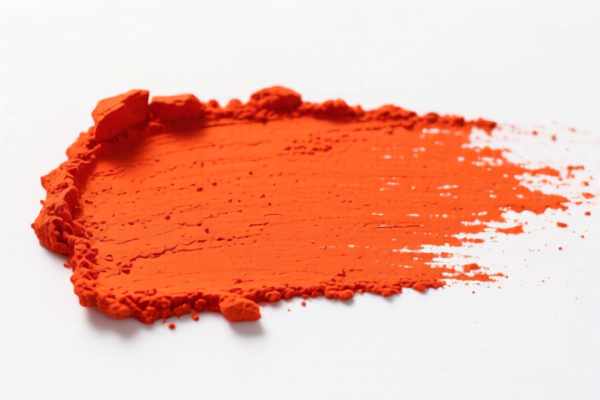
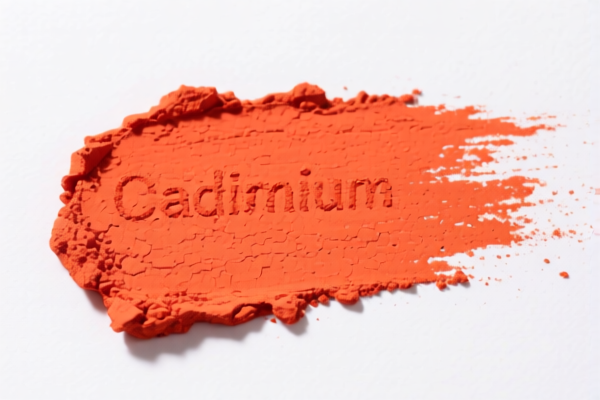
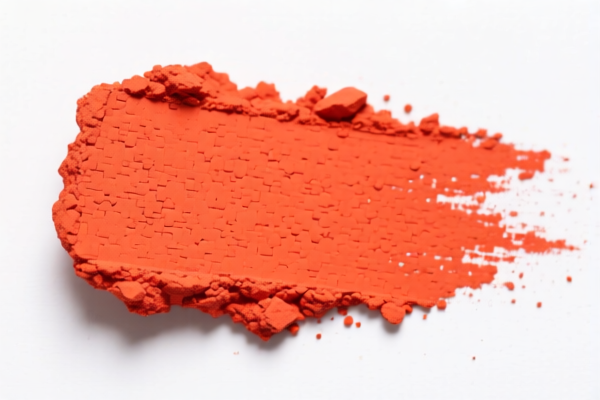
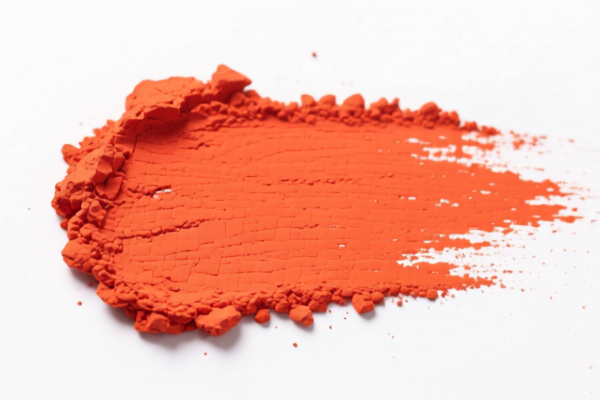
AI Analysis
🎨 Inorganic Pigments (Inorganic Coloring Agents)
🌐 HS Code Reference & Customs Clearance Guide | 2026 Latest Tariff Analysis | Strategic Entry Strategy for US Imports 📌 Part 1: Product Definition & Classification: Do You Really Understand "Inorganic Pigments"?
Inorganic Pigments are chemically stable, high-performance coloring agents derived from minerals, oxides, or synthetic inorganic compounds. They are widely used in plastics, coatings, inks, and ceramics due to their heat resistance and lightfastness. In international trade, they are primarily categorized under two main chapters based on their chemical nature and processing status:
1. Iron Oxides & Hydroxides (Chapter 28):
Raw or synthetic iron oxide pigments (e.g., red iron oxide, yellow iron oxide). These are considered "inorganic products" rather than "prepared pigments" if they are in a basic chemical form.
2. Prepared Pigments & Coloring Preparations (Chapter 32):
Inorganic pigments that have been processed, milled, or mixed into specific formulations for industrial use (e.g., titanium dioxide derivatives, other inorganic coloring agents excluding cadmium compounds).
⚠️ Key Distinction Point:
- If the product is a pure chemical oxide/hydroxide (e.g., synthetic ferric oxide) → Classified under Chapter 28 (Chemical Products).
- If the product is a processed pigment, coloring preparation, or compound inorganic pigment → Classified under Chapter 32 (Paints, Varnishes, and Pigments).
📦 Part 2: HS Code Classification Details (2026 Latest Tariff Authority Comparison)
| HS Code | Product Description | Application Scenario | Chemical Nature |
|---|---|---|---|
2821.10.00.30 |
Iron oxides and iron hydroxides; other than those of heading 28.20 | Synthetic iron oxide pigments; "catch-all" for synthetic inorganic iron compounds | ✅ Iron Oxide/Hydroxide |
2821.10.00.50 |
Other iron oxides and iron hydroxides; other | Generic iron oxide pigments; fallback category for inorganic iron-based pigments | ✅ Iron Oxide/Hydroxide |
3206.49.60.50 |
Other coloring matter and preparations based on substances of heading 32.03, 32.04 or 32.05: Other | Inorganic pigments excluding cadmium compounds; fits "other coloring agents and preparations" definition | ✅ Inorganic Pigment (Prepared) |
3206.50.00.00 |
Products based on substances of heading 32.03, 32.04, 32.05 or 32.06: Other | General inorganic pigments; perfect material match for inorganic coloring agents | ✅ Inorganic Pigment (General) |
🔍 Key Reminder:
- Chapter 28 Codes apply to basic chemical oxides/hydroxides.
- Chapter 32 Codes apply to processed, milled, or formulated inorganic pigments.
- Do NOT confuse with organic pigments (Chapter 32.04) or cadmium-based pigments (excluded from 3206.49).
💰 Part 3: 2026 Latest Tariff Rate Breakdown (Including Additional Taxes & Policy Surcharges)
✅ Applicable Country: United States (US)
✅ Country of Origin: China (CN)
✅ Effective Date: November 10, 2025 onwards (including subsequent imports)
🎯 1. 2821.10.00.30 – Iron Oxides & Hydroxides (Synthetic)
| Item | Content |
|---|---|
| Base Tariff Rate | 3.7% (ad valorem) |
| Section 301 Additional Tariff | +25.0% |
| Section 122 Tariff | +10.0% |
| Total Effective Rate | 38.7% |
| Tax Calculation | CIF Value × 38.7% |
| De Minimis Exemption Eligible? | ❌ No (denied for Section 122 and Section 301 goods) |
| Legal Basis Path | Section 301: Footnote 9903.88.01 → Section 122: IEEPA → USITC:2821.10.00.30 |
📌 Explanation:
- The 25% Section 301 tariff is imposed under U.S. Trade Law Section 301 on Chinese goods.
- The 10% Section 122 tariff is applied under the International Emergency Economic Powers Act (IEEPA) specifically targeting certain Chinese goods.
- Total 38.7% is a high barrier. Accurate classification as "Iron Oxide" is critical.
🎯 2. 2821.10.00.50 – Other Iron Oxides & Hydroxides
| Item | Content |
|---|---|
| Base Tariff Rate | 3.7% (ad valorem) |
| Section 301 Additional Tariff | +25.0% |
| Section 122 Tariff | +10.0% |
| Total Effective Rate | 38.7% |
| Tax Calculation | CIF Value × 38.7% |
| De Minimis Exemption Eligible? | ❌ No |
| Legal Basis Path | Same as above, fallback classification |
📌 Note:
- Tax rate is identical to2821.10.00.30.
- Use this code if the specific synthetic iron oxide does not fit the precise definition of 2821.10.00.30 but still falls under the general umbrella of iron oxides/hydroxides.
🎯 3. 3206.49.60.50 – Other Coloring Matter & Preparations (Inorganic, Non-Cadmium)
| Item | Content |
|---|---|
| Base Tariff Rate | 3.1% (ad valorem) |
| Section 301 Additional Tariff | +25.0% |
| Section 122 Tariff | +10.0% |
| Total Effective Rate | 38.1% |
| Tax Calculation | CIF Value × 38.1% |
| De Minimis Exemption Eligible? | ❌ No |
| Legal Basis Path | Section 301 → Section 122 → USITC:3206.49.60.50 |
📌 Explanation:
- Slightly lower base rate (3.1%) compared to Chapter 28 codes.
- Applies to inorganic pigments that are not cadmium-based and are prepared/formulated.
- Total 38.1% is the most competitive rate among the inorganic options, but requires precise chemical documentation.
🎯 4. 3206.50.00.00 – Other Coloring Matter & Preparations (General Inorganic)
| Item | Content |
|---|---|
| Base Tariff Rate | 6.5% (ad valorem) |
| Section 301 Additional Tariff | +25.0% |
| Section 122 Tariff | +10.0% |
| Total Effective Rate | 41.5% |
| Tax Calculation | CIF Value × 41.5% |
| De Minimis Exemption Eligible? | ❌ No |
| Legal Basis Path | Section 301 → Section 122 → USITC:3206.50.00.00 |
📌 Note:
- Higher base rate (6.5%) leads to the highest total tax (41.5%).
- This is a "catch-all" for inorganic coloring agents under Chapter 32. Use only if no more specific Chapter 32 code (like 3206.49) applies.
🛠️ Part 4: Customs Clearance Practical Advice (Battle-Tested Pitfall Avoidance)
✅ 1. Documentation Checklist (Mandatory)
| Document | Required | Purpose |
|---|---|---|
| ✅ Technical Data Sheet (TDS) | ✔️ | Must specify chemical composition (e.g., Fe₂O₃ > 95%) to justify Chapter 28 vs. Chapter 32. |
| ✅ Formula/Composition List | ✔️ | Critical to prove absence of Cadmium (if claiming 3206.49) or organic binders (if claiming inorganic). |
| ✅ Product Photos (Label & Bulk) | ✔️ | Show packaging, MSDS label, and physical state (powder/liquid). |
| ✅ MSDS (Material Safety Data Sheet) | ✔️ | Required for all chemical shipments; confirms inorganic nature. |
| ✅ Commercial Invoice | ✔️ | Must clearly state "Inorganic Pigment" or "Iron Oxide," NOT generic "Colorant." |
| ✅ Certificate of Origin | ✔️ | To confirm China origin for Section 301/122 application. |
| ✅ Packing List | ✔️ | Detail net/gross weight, packaging type (drums/cartons). |
✅ 2. Declaration Strategy (Key Mantras)
🔥 "Chemical Nature Dictates Code, Iron Oxide vs. Prep, Base Rate Matters!"
| Scenario | Correct Classification | Wrong Practice | Consequence |
|---|---|---|---|
| Synthetic Iron Oxide Powder | 2821.10.00.30 or .50 |
Declare as "Paint Pigment" → 3206.50 |
Higher Tax (41.5% vs 38.7%) |
| Processed Inorganic Pigment (Non-Cadmium) | 3206.49.60.50 |
Declare as "Chemical Raw Material" → 2821 |
Misclassification Risk, Audit |
| Cadmium-Based Pigment | Excluded from these codes | Declare under 3206.49 |
Illegal, Seizure, Heavy Penalties |
| Organic-Inorganic Hybrid | Check Composition | Declare as "Inorganic" | Classification Error, Penalty |
✅ 3. Special Case Handling
| Situation | Handling Advice |
|---|---|
| Iron Oxide with Additives | If additives are <10% and do not change chemical nature, may still qualify for Chapter 28. If >10%, likely Chapter 32. |
| Nano-Inorganic Pigments | Still classified by chemical nature. Provide nano-specific safety data. |
| Cadmium-Free Certification | Mandatory for 3206.49.60.50. Provide lab test report from accredited third party. |
| Bulk vs. Retail | Bulk drums may have lower handling costs, but same tax. Retail packaging does not change HS code. |
🌍 Part 5: Global Market Comparison (2026 Latest)
| Country/Region | Recommended HS Code | Tariff (China Origin) | Certification | Notes |
|---|---|---|---|---|
| 🇺🇸 USA | 3206.49.60.50 |
38.1% (Total) | None specific | Section 301 + 122 applies heavily. |
| 🇨🇳 China | 3206.49.60.50 |
3.1% | ISO 9001 | No additional tariffs. |
| 🇪🇺 EU | 3206.49 |
~3-6% | REACH Registration | REACH compliance is critical. |
| 🇬🇧 UK | 3206.49 |
~3-6% | UK REACH | Post-Brexit rules apply. |
| 🇯🇵 Japan | 3206.49 |
0-5% | JIS Standards | No major additional tariffs. |
📌 Conclusion:
- USA is the highest-cost market due to Section 301 and Section 122 tariffs.
- Cost Savings Opportunity: Opt for3206.49.60.50(38.1%) over3206.50.00.00(41.5%) if product qualifies.
- EU/Japan/China: Significantly lower tariffs, but regulatory compliance (REACH, etc.) is key.
📌 Part 6: Common Errors & Pitfall Avoidance (Blood-Taught Lessons)
❌ Error 1: Declaring "Iron Oxide" when it's actually a "Prepared Pigment" with organic binders
👉 Consequence: Misclassification → Audit, Back Taxes, Penalties.
👉 Solution: Provide full chemical formula.
❌ Error 2: Using 3206.50.00.00 when 3206.49.60.50 applies
👉 Consequence: Overpaying 3.4% in total tariffs.
👉 Solution: Ensure product is non-cadmium and fits "other coloring matter" definition.
❌ Error 3: Ignoring Section 122 Tariff Impact
👉 Consequence: Unexpected 10% surcharge on top of Section 301.
👉 Solution: Factor in Total 38.1%-41.5% in pricing strategy.
❌ Error 4: Assuming "De Minimis" (Section 321) applies
👉 Consequence: Shipments under $800 are NOT exempt from Section 301 and Section 122.
👉 Solution: All shipments, regardless of value, are subject to full tariffs.
✅ Correct Practice:
"Synthetic Iron Oxide, Fe₂O₃ ≥ 95%, Powder, 25kg Drum, Non-Cadmium, MSDS Attached"
🎯 Part 7: Conclusion: Professional Classification, Cost Efficiency, Risk Mitigation!
🎯 Remember the Mantra:
🔹 "Iron Oxide: Chapter 28, 38.7%. Prepared Inorganic: Chapter 32, 38.1%-41.5%. Section 301 + 122 = High Cost!"
🔹 "Accurate Chemical Definition Saves Money! 3.4% Difference Matters!"
📌 Pro Tip:
- If your product is non-cadmium inorganic pigment, aim for 3206.49.60.50 (38.1%) as the optimal balance of accuracy and cost.
- If it's pure iron oxide, use 2821.10.00.30 or .50 (38.7%).
- Always apply for Advance Ruling if unsure about chemical nature.
📣 Immediate Action:
📞 Contact Customs Broker + Provide TDS/MSDS + Apply for HS Code Advance Ruling
🚀 Ensure Smooth Customs Clearance, Maximize Profit Margins!
✨ Professional Clearance Starts with Accurate Classification!
💼 Every Percent of Tariff Saved is Pure Profit!
Customer Reviews
About HS Code Classification
The Harmonized System (HS) is an internationally standardized nomenclature developed by the World Customs Organization (WCO) to classify traded products. Over 200 countries use the HS system as the basis for customs tariffs, trade statistics, and import/export regulations.
Each HS code follows a hierarchical structure:
- Chapter (2 digits) — Broad category of goods (e.g., Chapter 84: Machinery and Mechanical Appliances)
- Heading (4 digits) — More specific grouping within the chapter
- Subheading (6 digits) — Internationally standardized breakdown, used by all WCO member countries
- National subdivisions (8-10 digits) — Country-specific extensions for further classification, such as US HTSUS 10-digit codes
Correct HS code classification is essential for smooth customs clearance, accurate duty payment, and compliance with trade regulations. Misclassification can lead to customs delays, overpayment of duties, or penalties.
When importing from CN to US, the applicable tariff rates may include:
- Most-Favored-Nation (MFN) rate — The standard duty rate applied to WTO members
- General rate — Applied to countries without trade agreements
- Trade remedy duties — Additional tariffs such as Section 301 (anti-dumping), Section 232 (national security), or countervailing duties
The information provided on this page is for reference purposes only. For official classification, please consult with your local customs authority or a licensed customs broker.