Inorganic Sodium Salt Additive
CN → US| HS Code | Tariff Rate | Origin | Destination | Doc |
|---|---|---|---|---|
| 3824405000 | 40.0% | CN | US | Official Doc |
| 2836200000 | 36.2% | CN | US | Official Doc |
| 2836300000 | 35.0% | CN | US | Official Doc |
| 3824991100 | 35.0% | CN | US | Official Doc |
Product Images
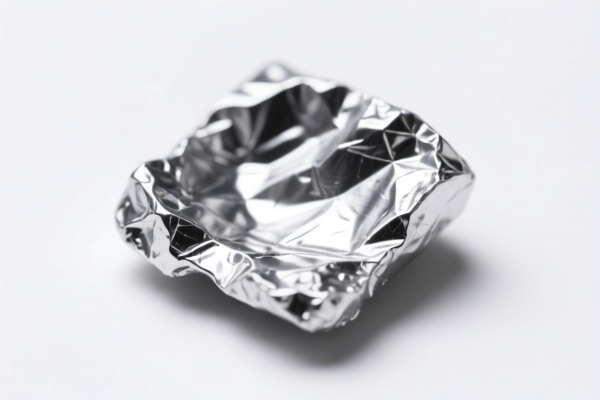
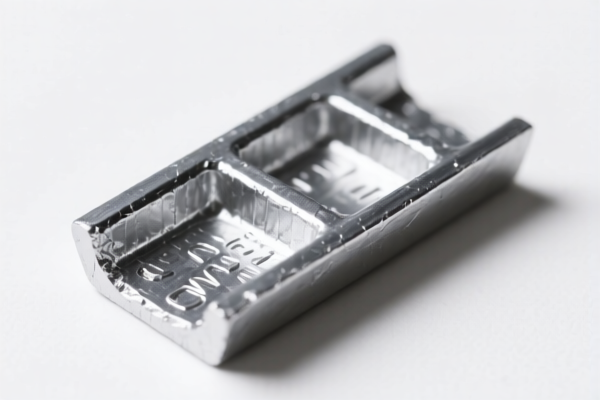
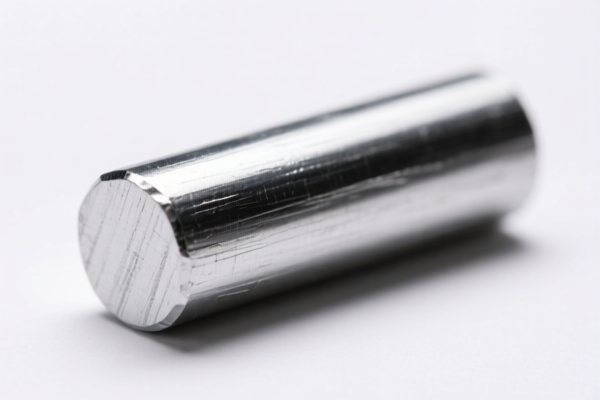
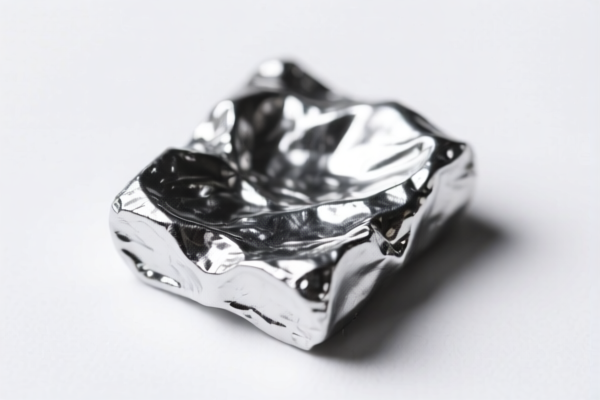
AI Analysis
🧪 Inorganic Sodium Salt Additive: HS Code Classification & Customs Clearance Strategy (2026)
🌐 HS Code Reference & Customs Guide | 2026 Latest Tariff Analysis | Professional Clearance Strategy
📌 I. Product Definition: What is "Inorganic Sodium Salt Additive"?
Inorganic Sodium Salts are a broad category of chemical compounds widely used in industrial applications. Their HS Code classification depends entirely on their specific chemical composition and intended use. Common forms include: 1. Sodium Carbonate (Soda Ash): Used in glass manufacturing, water treatment, and as a chemical intermediate. 2. Sodium Bicarbonate (Baking Soda): Used in food processing, pharmaceuticals, and fire extinguishers. 3. Chemical Additives (Preparations): Mixtures or preparations containing sodium salts used for specific industrial processes (e.g., concrete additives, cement modifiers).
⚠️ Critical Distinction:
- If the product is a pure chemical compound (like pure Soda Ash) → It is classified by its chemical nature (Chapter 28).
- If the product is a mixture/preparation used for a specific technical function (like a cement additive) → It is classified as a Chemical Product/Preparation (Chapter 38).
📦 II. HS Code Classification Details (2026 Latest Tariff Authority)
Based on the provided data, there are four possible classifications. The correct one depends on the product's purity and application.
| HS Code | Product Description | Application Scenario | Chemical Nature |
|---|---|---|---|
3824.40.50.00 |
Other Chemical Additives for Cement/Concrete | Additives used to modify properties of cement, mortar, or concrete. | Mixed preparation/Chemical Additive |
2836.20.00.00 |
Sodium Carbonates | Pure Sodium Carbonate (Soda Ash). | Inorganic Salt (Carbonate) |
2836.30.00.00 |
Sodium Bicarbonates | Pure Sodium Bicarbonate (Baking Soda). | Inorganic Salt (Bicarbonate) |
3824.99.11.00 |
Other Chemical Products & Preparations | Sodium salt-based preparations not specified elsewhere (general chemical industrial use). | General Chemical Preparation |
🔍 Key Reminder:
- Pure Chemicals (e.g., Soda Ash) fall under Chapter 28 (2836.xx).
- Industrial Mixtures/Additives (e.g., Concrete Modifiers) fall under Chapter 38 (3824.xx).
- Misclassification between Chapter 28 and 38 is a common customs error that leads to 4%-10% tax differences and potential penalties.
💰 III. 2026 Latest Tariff Rate Details (Including Surcharges & Policy Add-ons)
✅ Applicable Country: United States (US)
✅ Country of Origin: China (CN)
✅ Effective Date: Ongoing (Includes Section 301 and IEEPA surcharges)
🎯 1. 3824.40.50.00 —— Chemical Additives for Cement/Concrete (Sodium Salt Basis)
| Item | Content |
|---|---|
| Base Tariff | 5.0% |
| Section 301 Surcharge | +25.0% |
| Section 122 Surcharge | +10.0% |
| Total Effective Tax Rate | 40.0% |
| Tax Calculation | CIF Value × 40.0% |
| De Minimis Exemption | ❌ Not Eligible (High tariff rate triggers scrutiny) |
| Legal Basis Path | USITC:3824.40.50.00 → Section 301 Footnote → Section 122 IEEPA |
📌 Explanation:
- This code is for functional additives. If your sodium salt is sold specifically as a "concrete additive" or "mortar modifier," use this code. - The 40% total tax is significantly higher than pure chemicals due to the combined surcharges.
🎯 2. 2836.20.00.00 —— Sodium Carbonates (e.g., Soda Ash)
| Item | Content |
|---|---|
| Base Tariff | 1.2% |
| Section 301 Surcharge | +25.0% |
| Section 122 Surcharge | +10.0% |
| Total Effective Tax Rate | 36.2% |
| Tax Calculation | CIF Value × 36.2% |
| De Minimis Exemption | ❌ Not Eligible |
| Legal Basis Path | USITC:2836.20.00.00 → Section 301 Footnote → Section 122 IEEPA |
📌 Explanation:
- Use this code if the product is pure Sodium Carbonate (Na₂CO₃) used as a chemical raw material. - Slightly lower tax (36.2%) compared to concrete additives (40.0%), but still high.
🎯 3. 2836.30.00.00 —— Sodium Bicarbonates (e.g., Baking Soda)
| Item | Content |
|---|---|
| Base Tariff | 0.0% |
| Section 301 Surcharge | +25.0% |
| Section 122 Surcharge | +10.0% |
| Total Effective Tax Rate | 35.0% |
| Tax Calculation | CIF Value × 35.0% |
| De Minimis Exemption | ❌ Not Eligible |
| Legal Basis Path | USITC:2836.30.00.00 → Section 301 Footnote → Section 122 IEEPA |
📌 Explanation:
- Use this code for pure Sodium Bicarbonate (NaHCO₃). - This is the lowest tax rate among the options (35.0%) because the base tariff is 0%.
🎯 4. 3824.99.11.00 —— Other Chemical Products & Preparations
| Item | Content |
|---|---|
| Base Tariff | 0.0% |
| Section 301 Surcharge | +25.0% |
| Section 122 Surcharge | +10.0% |
| Total Effective Tax Rate | 35.0% |
| Tax Calculation | CIF Value × 35.0% |
| De Minimis Exemption | ❌ Not Eligible |
| Legal Basis Path | USITC:3824.99.11.00 → Section 301 Footnote → Section 122 IEEPA |
📌 Explanation:
- This is a "Catch-all" code for chemical preparations that don’t fit into specific additive categories. - Use this if the sodium salt is part of a complex chemical mixture for industrial use, but not specifically for concrete/cement.
🛠️ IV. Customs Clearance Practical Advice (Battle-Tested Pitfall Guide)
✅ 1. Documentation Checklist (Mandatory)
| Document | Required | Notes |
|---|---|---|
| ✅ Product Specification Sheet | ✔️ | Must specify chemical composition (e.g., "Na₂CO₃ ≥ 99%") |
| ✅ Certificate of Analysis (COA) | ✔️ | Proves purity and identifies specific sodium salt |
| ✅ Product Photos | ✔️ | Show packaging, labels, and product state (powder/granule) |
| ✅ Commercial Invoice | ✔️ | Clearly state "Inorganic Sodium Salt" or specific name (e.g., "Soda Ash") |
| ✅ Intended Use Statement | ✔️ | Critical: Explain if it's for "Concrete," "Chemical Intermediate," or "Food/Pharma" |
| ✅ Safety Data Sheet (SDS) | ✔️ | Required for hazardous chemical clearance |
✅ 2. Classification Strategy (Key Mantras)
🔥 "Pure Chemical? Chapter 28. Mixture? Chapter 38. Use Defines Code!"
| Scenario | Correct HS Code | Reason |
|---|---|---|
| Pure Soda Ash (Na₂CO₃) | 2836.20.00.00 |
Specific chemical compound |
| Pure Baking Soda (NaHCO₃) | 2836.30.00.00 |
Specific chemical compound |
| Sodium Salt Mixed with Cement/Additives | 3824.40.50.00 |
Functional additive for construction |
| General Chemical Sodium Salt Preparation | 3824.99.11.00 |
Other chemical preparation |
⚠️ Warning:
- Do NOT classify a pure chemical as a "preparation" (3824) unless it is mixed with other substances for a specific technical function.
- Do NOT classify a concrete additive as a pure chemical (2836) if it contains other additives.
✅ 3. Special Handling & Pitfalls
| Situation | Handling Advice |
|---|---|
| Dual-Use Products | If used for both chemical and construction purposes, classify based on primary use or commercial presentation. Provide proof of intended use. |
| Bulk vs. Retail | Bulk industrial sodium salts are typically Chapter 28. Pre-mixed retail cement additives are Chapter 38. |
| Hazardous Classification | Sodium salts are generally non-hazardous, but if mixed with other chemicals, check SDS for DOT/Hazmat requirements. |
| Anti-Dumping/Countervailing Duties | Check for any existing CAD/CVD orders on Soda Ash or Sodium Bicarbonate from China. |
🌍 V. Global Market Comparison (2026 Latest)
| Country/Region | Recommended HS Code | Base Tariff | Surcharges (China) | Total Est. Tax | Notes |
|---|---|---|---|---|---|
| 🇺🇸 USA | 2836.20.00.00 / 3824.xx |
0-5% | +35% (301+122) | 35-40% | Highest impact; plan margins accordingly. |
| 🇨🇳 China | 2836.20.00.00 |
0-10% | 0% | 0-10% | Import tariffs vary by type. |
| 🇪🇺 EU | 2836.20.00.00 |
0-5% | 0% | 0-5% | No Section 301/122 equivalents. |
| 🇯🇵 Japan | 2836.20.00.00 |
0% | 0% | 0% | Generally free for chemicals. |
📌 Conclusion:
- USA is the most challenging market for inorganic sodium salts due to 35-40% total tariffs.
- EU, Japan, and Canada are much more favorable, with base tariffs often 0-5%.
- Recommendation: If targeting the US, consider supply chain diversification or pre-clearance rulings to mitigate risk.
📌 VI. Common Mistakes & Pitfall Guide (Lessons Learned)
❌ Mistake 1: Classifying Soda Ash (2836.20) as a general Chemical Additive (3824.99).
👉 Consequence: Overpayment of tax (36.2% vs 35.0% + potential scrutiny for misclassification).
👉 Fix: Use specific chemical codes (2836) for pure compounds.
❌ Mistake 2: Classifying Concrete Additives as Pure Chemicals (2836).
👉 Consequence: Customs seizure or penalty for misdeclaration of use.
👉 Fix: Use 3824.40.50.00 if it’s a mixture for construction.
❌ Mistake 3: Ignoring Section 122 (10%) in tax calculations.
👉 Consequence: Underestimating landed cost by 10%, leading to cash flow issues.
👉 Fix: Always add 35-40% total tax for China-origin goods to the US.
✅ Best Practice:
"Specify Chemical Name + Purity % + Intended Use in Invoice.
Example: 'Sodium Carbonate (Soda Ash), 99.5% Pure, for Glass Manufacturing, HS 2836.20.00.00'"
🎯 VII. Conclusion: Precise Classification Saves Money!
🎯 Remember the Mantras:
🔹 "Pure Chemical = Chapter 28. Mixture = Chapter 38."
🔹 "US Tariffs are 35-40%. Plan your margin accordingly."
🔹 "Use Specific Codes (2836) to Avoid Penalties."
📌 Pro Tip:
If your product is not from China (e.g., Vietnam, India, or EU), you may avoid Section 301/122 surcharges, reducing the total tax to 0-5%.
Recommendation: Apply for an Advance Ruling from CBP if your product is on the borderline between 2836 and 3824.
📣 Immediate Action:
📞 Contact a professional customs broker.
📄 Provide COA and SDS.
🚀 Ensure HS Code matches Chemical Composition to avoid audits.
✨ Professional Clearance Starts with Accurate Classification!
💼 Your landed cost depends on 2 digits: 28 vs 38!
Customer Reviews
About HS Code Classification
The Harmonized System (HS) is an internationally standardized nomenclature developed by the World Customs Organization (WCO) to classify traded products. Over 200 countries use the HS system as the basis for customs tariffs, trade statistics, and import/export regulations.
Each HS code follows a hierarchical structure:
- Chapter (2 digits) — Broad category of goods (e.g., Chapter 84: Machinery and Mechanical Appliances)
- Heading (4 digits) — More specific grouping within the chapter
- Subheading (6 digits) — Internationally standardized breakdown, used by all WCO member countries
- National subdivisions (8-10 digits) — Country-specific extensions for further classification, such as US HTSUS 10-digit codes
Correct HS code classification is essential for smooth customs clearance, accurate duty payment, and compliance with trade regulations. Misclassification can lead to customs delays, overpayment of duties, or penalties.
When importing from CN to US, the applicable tariff rates may include:
- Most-Favored-Nation (MFN) rate — The standard duty rate applied to WTO members
- General rate — Applied to countries without trade agreements
- Trade remedy duties — Additional tariffs such as Section 301 (anti-dumping), Section 232 (national security), or countervailing duties
The information provided on this page is for reference purposes only. For official classification, please consult with your local customs authority or a licensed customs broker.