Inorganic Sterilizer
CN → US| HS Code | Tariff Rate | Origin | Destination | Doc |
|---|---|---|---|---|
| 8479899599 | 87.5% | CN | US | Official Doc |
| 8419200020 | 10.0% | CN | US | Official Doc |
| 8419200010 | 10.0% | CN | US | Official Doc |
| 9022298000 | 35.0% | CN | US | Official Doc |
| 8479896500 | 20.3% | CN | US | Official Doc |
Product Images
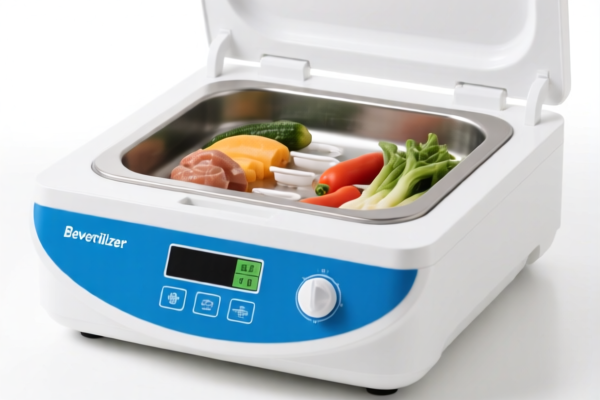
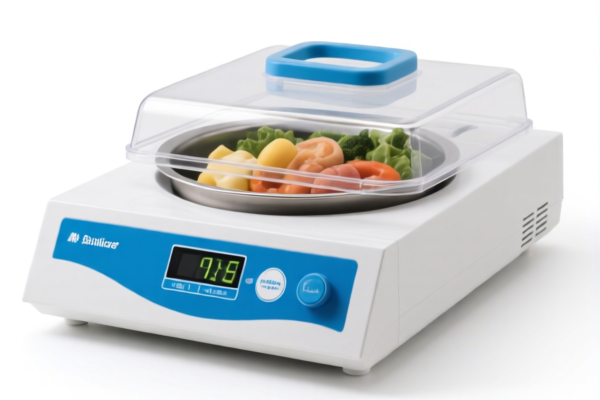


AI Analysis
🧪 Inorganic Sterilizer (无机灭菌器)
🌐 HS Code Reference & Customs Clearance Guide | 2026 Tariff Analysis | Strategic Clearance Strategy
📌 1. Product Definition & Classification: What is an "Inorganic Sterilizer"?
The term "Inorganic Sterilizer" is ambiguous in international trade and typically refers to sterilization equipment that utilizes physical or chemical processes rather than organic biological agents. Depending on the specific technology employed (heat, radiation, or mechanical), this product falls into different Harmonized System (HS) categories.
⚠️ Critical Distinction:
- Physical/Thermal Sterilizers: Autoclaves, dry heat sterilizers → Generally classified under Chapter 84 (Machinery).
- Radiation Sterilizers: Devices using ionizing radiation → Classified under Chapter 90 (Medical/Optical Instruments).
- Medical vs. Industrial: Medical use often allows for duty exemptions, while industrial use attracts standard tariffs.
📦 2. HS Code Classification Details (2026 Latest Tariff Alignment)
Based on the provided data, there are 5 potential classifications for "Inorganic Sterilizer," each with significantly different tax implications.
| HS Code | Summary Description | Primary Use Case | Total Tax Rate (China Origin to US)* |
|---|---|---|---|
| 8419.20.00.10 | Medical/Surgical Sterilizer | Hospital-grade surgical sterilization | 10.0% |
| 8419.20.00.20 | Laboratory Sterilizer | Lab-grade non-system sterilization | 10.0% |
| 8479.89.65.00 | Independent Mechanical Sterilizer | General industrial mechanical sterilization | 20.3% |
| 9022.29.80.00 | Ionizing Radiation Sterilizer | Radiation-based sterilization equipment | 35.0% |
| 8479.89.95.99 | General Mechanical Sterilizer | Other mechanical machines, inferred metal/heat material | 87.5% |
🔍 Key Insight:
- The lowest tax rate (10%) applies if the device is explicitly for medical or laboratory use (HS 8419).
- The highest tax rate (87.5%) applies if classified as a general "other machine" (HS 8479), likely due to Section 301/IEEPA surcharges on non-specific machinery.
- Radiation-based devices (HS 9022) face a moderate-high rate of 35% due to specific regulatory tariffs.
💰 3. 2026 Latest Tariff Rate Breakdown (Including Surcharges)
✅ Applicable Country: USA (US)
✅ Country of Origin: China (CN)
✅ Effective Date: Post-November 2025 (Current Policy)
🎯 1. 8419.20.00.10 & 8419.20.00.20 —— Medical/Laboratory Sterilizers (Best Rate)
| Item | Detail |
|---|---|
| Base Tariff | 0.0% |
| Section 301 Surcharge | 0.0% (Exempted for medical/lab machinery in this subheading) |
| IEEPA Tariff (122 Clause) | +10% (Applicable to China-origin goods) |
| Total Tax Rate | 10.0% |
| Calculation | CIF Value × 10% |
| De Minimis Eligibility | ❌ No (Generally denied for machinery) |
| Legal Path | IEEPA:9903.01.25 → USITC:8419.20.00.10/20 |
📌 Explanation:
- These codes cover steam, dry heat, or chemical sterilizers used in hospitals or labs.
- Despite high tariffs on many Chinese goods, medical-grade sterilization equipment often enjoys a 10% preferential rate under current IEEPA guidelines.
- Crucial: The product description must explicitly state "Medical" or "Laboratory" use.
🎯 2. 8479.89.65.00 —— Independent Mechanical Sterilizer
| Item | Detail |
|---|---|
| Base Tariff | 2.8% |
| Section 301 Surcharge | +7.5% |
| IEEPA Tariff (122 Clause) | +10% |
| Total Tax Rate | 20.3% |
| Calculation | CIF Value × 20.3% |
| De Minimis Eligibility | ❌ No |
| Legal Path | USITC:8479.89.65.00 |
📌 Explanation:
- This code is for general-purpose mechanical sterilizers not strictly defined as medical.
- If your product is industrial (e.g., packaging sterilization) but not "medical," it may fall here.
- Avoid this code if your product can qualify for 8419, as the tax is double.
🎯 3. 9022.29.80.00 —— Ionizing Radiation Sterilizer
| Item | Detail |
|---|---|
| Base Tariff | 0.0% |
| Section 301 Surcharge | +25% |
| IEEPA Tariff (122 Clause) | +10% |
| Total Tax Rate | 35.0% |
| Calculation | CIF Value × 35% |
| De Minimis Eligibility | ❌ No |
| Legal Path | USITC:9022.29.80.00 |
📌 Explanation:
- Applies if the sterilizer uses X-rays, Gamma rays, or Electron beams.
- These are considered medical/industrial radiation apparatus.
- The 25% Section 301 tax is not waived for this category, making it costlier than steam sterilizers.
🎯 4. 8479.89.95.99 —— General Mechanical Sterilizer (Highest Risk)
| Item | Detail |
|---|---|
| Base Tariff | 2.5% |
| Section 301 Surcharge | +25% |
| IEEPA Tariff (122 Clause) | +10% |
| Steel/Aluminum/Copper Surcharge | +50% (Specific to metal products under 122 Clause) |
| Total Tax Rate | 87.5% |
| Calculation | CIF Value × 87.5% |
| De Minimis Eligibility | ❌ No |
| Legal Path | USITC:8479.89.95.99 |
📌 Explanation:
- This is the default "catch-all" category for machines not specified elsewhere.
- If you fail to prove medical/lab use, and the body is made of metal, you face the full 50% metal surcharge.
- This rate is extremely high and should be avoided if any other classification is plausible.
🛠️ 4. Customs Clearance Practical Advice (Risk Mitigation)
✅ 1. Documentation Checklist (Mandatory)
| Document | Required? | Purpose |
|---|---|---|
| Product Specification Sheet | ✔️ | Must specify: Type of sterilization (Steam, Radiation, Chemical), Capacity, Application (Medical/Lab/Industrial). |
| Declaration of Use | ✔️ | Explicitly state: "For use in Medical Facilities" or "Laboratory Use Only." |
| Material Composition | ✔️ | Crucial for avoiding the 50% metal surcharge. Confirm if primary material is metal. |
| Certificates (FCC/CE/RoHS) | ✔️ | Required for electronic/radiation devices (HS 9022). |
| Commercial Invoice | ✔️ | Description must match HS Code rationale (e.g., "Medical Steam Autoclave"). |
✅ 2. Classification Strategy (Key Tactics)
🔥 "Target Medical, Avoid Generic!"
| Scenario | Recommended HS Code | Why? |
|---|---|---|
| Hospital/Lab Sterilizer | 8419.20.00.10 / .20 |
10% Tax. Lowest liability. Proves medical/lab purpose. |
| Industrial Packaging Sterilizer | 8479.89.65.00 |
20.3% Tax. If not medical, this is safer than generic. |
| Radiation Sterilizer | 9022.29.80.00 |
35% Tax. Only if using ionizing radiation. Cannot be reclassified as steam. |
| General/Unknown Use | 8479.89.95.99 |
87.5% Tax. AVOID. Only use if no other code fits. |
✅ 3. Critical Warnings & Pitfalls
❌ Pitfall 1: Using vague terms like "Sterilization Machine" in invoices.
👉 Result: Customs may default to 8479.89.95.99 (87.5% tax).
✅ Fix: Use precise terms: "Medical Steam Sterilizer, Model XYZ."
❌ Pitfall 2: Ignoring the 122 Clause Metal Surcharge.
👉 Result: If the sterilizer is metal-based and classified under 8479.89.95.99, you pay an extra 50%.
✅ Fix: Ensure product description emphasizes function over material, or classify under 8419 if possible.
❌ Pitfall 3: Misclassifying Radiation Devices as Steam Sterilizers.
👉 Result: If FDA/Customs inspect and find radiation sources, they may penalize for misdeclaration.
✅ Fix: If using radiation, declare as 9022.29.80.00 and include radiation safety certifications.
🌍 5. Global Market Comparison (2026)
| Market | Recommended HS Code | Est. Tax (China Origin) | Notes |
|---|---|---|---|
| 🇺🇸 USA | 8419.20.00.10 |
10% | Best option for medical/lab use. Avoid 8479. |
| 🇪🇺 EU | 8419.20.00 |
0% | Likely duty-free if medical device. CE Mark required. |
| 🇨🇳 China | 8419.20.00 |
0-5% | Low import duty for medical equipment. |
| 🇯🇵 Japan | 8419.20.00 |
0-5% | Low duty. PSE Mark required. |
📌 Conclusion:
- USA is the most tariff-sensitive market for this product due to Section 301 and IEEPA tariffs.
- Medical/Lab classification (8419) is the only way to achieve low tariffs (10%) in the US.
- General machinery classification (8479.95) is financially disastrous (87.5%).
📌 6. Final Recommendation
🎯 Action Plan: 1. Confirm Application: Is the sterilizer for medical/laboratory use? - ✅ YES → Classify under 8419.20.00.10 or .20. Total Tax: 10%. - ❌ NO → Classify under 8479.89.65.00. Total Tax: 20.3%. 2. Check Material: Is it primarily metal? - If yes, and classified under 8479.95.99, you face 87.5%. Avoid this code at all costs. 3. Documentation: Prepare a Declaration of Use stating "Medical/Laboratory Equipment" to support the 8419 classification.
💡 Pro Tip:
"Specify 'Medical' or 'Lab' in the product name and invoice. Vague descriptions lead to 87.5% tariffs!"
✨ Precise Classification = Significant Cost Savings
💼 Don't let ambiguous descriptions cost you 77.5% in extra taxes!
Customer Reviews
About HS Code Classification
The Harmonized System (HS) is an internationally standardized nomenclature developed by the World Customs Organization (WCO) to classify traded products. Over 200 countries use the HS system as the basis for customs tariffs, trade statistics, and import/export regulations.
Each HS code follows a hierarchical structure:
- Chapter (2 digits) — Broad category of goods (e.g., Chapter 84: Machinery and Mechanical Appliances)
- Heading (4 digits) — More specific grouping within the chapter
- Subheading (6 digits) — Internationally standardized breakdown, used by all WCO member countries
- National subdivisions (8-10 digits) — Country-specific extensions for further classification, such as US HTSUS 10-digit codes
Correct HS code classification is essential for smooth customs clearance, accurate duty payment, and compliance with trade regulations. Misclassification can lead to customs delays, overpayment of duties, or penalties.
When importing from CN to US, the applicable tariff rates may include:
- Most-Favored-Nation (MFN) rate — The standard duty rate applied to WTO members
- General rate — Applied to countries without trade agreements
- Trade remedy duties — Additional tariffs such as Section 301 (anti-dumping), Section 232 (national security), or countervailing duties
The information provided on this page is for reference purposes only. For official classification, please consult with your local customs authority or a licensed customs broker.