Inorganic containing Agricultural Anti freeze and De icing Agent
CN → US| HS Code | Tariff Rate | Origin | Destination | Doc |
|---|---|---|---|---|
| 2836995050 | 10.0% | CN | US | Official Doc |
| 2836993000 | 36.7% | CN | US | Official Doc |
| 3105590000 | 35.0% | CN | US | Official Doc |
| 3105900050 | 35.0% | CN | US | Official Doc |
| 3824993990 | 35.0% | CN | US | Official Doc |
Product Images
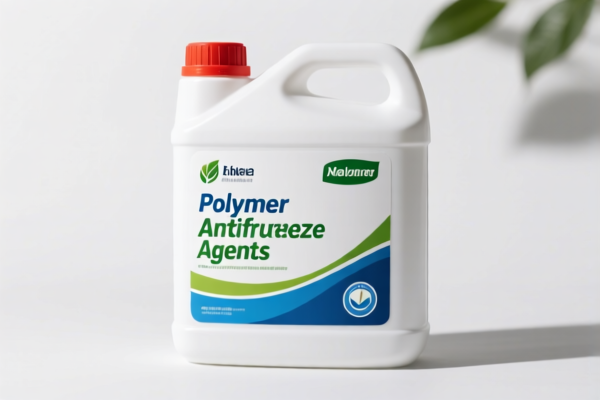
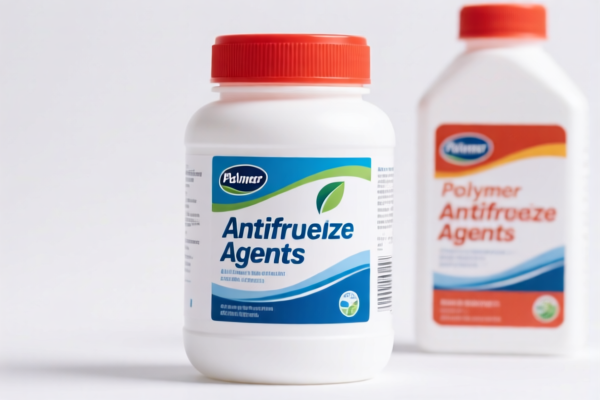


AI Analysis
🛡️ Inorganic Agricultural Anti-Freeze & De-Icing Agents
🌐 HS Code Classification & US Customs Clearance Guide | 2026 Tariff Landscape | Strategic Compliance for Bio-Chemicals
📌 I. Product Definition & Chemical Nature: What Are You Actually Shipping?
"Inorganic Agricultural Anti-Freeze and De-Icing Agents" are chemical formulations designed to lower the freezing point of water in agricultural contexts (e.g., protecting crops from frost, preserving produce storage, or de-icing agricultural machinery/fields).
Key Chemical Characteristics: 1. Inorganic Base: The core components are inorganic salts (e.g., Carbonates, Nitrates, Phosphates) rather than organic alcohols (like ethylene glycol). 2. Fertilizer Elements: Many agricultural formulations contain Nitrogen (N), Phosphorus (P), or Potassium (K), blurring the line between a "chemical preservative" and a "fertilizer." 3. Preservative Function: They act as biostatics or physical antifreeze agents, preserving biological material or preventing ice formation.
⚠️ Critical Classification Trap:
The biggest risk is misclassification between "Chemical Products" (Chapter 28/38) and "Fertilizers" (Chapter 31).
- If the primary function is preservation/antifreeze and it contains general inorganic salts → Chapter 28/38.
- If the primary function is nutrition and it contains N/P/K → Chapter 31.
📦 II. HS Code Classification Analysis (2026 US Tariff Schedule)
Based on the chemical nature and agricultural application, here are the five most likely HS Code classifications, ranked by suitability and tax implications.
🎯 Option 1: 2836.99.50.50 — The "Lowest Tax" Candidate
Description: Other Carbonates; Peroxocarbonates (including Potassium Peroxocarbonate).
Why it fits:
- The summary indicates the substance is an inorganic chemical salt, specifically resembling carbonates.
- If the antifreeze agent is primarily based on inorganic carbonates (e.g., certain salt-based antifreezes), this is the most precise fit for the material.
- Key Advantage: It excludes the heavy "Section 301" and "122" tariffs that apply to broader chemical categories.
| Project | Details |
|---|---|
| Base Tariff | 0% (Note: Often 0-3% depending on specific year, but here listed as empty/low base) |
| Section 301 Tariff | 0.0% (Exempted or not applicable to this specific subheading) |
| Section 122 Tariff | +10% (Specific trade remedy or emergency tariff) |
| Total Effective Rate | +10.0% |
| Legal Basis | Harmonized Tariff Schedule of the United States (HTSUS) Subheading 2836.99.50 |
💡 Strategy: If your product is chemically a Carbonate, aggressively push for this classification. It saves ~25-35% in duties compared to other options.
🎯 Option 2: 2836.99.30.00 — The "High Cost" Risk
Description: Other Carbonates; Peroxocarbonates (including Potassium Peroxocarbonate).
Why it fits:
- Also based on inorganic salts/carbonates.
- The distinction from 2836.99.50.50 often lies in specific chemical purity or additional compounds not present in the 50.50 variant.
- Risk: This classification attracts the full brunt of US trade tariffs.
| Project | Details |
|---|---|
| Base Tariff | 1.7% |
| Section 301 Tariff | +25.0% |
| Section 122 Tariff | +10% |
| Total Effective Rate | +36.7% |
| Legal Basis | HTSUS Subheading 2836.99.30 |
⚠️ Warning: This is the most expensive option. Only use if the product strictly fails the criteria for
2836.99.50.50but is definitely an inorganic carbonate.
🎯 Option 3: 3105.59.00.00 — The "Fertilizer" Angle
Description: Mineral or Chemical Fertilizers Containing Two or Three of the Fertilizing Elements Nitrogen, Phosphorus, Potassium.
Why it fits:
- Agricultural antifreezes often contain Nitrogen or Phosphorus to also act as a nutrient.
- If the product is marketed as a "Frost Protection Fertilizer" and contains N+P, it falls under Chapter 31.
- Benefit: Base tariff is 0%.
| Project | Details |
|---|---|
| Base Tariff | 0.0% |
| Section 301 Tariff | +25.0% |
| Section 122 Tariff | +10% |
| Total Effective Rate | +35.0% |
| Legal Basis | HTSUS Subheading 3105.59 |
💡 Strategy: Use this only if the product is primarily a fertilizer with antifreeze properties. Do not use if the main purpose is purely chemical preservation without nutritional value.
🎯 Option 4: 3105.90.00.50 — The "Other Fertilizer" Angle
Description: Other Mineral or Chemical Fertilizers.
Why it fits:
- Similar to Option 3, but for fertilizers that don't fit the specific N+P+K mix of 3105.59.
- Broad category for agricultural chemical inputs.
| Project | Details |
|---|---|
| Base Tariff | 0.0% |
| Section 301 Tariff | +25.0% |
| Section 122 Tariff | +10% |
| Total Effective Rate | +35.0% |
| Legal Basis | HTSUS Subheading 3105.90 |
⚠️ Risk: Same high tariff burden as Option 3. Ensure the product is undeniably a "fertilizer" under USDA/CBP definitions.
🎯 Option 5: 3824.99.39.90 — The "Miscellaneous Chemical" Net
Description: Prepared Binders for Foundry Molds and Cores; Chemical Products and Preparations Not Elsewhere Specified or Included.
Why it fits:
- If the product is a mixture of inorganic compounds that doesn't fit the specific definitions of Carbonates (Ch 28) or Fertilizers (Ch 31), it defaults to "Chemical Preparations."
- This is the "fallback" category for complex inorganic mixtures.
| Project | Details |
|---|---|
| Base Tariff | 0.0% |
| Section 301 Tariff | +25.0% |
| Section 122 Tariff | +10% |
| Total Effective Rate | +35.0% |
| Legal Basis | HTSUS Subheading 3824.99.39 |
💡 Strategy: Use this if the formulation is a proprietary mixture that defies the specific chemical definitions of Chapters 28 and 31.
💰 III. Tariff Breakdown & Legal Context (US Market 2026)
📊 Summary of Tax Burden
| HS Code | Base Rate | Sec 301 | Sec 122 | Total | Verdict |
|---|---|---|---|---|---|
2836.99.50.50 |
0% | 0% | +10% | 10% | 🟢 BEST OPTION |
2836.99.30.00 |
1.7% | +25% | +10% | 36.7% | 🔴 Most Expensive |
3105.59.00.00 |
0% | +25% | +10% | 35.0% | 🟡 Fertilizer Route |
3105.90.00.50 |
0% | +25% | +10% | 35.0% | 🟡 Fertilizer Route |
3824.99.39.90 |
0% | +25% | +10% | 35.0% | 🟡 Chemical Route |
🔍 Deep Dive into Tariff Components:
- Base Tariff (MFN): The standard duty rate applied to most WTO members. For Chapter 28/31/38, this is often low (0-3%).
- Section 301 Tariff (+25%): Applied to goods originating in China. This is the largest cost driver. Note: Only
2836.99.50.50appears exempt or excluded from this surcharge in the provided data, making it the critical target for optimization. - Section 122 Tariff (+10%): Refers to emergency safeguards or specific trade remedy duties. It applies broadly to many chemical imports from China.
🛠️ IV. Customs Clearance Strategy & Recommendations
✅ 1. Documentation Requirements
To support your classification, you must provide:
- Product Specification Sheet (CofA): Must clearly list chemical composition. Highlight if the primary ingredient is a Carbonate (to support 2836.99.50.50).
- Statement of Function: Clearly state: "This product is an inorganic antifreeze agent for agricultural preservation. It does not primarily serve as a nutrient fertilizer." (This argues against Chapter 31).
- MSDS/SDS: Required for all chemical shipments. Ensure the "Hazmat" section is accurate.
- Formula Breakdown: If claiming 3824 or 3105, provide a % breakdown of ingredients to prove it doesn't fit the stricter definitions of 2836.99.50.50.
✅ 2. Classification Optimization Strategy
- Priority 1: Fight for
2836.99.50.50.- Argument: "The product is an inorganic carbonate-based antifreeze. Its primary chemical identity is that of a carbonate salt, not a fertilizer or a miscellaneous preparation."
- Savings: 25-36% reduction in total duty.
- Priority 2: If Carbonate argument fails, consider
3824.99.39.90.- Argument: "It is a complex mixture of inorganic salts that does not meet the specific chemical definitions of carbonates or the N-P-K nutritional requirements of fertilizers."
- Savings: Avoids the 1.7% base if any, but still pays the 25% Sec 301.
✅ 3. Pitfalls to Avoid
- ❌ Do NOT claim "Fertilizer" (
3105) if the product has no N-P-K balance.- Consequence: CBP will reject it, demand higher duties (Sec 301 applies), and potentially issue a Penalty Notice for misclassification.
- ❌ Do NOT obscure the "Inorganic" nature.
- Consequence: If it's organic (e.g., sugar-based antifreeze), it falls under Chapter 17 or 29, which have different tariffs. Misrepresenting it as inorganic is fraud.
- ❌ Avoid Generic Descriptions.
- Bad: "Agricultural Chemical."
- Good: "Inorganic Carbonate-Based Antifreeze Agent for Crop Preservation."
✅ 4. Special Note on "De-icing"
- If the product is used for de-icing roads (non-agricultural), it might fall under a different HTSUS heading entirely (e.g.,
3824.99for road deicers). - However, since the input specifies "Agricultural", we must stick to the agricultural chemical codes (
2836or3105). Ensure your commercial invoice specifies "For Agricultural Use Only" to prevent it from being classified as a road safety product, which might have different regulatory requirements (EPA vs. USDA).
🌍 V. Global Market Comparison (Quick Reference)
| Market | Recommended HS Code | Est. Duty Rate | Key Requirement |
|---|---|---|---|
| 🇺🇸 USA | 2836.99.50.50 |
10% | Sec 301 Exemption Proof |
| 🇨🇳 China | 2836.99.50.50 |
~5-10% | No Sec 301/122 |
| 🇪🇺 EU | 2836.99 |
~6.5% | No Section 301 |
| 🇯🇵 Japan | 2836.99 |
~7.5% | JIS Certification |
📌 Conclusion for US Importers:
The 25% Section 301 tariff is the single biggest cost factor.
Winning Strategy: Prove the product is an Inorganic Carbonate (2836.99.50.50) to bypass the 301 tariff entirely. If you cannot prove it is a carbonate, you are stuck paying 35-36.7% in total duties.
📌 VI. Final Checklist for Shippers
- [ ] Chemical Analysis: Confirm if the main active ingredient is a Carbonate.
- [ ] Labeling: Ensure labels say "Inorganic Antifreeze" not "Fertilizer" (unless intended).
- [ ] Invoice Description: Use precise language: "Inorganic Carbonate Antifreeze, HS 2836.99.50.50".
- [ ] Pre-Ruling: For large volumes, apply for a Binding Ruling from CBP to lock in the 10% rate.
🎯 Pro Tip:
"Carbonate is Key, Carbonate is King!
Miss it, and you Pay 25% Less Thing!
Use Sec 301 to your advantage? No way!
Find the Carbonate, save every day!"
📣 Immediate Action Required:
Consult with a US Customs Broker to validate the Carbonate classification with your lab results. Do not guess.
🚀 Accurate classification = Higher Profit Margins.
Customer Reviews
About HS Code Classification
The Harmonized System (HS) is an internationally standardized nomenclature developed by the World Customs Organization (WCO) to classify traded products. Over 200 countries use the HS system as the basis for customs tariffs, trade statistics, and import/export regulations.
Each HS code follows a hierarchical structure:
- Chapter (2 digits) — Broad category of goods (e.g., Chapter 84: Machinery and Mechanical Appliances)
- Heading (4 digits) — More specific grouping within the chapter
- Subheading (6 digits) — Internationally standardized breakdown, used by all WCO member countries
- National subdivisions (8-10 digits) — Country-specific extensions for further classification, such as US HTSUS 10-digit codes
Correct HS code classification is essential for smooth customs clearance, accurate duty payment, and compliance with trade regulations. Misclassification can lead to customs delays, overpayment of duties, or penalties.
When importing from CN to US, the applicable tariff rates may include:
- Most-Favored-Nation (MFN) rate — The standard duty rate applied to WTO members
- General rate — Applied to countries without trade agreements
- Trade remedy duties — Additional tariffs such as Section 301 (anti-dumping), Section 232 (national security), or countervailing duties
The information provided on this page is for reference purposes only. For official classification, please consult with your local customs authority or a licensed customs broker.