Inorganic containing Insecticide Smoke
CN → US| HS Code | Tariff Rate | Origin | Destination | Doc |
|---|---|---|---|---|
| 2842909050 | 10.0% | CN | US | Official Doc |
| 2827399050 | 10.0% | CN | US | Official Doc |
| 2827399010 | 10.0% | CN | US | Official Doc |
| 3808913000 | 40.0% | CN | US | Official Doc |
| 3808997000 | 40.0% | CN | US | Official Doc |
Product Images
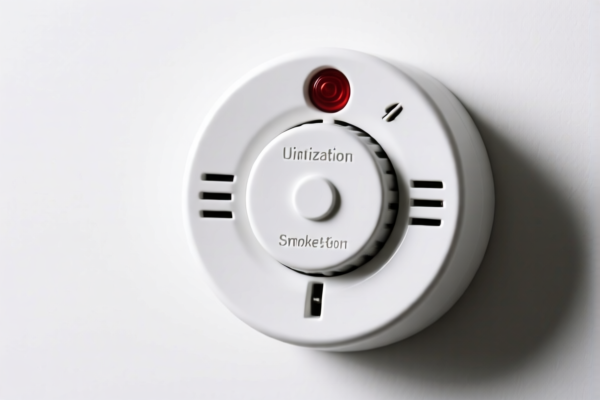
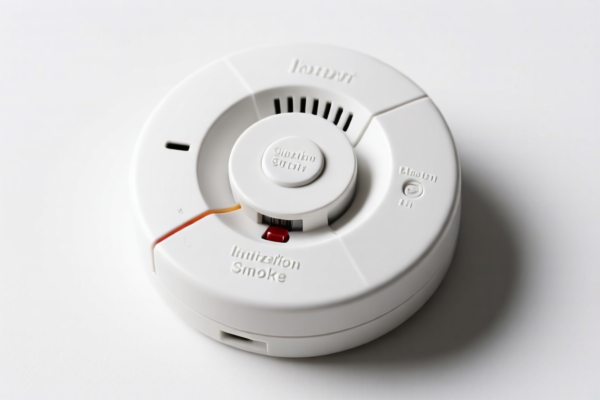
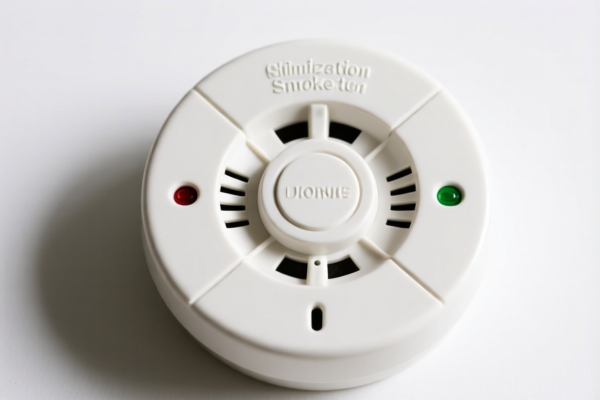
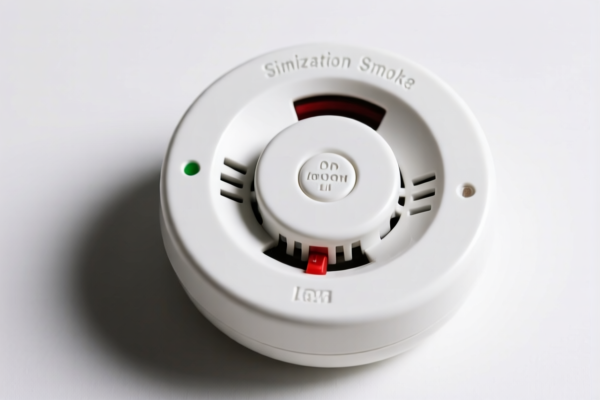
AI Analysis
🌫️ Insecticide Smoke (Inorganic Basis)
🌐 HS Code Reference & Customs Clearance Guide | 2026 Latest Tariff Analysis | Professional Clearance Strategy
📌 I. Product Definition & Classification: What is "Inorganic Insecticide Smoke"?
"Insecticide Smoke" typically refers to fumigant products (such as smoke bombs, fogging fluids, or coils) used to control pests through vaporization. When the active ingredient is Inorganic, the classification differs significantly from organic pesticides due to the chemical nature of the active substance.
In the context of US Customs data and the provided dataset, these products are classified based on whether they are declared as raw chemical salts (HS Chapter 28) or finished pesticide preparations (HS Chapter 38).
⚠️ Key Distinction Point:
- If declared as raw inorganic salts (e.g., specific chlorides, bromides, or peroxides) without formulation details → HS Code Group 28xxx
- If declared as a formulated pesticide product (ready-to-use, mixed with carriers, waxes, etc.) → HS Code Group 3808
📦 II. HS Code Classification Details (2026 Latest Tariff Authority Reference)
Based on the provided <DATA>, here are the 5 specific HS Codes for "Inorganic Insecticide Smoke":
| HS Code | Summary Description | Classification Logic | Tax Rate |
|---|---|---|---|
2842.90.90.50 |
Inorganic Insecticide: Fits the category of salts of inorganic acids or peroxides. | Classified as a chemical salt, not a formulated pesticide. | +10.0% |
2827.39.90.50 |
Inorganic Insecticide: Belongs to other chlorides/bromides/iodides inorganic salts. | Specific inorganic halide salt. | +10.0% |
2827.39.90.10 |
Inorganic Insecticide: Fits material attributes of inorganic chlorides, bromides, etc. | Specific inorganic halide salt (often distinct from .50 based on specific chemical composition). | +10.0% |
3808.91.30.00 |
Insecticide with Inorganic Content: Meets material and use classification definitions. | Formulated Product: Ready-to-use smoke/fogging agent containing inorganic actives. | +40.0% |
3808.99.70.00 |
Insecticide with Inorganic Content: Meets material and use classification requirements. | Formulated Product: Other pesticide preparations (inorganic base). | +40.0% |
🔍 Key Reminder:
- HS 28xxx Codes: Apply if the import is primarily the chemical raw material used to make the smoke, or if the product is legally defined as a salt.
- HS 3808 Codes: Apply if the product is a finished consumer/industrial good (e.g., a smoke bomb ready to be lit, or a fogging liquid in a canister).
- Warning: Using HS 28xxx for a finished formulated product may lead to misdeclaration, as HS 3808 is the specific heading for "Insecticides... put up in forms or packings for retail sale or as preparations or articles."
💰 III. 2026 Latest Tariff Rate Breakdown (Including Surtaxes & Policy Add-ons)
✅ Applicable Country: United States (US)
✅ Origin: China (CN)
✅ Effective Time: Ongoing (Section 301 & IEEPA Tariffs)
🎯 1. Raw Material / Salt Classification (HS Codes 2842.90.90.50, 2827.39.90.50, 2827.39.90.10)
| Item | Content |
|---|---|
| Base Tariff | Low/Zero (Typically 0-5% for chemical salts, not explicitly listed in data but implied by low total) |
| Additional Tariff (Sec 301) | 0.0% (Not applied to these specific chemical subheadings in this dataset) |
| 122 Clause Tariff (IEEPA) | +10.0% (Specific surcharge for Chinese origin inorganic compounds) |
| Total Tax Rate | +10.0% |
| Tax Calculation | CIF Value × 10% |
| Legal Basis Path | IEEPA:122 Clause → USITC:2842/2827 |
📌 Explanation:
- These codes benefit from a lower tariff burden (10%) because they are viewed as chemical intermediates/salts rather than finished agricultural/pest control products.
- Crucial: Ensure your commercial invoice describes the item as a "Chemical Salt" or "Inorganic Compound" rather than "Smoke Bomb" to align with this classification.
🎯 2. Formulated Pesticide Preparation (HS Codes 3808.91.30.00, 3808.99.70.00)
| Item | Content |
|---|---|
| Base Tariff | 5.0% (Standard ad valorem rate for pesticides) |
| Additional Tariff (Sec 301) | 25.0% (Section 301 Tariff List 4/China) |
| 122 Clause Tariff (IEEPA) | 10.0% (Additional surcharge) |
| Total Tax Rate | 40.0% |
| Tax Calculation | CIF Value × 40% |
| Legal Basis Path | USITC:3808 → USITC:Footnote 301 → IEEPA:122 |
📌 Explanation:
- This is the standard rate for finished pesticide products.
- The base rate (5%) + Section 301 (25%) + IEEPA (10%) = 40%.
- This rate is 4x higher than the salt classification. Misclassifying a formulated smoke product as a raw salt to get 10% is a high-risk audit trigger.
🛠️ IV. Customs Clearance Practical Advice (Battle-Tested Pitfall Guide)
✅ 1. Documentation Checklist (Non-negotiable)
| Document | Must Provide | Description |
|---|---|---|
| ✅ MSDS / SDS | ✔️ | Critical to prove if the product is a pure chemical or a mixture. For HS 28xx, SDS should highlight pure inorganic salts. For HS 38xx, it should show formulation. |
| ✅ Product Photos | ✔️ | Show packaging. If it looks like a consumer "smoke bomb," CBP will lean toward 3808. |
| ✅ Ingredients List | ✔️ | Exact percentage of active inorganic ingredient vs. carriers (wax, sawdust, etc.). |
| ✅ Commercial Invoice | ✔️ | Must match HS Code logic. • For 28xx: Use "Inorganic Chloride Salt for Pesticide Manufacturing" • For 38xx: Use "Formulated Inorganic Insecticide Smoke" |
| ✅ EPA Registration | ✔️ | High Priority. If you claim HS 3808, you usually need an EPA registration number. If you claim HS 28xx, you may argue it's an industrial intermediate, but CBP may still ask for EPA status. |
✅ 2. Declaration Strategy (Key Mantras)
🔥 "Salt is Salt, Smoke is Smoke. Don't Mix the Two!"
| Scenario | Correct Declaration | Wrong Approach |
|---|---|---|
| Pure Chemical Powder (to be mixed later) | 2842.90.90.50 / 2827.39...Desc: "Sodium Fluosilicate, Inorganic Salt" |
"Insecticide Powder" |
| Pre-made Smoke Bombs (ready to burn) | 3808.91.30.00 / 3808.99.70.00Desc: "Ready-to-use Inorganic Insecticide Smoke" |
"Chemical Salt" |
| Fogging Fluid (liquid concentrate) | 3808.99.70.00 |
2827.39... (Risk of penalty) |
✅ 3. Special Handling Tips
| Situation | Recommendation |
|---|---|
| Is it EPA Regulated? | If the product claims to kill insects in a consumer setting, CBP will expect EPA compliance. If you use HS 28xx to avoid 40% tax, you must ensure it is NOT marketed as a finished pesticide. It must be an industrial chemical. |
| Mixtures | If the smoke contains >10% inorganic active + 90% organic carrier (paraffin, etc.), HS 3808 is almost certainly correct. |
| Audit Risk | The difference between 10% and 40% is significant. CBP audits often focus on "Pesticides" misclassified as "Chemicals." Keep technical data sheets ready to prove the physical state and purpose. |
🌍 V. Global Market Comparison (2026 Update)
| Market | Recommended HS Code | Estimated Duty | Note |
|---|---|---|---|
| 🇺🇸 USA | 3808.91.30.00 (Formulated) |
40% | High tariff due to Sec 301 + IEEPA. |
| 🇺🇸 USA | 2842.90.90.50 (Salt) |
10% | Only if declared as raw material/intermediate. |
| 🇨🇳 China | 3808.91.30.00 |
~5-10% | Lower base rates, no Section 301. |
| 🇪🇺 EU | 3808.91.00 |
0-6.5% | No equivalent IEEPA 122 tariff. |
📌 Conclusion:
- USA is the most expensive market for insecticide imports due to the 40% ceiling.
- Strategic Choice: If your product is a raw chemical, use HS 28xx codes to save 30%. If it is a finished product, you must pay the 40% and ensure EPA compliance.
📌 VI. Common Mistakes & Pitfalls (Blood & Tears Lessons)
❌ Mistake 1: Declaring ready-to-use smoke bombs as "Chemical Salts" (HS 28xx) to pay only 10%.
👉 Consequence: CBP inspection reveals ready-to-use packaging. Penalty for misdeclaration + back taxes + possible seizure.
❌ Mistake 2: Not providing EPA Registration for HS 3808 imports.
👉 Consequence: Refusal of Entry by CBP/EPA. The shipment cannot be released without valid EPA control numbers.
❌ Mistake 3: Confusing "Inorganic" with "Organic."
👉 Consequence: If the active ingredient is Pyrethroids (organic), HS 3808 codes still apply, but the specific subheading might differ. Ensure the "Inorganic" claim is chemically accurate (e.g., Fluorides, Chlorides).
✅ Correct Practice:
For Smoke Bombs:
"Inorganic Insecticide Smoke Bombs, Ready-to-use, Contains [Specific Salt], EPA Reg. No. XXXXX, HS Code 3808.91.30.00"
🎯 VII. Conclusion: Precise Classification Saves 30%
🎯 Remember the Mantra:
🔹 "Salt = 10%, Smoke = 40%. Check the Form!"
🔹 "Finished Product Needs EPA; Raw Chemical Needs Purity."
🔹 "40% Tariff is real for formulated pesticides from China."
📌 Pro Tip:
If you are importing raw inorganic salts to manufacture smoke bombs in the US, use HS 28xx. You save 30% in duties.
If you are importing finished smoke bombs for direct sale, you must use HS 3808 and budget for 40% duty + EPA fees.
📣 Immediate Action:
📞 Verify the Physical State of your product.
📞 Check EPA Registration status for finished goods.
📞 Apply for a CBP Binding Ruling if the distinction between "Salt" and "Preparation" is ambiguous.
🚀 Clear customs smoothly, avoid penalties, and maximize your margin!
✨ Professional Customs Clearance Starts with Accurate Classification!
💼 Your duty cost is directly linked to your HS Code strategy!
Customer Reviews
About HS Code Classification
The Harmonized System (HS) is an internationally standardized nomenclature developed by the World Customs Organization (WCO) to classify traded products. Over 200 countries use the HS system as the basis for customs tariffs, trade statistics, and import/export regulations.
Each HS code follows a hierarchical structure:
- Chapter (2 digits) — Broad category of goods (e.g., Chapter 84: Machinery and Mechanical Appliances)
- Heading (4 digits) — More specific grouping within the chapter
- Subheading (6 digits) — Internationally standardized breakdown, used by all WCO member countries
- National subdivisions (8-10 digits) — Country-specific extensions for further classification, such as US HTSUS 10-digit codes
Correct HS code classification is essential for smooth customs clearance, accurate duty payment, and compliance with trade regulations. Misclassification can lead to customs delays, overpayment of duties, or penalties.
When importing from CN to US, the applicable tariff rates may include:
- Most-Favored-Nation (MFN) rate — The standard duty rate applied to WTO members
- General rate — Applied to countries without trade agreements
- Trade remedy duties — Additional tariffs such as Section 301 (anti-dumping), Section 232 (national security), or countervailing duties
The information provided on this page is for reference purposes only. For official classification, please consult with your local customs authority or a licensed customs broker.