Insect Net
CN → US| HS Code | Tariff Rate | Origin | Destination | Doc |
|---|---|---|---|---|
| 3926903300 | 16.5% | CN | US | Official Doc |
| 3926904000 | 12.8% | CN | US | Official Doc |
| 5608192010 | 40.0% | CN | US | Official Doc |
| 5608191020 | 43.5% | CN | US | Official Doc |
| 6310102010 | 17.5% | CN | US | Official Doc |
| 6310102020 | 10.0% | CN | US | Official Doc |
Product Images
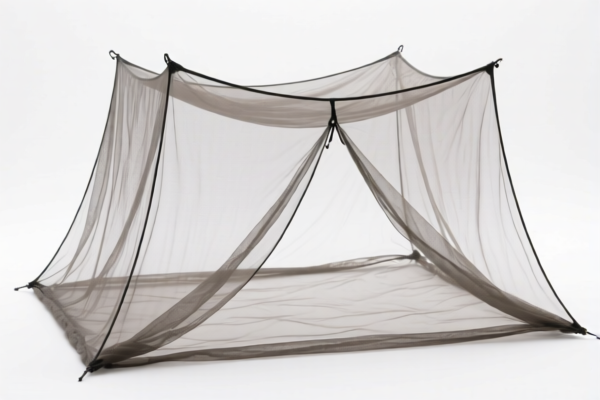


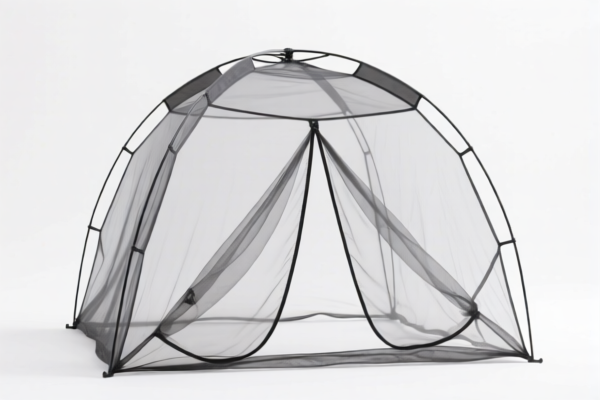
AI Analysis
🕸️ Insect Netting & Textile Nets (Textile Material)
🌐 HS Code Reference & Customs Clearance Guide | 2024-2026 Latest Tariff Analysis | Professional Clearance Strategy
📌 I. Product Definition & Classification: What Exactly is "Insect Net"?
In the context of international trade and the provided data, "Insect Net" refers to knotted netting, fishing nets, or other made-up nets primarily made of textile materials (such as nylon, polyester, or polypropylene).
It is crucial to distinguish between the material structure (netting) and the specific end-use (fishing vs. household/decorative vs. scrap).
⚠️ Key Classification Logic:
- If it is a functional net (fishing, bait bag, general netting) made of man-made fibers → Chapter 56 (5608).
- If it is scrap/worn out netting → Chapter 63 (6310).
- ⛔ Exclusion: It is NOT a plastic bead/spangle item (Ch 39) nor a plastic handbag (Ch 39).
📦 II. HS Code Classification Details (Based on Provided Data)
| HS Code | Product Description | Material/Type | Tax Rate (Total) | Key Identifier |
|---|---|---|---|---|
5608.19.20.10 |
Bait bags with draw string closures | Man-made textile nets | 0.0% | Specific use: Bait bags |
5608.19.10.20 |
Fish netting (Other) | Man-made textile nets | 0.0% | Specific use: Fishing |
6310.10.20.10 |
Scrap/Worn out Nets | Of Cotton | 7.5% | Condition: Used/Scrap |
6310.10.20.20 |
Scrap/Worn out Nets | Of Man-made Fibers | 7.5% | Condition: Used/Scrap |
3926.90.33.00 |
Handbags | Plastics/Imitation | 6.5% | ⛔ WARNING: Do NOT classify insect net as a handbag unless it is specifically a plastic fashion bag |
3926.90.40.00 |
Imitation Gemstones | Plastics | 0.0% | ⛔ WARNING: Irrelevant to nets |
🔍 Critical Clarification:
- The term "Insect Net" is ambiguous. If it is a new, functional net for fishing or bait, it falls under 5608.19.
- If it is discarded or worn-out netting (textile waste), it falls under 6310.10.
- Do not classify functional nets under Chapter 39 (Plastics) unless they are decorative beads/spangles, which is unlikely for functional "nets."
💰 III. Detailed Tariff Analysis (2024-2026)
✅ Applicable Country: USA (US)
✅ Origin: China (CN) (Assumed based on typical tariff structures in examples)
✅ Effective Time: Current Tariff Schedule
🎯 1. 5608.19.20.10 & 5608.19.10.20 — Functional Textile Nets
| Item | Content |
|---|---|
| Product | Bait Bags (...20.10) / Fish Netting (...10.20) |
| Material | Man-made textile materials (e.g., Nylon, Polyester) |
| Base Tariff | 0.0% |
| Additional Tariff (Section 301) | 0.0% (Not listed in provided data) |
| Total Tariff | 0.0% |
| Legal Basis | HTSUS Chapter 56 (Knotted netting; fishing nets) |
📌 Explanation:
- Zero Duty Advantage: Functional nets made of man-made fibers are generally duty-free under this specific subheading in the provided dataset.
- Scope: This applies to new nets. If the net is damaged or used as waste, it does not qualify for 0%.
🎯 2. 6310.10.20.10 & 6310.10.20.20 — Scrap/Used Textile Nets
| Item | Content |
|---|---|
| Product | Used/Worn out Rags, Scrap Twine, Cordage, Rope, or Cables |
| Material | Cotton (...10) or Man-made Fibers (...20) |
| Base Tariff | 0.0% |
| Additional Tariff | 7.5% |
| Total Tariff | 7.5% |
| Legal Basis | HTSUS Chapter 63 (Other made up articles; rags/scrap) |
📌 Explanation:
- Condition is Key: If your "Insect Net" is used, discarded, or worn out, it is classified as scrap/waste.
- 7.5% Penalty: Unlike new nets, scrap nets incur a 7.5% total tariff.
- Material Agnostic: Both cotton and man-made fiber scrap nets have the same 7.5% rate in this dataset.
🎯 3. 3926.90.33.00 — Plastics/Handbags (Misclassification Risk)
| Item | Content |
|---|---|
| Product | Handbags (Plastics/Imitation materials) |
| Tariff | 6.5% |
| Risk | High risk of misclassification. If you declare a functional insect net as a "plastic bag," customs may reject it for lacking proper utility proof, or assign the wrong code. |
⚠️ Warning:
- Do not use this code for functional mesh nets.
- This code is for fashion/accessory handbags made of plastic materials, not agricultural or fishing nets.
🛠️ IV. Customs Clearance Practical Advice
✅ 1. Essential Documentation Checklist
| Document | Required? | Purpose |
|---|---|---|
| Commercial Invoice | ✅ Yes | Must specify "Knotted Netting" or "Fishing Net," NOT just "Net" |
| Product Specification Sheet | ✅ Yes | Must state: Material (Nylon/Polyester/Cotton), Mesh Size, Knot Type |
| Declaration of Condition | ✅ Yes | Critical: Must declare if NEW (5608) or USED/SCRAP (6310) |
| HS Code Justification | ✅ Yes | Explain why it falls under 5608 (functional) vs. 6310 (waste) |
✅ 2. Classification Strategy & Pitfalls
| Scenario | Correct HS Code | Tax Rate | Why? |
|---|---|---|---|
| New Fishing/Bait Net (Man-made) | 5608.19.10.20 or 5608.19.20.10 |
0.0% | Functional netting, new condition |
| New Cotton Net | Not in Data | Check HTSUS | Data only lists man-made for 0% |
| Worn-out Fishing Net (Man-made) | 6310.10.20.20 |
7.5% | Scrap/waste textile material |
| Worn-out Cotton Net | 6310.10.20.10 |
7.5% | Scrap/waste textile material |
| Plastic Mesh Bag (Fashion) | 3926.90.33.00 |
6.5% | If it is a handbag, not a functional net |
🔥 Golden Rule:
"New = Net (5608), Used = Scrap (6310)"
Declaring a used net as new will lead to customs detention, fines, and reclassification penalties.
Declaring a new net as scrap will overpay tax (7.5% vs 0%).
✅ 3. Special Handling Tips
| Situation | Recommendation |
|---|---|
| Mixed Material Nets | If the net has both cotton and man-made parts, do not mix codes. Determine the essential character (usually the dominant material). |
| Insect Screens for Windows | If it is non-knotted (woven mesh), it may fall under Chapter 57 or 63, not 5608. Confirm with customs if it is "knotted netting" (5608) or "woven fabric" (6302/6310). |
| De Minimis (Section 321) | ❌ Not Eligible: Nets (5608/6310) are generally not eligible for the $800 de minimis exemption if classified as waste or specific textile nets. Verify current CBP rulings. |
🌍 V. Global Market Comparison (2024-2026)
| Market | Recommended HS Code (New Net) | Tariff (Approx.) | Notes |
|---|---|---|---|
| 🇺🇸 USA | 5608.19.20.10 / 5608.19.10.20 |
0.0% | Duty-free for man-made new nets |
| 🇨🇳 China | 5608.10.00.00 |
5-10% | General import duty for nets |
| 🇪🇺 EU | 5608.19.90 |
0-6.5% | Varies by specific net type |
| 🇦🇺 Australia | 5608.19.00 |
5% | Standard textile net rate |
📌 Conclusion:
- The US offers 0% duty for new man-made fishing/bait nets.
- Scrap nets incur a 7.5% surcharge in the US under the provided data.
- Accuracy in "Condition" (New vs. Used) is the most critical factor for cost savings.
📌 VI. Common Errors & Avoidance Guide
❌ Error 1: Declaring Scrap Nets as New Nets
👉 Consequence: Customs may classify as 6310 after inspection → Backdated 7.5% tax + Penalties.
❌ Error 2: Using 3926 (Plastics) for Textile Nets
👉 Consequence: Misclassification → 6.5% Tax instead of 0%, or seizure for incorrect HTS.
❌ Error 3: Vague Description ("Net")
👉 Consequence: Customs will assign the highest possible tax rate or hold shipment for clarification.
✅ Correct Description:
"Knotted Fishing Net, Man-made Polyester, Mesh Size 2cm, New Condition, for Commercial Fishing Use"
OR
"Used Worn-out Cotton Scrap Netting, Sorted, for Recycling"
🎯 VII. Conclusion: Professional Clearance, Cost Efficiency!
🎯 Remember:
🔹 "New Net = 0% (Man-made), Used Net = 7.5% (All Materials)"
🔹 "Material Matters: Cotton vs. Man-made defines Chapter 56 vs 63 for Waste"
🔹 "Don't confuse Plastic Bags (3926) with Textile Nets (5608/6310)"
📌 Pro Tip:
If you are exporting used/insect nets from the US, ensure they are properly sorted and labeled as "Scrap" to avoid import rejection in countries with strict waste import laws.
📣 Immediate Action:
📞 Confirm Material Composition: Is it Nylon/Polyester (Man-made) or Cotton?
📞 Confirm Condition: New or Used?
🚀 Select Correct HS Code:5608(New) or6310(Used) to minimize tax liability!
✨ Precision in Classification = Savings in Duties!
💼 Don't let vague descriptions cost you 7.5% on every shipment.
Customer Reviews
About HS Code Classification
The Harmonized System (HS) is an internationally standardized nomenclature developed by the World Customs Organization (WCO) to classify traded products. Over 200 countries use the HS system as the basis for customs tariffs, trade statistics, and import/export regulations.
Each HS code follows a hierarchical structure:
- Chapter (2 digits) — Broad category of goods (e.g., Chapter 84: Machinery and Mechanical Appliances)
- Heading (4 digits) — More specific grouping within the chapter
- Subheading (6 digits) — Internationally standardized breakdown, used by all WCO member countries
- National subdivisions (8-10 digits) — Country-specific extensions for further classification, such as US HTSUS 10-digit codes
Correct HS code classification is essential for smooth customs clearance, accurate duty payment, and compliance with trade regulations. Misclassification can lead to customs delays, overpayment of duties, or penalties.
When importing from CN to US, the applicable tariff rates may include:
- Most-Favored-Nation (MFN) rate — The standard duty rate applied to WTO members
- General rate — Applied to countries without trade agreements
- Trade remedy duties — Additional tariffs such as Section 301 (anti-dumping), Section 232 (national security), or countervailing duties
The information provided on this page is for reference purposes only. For official classification, please consult with your local customs authority or a licensed customs broker.