Insecticide (3808911500)
CN → US| HS Code | Tariff Rate | Origin | Destination | Doc |
|---|---|---|---|---|
| 3808911500 | 35.0% | CN | US | Official Doc |
| 3808911000 | 37.8% | CN | US | Official Doc |
Product Images
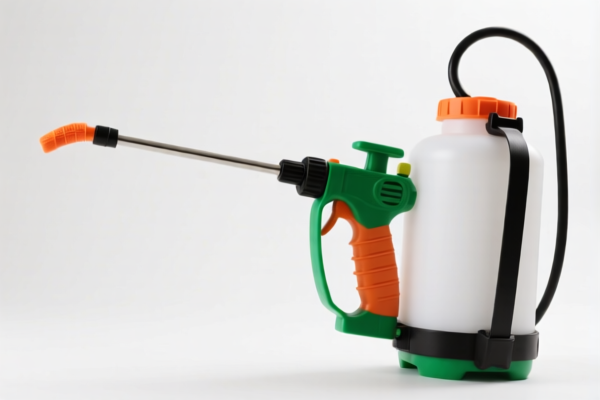
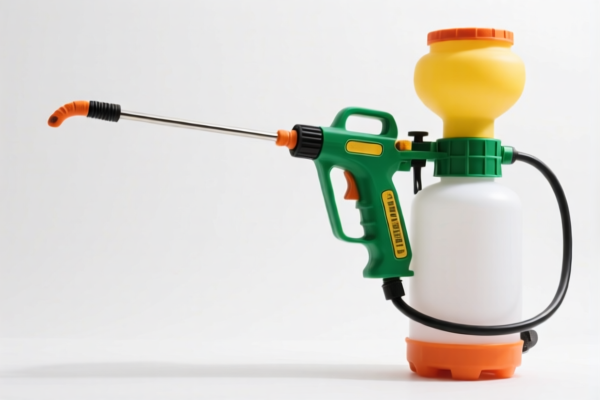
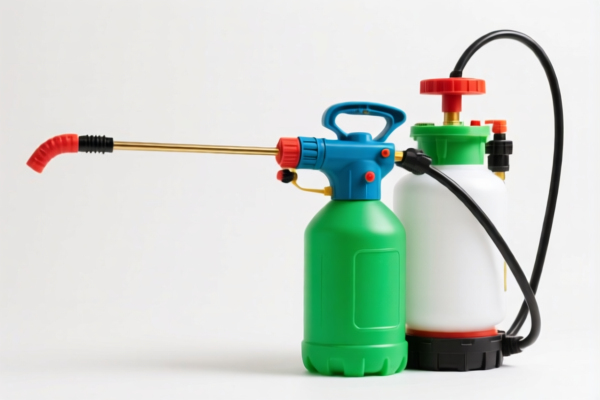
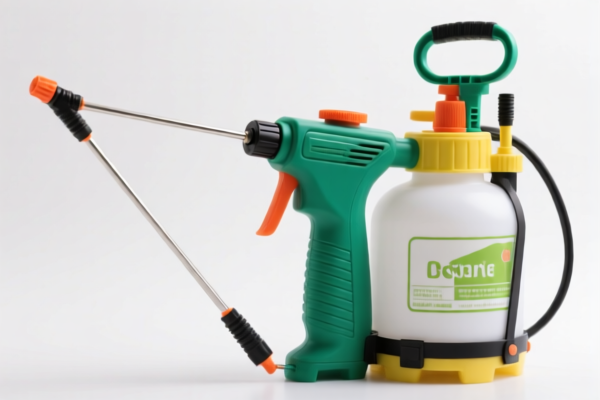
AI Analysis
🐜 Insecticides & Pest Control Products (HS Code 3808.91.15.00 & 3808.91.10.00)
🌐 HS Code Reference & Customs Clearance Guide | 2026 Latest Tariff Analysis | Professional Strategy for Agrochemicals
📌 I. Product Definition & Classification: What Exactly Are These Products?
Insecticides, rodenticides, fungicides, and related agricultural chemicals are critical for pest management. In international trade, Chapter 38 (Miscellaneous Chemical Products) specifically handles these items when they are put up in forms or packings for retail sale or as preparations/articles (e.g., treated bands, wicks, candles, flypapers).
These products are distinct from bulk raw chemicals (usually Chapter 29) because they are formulated for end-user application. The classification depends heavily on: 1. Active Ingredient Type: Is it a specific aromatic insecticide or a general fly-catching device? 2. Physical Form: Is it a mixture of active ingredients, or a mechanical trap like fly ribbons?
⚠️ Key Distinction Point:
- Chemical Mixtures: If the product is a liquid, powder, or solid preparation containing active insecticidal substances (especially modified aromatics), it falls under 3808.91.15.00.
- Mechanical/Physical Traps: If the product is simply a fly ribbon (sticky paper tape) without complex chemical formulations, it falls under 3808.91.10.00.
📦 II. HS Code Classification Details (2026 Latest Tariff Authority Cross-Reference)
| HS Code | Product Description | Application Scenario | Key Component |
|---|---|---|---|
3808.91.15.00 |
Insecticides: Other: Containing any aromatic or modified aromatic insecticide: Mixtures of N-[[(4-chlorophenyl)amino]-carbonyl]-2,6-difluorobenzamide and inert substances | Professional/Consumer insecticide sprays, powders, or granules containing specific aromatic chemical blends | ✅ Chemical Active Ingredient (Aromatic/Modified Aromatic) |
3808.91.10.00 |
Insecticides: Fly ribbons (ribbon fly catchers) | Sticky tape traps for home or agricultural use | ❌ Physical Trap (No complex chemical formulation) |
🔍 Important Note:
- 3808.91.15.00 is highly specific. It targets preparations containing "aromatic or modified aromatic insecticides." The example provided cites a specific chemical mixture (N-[[(4-chlorophenyl)amino]-carbonyl]-2,6-difluorobenzamide). If your product contains such aromatic compounds, this is the correct code. - 3808.91.10.00 is for Fly Ribbons. Do not misclassify chemical sprays as fly ribbons, or vice versa. The tax implication differs significantly due to US trade policies.
💰 III. 2026 Latest Tariff Rate Breakdown (Including Additional Taxes & Policy Surcharges)
✅ Applicable Country: United States (US)
✅ Origin: China (CN)
✅ Effective Time: 2025-11-10 onwards (including subsequent imports)
🎯 1. 3808.91.15.00 —— Insecticides (Containing Aromatic/Modified Aromatic Insecticides)
| Item | Content |
|---|---|
| Base Tariff Rate | 0% (Ad Valorem) |
| USITC Additional Tariff | +25% (Under USITC Footnote/Section 301 Measures) |
| Total Tax Rate | 25.0% |
| Tax Calculation | CIF Value × 25% |
| De Minimis Exemption? | ❌ No (Denied. Aggressive chemicals are subject to full taxation.) |
| Legal Basis Path | Section 301 → 3808.91.15.00 |
📌 Explanation:
- Although the base MFN tariff is 0%, this product is subject to a 25% additional tariff due to US trade actions against Chinese chemical products (Section 301). - Total Import Duty = 25%. This is a significant cost factor. - No IEEPA 10% surcharge is listed in the provided data for this specific code, but the 25% is already substantial. Ensure compliance with EPA regulations in addition to customs duties.
🎯 2. 3808.91.10.00 —— Fly Ribbons (Ribbon Fly Catchers)
| Item | Content |
|---|---|
| Base Tariff Rate | 0% (Ad Valorem) |
| USITC Additional Tariff | 0% (Exempt from Additional Surcharges) |
| Total Tax Rate | 0.0% |
| Tax Calculation | CIF Value × 0% |
| De Minimis Exemption? | ✅ Yes (Potentially eligible under Section 321 de minimis if value < $800, subject to CBP discretion on controlled goods) |
| Legal Basis Path | Section 301 Exclusion/Exemption → 3808.91.10.00 |
📌 Explanation:
- Fly ribbons are classified as simple physical traps. They are not subject to the 25% additional tariff that applies to chemical insecticides. - Total Import Duty = 0%. This makes fly ribbons a much more cost-effective option for export to the US compared to chemical insecticide preparations. - This highlights the critical importance of correct classification: Is it a chemical spray (25%) or a sticky tape (0%)?
🛠️ IV. Customs Clearance Practical Advice (Field Pitfall Avoidance Guide)
✅ 1. Required Documentation Checklist (None Can Be Missing)
| Document | Mandatory | Description |
|---|---|---|
| ✅ Product Specification Sheet | ✔️ | Must detail active ingredients, concentration, and physical form (liquid/powder/strip). |
| ✅ Safety Data Sheet (SDS) | ✔️ | Required for hazardous materials. Must classify correctly for DOT/Hazmat shipping. |
| ✅ EPA Registration Number | ✔️ | Critical. All insecticides sold in the US must be registered with the Environmental Protection Agency (EPA). Provide the EPA Registration Number on the label and invoice. |
| ✅ Certificate of Origin | ✔️ | To prove origin. If non-China origin, may apply for preferential rates (if any). |
| ✅ Commercial Invoice | ✔️ | Clearly state "Insecticide" or "Fly Ribbon" and the specific HS Code. Do not use generic terms like "Pest Control." |
| ✅ Labeling Compliance | ✔️ | US labels must comply with EPA and FDA regulations. Include precautionary statements, first aid instructions, and EPA Reg. No. |
✅ 2. Declaration Tips (Key Mnemonics)
🔥 “Chemical Mix = 25%, Sticky Tape = 0%: EPA Number is Key!”
| Scenario | Correct Declaration | Wrong Approach | Consequence |
|---|---|---|---|
| Insecticide Spray/Powder | 3808.91.15.00 with EPA Reg. No. |
Declare as "Cleaner" or "Fly Ribbon" | Heavy Penalty, Smuggling Charge, 25% Duty Back-Payment |
| Fly Ribbon/Trap | 3808.91.10.00 |
Declare as "Insecticide" | Unnecessary 25% Tax Payment |
| Bulk Chemical (Not Retail) | Not 3808 (Likely Ch. 29) | Declare as 3808 | Classification Error, Audit Trigger |
| Missing EPA Number | N/A | Submit without EPA Info | Customs Hold, Rejection by FDA/EPA |
✅ 3. Special Handling
| Situation | Handling Advice |
|---|---|
| OEM/White Label | Ensure the US Brand Owner has the EPA registration. The exporter must provide proof of authorization. |
| Hazmat Shipping | Insecticides are often hazardous materials. Use IATA/IMDG compliant packaging and declare correctly for air/sea freight. |
| Fly Ribbons with Insecticide Coating | If the ribbon is chemically treated with an active ingredient, it may be classified as 3808.91.15.00 (25% duty). If it is just a sticky surface without pesticide, it is 3808.91.10.00 (0% duty). Clarify with manufacturer! |
🌍 V. Global Major Market Clearance Comparison (2026 Latest)
| Country/Region | Recommended HS Code | Duty Rate | Certification Requirements | Notes |
|---|---|---|---|---|
| 🇺🇸 United States | 3808.91.15.00 (Chemical) / 3808.91.10.00 (Trap) |
25% (Chem) / 0% (Trap) | EPA Registration (Mandatory) + Labeling | High scrutiny on chemical composition. |
| 🇨🇳 China | 3808.91.15.00 |
~5-10% | EPA-like registration (China Ministry of Agriculture) | Import duties apply. |
| 🇪🇺 European Union | 3808.94 or 3808.93 |
Varies (0-6.5%) | EU Biocidal Products Regulation (BPR) | Strict BPR approval required. |
| 🇯🇵 Japan | 3808.91 |
~0-5% | Ministry of Agriculture (Nōkai) Registration | Phytosanitary certificate may be needed. |
📌 Conclusion:
- The US market is the most tariff-sensitive for chemical insecticides due to the 25% additional duty. - Fly ribbons offer a tariff advantage (0%) but require careful distinction from chemically treated traps. - EPA compliance is non-negotiable. No EPA number = No entry into the US.
📌 VI. Common Mistakes & Pitfall Guide (Blood & Tears Lessons)
❌ Mistake 1: Declaring a chemical insecticide spray as "Fly Ribbon" to avoid the 25% tax.
👉 Consequence: Customs audit reveals active ingredients. Back taxes (25%) + Penalties + Goods Seized.
❌ Mistake 2: Missing the EPA Registration Number on the label.
👉 Consequence: Goods held at port. FDA/EPA refusal entry. Costly demurrage fees.
❌ Mistake 3: Assuming "Fly Ribbon" is always 0% duty.
👉 Consequence: If the ribbon is impregnated with an aromatic insecticide, it should be 3808.91.15.00 (25%). Incorrect classification leads to duty underpayment.
❌ Mistake 4: Using generic descriptions like "Pest Control Stuff."
👉 Consequence: Customs will classify under the highest default rate or require detailed testing. Delays and uncertainty.
✅ Correct Approach:
"Insecticide Spray, 500ml, Contains [Active Ingredient Name], EPA Reg. No. XXXXXX-XX-XXXX, Model: XYZ"
OR
"Adhesive Fly Trap Strips, Non-Chemical, Pack of 10, HS Code: 3808.91.10.00"
🎯 VII. Conclusion: Precise Classification Saves Money!
🎯 Remember the Mantra:
🔹 "Chemical Spray = 25% Duty, Sticky Tape = 0% Duty."
🔹 "EPA Number on Label = Smooth Clearance."
🔹 "Classify Wrong = Fine & Seizure."
📌 Pro Tip:
- For chemical insecticides, start the EPA registration process 6-12 months before shipment.
- Consider supply chain optimization: If possible, shift product mix towards non-chemical traps (0% duty) or source from countries with favorable trade agreements (if applicable for other chapters, though 3808 is broadly tariffed).
- Always request the SDS and EPA Reg. No. from your supplier before booking cargo.
📣 Immediate Action:
📞 Consult with a US Customs Broker for Advance Ruling on product classification.
🚀 Ensure EPA Compliance before production.
💼 Your cargo is not just goods; it's regulated chemicals. Handle with care!
✨ Professional Customs Clearance Starts with Accurate Classification!
💼 Every percentage point of duty counts in the agrochemical trade!
Customer Reviews
About HS Code Classification
The Harmonized System (HS) is an internationally standardized nomenclature developed by the World Customs Organization (WCO) to classify traded products. Over 200 countries use the HS system as the basis for customs tariffs, trade statistics, and import/export regulations.
Each HS code follows a hierarchical structure:
- Chapter (2 digits) — Broad category of goods (e.g., Chapter 84: Machinery and Mechanical Appliances)
- Heading (4 digits) — More specific grouping within the chapter
- Subheading (6 digits) — Internationally standardized breakdown, used by all WCO member countries
- National subdivisions (8-10 digits) — Country-specific extensions for further classification, such as US HTSUS 10-digit codes
Correct HS code classification is essential for smooth customs clearance, accurate duty payment, and compliance with trade regulations. Misclassification can lead to customs delays, overpayment of duties, or penalties.
When importing from CN to US, the applicable tariff rates may include:
- Most-Favored-Nation (MFN) rate — The standard duty rate applied to WTO members
- General rate — Applied to countries without trade agreements
- Trade remedy duties — Additional tariffs such as Section 301 (anti-dumping), Section 232 (national security), or countervailing duties
The information provided on this page is for reference purposes only. For official classification, please consult with your local customs authority or a licensed customs broker.