Insecticide Tablet
CN → US| HS Code | Tariff Rate | Origin | Destination | Doc |
|---|---|---|---|---|
| 3801105090 | 35.0% | CN | US | Official Doc |
| 3808915001 | 40.0% | CN | US | Official Doc |
| 3808999501 | 40.0% | CN | US | Official Doc |
| 2904990400 | 40.5% | CN | US | Official Doc |
Product Images
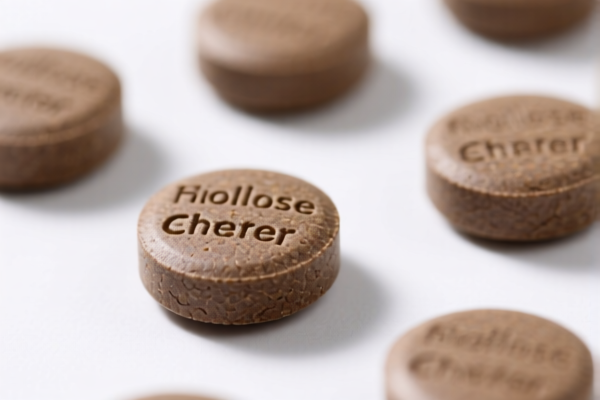
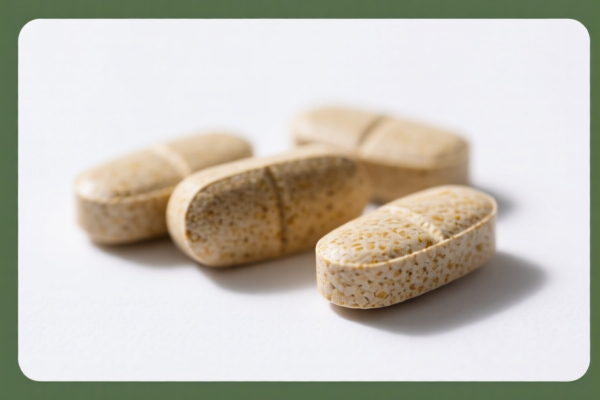


AI Analysis
🧪 Insecticide Tablet (Pesticide Tablets)
🌐 HS Code Reference & Customs Clearance Guide | 2026 Latest Tariff Breakdown | Professional Strategy for Chemical Imports
📌 I. Product Definition & Classification: What Exactly Is an "Insecticide Tablet"?
An Insecticide Tablet is a solid-form pesticide formulation designed for the control of insects. In international trade, its classification depends strictly on its chemical nature and physical form:
- Pure Chemical Substance (Active Ingredient): If the tablet consists of a single, defined chemical compound (even if compressed), it is classified under Chapter 29 (Organic Chemicals).
- Pesticide Formulation (Ready-to-Use): If the tablet is a mixture containing the active ingredient plus inert fillers, binders, or surfactants (i.e., a "制剂" or formulation), it is classified under Chapter 38 (Miscellaneous Chemical Products).
⚠️ Critical Distinction:
- If it is a pure chemical (e.g., pure Pyrethroid powder compressed into a tablet) → Chapter 29.
- If it is a mixture/formulation (e.g., Boric Acid tablets, Fumigant tablets with carriers) → Chapter 38.
📦 II. HS Code Classification Details (2026 Latest Tariff Authority)
Based on the provided data, here are the four possible classifications for Insecticide Tablets, ranging from pure chemicals to complex formulations.
| HS Code | Product Description | Applicable Scenario | Key Differentiator |
|---|---|---|---|
2904.99.04.00 |
Nitro-derivative Pesticides (Pure Chemical) | Pure chemical substance with nitro group properties (e.g., certain nitro-pyrethroids or specific organic derivatives) | ✅ Pure Chemical (Chapter 29). Defined by chemical structure. |
3808.91.50.01 |
Other Pesticides, Fungicides, etc. (Formulation) | Liquid or solid formulations (tablets, powders) that do not fall under specific headings like rodenticides. | ✅ Formulation (Chapter 38). Mixture of active + inert ingredients. |
3808.99.95.01 |
Other Pesticides, Fungicides, etc. (Formulation) | General solid pesticide formulations (tablets, granules) where no specific sub-heading applies. | ✅ Formulation (Chapter 38). General "catch-all" for pesticide tablets. |
3801.10.50.90 |
Colloidal Graphite; Pencil Leads; etc. | Misclassification Risk. Only applies if the tablet is primarily colloidal graphite or a carbon-based non-pesticide product. | ❌ Unlikely for Pesticides. Only if "Insecticide" is a secondary claim and the main character is carbon/graphite. |
🔍 Key Insight:
- Most standard insecticide tablets (like cockroach bait tablets, flea tablets) are Formulations and fall under 3808.
- Only pure active ingredients in tablet form fall under 2904.
- 3801 is generally incorrect for typical insecticides unless they are carbon-based fumigants with specific chemical traits.
💰 III. 2026 Latest Tariff Rate Breakdown (Including Surtaxes & Policy Add-ons)
✅ Applicable Country: United States (US)
✅ Origin: China (CN)
✅ Effective Date: Post-2025 Policy Changes (Section 301 & IEEPA)
🎯 1. 3801.10.50.90 – Colloidal/Carbon-Based Products (If misclassified or niche)
⚠️ Warning: Only apply if the product is primarily Colloidal Graphite or similar carbon material, not a standard biological/chemical insecticide.
| Item | Content |
|---|---|
| Base Tariff | 0.0% |
| Section 301 Surtax | +25.0% |
| Section 122 Tariff | +10.0% |
| Total Tax Rate | 35.0% |
| Tax Detail | Base (0%) + 301 (25%) + 122 (10%) |
| De Minimis Exemption | ❌ No (High value, regulated chemical) |
📌 Explanation:
- This rate is lower than the 40% rates for standard pesticides but only applies if the product is NOT primarily a pesticidal formulation but rather a chemical substance like colloidal graphite.
- Risk: Misclassifying a pesticide here could lead to customs seizure.
🎯 2. 3808.91.50.01 & 3808.99.95.01 – Pesticide Formulations (Most Common for Tablets)
✅ Recommended for: Standard insecticide tablets (e.g., Boric acid baits, Pyrethroid tablets, Fumigant tablets).
| Item | Content |
|---|---|
| Base Tariff | 5.0% |
| Section 301 Surtax | +25.0% |
| Section 122 Tariff | +10.0% |
| Total Tax Rate | 40.0% |
| Tax Detail | Base (5%) + 301 (25%) + 122 (10%) |
| De Minimis Exemption | ❌ No |
| Legal Basis Path | USITC:3808.91.50.01 → FOOTNOTE:301 → IEEPA:122 |
📌 Difference Between 3808.91 and 3808.99:
- 3808.91: Often used for specific pesticide formulations like rodenticides or insecticides with specific chemical bases.
- 3808.99: A broader category for "Other" pesticides.
- Tax Impact: Identical (40%). Choose the sub-code based on the specific chemical composition or regulatory definition provided by your manufacturer.
🎯 3. 2904.99.04.00 – Nitro-derivative Pesticides (Pure Chemicals)
✅ Recommended for: Pure active ingredients in tablet form, specifically those with nitro-group chemical structures.
| Item | Content |
|---|---|
| Base Tariff | 5.5% |
| Section 301 Surtax | +25.0% |
| Section 122 Tariff | +10.0% |
| Total Tax Rate | 40.5% |
| Tax Detail | Base (5.5%) + 301 (25%) + 122 (10%) |
| De Minimis Exemption | ❌ No |
| Legal Basis Path | USITC:2904.99.04.00 → FOOTNOTE:301 → IEEPA:122 |
📌 Explanation:
- Slightly higher (40.5%) than standard formulations (40%) due to a higher base tariff (5.5% vs 5.0%).
- Only apply if the product is a pure chemical (Chapter 29) and specifically a nitro-derivative.
- Caution: Do not use this for mixed formulations.
🛠️ IV. Customs Clearance Practical Advice (Avoid Pitfalls)
✅ 1. Required Documentation Checklist (Non-Negotiable)
| Document | Mandatory? | Notes |
|---|---|---|
| ✅ SDS (Safety Data Sheet) | ✔️ | Must clearly state: Active Ingredient, Concentration, Chemical Formula, HS Code, Pesticide Registration Number. |
| ✅ EPA Registration Number | ✔️ | Critical for US Import. All pesticides sold/distributed in the US must have an EPA registration number on the label. |
| ✅ Certificate of Analysis (COA) | ✔️ | Proves chemical purity and composition. |
| ✅ Commercial Invoice | ✔️ | Must clearly state: "Insecticide Tablet", "HS Code", "Country of Origin", "EPA Reg No.". |
| ✅ Bill of Lading | ✔️ | Accurate description of goods. |
| ✅ Import License (if required) | ✔️ | Check if specific EPA permits are needed for the active ingredient. |
✅ 2. Declaration Tips (Key Mnemonics)
🔥 "Active Ingredient Dictates Chapter, EPA Reg Number Passes US Customs!"
| Scenario | Correct HS Code | Incorrect Code | Consequence |
|---|---|---|---|
| Pure Chemical Tablet (e.g., 99% pure Pyrethroid) | 2904.99.04.00 |
3808.99.95.01 |
Potential fine for misclassification; 40.5% vs 40% tax diff. |
| Mixed Formulation Tablet (e.g., 2% active + fillers) | 3808.91.50.01 or 3808.99.95.01 |
2904.99.04.00 |
High Risk: Customs may reject as "unregistered pesticide". |
| Carbon-based Fumigant Tablet (e.g., Graphite-based) | 3801.10.50.90 |
3808.99.95.01 |
Lower tax (35%), but requires proof of primary chemical character. |
📌 Critical Note:
- Do NOT use the "De Minimis" (Section 321) exemption for pesticides. EPA and CBP closely monitor these entries.
- Labeling: Every package must have the EPA Registration Number and Establishment Number. Missing labels = Refusal of Entry.
✅ 3. Special Cases
| Case | Handling Advice |
|---|---|
| OEM/White Label | Ensure the EPA Number belongs to the importer or manufacturer. Provide authorization letter. |
| Samples | Still require EPA registration unless exempted (rare for commercial pesticides). Declare accurately. |
| Mixed Containers | If container has both pesticides and non-pesticides, split declaration. Do not lump together. |
🌍 V. Global Market Comparison (2026)
| Country/Region | Recommended HS Code | Tariff (China Origin) | Key Certification | Notes |
|---|---|---|---|---|
| 🇺🇸 USA | 3808.99.95.01 |
40.0% | EPA Registration | Strict labeling; High surtaxes. |
| 🇨🇳 China | 3808.99.95.01 |
5.0% | Pesticide Registration | No surtaxes. Domestic market access. |
| 🇪🇺 EU | 3808.94.00 |
0% - 6% | EU Pesticides Regulation | Requires EU approval for active substance. |
| 🇦🇺 Australia | 3808.94.00 |
5.0% | APVMA Registration | Strict chemical safety standards. |
| 🇯🇵 Japan | 3808.94.00 |
0% - 10% | Ministry of Agriculture Approval | MRL (Maximum Residue Limits) compliance. |
📌 Conclusion:
- USA is the most complex market due to EPA regulations and high tariffs (40%).
- EU and Japan require pre-market approval of the active ingredient, which takes time.
- China has the lowest entry barrier for domestic sales but strict production standards.
📌 VI. Common Mistakes & Pitfalls (Lessons Learned)
❌ Mistake 1: Classifying a Formulation as a Pure Chemical (2904)
👉 Consequence: Underpayment of duties (if base tax differs) + EPA Violation if not registered correctly.
👉 Fix: Check SDS. If it’s a mixture, use 3808.
❌ Mistake 2: Using 3801.10.50.90 for regular insecticides
👉 Consequence: Customs audit reveals misclassification. Penalty + Back taxes.
👉 Fix: Only use 3801 for graphite/carbon-based products.
❌ Mistake 3: Missing EPA Number on Label
👉 Consequence: Automatic Refusal of Entry by CBP. Goods destroyed or re-exported.
👉 Fix: Ensure all packaging has EPA Reg No. and Est. No.
❌ Mistake 4: Ignoring Section 122 Tariffs
👉 Consequence: Underpaying 10% additional duty.
👉 Fix: Always calculate Base + 301 (25%) + 122 (10%).
✅ Correct Declaration Example:
"Insecticide Tablet, For Cockroach Control, Contains 0.5% Fipronil, EPA Reg. No. 12345-67, HS Code: 3808.99.95.01, Origin: China"
🎯 VII. Conclusion: Professional Clearance, Save Time & Money!
🎯 Remember:
🔹 "Formulation = 3808, Pure = 2904, EPA Number = Must Have!"
🔹 "Total Tax = Base + 25% (301) + 10% (122). Don’t guess!"
🔹 "Misclassification = Delay + Penalty + Destruction!"
📌 Pro Tip:
If your insecticide tablets contain new active ingredients, ensure they are EPA-registered before shipping. For China-origin goods, budget for 40% total duty.
Consider Advance Ruling from CBP if the chemical composition is complex.
📣 Immediate Action:
📞 Contact a licensed customs broker.
📄 Prepare SDS, COA, and EPA Registration Proof.
🚀 Ensure your packaging is 100% compliant with US EPA labeling laws.
✨ Professional Customs Clearance Starts with Accurate Classification!
💼 Your Profit Margin Depends on Correct HS Codes and Tariff Calculations!
Customer Reviews
About HS Code Classification
The Harmonized System (HS) is an internationally standardized nomenclature developed by the World Customs Organization (WCO) to classify traded products. Over 200 countries use the HS system as the basis for customs tariffs, trade statistics, and import/export regulations.
Each HS code follows a hierarchical structure:
- Chapter (2 digits) — Broad category of goods (e.g., Chapter 84: Machinery and Mechanical Appliances)
- Heading (4 digits) — More specific grouping within the chapter
- Subheading (6 digits) — Internationally standardized breakdown, used by all WCO member countries
- National subdivisions (8-10 digits) — Country-specific extensions for further classification, such as US HTSUS 10-digit codes
Correct HS code classification is essential for smooth customs clearance, accurate duty payment, and compliance with trade regulations. Misclassification can lead to customs delays, overpayment of duties, or penalties.
When importing from CN to US, the applicable tariff rates may include:
- Most-Favored-Nation (MFN) rate — The standard duty rate applied to WTO members
- General rate — Applied to countries without trade agreements
- Trade remedy duties — Additional tariffs such as Section 301 (anti-dumping), Section 232 (national security), or countervailing duties
The information provided on this page is for reference purposes only. For official classification, please consult with your local customs authority or a licensed customs broker.