Installation Accessories
CN → US| HS Code | Tariff Rate | Origin | Destination | Doc |
|---|---|---|---|---|
| 8205598000 | 38.7% | CN | US | Official Doc |
| 8467891000 | 17.5% | CN | US | Official Doc |
| 8205595560 | 40.3% | CN | US | Official Doc |
| 8467990190 | 35.0% | CN | US | Official Doc |
| 8543906800 | 35.0% | CN | US | Official Doc |
Product Images
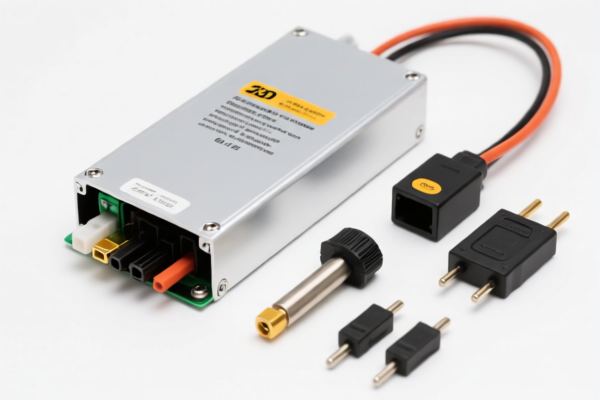
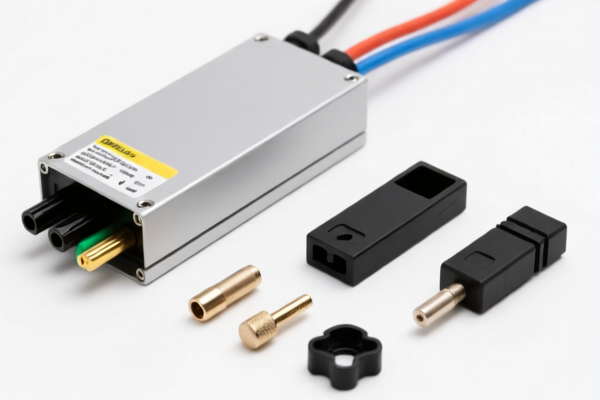


AI Analysis
🛠️ Installation Accessories (Hand Tools & Electrical Components)
🌐 HS Code Reference & Customs Clearance Guide | 2026 Latest Tariff Analysis | Professional-Level Clearance Strategy
📌 Part 1: Product Definition and Classification: Do You Really Understand "Installation Accessories"?
"Installation Accessories" is a broad category that typically encompasses hardware used for mounting, securing, or repairing equipment. In international trade, these goods are primarily split into two distinct functional categories based on their material and mechanical nature:
- Manual Hand Tools (Metal): Physical tools used for tightening, cutting, or shaping (e.g., wrenches, screwdrivers, pliers). These usually fall under Chapter 82.
- Parts/Components of Power Tools or Electrical Equipment: Non-mechanical parts, electrical connectors, or accessories for powered devices. These usually fall under Chapter 84 (Machinery) or Chapter 85 (Electrical Machinery).
⚠️ Key Distinction Point:
- If the item is a metal manual tool used for installation (like a wrench or plier) → It is classified as a Hand Tool (Chapter 82).
- If the item is a mechanical part for a power tool or an electrical component → It is classified as a Part of Machinery/Electrical Goods (Chapter 84/85).
📦 Part 2: HS Code Classification Details (2026 Latest Tariff Authoritative Comparison)
Based on the provided data, here are the specific classifications and their corresponding tax implications:
| HS Code | Product Description & Logic | Applicable Scenario | Total Tax Rate |
|---|---|---|---|
8205.59.80.00 |
Other Hand Tools (Metal) | Metal manual tools for installation (e.g., wrenches, pliers) where no specific material conflict exists. Classified as a "catch-all" for hand tools. | 38.7% |
8467.89.10.00 |
Parts of Power Tools / Other Tools | Accessories or parts for power tools where no material/shape conflict is found. Based on the "catch-all" logic for tool parts. | 17.5% |
8205.59.55.60 |
Iron or Steel Hand Tools | Installation tools inferred to be made of iron or steel, matching the specific sub-category for non-specified metal hand tools. | 40.3% |
8467.99.01.90 |
Parts of Hand-Held Tools | Components for hand-held power tools. No material or use conflict detected; fits within handheld tool parts category. | 35.0% |
8543.90.68.00 |
Parts of Electrical Apparatus | Computer accessories or electrical installation components. Classified as printed circuit assemblies or other parts with no material conflict. | 35.0% |
🔍 Key Reminder:
- "Hand Tools" (Chapter 82) generally incur higher tariffs (38.7% - 40.3%) due to the specific metal content and manual tool classification.
- "Parts of Power Tools" (Chapter 84) have a lower base tariff but still face significant surcharges.
- "Electrical Parts" (Chapter 85) also face high surcharges despite a 0% base rate.
💰 Part 3: 2026 Latest Tariff Rate Breakdown (Including Surcharges & Policy Add-ons)
✅ Applicable Country: United States (US)
✅ Origin: China (CN)
✅ Effective Time: November 10, 2025 (and subsequent imports)
🎯 1. 8205.59.55.60 —— Iron/Steel Hand Tools (Highest Tax Bracket)
| Item | Detail |
|---|---|
| Base Tariff | 5.3% (ad valorem) |
| Section 301 Surcharge | +25.0% (Based on USITC Footnote 9903.88.01 / Section 301) |
| IEEPA Surcharge | +10.0% (Against China/HK products, effective Nov 10, 2025) |
| Total Effective Rate | 40.3% |
| Tax Calculation | CIF Value × 40.3% |
| De Minimis Eligibility | ❌ Not Eligible (deny_de_minimis applies) |
| Legal Basis Path | IEEPA:9903.01.25 → IEEPA:9903.01.24 → USITC:8205.59.55.60 → FOOTNOTE:9903.88.01 |
📌 Explanation:
- This is the highest cost scenario for hand tools.
- The 25% is a Section 301 tariff; the 10% is the new IEEPA tariff.
- Warning: Do not misclassify manual tools as "parts" to avoid this, as customs may penalize for incorrect classification.
🎯 2. 8205.59.80.00 —— Other Metal Hand Tools (General Catch-All)
| Item | Detail |
|---|---|
| Base Tariff | 3.7% (ad valorem) |
| Section 301 Surcharge | +25.0% |
| IEEPA Surcharge | +10.0% |
| Total Effective Rate | 38.7% |
| Tax Calculation | CIF Value × 38.7% |
| De Minimis Eligibility | ❌ Not Eligible |
| Legal Basis Path | Similar to above, based on general hand tool provisions. |
📌 Explanation:
- Slightly lower than the iron/steel specific code due to a lower base rate (3.7% vs 5.3%).
- Still a very high tax burden. Suitable for generic metal tools not specifically defined as iron/steel in other subsections.
🎯 3. 8467.99.01.90 —— Parts of Hand-Held Power Tools
| Item | Detail |
|---|---|
| Base Tariff | 0.0% |
| Section 301 Surcharge | +25.0% |
| IEEPA Surcharge | +10.0% |
| Total Effective Rate | 35.0% |
| Tax Calculation | CIF Value × 35.0% |
| De Minimis Eligibility | ❌ Not Eligible |
| Legal Basis Path | IEEPA:9903.01.24 → USITC:8467.99.01.90 |
📌 Explanation:
- Lower total rate compared to manual tools because the base tariff is 0%.
- Applicable if the "installation accessory" is a part/component of a power tool (e.g., a drill bit holder, battery adapter, or mechanical part), rather than a standalone manual tool.
🎯 4. 8467.89.10.00 —— Other Power Tool Parts (Lowest Tax Bracket)
| Item | Detail |
|---|---|
| Base Tariff | 0.0% |
| Section 301 Surcharge | +7.5% |
| IEEPA Surcharge | +10.0% |
| Total Effective Rate | 17.5% |
| Tax Calculation | CIF Value × 17.5% |
| De Minimis Eligibility | ❌ Not Eligible |
| Legal Basis Path | IEEPA:9903.01.24 → USITC:8467.89.10.00 |
📌 Explanation:
- The most cost-effective option among the listed codes.
- Applicable to specific "other" tool parts where the Section 301 surcharge is only 7.5% instead of 25%.
- Critical: This requires the item to strictly fit the "Other tools" definition under Chapter 84, excluding general hand tools. Misclassification here is risky.
🎯 5. 8543.90.68.00 —— Electrical/Computer Accessories
| Item | Detail |
|---|---|
| Base Tariff | 0.0% |
| Section 301 Surcharge | +25.0% |
| IEEPA Surcharge | +10.0% |
| Total Effective Rate | 35.0% |
| Tax Calculation | CIF Value × 35.0% |
| De Minimis Eligibility | ❌ Not Eligible |
| Legal Basis Path | IEEPA:9903.01.24 → USITC:8543.90.68.00 |
📌 Explanation:
- If the "installation accessory" is an electronic component (e.g., a control board, connector, or computer accessory), it falls under Chapter 85.
- While the base rate is 0%, the 25% + 10% surcharge makes it expensive. However, it is distinct from mechanical tools.
🛠️ Part 4: Customs Clearance Practical Advice (Actionable Pitfall Avoidance)
✅ 1. Document Checklist (Must-Haves)
| Document | Required | Explanation |
|---|---|---|
| ✅ Product Spec Sheet | ✔️ | Must detail: Material (Metal/Plastic/Electronic), Function (Manual/Part/Component), and Usage. |
| ✅ Photos (Clear) | ✔️ | Show the item, labeling, and any brand/model numbers. Distinguish between a "tool" and a "part." |
| ✅ Composition Statement | ✔️ | Explicitly state if it is "Manual Hand Tool" or "Part of Power Tool." |
| ✅ Commercial Invoice | ✔️ | Description must match HS Code logic (e.g., "Iron Wrench" vs. "Drill Bit Holder"). |
| ✅ Packing List | ✔️ | Ensure quantities and weights match the invoice. |
✅ 2. Declaration Tips (Key Mantras)
🔥 "Hand Tools High Tax, Parts Lower Tax, Be Specific to Save!"
| Scenario | Correct Declaration | Common Error |
|---|---|---|
| Manual Wrench/Plumber's Tool | 8205.59.80.00 or 8205.59.55.60 |
Misdeclaring as "Tool Part" → 35% vs 40% (Risk of penalty) |
| Drill Bit Holder/Power Tool Part | 8467.99.01.90 |
Misdeclaring as "Hand Tool" → 35% vs 40% |
| Specific Low-Surcharge Part | 8467.89.10.00 |
Misdeclaring as General Hand Tool → 17.5% vs 38.7% |
| Electronic Connector/Board | 8543.90.68.00 |
Misdeclaring as Mechanical Part → 35% vs 35% (Similar, but logic differs) |
✅ 3. Special Handling Advice
| Situation | Recommendation |
|---|---|
| Ambiguous Items | If the item is a "tool" but looks like a "part," provide a technical diagram showing it is not a component of another machine. |
| Mixed Shipments | Do not mix Hand Tools and Electrical Parts in one HS Code. Declare separately to avoid customs scrutiny. |
| OEM/Custom Parts | Provide a part number cross-reference and a letter of guarantee that the item is exclusively for use with specific machinery. |
| Material Verification | If claiming 8205 (Metal), ensure the item is indeed Iron/Steel. If it's plastic, it may fall under Chapter 39, which has different tariffs. |
🌍 Part 5: Global Market Comparison (2026 Outlook)
| Country/Region | Recommended HS Code | Effective Tax (China Origin) | Certification | Notes |
|---|---|---|---|---|
| 🇺🇸 USA | 8205.59.80.00 |
38.7% | None specific | High tariffs due to Section 301 + IEEPA. |
| 🇨🇳 China | 8205.59.80.00 |
~5-10% | None | Low base tariff, no surcharges. |
| 🇪🇺 EU | 8205.59.00 |
4-6% | CE (if electrical) | Lower tariffs, no Section 301. |
| 🇦🇺 Australia | 8205.59.00 |
5% | RCM (if electrical) | Competitive market. |
📌 Conclusion:
- The US market is the most expensive for these items due to layered tariffs.
- Cost Optimization: If possible, classify items correctly under8467.89.10.00(17.5%) if they are indeed parts of power tools, as this offers the lowest tax burden.
- Risk: Incorrectly downgrading a hand tool to a "part" to save tax can lead to seizure, fines, and audit trails.
📌 Part 6: Common Mistakes & Pitfall Guide (Lessons Learned)
❌ Mistake 1: Calling a "Manual Wrench" a "Tool Part"
👉 Consequence: Customs may reclassify it to 8205.59.xxxx → Tax jumps from 17.5% to 38.7%.
❌ Mistake 2: Not specifying material for 8205.59.55.60
👉 Consequence: If it’s not Iron/Steel, it may be misclassified → Penalties for false declaration.
❌ Mistake 3: Ignoring IEEPA 10% Surcharge
👉 Consequence: Budgeting only for Section 301 (25%) → Unexpected 10% cost increase on all shipments.
❌ Mistake 4: Mixing Electronic and Mechanical Parts
👉 Consequence: Customs may delay shipment to separate lines → Demurrage charges.
✅ Correct Approach:
"Installation Tool, Manual, Steel, Model XYZ, For HVAC Use" →
8205.59.55.60
"Power Drill Chuck, Model ABC" →8467.99.01.90or8467.89.10.00
🎯 Part 7: Conclusion: Professional Classification Saves Money!
🎯 Remember the Key Takeaways:
🔹 "Manual Tools = High Tax (~39-40%)"
🔹 "Power Tool Parts = Lower Tax (17.5-35%)"
🔹 "IEEPA 10% is Mandatory for All China-Origin Goods"
🔹 "De Minimis (800 USD) DOES NOT Apply!"
📌 Pro Tip:
If your "Installation Accessories" are electrical components, ensure they are clearly defined as such. If they are mechanical, decide if they are "Tools" (Chapter 82) or "Parts" (Chapter 84).
Always apply for a Pre-Ruling (ISF/Entry Summary) if the classification is ambiguous to avoid post-entry audits.
📣 Immediate Action:
📞 Consult a Licensed Customs Broker
📄 Provide Detailed Product Specs (Material & Function)
🚀 Calculate Landed Cost including 35-40% Tariffs
Ensure Smooth Clearance and Maximize Profit Margins!
✨ Professional Classification Starts with Precision!
💼 Every Dollar of Tariff Must Be Justified and Minimized Legally!
Customer Reviews
About HS Code Classification
The Harmonized System (HS) is an internationally standardized nomenclature developed by the World Customs Organization (WCO) to classify traded products. Over 200 countries use the HS system as the basis for customs tariffs, trade statistics, and import/export regulations.
Each HS code follows a hierarchical structure:
- Chapter (2 digits) — Broad category of goods (e.g., Chapter 84: Machinery and Mechanical Appliances)
- Heading (4 digits) — More specific grouping within the chapter
- Subheading (6 digits) — Internationally standardized breakdown, used by all WCO member countries
- National subdivisions (8-10 digits) — Country-specific extensions for further classification, such as US HTSUS 10-digit codes
Correct HS code classification is essential for smooth customs clearance, accurate duty payment, and compliance with trade regulations. Misclassification can lead to customs delays, overpayment of duties, or penalties.
When importing from CN to US, the applicable tariff rates may include:
- Most-Favored-Nation (MFN) rate — The standard duty rate applied to WTO members
- General rate — Applied to countries without trade agreements
- Trade remedy duties — Additional tariffs such as Section 301 (anti-dumping), Section 232 (national security), or countervailing duties
The information provided on this page is for reference purposes only. For official classification, please consult with your local customs authority or a licensed customs broker.