Instant Noodle Bowl
CN → US| HS Code | Tariff Rate | Origin | Destination | Doc |
|---|---|---|---|---|
| 6912004400 | 20.0% | CN | US | Official Doc |
| 6911108010 | 38.3% | CN | US | Official Doc |
| 6911104500 | 24.0% | CN | US | Official Doc |
| 3924102000 | 24.0% | CN | US | Official Doc |
| 3924104000 | 13.4% | CN | US | Official Doc |
| 6912004810 | 19.8% | CN | US | Official Doc |
Product Images
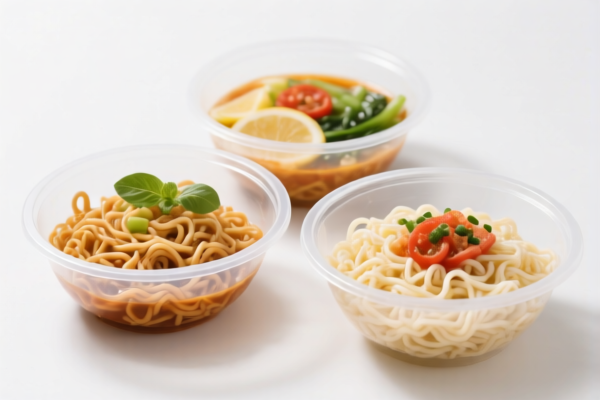
AI Analysis
🍜 Instant Noodle Bowl: HS Code Classification & Tariff Deep Dive (US Market)
🌐 HS Code Reference & Customs Clearance Guide | 2026 Latest Tariff Analysis | Professional Entry Strategy
📌 I. Product Definition & Classification: What Exactly is an "Instant Noodle Bowl"?
An Instant Noodle Bowl is a single-serving container designed specifically for holding and consuming instant noodles. In international trade, it is classified based on its material composition. The two primary material categories are Ceramic/Porcelain and Plastic. Misclassification between these materials leads to significantly different tariff rates.
⚠️ Key Distinction Point:
- Ceramic/Porcelain: Rigid, fired clay products. Often regulated under Chapter 69.
- Plastic: Polymers such as PP, PS, or PET. Regulated under Chapter 39.
- Non-Ceramic/Porcelain (Other): If the material is neither ceramic nor plastic (e.g., paper-based composite or other unspecified materials), it falls into a "catch-all" category with potentially lower base tariffs but specific restrictions.
📦 II. HS Code Classification Details (2026 Latest Tariff Authority Mapping)
The following table maps the Instant Noodle Bowl to its correct HS Codes based on material and specific usage definitions found in the provided data.
| HS Code | Product Description (Summary) | Material | Specific Sub-Category/Nuance |
|---|---|---|---|
6912.00.44.00 |
Noodle Bowl, Tableware, Non-Ceramic/Non-Porcelain | Other | Catch-all category for non-ceramic tableware not specified elsewhere. |
6911.10.80.10 |
Noodle Bowl, Tableware, Ceramic (Porcelain) | Ceramic | General ceramic tableware category. |
6911.10.45.00 |
Noodle Bowl, Tableware/Kitchenware, Bowl Type | Ceramic | Specifically identified as a "Bowl" within ceramic kitchenware. |
3924.10.20.00 |
Noodle Bowl, Soup Bowl, Plastic | Plastic | Specifically identified as a "Soup Bowl" made of plastic. |
3924.10.40.00 |
Noodle Bowl, Tableware/Kitchenware, Plastic | Plastic | General plastic tableware/kitchenware category. |
6912.00.48.10 |
Noodle Bowl, Tableware, Food Contact, Ceramic | Ceramic | Specifically designated for Food Contact applications. |
🔍 Critical Analysis:
- Ceramic vs. Non-Ceramic: Ceramic bowls (6911and6912subheadings) generally face higher base tariffs (9.8%–20.8%) compared to some plastic alternatives.
- Plastic Complexity: Plastic bowls have two distinct codes (3924.10.20.00and3924.10.40.00) with vastly different total tax rates (24.0% vs. 13.4%). The distinction lies in whether it is defined as a "Soup Bowl" vs. general "Tableware/Kitchenware."
- Food Contact Specificity: Code6912.00.48.10explicitly mentions "Contact Food," which may trigger specific FDA/food safety compliance checks, though it offers a lower tax rate (19.8%) compared to general ceramic codes.
💰 III. 2026 Latest Tariff Rate Breakdown (Including Surtaxes & Policy Add-ons)
✅ Applicable Country: United States (US)
✅ Origin: China (CN)
✅ Applicable Time: 2025/2026 Tariff Schedule
The total tax rate is composed of three parts:
1. Base Tariff (MFN): The standard import duty.
2. Section 301 Surcharge (7.5%): Additional tariff on Chinese goods in many categories.
3. 122-Clause Tariff (10%): Specific surcharge applied to certain tableware/kitchenware items from China.
🎯 1. 6912.00.44.00 — Noodle Bowl (Non-Ceramic/Other)
| Item | Content |
|---|---|
| Base Tariff | 10.0% |
| Section 301 Surcharge | 0.0% |
| 122-Clause Tariff | 10.0% |
| Total Tax Rate | 20.0% |
| Calculation | CIF Value × 20% |
| De Minimis Eligibility | ❌ No (Generally, tableware >$800 requires formal entry; < $800 may be exempt under Section 321, but duties still apply if claimed). |
| Legal Basis | USITC 6912.00.44.00 + 122-Clause Footnotes |
📌 Explanation:
- This is a "catch-all" for non-ceramic. If your bowl is paper, bamboo, or a composite not specified elsewhere, it falls here.
- No Section 301 makes this significantly cheaper than ceramic equivalents.
- Total 20% is moderate.
🎯 2. 6911.10.80.10 — Ceramic Noodle Bowl (General)
| Item | Content |
|---|---|
| Base Tariff | 20.8% |
| Section 301 Surcharge | 7.5% |
| 122-Clause Tariff | 10.0% |
| Total Tax Rate | 38.3% |
| Calculation | CIF Value × 38.3% |
| De Minimis Eligibility | ❌ No |
| Legal Basis | USITC 6911.10.80.10 + 301 Footnote + 122-Clause |
📌 Explanation:
- This is the highest tax category for ceramic bowls.
- The high base rate (20.8%) plus both surcharges results in a heavy tariff burden.
- Risk: High. If you classify a ceramic bowl here, you pay nearly 40% duty.
🎯 3. 6911.10.45.00 — Ceramic Noodle Bowl (Bowl Specific)
| Item | Content |
|---|---|
| Base Tariff | 14.0% |
| Section 301 Surcharge | 0.0% |
| 122-Clause Tariff | 10.0% |
| Total Tax Rate | 24.0% |
| Calculation | CIF Value × 24.0% |
| De Minimis Eligibility | ❌ No |
| Legal Basis | USITC 6911.10.45.00 + 122-Clause |
📌 Explanation:
- Strategic Choice: If the bowl is ceramic, this code offers a significant saving (24.0% vs. 38.3%).
- Why?: It avoids the 7.5% Section 301 surcharge, likely due to specific legislative exclusions or different heading interpretations for "Bowls" vs. general "Tableware."
- Advice: Verify with customs brokers if your ceramic noodle bowl qualifies for this specific "Bowl" subheading.
🎯 4. 3924.10.20.00 — Plastic Noodle Bowl (Soup Bowl)
| Item | Content |
|---|---|
| Base Tariff | 6.5% |
| Section 301 Surcharge | 7.5% |
| 122-Clause Tariff | 10.0% |
| Total Tax Rate | 24.0% |
| Calculation | CIF Value × 24.0% |
| De Minimis Eligibility | ❌ No |
| Legal Basis | USITC 3924.10.20.00 + 301 Footnote + 122-Clause |
📌 Explanation:
- Defined specifically as a "Soup Bowl."
- Moderate total rate of 24.0%.
- Requires proof that the primary use/function is as a "soup bowl" (common for noodle bowls).
🎯 5. 3924.10.40.00 — Plastic Noodle Bowl (Tableware/Kitchenware)
| Item | Content |
|---|---|
| Base Tariff | 3.4% |
| Section 301 Surcharge | 0.0% |
| 122-Clause Tariff | 10.0% |
| Total Tax Rate | 13.4% |
| Calculation | CIF Value × 13.4% |
| De Minimis Eligibility | ❌ No |
| Legal Basis | USITC 3924.10.40.00 + 122-Clause |
📌 Explanation:
- Lowest Tariff Option: At 13.4%, this is the most cost-effective classification for plastic noodle bowls.
- Why?: It avoids the 7.5% Section 301 surcharge.
- Strategy: If your product is plastic, aggressively pursue this classification by labeling it as "Plastic Tableware" or "Kitchenware" rather than strictly "Soup Bowl" if structurally permissible.
🎯 6. 6912.00.48.10 — Ceramic Noodle Bowl (Food Contact)
| Item | Content |
|---|---|
| Base Tariff | 9.8% |
| Section 301 Surcharge | 0.0% |
| 122-Clause Tariff | 10.0% |
| Total Tax Rate | 19.8% |
| Calculation | CIF Value × 19.8% |
| De Minimis Eligibility | ❌ No |
| Legal Basis | USITC 6912.00.48.10 + 122-Clause |
📌 Explanation:
- Best for Food-Grade Ceramic: If you can prove the item is specifically certified for Food Contact, this code applies.
- Lowest Ceramic Rate: 19.8% is significantly lower than the general ceramic rates (24% or 38.3%).
- Compliance: Requires FDA compliance documentation for food-contact surfaces.
🛠️ IV. Customs Clearance Practical Advice (Risk Avoidance Guide)
✅ 1. Preparation Checklist (Mandatory)
| Document | Required? | Notes |
|---|---|---|
| ✅ Product Specification Sheet | ✔️ | Must clearly state material (e.g., "Porcelain," "Polypropylene Plastic"). |
| ✅ Photos (Front/Side/Bottom) | ✔️ | Must show branding, material texture, and any "Food Safe" symbols. |
| ✅ Commercial Invoice | ✔️ | Describe as "Ceramic Noodle Bowl" or "Plastic Soup Bowl." Do not use vague terms like "Household Item." |
| ✅ FDA Food Contact Notification (FCN) | ✔️ | Critical for codes 6912.00.48.10 and plastic items (3924...) if claiming food safety compliance. |
| ✅ Certificate of Origin (CO) | ✔️ | Required to prove China origin for surcharge calculations. |
| ✅ Packaging List | ✔️ | Ensure quantity matches invoice. |
✅ 2. Declaration Strategy (Key Mantras)
🔥 “Material First, Function Second, Specificity Saves Money!”
| Scenario | Correct Declaration | Risk if Incorrect |
|---|---|---|
| Plastic Bowl | "Plastic Tableware Bowl" → 3924.10.40.00 (13.4%) |
Misclassified as "Soup Bowl" → 24.0% (+10.6% tax!) |
| Ceramic Bowl | "Food-Contact Ceramic Bowl" → 6912.00.48.10 (19.8%) |
Misclassified as General Ceramic → 24.0% or 38.3% (+4.2% to +18.5% tax!) |
| Non-Ceramic/Non-Plastic | "Non-Ceramic Tableware" → 6912.00.44.00 (20.0%) |
N/A (Fallback category) |
| Mixed Packaging | Declare individually by material | Mixing materials in one SKU without splitting → Customs may classify by highest tariff component. |
✅ 3. Special Cases & Mitigation
| Situation | Recommendation |
|---|---|
| Plastic vs. Paper Composite | If the bowl has a paper exterior and plastic interior, check if it’s deemed "Plastic" (Ch 39) or "Other" (Ch 69/48). Often, plastic lining dictates Ch 39. |
| Food Safety Compliance | For 6912.00.48.10 and plastic codes, ensure the product has FDA 21 CFR 177 or FCN documentation. Lack of proof may lead to rejection or reclassification. |
| Section 301 Exemption | Currently, most tableware items are NOT exempt. Do not rely on 301 exclusions without current HTS number verification. |
| Pre-Ruling Application | For high-volume shipments, apply for an Advance Ruling from CBP to lock in the 13.4% or 19.8% rate. |
📊 V. Cost Comparison Summary (Tax Efficiency Ranking)
| Rank | HS Code | Material | Total Tax | Savings vs. Highest |
|---|---|---|---|---|
| 🥇 1 | 3924.10.40.00 |
Plastic (Tableware) | 13.4% | Base |
| 🥈 2 | 6912.00.48.10 |
Ceramic (Food Contact) | 19.8% | -6.4 pts |
| 🥉 3 | 6912.00.44.00 |
Other (Non-Ceramic) | 20.0% | -6.6 pts |
| 4 | 6911.10.45.00 |
Ceramic (Bowl) | 24.0% | -10.6 pts |
| 5 | 3924.10.20.00 |
Plastic (Soup Bowl) | 24.0% | -10.6 pts |
| 6 | 6911.10.80.10 |
Ceramic (General) | 38.3% | -24.9 pts |
📌 Conclusion:
- Plastic is King (for cost): If you can use plastic, classify as3924.10.40.00to save 24.9% compared to the most expensive ceramic classification.
- Ceramic is Viable (if food-contact): If you must use ceramic, ensure it is declared as "Food Contact" (6912.00.48.10) to save 18.5% vs. general ceramic.
📌 VI. Common Errors & Pitfalls (Lessons Learned)
❌ Error 1: Classifying Plastic Noodle Bowls as 3924.10.20.00 ("Soup Bowl")
👉 Consequence: Pay 24.0% instead of 13.4%.
👉 Fix: Describe as "Plastic Tableware" or "Kitchenware Bowl" if design allows.
❌ Error 2: Classifying Ceramic Bowls as 6911.10.80.10 (General)
👉 Consequence: Pay 38.3% instead of 19.8% or 24.0%.
👉 Fix: Prove "Food Contact" status or argue for "Bowl" subheading (6911.10.45.00).
❌ Error 3: Ignoring FDA Requirements for Plastic/Ceramic
👉 Consequence: Cargo detained at port for missing food-contact compliance docs.
👉 Fix: Submit FDA FCN number on the invoice and commercial documents.
❌ Error 4: Vague Description "Noodle Container"
👉 Consequence: Customs assigns a default rate (often higher) or requires manual review.
👉 Fix: Use precise terms: "Ceramic Noodle Bowl, Food Grade" or "PP Plastic Soup Bowl."
🎯 VII. Conclusion: Professional Declaration, Cost Optimization!
🎯 Remember the Mantra:
🔹 "Plastic Tableware (13.4%) beats Plastic Soup Bowl (24.0%)!"
🔹 "Food-Contact Ceramic (19.8%) beats General Ceramic (38.3%)!"
🔹 "Describe Material First, Function Second, Save Thousands!"
📌 Pro Tip:
If your supplier can modify the product description or marketing materials to align with "Tableware/Kitchenware" (for plastic) or "Food Contact" (for ceramic), you can legally reduce your tariff burden by up to 25%.
📣 Immediate Action:
📞 Verify material with your manufacturer.
📝 Update Commercial Invoice descriptions to match the lowest-tariff HS Code.
🚀 Ensure FDA compliance documents are ready for clearance.
✨ Professional Customs Clearance Starts with Precise Classification!
💼 Every Percentage Point Saved is Pure Profit!
Customer Reviews
About HS Code Classification
The Harmonized System (HS) is an internationally standardized nomenclature developed by the World Customs Organization (WCO) to classify traded products. Over 200 countries use the HS system as the basis for customs tariffs, trade statistics, and import/export regulations.
Each HS code follows a hierarchical structure:
- Chapter (2 digits) — Broad category of goods (e.g., Chapter 84: Machinery and Mechanical Appliances)
- Heading (4 digits) — More specific grouping within the chapter
- Subheading (6 digits) — Internationally standardized breakdown, used by all WCO member countries
- National subdivisions (8-10 digits) — Country-specific extensions for further classification, such as US HTSUS 10-digit codes
Correct HS code classification is essential for smooth customs clearance, accurate duty payment, and compliance with trade regulations. Misclassification can lead to customs delays, overpayment of duties, or penalties.
When importing from CN to US, the applicable tariff rates may include:
- Most-Favored-Nation (MFN) rate — The standard duty rate applied to WTO members
- General rate — Applied to countries without trade agreements
- Trade remedy duties — Additional tariffs such as Section 301 (anti-dumping), Section 232 (national security), or countervailing duties
The information provided on this page is for reference purposes only. For official classification, please consult with your local customs authority or a licensed customs broker.