Instantaneous Button Switch
CN → US| HS Code | Tariff Rate | Origin | Destination | Doc |
|---|---|---|---|---|
| 8536509031 | 35.0% | CN | US | Official Doc |
| 8536509033 | 35.0% | CN | US | Official Doc |
Product Images
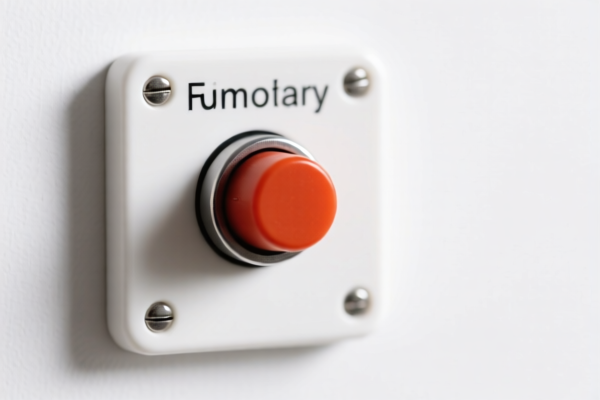
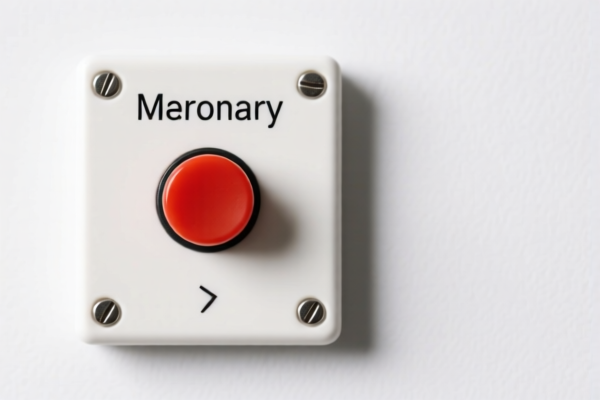
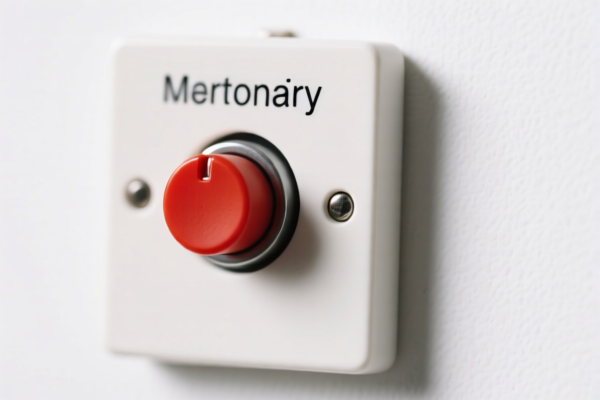

AI Analysis
🔘 Instantaneous Push-Button Switches (Electrical Apparatus ≤ 1,000 V)
🌐 HS Code Reference & Customs Clearance Guide | 2026 Latest Tariff Analysis | Professional Compliance Strategy
📌 I. Product Definition & Classification: Do You Truly Understand "Instantaneous Switches"?
An Instantaneous Push-Button Switch is an electrical apparatus used for switching or protecting electrical circuits, or for making connections to or in electrical circuits, for a voltage not exceeding 1,000 V.
In international trade, these are classified under Chapter 85, specifically heading 8536.50 ("Other switches"). The critical distinction lies in the current rating and contact type:
- Instantaneous (Momentary) Contact: The switch only completes the circuit while the button is pressed. It does not stay in the "on" position after release.
- Rated Current: The classification in
<DATA>specifically targets switches rated at not over 5 A.
⚠️ Key Distinction Point:
- If the switch is rated > 5 A or is not instantaneous (e.g., toggle, maintained contact), it may fall under different subheadings (e.g., 8536.50.90.90).
- If the voltage exceeds 1,000 V, it is excluded from this chapter entirely.
- Must be strictly "Push-button" type with "Momentary contact" characteristics to qualify for the specific codes below.
📦 II. HS Code Classification Details (2026 Latest Tariff Authority Comparison)
Based on the provided <DATA>, there are two primary HS Codes for Instantaneous Push-Button Switches Rated at Not Over 5 A. The distinction is subtle but critical for customs valuation and origin tracking.
| HS Code | Product Description | Key Characteristics | Application Scenario |
|---|---|---|---|
8536.50.90.31 |
Other Push-button: Rated at not over 5 A - Momentary contact | Specifically defined as "Momentary contact" | Standard industrial control panels, consumer electronics buttons, temporary activation switches |
8536.50.90.33 |
Other Push-button: Rated at not over 5 A - Other | "Other" implies non-momentary or unspecified contact type within the ≤5A limit | Less common for "instantaneous" specific queries, but may apply if technical documentation doesn't explicitly state "momentary" |
🔍 Critical Reminder:
- 8536.50.90.31 is the precise fit for "Instantaneous" (Momentary) switches.
- 8536.50.90.33 is a broader "Other" category. If your product is explicitly instantaneous, use 8536.50.90.31 to avoid customs queries regarding contact type.
- Both codes apply to switches ≤ 1,000 V and ≤ 5 A.
💰 III. 2026 Latest Tariff Rate Details (Including Surtaxes & Policy Add-ons)
✅ Applicable Country: United States (US)
✅ Origin: China (CN) (Assumed based on typical 25% surtax context in training data)
✅ Effective Time: Current trade regime (Section 301 / IEEPA implications)
🎯 1. 8536.50.90.31 —— Instantaneous Push-Button Switch (≤ 5 A, Momentary)
| Item | Content |
|---|---|
| Base Tariff Rate | 0.0% (ad valorem) |
| Section 301 Surtax | +25.0% (USITC Footnote for Chapter 85) |
| IEEPA Add-on | Included in the 25% (See Note Below) |
| Total Tariff Rate | 25.0% |
| Tax Calculation | CIF Value × 25% |
| De Minimis Exemption | ❌ NOT Eligible (Section 301 duties apply to low-value shipments) |
| Legal Authority Path | USITC:8536.50.90.31 → SECTION 301: 8536.50.90 → FOOTNOTE: 301.02.01 |
📌 Explanation:
- The "Base Tariff: 0.0%" means the standard Most Favored Nation (MFN) duty is free.
- The "Added Tariff: 25.0%" is the critical cost driver. This is typically the Section 301 tariff imposed on Chinese goods in Chapter 85.
- Total Cost Impact: For every $100 of goods, you pay $25 in duties.
- No IEEPA Separation: The<DATA>shows a combined total of 25.0%. In many current US trade contexts, this 25% represents the primary Section 301 surtax. Ensure your customs broker confirms if any additional "Section 301" or "IEEPA" layers apply beyond this 25%.
🎯 2. 8536.50.90.33 —— Other Push-Button Switches (≤ 5 A)
| Item | Content |
|---|---|
| Base Tariff Rate | 0.0% (ad valorem) |
| Section 301 Surtax | +25.0% |
| Total Tariff Rate | 25.0% |
| Tax Calculation | CIF Value × 25% |
| De Minimis Exemption | ❌ NOT Eligible |
| Legal Authority Path | USITC:8536.50.90.33 → SECTION 301: 8536.50.90 |
📌 Note:
- The tariff rate is identical to the momentary contact switch.
- The risk here is classification accuracy. If you declare a non-instantaneous switch as8536.50.90.31, you may face penalties for misclassification. If you declare an instantaneous switch as8536.50.90.33, it is generally acceptable but less precise.
🛠️ IV. Customs Clearance Practical Advice (Combat Pitfalls Guide)
✅ 1. Required Documentation Checklist (Mandatory)
| Document | Required | Description |
|---|---|---|
| ✅ Product Specifications Sheet | ✔️ | Must explicitly state: "Voltage ≤ 1,000 V", "Current ≤ 5 A", "Contact Type: Momentary/Instantaneous". |
| ✅ Technical Diagram | ✔️ | Schematic showing the switch mechanism. |
| ✅ Commercial Invoice | ✔️ | Must match HS Code description. Use term: "Instantaneous Push-Button Switch, 5A, 120V, Momentary Contact". |
| ✅ Packing List | ✔️ | Clear itemization. |
| ✅ Certificate of Origin (CO) | ✔️ | Critical for proving Chinese origin to apply Section 301 rules (or exemptions if applicable). |
| ✅ UL/CE/FCC Reports | ✔️ | Electrical safety compliance is often checked for switches. |
✅ 2. Declaration Tips (Key Mnemonic)
🔥 "Low Voltage, Low Amp, Momentary Contact, 25% Tax!"
| Scenario | Correct Declaration | Wrong Approach |
|---|---|---|
| Standard Instantaneous Switch | 8536.50.90.31 + "Momentary Contact" |
Generic "Switch" → Risk of audit |
| Switch Rated 10 A | NOT 8536.50.90.31 → Must use different subcode (e.g., 8536.50.90.90) |
Forcing ≤5A code on 10A product → Severe Penalty |
| Switch > 1,000 V | NOT Chapter 85 → Use Chapter 85 but different heading or Chapter 84/90 if applicable | Classifying high-voltage equipment as ≤1,000 V → Confiscation Risk |
| Bundle with Cables | Declare separately | Bundling switches with optical fiber cables → Misclassification |
✅ 3. Special Case Handling
| Scenario | Handling Advice |
|---|---|
| OEM Custom Switches | Provide customer PO + design specs. Ensure "Momentary" is technically documented. |
| Mixed Shipments (Switches + Sockets) | Switches go to 8536.50.90.31; Sockets may go to 8536.69. Do not combine into one line item unless identical classification. |
| Non-Chinese Origin | If origin is Vietnam, Thailand, Mexico, etc., you may EXEMPT from the 25% surtax. Provide CO (Certificate of Origin) immediately. |
| De Minimis (Section 321) | ⚠️ WARNING: Section 301 duties (25%) ARE NOT EXEMPT from de minimis ($800) for Chinese goods. You MUST pay the 25% even for small packages. |
🌍 V. Global Market Comparison (2026 Latest)
| Country/Region | Recommended HS Code | Tariff (China Origin) | Certification | Notes |
|---|---|---|---|---|
| 🇺🇸 USA | 8536.50.90.31 |
25.0% | UL, FCC, CE | High duty cost. No de minimis exemption. |
| 🇨🇳 China | 8536.50.90.31 |
0% - 5% | CCC | Import duty may be low, but export from CN is standard. |
| 🇪🇺 EU | 8536.50.50 |
0% - 4% | CE, RoHS, WEEE | No Section 301 equivalent. Lower cost. |
| 🇬🇧 UK | 8536.50.50 |
0% - 4% | UKCA | Post-Brexit rules apply. |
| 🇨🇦 Canada | 8536.50.90 |
0% (if FTA) | CSA, UL | Check USMCA eligibility if assembled in NA. |
📌 Conclusion:
- USA is the most expensive market due to the 25% surtax.
- EU/UK are cost-effective alternatives if logistics allow.
- Origin is Key: Shifting final assembly to a non-China country (e.g., Vietnam) can eliminate the 25% tariff, provided substantial transformation occurs.
📌 VI. Common Mistakes & Pitfall Guide (Blood & Tears Lessons)
❌ Mistake 1: Declaring a 10 A switch as 8536.50.90.31 (≤5 A)
👉 Consequence: Customs will reassess to a different code, potentially with higher tariffs or penalties for misdeclaration.
❌ Mistake 2: Assuming De Minimis ($800) exempts Section 301 Duties
👉 Consequence: For Chinese-origin goods, you must pay the 25% duty even if the package value is $50. Failure to declare leads to seizure.
❌ Mistake 3: Not specifying "Momentary Contact"
👉 Consequence: If you use 8536.50.90.33 ("Other"), you may miss the opportunity to clarify it's not a maintained switch, leading to customs hold for clarification.
❌ Mistake 4: Bundling switches with non-electrical parts without separate line items
👉 Consequence: Mixed classifications can delay clearance. Keep electrical components separate.
✅ Correct Practice:
"Instantaneous Push-Button Switch, 5A Max, 120V AC/DC, Momentary Contact, UL Listed, Model: XYZ-123"
🎯 VII. Conclusion: Professional Declaration Saves Money!
🎯 Remember the Mantra:
🔹 "Voltage ≤ 1000V, Amp ≤ 5A, Momentary = 31. 25% Tax is Real, No Exemption for China!"
🔹 "HS Code Precision Prevents Delays, 25% Surcharge is Mandatory!"
📌 Pro Tip:
If your products are assembled in Vietnam, Mexico, or Thailand, obtain a Certificate of Origin to waive the 25% surtax. This can save you 25% of the product value in duties.
Request an Advance Ruling (Ruling Letter) from CBP if the product features are unique (e.g., waterproof, industrial-grade) to ensure 8536.50.90.31 is the correct classification.
📣 Immediate Action:
📞 Contact a licensed US Customs Broker.
📝 Provide Spec Sheets highlighting "≤ 5 A" and "Momentary".
🚀 Clear Customs Smoothly, Avoid 25% Surprises, Maximize Profit!
✨ Professional Customs Clearance Starts with Accurate Classification!
💼 Every Duty Percentage Counts!
Customer Reviews
About HS Code Classification
The Harmonized System (HS) is an internationally standardized nomenclature developed by the World Customs Organization (WCO) to classify traded products. Over 200 countries use the HS system as the basis for customs tariffs, trade statistics, and import/export regulations.
Each HS code follows a hierarchical structure:
- Chapter (2 digits) — Broad category of goods (e.g., Chapter 84: Machinery and Mechanical Appliances)
- Heading (4 digits) — More specific grouping within the chapter
- Subheading (6 digits) — Internationally standardized breakdown, used by all WCO member countries
- National subdivisions (8-10 digits) — Country-specific extensions for further classification, such as US HTSUS 10-digit codes
Correct HS code classification is essential for smooth customs clearance, accurate duty payment, and compliance with trade regulations. Misclassification can lead to customs delays, overpayment of duties, or penalties.
When importing from CN to US, the applicable tariff rates may include:
- Most-Favored-Nation (MFN) rate — The standard duty rate applied to WTO members
- General rate — Applied to countries without trade agreements
- Trade remedy duties — Additional tariffs such as Section 301 (anti-dumping), Section 232 (national security), or countervailing duties
The information provided on this page is for reference purposes only. For official classification, please consult with your local customs authority or a licensed customs broker.