Insulated Bowl
CN → US| HS Code | Tariff Rate | Origin | Destination | Doc |
|---|---|---|---|---|
| 9617001000 | 17.2% | CN | US | Official Doc |
| 9617003000 | 16.9% | CN | US | Official Doc |
| 7323930060 | 62.0% | CN | US | Official Doc |
| 7323999030 | 88.4% | CN | US | Official Doc |
| 7418100051 | 70.5% | CN | US | Official Doc |
Product Images
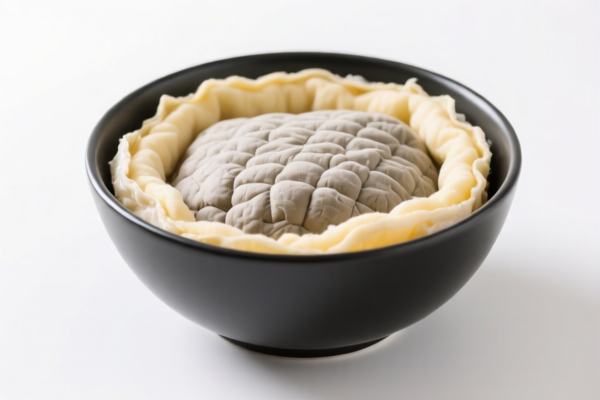
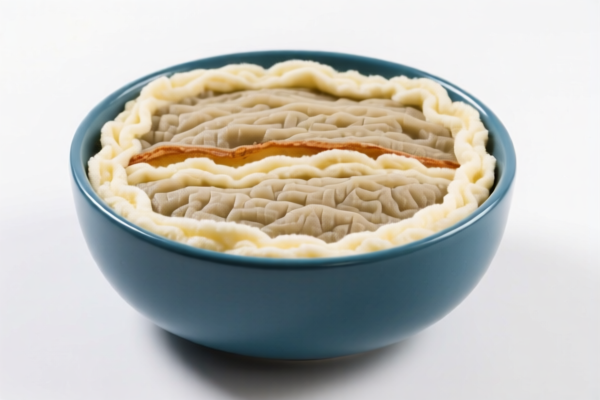
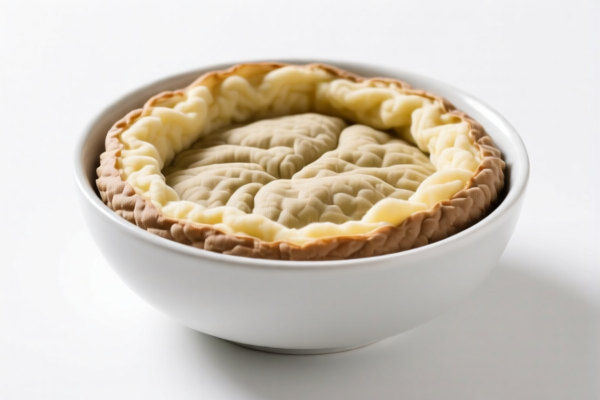
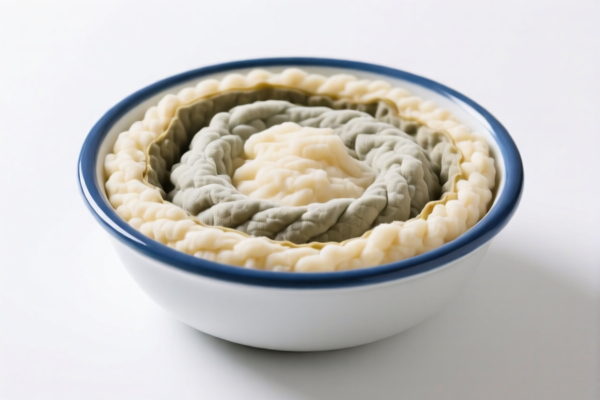
AI Analysis
🥣 Insulated Bowl / Vacuum Flask (Stainless Steel Beverage Container)
🌐 HS Code Reference & Customs Clearance Guide | 2026 Latest Tariff Analysis | Professional Clearance Strategy
📌 I. Product Definition & Classification: Do You Really Understand "Insulated Bowls"?
An Insulated Bowl (often referred to as a Vacuum Flask, Thermos, or Vacuum Container in international trade) is a container designed to maintain the temperature of its contents through thermal insulation. In customs classification, the key distinction lies in whether it is classified as a general vacuum container or a specific kitchen/household article made of base metals.
Key Classification Logic: * Vacuum Container Focus: If classified under Chapter 96, it is viewed primarily as a vacuum-insulated vessel, regardless of material. * Material Focus: If classified under Chapter 73 (Iron/Steel Articles), it is viewed as a household/kitchen utensil made of stainless steel. This triggers significantly higher tariffs due to trade remedies on steel/aluminum/copper products.
⚠️ Critical Distinction:
- If declared as "Vacuum Container" → Falls under 9617.00 → Lower Tax (~16-17%)
- If declared as "Steel Kitchen Utensil" → Falls under 7323.xx / 7418.xx → High Tax (62% - 88.4%) due to "Steel, Aluminum, Copper Products" surcharges.
📦 II. HS Code Classification Details (2026 Latest Tariff Authority Reference)
| HS Code | Product Description | Application Scenario | Tax Bracket |
|---|---|---|---|
9617.00.10.00 |
Vacuum containers; parts thereof (General Definition) | Insulated bottles, flasks, generic vacuum containers | 17.2% |
9617.00.30.00 |
Vacuum containers; parts thereof (Finished Goods) | Insulated bottles/flasks as finished consumer goods | 16.9% |
7323.93.00.60 |
Articles of table/kitchen linen, of stainless steel | Insulated bowls made of stainless steel, kitchen/household use | 62.0% |
7323.99.90.30 |
Other table/kitchen articles, of base metal (not stainless steel or unspecified) | Generic metal kitchenware, tableware | 88.4% |
7418.10.00.51 |
Copper household articles, non-electric heating appliances | Insulated containers made of copper or copper alloys | 70.5% |
🔍 Key Reminder:
- Optimal Strategy: Classify as 9617.00 (Vacuum Container) to avoid the punitive "Steel, Aluminum, Copper Products" surcharge. - Risk Alert: If classified under 7323 or 7418, the total tax jumps to 62%-88% due to additional levies (Section 232/Trade Act surcharges).
💰 III. 2026 Latest Tariff Rate Details (Including Surcharges & Policy Add-ons)
✅ Applicable Country: United States (US)
✅ Country of Origin: China (CN)
✅ Effective Date: Current active rates (Post-2025 adjustments)
🎯 1. 9617.00.10.00 & 9617.00.30.00 —— Vacuum Containers (Recommended)
This classification treats the item primarily as a vacuum-insulated device rather than just a metal container.
| Item | Content |
|---|---|
| Base Duty Rate | 6.9% - 7.2% (Ad Valorem) |
| Section 301 Surcharge | +10% (List 4B / 122 Clause Tariff) |
| Section 232/Additional Surcharge | 0.0% (No specific steel/aluminum surcharge applied to Chapter 96) |
| Total Tax Rate | 16.9% - 17.2% |
| Tax Calculation | CIF Value × 16.9%~17.2% |
| De Minimis Eligibility | ❌ Not Eligible (Deny de minimis for China-origin goods under specific trade acts) |
| Legal Basis Path | HTSUS:9617.00 → Section 301: 122-Clause → USITC |
📌 Explanation:
- The 10% additional tariff is often referred to as the "122 Clause" or specific Section 301 duty for these subheadings. - Crucially, because it is classified under Chapter 96 (Miscellaneous Manufactured Articles), it avoids the punitive 50% surcharge applied to steel/copper products. - This is the most cost-effective clearance path for insulated stainless steel bowls/bottles.
🎯 2. 7323.93.00.60 —— Stainless Steel Kitchen Articles (High Risk)
If customs determines the item is essentially a "kitchen utensil" made of steel.
| Item | Content |
|---|---|
| Base Duty Rate | 2.0% |
| Section 301 Surcharge | +10% |
| Steel/Aluminum/Copper Surcharge | +50% (Specific surcharge for base metal products) |
| Total Tax Rate | 62.0% |
| Tax Calculation | CIF Value × 62.0% |
| De Minimis Eligibility | ❌ Not Eligible |
| Legal Basis Path | HTSUS:7323.93 → Steel Surcharge: 50% → Section 301: 10% |
📌 Explanation:
- The 50% surcharge is the killer here. It is applied specifically to "Steel, Aluminum, Copper Products" under recent trade enforcement actions. - Result: Nearly 4x higher tax than classifying as a vacuum container.
🎯 3. 7323.99.90.30 —— Other Base Metal Kitchen Articles
| Item | Content |
|---|---|
| Base Duty Rate | 3.4% |
| Section 301 Surcharge | +25% (Note: Some listings show 25% for general metal goods) |
| Steel/Aluminum/Copper Surcharge | +50% |
| Additional 122 Clause | +10% |
| Total Tax Rate | 88.4% |
| Tax Calculation | CIF Value × 88.4% |
📌 Explanation:
- This is the wor-case scenario. It combines general metal surcharges with high Section 301 rates. - Only applicable if the product is NOT stainless steel but other base metals, AND fails the vacuum container definition.
🎯 4. 7418.10.00.51 —— Copper Household Articles
| Item | Content |
|---|---|
| Base Duty Rate | 3.0% |
| Section 301 Surcharge | +7.5% |
| Steel/Aluminum/Copper Surcharge | +50% |
| Additional 122 Clause | +10% |
| Total Tax Rate | 70.5% |
📌 Explanation:
- Applies if the bowl is made of copper. Copper products also face the 50% surcharge, leading to a total of 70.5%.
🛠️ IV. Customs Clearance Practical Advice (Avoid Pitfalls)
✅ 1. Essential Documentation Checklist
| Document | Required | Notes |
|---|---|---|
| ✅ Product Specification Sheet | ✔️ | Must highlight "Vacuum Insulation" structure (double-wall, vacuum gap). |
| ✅ Technical Drawing / Structure Diagram | ✔️ | Show the vacuum layer clearly to support 9617.00 classification. |
| ✅ Product Photos | ✔️ | Clear view of neck, base, and any insulation seams. |
| ✅ Commercial Invoice | ✔️ | Description should read: "Vacuum Insulated Stainless Steel Bowl/Flask" |
| ✅ Certificate of Origin (CO) | ✔️ | To prove origin (China) for accurate surcharge calculation. |
| ✅ Third-Party Test Report | ✔️ | FDA/LFGB for food contact; Vacuum integrity test report. |
✅ 2. Declaration Strategy (Key Mantra)
🔥 "Declare Vacuum, Not Just Steel; Avoid the 50% Penalty!"
| Scenario | Correct Declaration | Wrong Practice |
|---|---|---|
| Insulated Bowl (Stainless) | 9617.00.30.00 (Vacuum Container) |
Declaring as "Steel Tableware" → 62% Tax |
| Insulated Bowl (Copper) | 7418.10.00.51 |
Declaring as "General Metal Cup" → 70.5% Tax |
| Non-Insulated Metal Bowl | 7323.99.90.30 |
Declaring as "Vacuum Flask" → Misdeclaration |
| Mixed Package | Bundle as Main Product | Splitting into "Bowl" + "Lid" → Risk of separate classification |
✅ 3. Special Case Handling
| Situation | Handling Advice |
|---|---|
| Product is NOT vacuum insulated | Must declare under 7323 or 7418. Do not fake vacuum structure. |
| OEM Custom Design | Provide design files showing vacuum layer. Customs may inspect physically. |
| Material Mix | If lid is silicone/plastic but body is stainless steel vacuum, still 9617.00. |
| Copper vs. Stainless | Clearly state material. Copper triggers 7418 (70.5%); Stainless triggers 7323 (62%) or 9617 (17%). |
🌍 V. Global Market Clearance Comparison (2026)
| Country/Region | Recommended HS Code | Tariff (China Origin) | Certification | Notes |
|---|---|---|---|---|
| 🇺🇸 USA | 9617.00.30.00 |
16.9% | FDA, Prop 65 | AVOID 7323/7418 due to 50% surcharge |
| 🇨🇳 China | 9617.00.30.00 |
~5-7% | CCC (if applicable) | No major surcharges |
| 🇪🇺 EU | 9617.00.30.00 |
~2-4% | LFGB, Food Contact | Low duty, focus on safety |
| 🇬🇧 UK | 9617.00.30.00 |
~0-5% | UKCA | Post-Brexit rules apply |
| 🇯🇵 Japan | 9617.00.30.00 |
~3-5% | JIS, Food Sanitation | Low duty, high safety standards |
📌 Conclusion:
- USA is the most critical market due to Section 301 and Base Metal Surcharges. - Classifying as Vacuum Container (9617) saves 45-70% in taxes compared to classifying as "Steel/Copper Kitchenware".
📌 VI. Common Errors & Pitfalls (Blood & Tears Lessons)
❌ Error 1: Declaring "Insulated Bowl" as "Stainless Steel Tableware" (7323)
👉 Consequence: Tax jumps from 16.9% to 62.0%. Penalty: +45% extra cost!
❌ Error 2: Declaring "Copper Insulated Bowl" as "General Metal Cup"
👉 Consequence: Tax jumps to 70.5% due to copper surcharge.
❌ Error 3: Missing "Vacuum" in product description
👉 Consequence: Customs inspector assumes it's a regular metal bowl → Applies 7323/7418 rates → Delay & Re-inspection.
❌ Error 4: Splitting shipment into "Bowl" and "Vacuum Lid"
👉 Consequence: Parts may be classified differently, leading to complex tax calculations or rejection.
✅ Correct Practice:
"Vacuum Insulated Stainless Steel Travel Bowl, Double-Wall Vacuum Technology, Model XYZ, FDA Compliant"
🎯 VII. Conclusion: Precise Classification, Maximize Profit!
🎯 Remember the Mantra:
🔹 "Vacuum First, Metal Second; 9617 is King!"
🔹 "Don't pay 60% for a 17% item; classify as vacuum!"
🔹 "50% Surcharge is Avoidable; 10% Surcharge is Inevitable."
📌 Pro Tip:
If your insulated bowls are originating from Vietnam, Mexico, or Thailand, you may qualify for IEEPA Exemptions or lower tariffs.
Recommend applying for an Advance Ruling (PB Ruling) from US Customs (CBP) to secure the 9617.00 classification legally.
📣 Immediate Action:
📞 Contact a professional customs broker + Provide technical drawings + Apply for Pre-classification
🚀 Ensure your Insulated Bowls clear customs smoothly, avoiding the 50% steel surcharge trap!
✨ Professional clearance starts with accurate classification!
💼 Every percentage point of tax saved is pure profit!
Customer Reviews
About HS Code Classification
The Harmonized System (HS) is an internationally standardized nomenclature developed by the World Customs Organization (WCO) to classify traded products. Over 200 countries use the HS system as the basis for customs tariffs, trade statistics, and import/export regulations.
Each HS code follows a hierarchical structure:
- Chapter (2 digits) — Broad category of goods (e.g., Chapter 84: Machinery and Mechanical Appliances)
- Heading (4 digits) — More specific grouping within the chapter
- Subheading (6 digits) — Internationally standardized breakdown, used by all WCO member countries
- National subdivisions (8-10 digits) — Country-specific extensions for further classification, such as US HTSUS 10-digit codes
Correct HS code classification is essential for smooth customs clearance, accurate duty payment, and compliance with trade regulations. Misclassification can lead to customs delays, overpayment of duties, or penalties.
When importing from CN to US, the applicable tariff rates may include:
- Most-Favored-Nation (MFN) rate — The standard duty rate applied to WTO members
- General rate — Applied to countries without trade agreements
- Trade remedy duties — Additional tariffs such as Section 301 (anti-dumping), Section 232 (national security), or countervailing duties
The information provided on this page is for reference purposes only. For official classification, please consult with your local customs authority or a licensed customs broker.