Insulated Cooking Cup
CN → US| HS Code | Tariff Rate | Origin | Destination | Doc |
|---|---|---|---|---|
| 9617001000 | 17.2% | CN | US | Official Doc |
| 9617003000 | 16.9% | CN | US | Official Doc |
| 7323930060 | 62.0% | CN | US | Official Doc |
| 7323999030 | 88.4% | CN | US | Official Doc |
| 7418100051 | 70.5% | CN | US | Official Doc |
Product Images
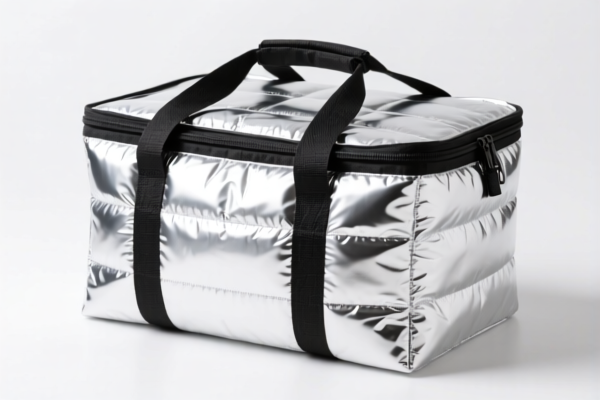
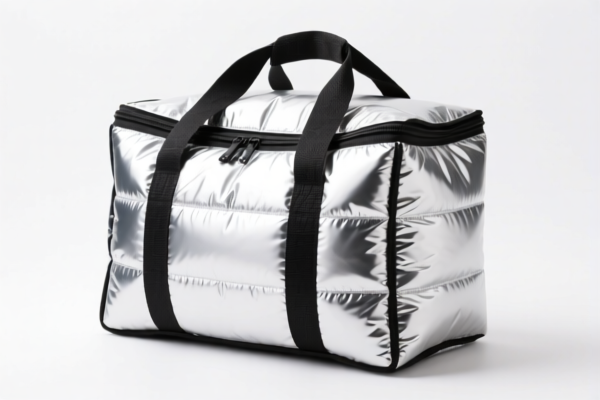
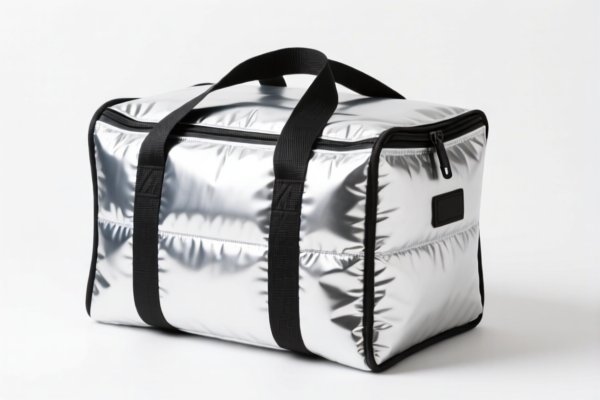
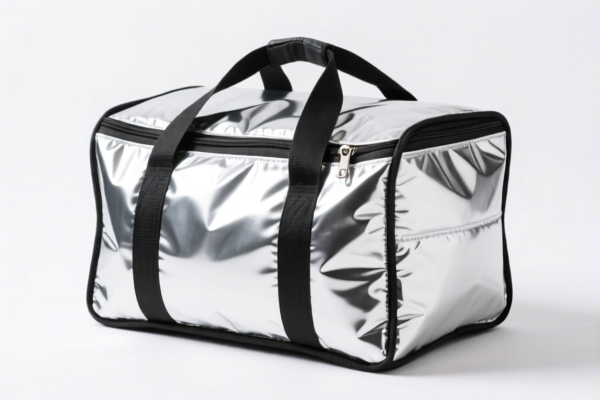
AI Analysis
🍵 Insulated Cooking Cup (Vacuum Flasks / Food Containers)
🌐 HS Code Reference & Customs Clearance Guide | 2026 Latest Tariff Analysis | Professional Transit Strategy
📌 I. Product Definition & Classification: What Exactly is an "Insulated Cooking Cup"?
An "Insulated Cooking Cup" generally refers to vacuum-insulated containers used for storing food or beverages. In international trade, especially when importing into the US from China, these products are highly sensitive to material composition and specific use. They can be classified under very different HS Codes depending on whether they are viewed as specialized "vacuum vessels" or general "metal household utensils."
⚠️ Critical Distinction:
- If classified as a specialized vacuum container (Headings 9617), tariffs are significantly LOWER (approx. 17-17.2%).
- If classified as general stainless steel household ware (Heading 7323 or 7418), tariffs can skyrocket to 62%-88.4% due to Section 301/Steel-specific surcharges.
- DO NOT misclassify a stainless steel thermos as a general metal utensil unless you are prepared to pay the higher duties!
📦 II. HS Code Classification Details (2026 Latest Tariff Authority Comparison)
| HS Code | Product Description | Applicability Scenario | Material/Feature Focus |
|---|---|---|---|
9617.00.10.00 |
Vacuum flasks and other vacuum vessels, complete with cases; parts thereof; of vacuum flasks and other vacuum vessels. | Specialized vacuum containers, high-end thermal bottles. | Vacuum Structure is the primary defining feature. |
9617.00.30.00 |
Vacuum flasks and other vacuum vessels, complete with cases; parts thereof; of vacuum flasks and other vacuum vessels. | Similar to above, often used for specific vacuum vessel sub-categories. | Vacuum Structure is the primary defining feature. |
7323.93.00.60 |
Table, kitchen or other household articles and parts thereof, of stainless steel; other; other; other. | Stainless steel pots, pans, cups, mugs (non-vacuum specific focus). | Stainless Steel material + Household Use. |
7323.99.90.30 |
Table, kitchen or other household articles and parts thereof, of stainless steel; other; other; other; other. | General stainless steel household items (broader category). | Stainless Steel + General Household Use. |
7418.10.00.51 |
Articles of copper ware; other; other; other; parts of copper ware; other; other. | Note: Data suggests classification for non-electric heating/copper-related household items. | Copper/Nickel/Alloy or specific non-electric utility definition. |
🔍 Key Reminder:
- 9617 Series: Best for true vacuum-insulated products. Lower total tax.
- 7323/7418 Series: Often applied if customs perceives the item as a generic metal cup/pot rather than a technical vacuum vessel. Highly punitive tariffs due to "Steel/Copper Surcharge."
- Material Matters: If the cup is Stainless Steel,7323is a high-risk trap due to the 50% Steel Surcharge. If it's Copper/Alloy,7418applies but still carries high penalties.
💰 III. 2026 Latest Tariff Rate Breakdown (Including Additional Duties & Policy Surcharges)
✅ Applicable Country: United States (US)
✅ Country of Origin: China (CN)
✅ Effective Time: Current rates including Section 301 and "122 Section" (referenced as 10% or 25% in data).
🎯 1. 9617.00.10.00 —— Vacuum Flasks & Vessels (Preferred Classification)
| Item | Detail |
|---|---|
| Base Tariff | 7.2% |
| Section 301 Surcharge | 0.0% (Note: Data shows 0.0% for this specific sub-line in the provided JSON, but verify real-time USITC lists) |
| "122 Section" Surcharge | +10% |
| Total Effective Rate | 17.2% |
| Tax Calculation | CIF Value × 17.2% |
| De Minimis Exemption | ❌ Not Eligible (High risk of audit) |
| Legal Basis Path | HTSUS:9617.00.10.00 → Section 301 Footnotes → 122 Section Proclamation |
📌 Explanation:
- This is the most favorable classification for insulated cups.
- The "122 Section" adds a flat 10% on top of the base duty.
- Total Cost Impact: Significantly lower than steel utensil classifications.
🎯 2. 9617.00.30.00 —— Other Vacuum Vessels
| Item | Detail |
|---|---|
| Base Tariff | 6.9% |
| Section 301 Surcharge | 0.0% |
| "122 Section" Surcharge | +10% |
| Total Effective Rate | 16.9% |
| Tax Calculation | CIF Value × 16.9% |
| De Minimis Exemption | ❌ Not Eligible |
| Legal Basis Path | HTSUS:9617.00.30.00 → Section 301 Footnotes → 122 Section Proclamation |
📌 Note:
- Slightly lower base duty than.10.00, but functionally similar.
- Use this if.10.00is restricted for specific types of vacuum parts.
🎯 3. 7323.93.00.60 —— Stainless Steel Household Articles (High Risk)
| Item | Detail |
|---|---|
| Base Tariff | 2.0% |
| Section 301 Surcharge | 0.0% |
| "122 Section" Surcharge | +10% |
| Steel/Copper Surcharge | +50% (Critical Penalty!) |
| Total Effective Rate | 62.0% |
| Tax Calculation | CIF Value × 62.0% |
| De Minimis Exemption | ❌ Not Eligible |
| Legal Basis Path | HTSUS:7323.93.00.60 → USITC Steel Surcharge Rule → 122 Section |
📌 Warning:
- This classification applies because the item is Stainless Steel.
- The 50% Steel Surcharge is the killer. Even with a low base duty (2%), the total hits 62%.
- Avoid this code for insulated cups unless you are importing non-vacuum steel bowls/cups without vacuum sealing claims.
🎯 4. 7323.99.90.30 —— Other Stainless Steel Household Articles (Highest Risk)
| Item | Detail |
|---|---|
| Base Tariff | 3.4% |
| Section 301 Surcharge | +25% (Section 301) |
| "122 Section" Surcharge | +10% |
| Steel/Copper Surcharge | +50% (Critical Penalty!) |
| Total Effective Rate | 88.4% |
| Tax Calculation | CIF Value × 88.4% |
| De Minimis Exemption | ❌ Not Eligible |
| Legal Basis Path | HTSUS:7323.99.90.30 → Section 301 (25%) → Steel Surcharge (50%) → 122 Section |
📌 Warning:
- This is the worst-case scenario.
- Combines Section 301 (25%), Steel Surcharge (50%), and 122 Section (10%).
- Total Tax: 88.4%. Do not misdeclare a vacuum flask as a generic "steel cup."
🎯 5. 7418.10.00.51 —— Copper/Ware Articles (Special Case)
| Item | Detail |
|---|---|
| Base Tariff | 3.0% |
| Section 301 Surcharge | +7.5% |
| "122 Section" Surcharge | +10% |
| Steel/Copper Surcharge | +50% (If applicable based on material mix) |
| Total Effective Rate | 70.5% |
| Tax Calculation | CIF Value × 70.5% |
| De Minimis Exemption | ❌ Not Eligible |
| Legal Basis Path | HTSUS:7418.10.00.51 → Material Specific Surcharge |
📌 Note:
- Applies if the product is deemed a "non-electric heating utensil" or copper-based.
- Still suffers from the ~50% material surcharge.
🛠️ IV. Customs Clearance Practical Advice (Real-World Pitfall Guide)
✅ 1. Preparation Checklist (Non-Negotiable)
| Document | Required? | Explanation |
|---|---|---|
| ✅ Product Specification Sheet | ✔️ | Must clearly state "Vacuum Insulated" or "Thermal Insulation". |
| ✅ Structure Diagram | ✔️ | Show the double-wall vacuum seal. Prove it's a 9617 vessel, not just a solid cup. |
| ✅ Product Photos (Labeled) | ✔️ | Show internal vacuum seam, material tags (e.g., "304 Stainless Steel Interior"). |
| ✅ Commercial Invoice | ✔️ | Description: "Vacuum Insulated Stainless Steel Bottle, 500ml" (Avoid "Cooking Pot" or "General Utensil"). |
| ✅ COO (Certificate of Origin) | ✔️ | Required for all China-origin goods to verify surcharge applicability. |
| ✅ Packaging List | ✔️ | Ensure no mixed HS codes in one shipment unless declared separately. |
✅ 2. Declaration Strategy (Key Mantras)
🔥 "Vacuum Structure is Key! Don't call it a 'Cup' if it's a 'Flask'!"
| Scenario | Correct Declaration | Wrong Declaration | Consequence |
|---|---|---|---|
| Vacuum Insulated Bottle | 9617.00.10.00 |
"Stainless Steel Cup" | Tax jumps from 17.2% to 62-88% |
| Non-Vacuum Steel Mug | 7323.93.00.60 |
"Vacuum Flask" | Risk of penalty for misclassification; tax 62% |
| Mixed Shipment | Separate HS Codes per item | Mixed all under one code | Customs audit, delays, penalties |
✅ 3. Special Case Handling
| Situation | Handling Advice |
|---|---|
| Dual-Wall but No Vacuum? | If it’s merely double-walled with air (not vacuum), it may fall under 7323. However, marketing it as "Vacuum" requires proof. If declared as vacuum but tested as air-filled → Fraud. |
| Electro-Plated/Copper-Lined | If the interior is copper, check if 7418 applies. Still likely to hit high tariffs. |
| Gift Sets (Cup + Lid + Straw) | Declare as a set. The primary character determines the HS Code. If the cup is the main item, the whole set follows the cup's code (9617 or 7323). |
| OEM/White Label | Provide supplier invoices showing manufacturing process (welding vs. vacuum sealing). |
🌍 V. Global Market Comparison (2026 Latest)
| Country/Region | Recommended HS Code | Tariff Rate | Notes |
|---|---|---|---|
| 🇺🇸 United States | 9617.00.10.00 |
17.2% | Best Route. Avoid 7323 to skip 50% Steel Surcharge. |
| 🇨🇳 China | 9617.00.10.00 |
Low/Exempt | No Section 301/122 surcharges in reverse export. |
| 🇪🇺 European Union | 9617.00.10.00 |
~2.5-5% | No steel surcharges. CE/RoHS required. |
| 🇬🇧 United Kingdom | 9617.00.10.00 |
~5% | Post-Brexit tariffs may vary slightly. |
📌 Conclusion:
- USA is the only major market with punitive "Steel Surcharges" and "122 Section" tariffs that make the HS Code choice critical.
- Misclassifying a vacuum flask as a steel utensil costs you ~45-70% more in taxes.
- Always emphasize "Vacuum Insulated" in your product description and documentation.
📌 VI. Common Errors & Pitfall Guide (Blood & Tears)
❌ Error 1: Declaring a Vacuum Flask as "Stainless Steel Kitchen Utensil" (7323)
👉 Result: You pay 62-88.4% instead of 17.2%.
👉 Loss: ~45-70% additional tax burden.
❌ Error 2: Ignoring the "122 Section" Surcharge
👉 Result: Even if you get the right HS Code, forgetting the 10% or 25% policy surcharge leads to underpayment penalties.
❌ Error 3: Vague Description ("Cup")
👉 Result: Customs officer has discretion. They may default to 7323 (higher tax) due to ambiguity.
👉 Fix: Use "Vacuum Insulated Beverage Container".
❌ Error 4: Assuming All Steel Items Are Equal
👉 Result: Not all steel items trigger the 50% surcharge in the same way, but 7323 (household ware) is a primary target.
✅ Correct Approach:
"Vacuum Insulated Stainless Steel Bottle, Double-Wall, Vacuum Sealed, Model XYZ, NSF Certified"
🎯 VII. Conclusion: Precision Classification Saves Money!
🎯 Remember the Mantra:
🔹 "Vacuum = 9617 = 17% Tax."
🔹 "Steel Cup = 7323 = 62-88% Tax."
🔹 "Don't let 'Steel' drive your tax bill to the moon!"
📌 Pro Tip:
If you are importing high volumes, consider applying for a Pre-Ruling from CBP (U.S. Customs and Border Protection). This legally binds the customs agency to accept your 9617.00.10.00 classification, protecting you from future audits and back-taxes.
📣 Immediate Action:
📞 Contact your Freight Forwarder: Confirm the HS Code
9617.00.10.00with your logistics provider.
📄 Update Your Invoice: Change "Cooking Cup" to "Vacuum Insulated Container."
🚀 Secure Your Margins: Every percentage point in tax is profit lost. Classify correctly today!
✨ Professional Clearance Starts with Accurate Classification!
💼 Your Bottom Line Depends on the First Line of Your Declaration!
Customer Reviews
About HS Code Classification
The Harmonized System (HS) is an internationally standardized nomenclature developed by the World Customs Organization (WCO) to classify traded products. Over 200 countries use the HS system as the basis for customs tariffs, trade statistics, and import/export regulations.
Each HS code follows a hierarchical structure:
- Chapter (2 digits) — Broad category of goods (e.g., Chapter 84: Machinery and Mechanical Appliances)
- Heading (4 digits) — More specific grouping within the chapter
- Subheading (6 digits) — Internationally standardized breakdown, used by all WCO member countries
- National subdivisions (8-10 digits) — Country-specific extensions for further classification, such as US HTSUS 10-digit codes
Correct HS code classification is essential for smooth customs clearance, accurate duty payment, and compliance with trade regulations. Misclassification can lead to customs delays, overpayment of duties, or penalties.
When importing from CN to US, the applicable tariff rates may include:
- Most-Favored-Nation (MFN) rate — The standard duty rate applied to WTO members
- General rate — Applied to countries without trade agreements
- Trade remedy duties — Additional tariffs such as Section 301 (anti-dumping), Section 232 (national security), or countervailing duties
The information provided on this page is for reference purposes only. For official classification, please consult with your local customs authority or a licensed customs broker.