Insulated Electric Cables
CN → US| HS Code | Tariff Rate | Origin | Destination | Doc |
|---|---|---|---|---|
| 8544499000 | 38.9% | CN | US | Official Doc |
| 8544493080 | 40.3% | CN | US | Official Doc |
| 8544499000 | 38.9% | CN | US | Official Doc |
| 8544493080 | 40.3% | CN | US | Official Doc |
| 8544499000 | 38.9% | CN | US | Official Doc |
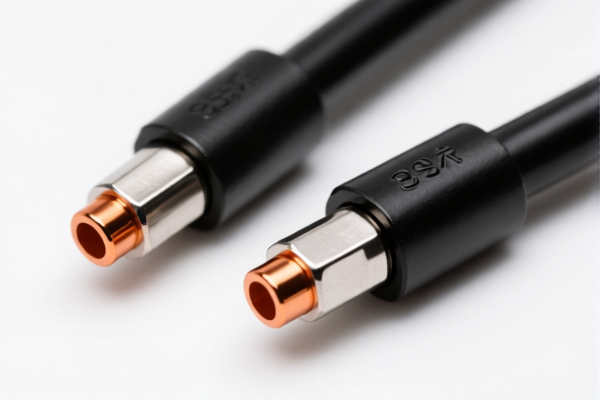
Product Images


AI Analysis
🔌 Insulated Electric Cables (绝缘电线电缆)
🌐 HS Code Reference & Customs Clearance Guide | 2026 Latest Tariff Analysis | Professional Clearance Strategy
📌 I. Product Definition & Classification: Do You Really Understand "Insulated Cables"?
Insulated electric cables are the "blood vessels" of modern power transmission and signal transmission. In international trade, they are strictly categorized based on their material, voltage level, and specific application.
According to the provided data, these cables fall under Heading 8544 ("Insulated (including enameled or anodized) wire, cable..."). The classification depends heavily on whether they meet specific sub-heading criteria (often related to voltage or specific conductor types).
⚠️ Key Distinction Point:
- If the cable is a general-purpose insulated conductor not falling under specific excluded sub-headings (often low voltage or specific industrial uses), it may fall under 8544.49.90.00.
- If the cable is specified under other provisions within 8544.49 (often related to specific material or voltage ranges like copper/aluminum for certain categories), it may fall under 8544.49.30.80.
📦 II. HS Code Classification Details (Latest 2026 Tariff Authority Comparison)
| HS Code | Product Description | Applicable Scenario | Tax Rate (Total) |
|---|---|---|---|
8544.49.90.00 |
Insulated electric cables, matching the category of insulated electric conductors, completely consistent in form. | General insulated wires/cables meeting voltage range requirements but not specified in other sub-headers. | 38.9% |
8544.49.30.80 |
Insulated electric cables, belonging to the category of insulated electric conductors, inferred material is copper or aluminum, meeting "other" category requirements. | Cables inferred to be copper/aluminum conductors, fitting the "other" classification within the 8544.49 sub-heading. | 40.3% |
🔍 Key Reminder:
- Both codes apply to Insulated Electric Cables/Wires.
- The primary difference lies in the specific sub-category definition within Heading 8544.49.
- 8544.49.90.00 is for the "residual" or general category not specified elsewhere in 8544.49.
- 8544.49.30.80 is for specific insulated conductors (often copper/aluminum) falling under other designated sub-items in that section.
💰 III. 2026 Latest Tariff Rate Breakdown (Including Surcharges & Policy Add-ons)
✅ Applicable Country: United States (US)
✅ Country of Origin: China (CN)
✅ Effective Date: Current (Includes all imports post-2025 policies)
🎯 1. 8544.49.90.00 —— Insulated Electric Cables (General/Residual Category)
| Item | Content |
|---|---|
| Base Tariff | 3.9% |
| Section 301 Surcharge | +25.0% |
| Section 122 Tariff | +10.0% |
| Total Tariff | 38.9% |
| Tax Calculation | CIF Value × 38.9% |
| De Minimis Exemption | ❌ Not Applicable (Denied) |
| Legal Basis Path | USITC:8544.49.90.00 → Section 301: 25% → Section 122: 10% |
📌 Explanation:
- Base Tariff (3.9%): The standard Most Favored Nation (MFN) rate for this HS code.
- Section 301 Surcharge (25%): Imposed under US Trade Act Section 301 against Chinese goods.
- Section 122 Tariff (10%): Imposed under Section 122 of the Trade Expansion Act of 1962, often applied to national security concerns (e.g., steel/aluminum or related industrial goods).
- Total Cost: High impact on profitability; must be factored into pricing.
🎯 2. 8544.49.30.80 —— Insulated Electric Cables (Copper/Aluminum Specific Category)
| Item | Content |
|---|---|
| Base Tariff | 5.3% |
| Section 301 Surcharge | +25.0% |
| Section 122 Tariff | +10.0% |
| Total Tariff | 40.3% |
| Tax Calculation | CIF Value × 40.3% |
| De Minimis Exemption | ❌ Not Applicable (Denied) |
| Legal Basis Path | USITC:8544.49.30.80 → Section 301: 25% → Section 122: 10% |
📌 Note:
- Base Tariff (5.3%): Slightly higher than the residual category (3.9%).
- Surcharges: Identical to the other code (25% + 10%).
- Total Cost: 40.3%, the highest among the two options.
- Even though the base rate is higher, the surcharges are fixed percentages of the value, so the total burden is heavier.
🛠️ IV. Customs Clearance Practical Advice (Real-World Pitfall Avoidance Guide)
✅ 1. Required Document Checklist (None Can Be Missed)
| Document | Must Provide | Explanation |
|---|---|---|
| ✅ Product Specification Sheet | ✔️ | Must include: Conductor material (Copper/Aluminum), insulation type, voltage rating, core count. |
| ✅ Technical Drawing | ✔️ | To prove the exact structure and confirm it falls under 8544 (insulated conductors) and not 8546 (optical fibers) or 8548 (waste). |
| ✅ Photos (Clear) | ✔️ | Must show the cable end, insulation material, and any printed markings (e.g., VW-1, UL, CE). |
| ✅ Certificate of Origin (CO) | ✔️ | Essential for verifying origin (China) to apply correct surcharges. |
| ✅ Commercial Invoice | ✔️ | Must explicitly state "Insulated Electric Cable" and not just "Wire". |
| ✅ Packing List | ✔️ | Detailing length, weight, and coil/packaging type. |
✅ 2. Declaration Tips (Key Mantra)
🔥 "Material Matters, Voltage Defines, Don't Split the Coil!"
| Scenario | Correct Declaration Method | Wrong Practice |
|---|---|---|
| Standard Insulated Cable (Cu/Al) | 8544.49.30.80 or 8544.49.90.00 based on exact sub-heading |
Misdeclaring as "Electrical Parts" → Risk of penalty |
| Cable with Jacketing/Sheathing | Ensure it is still classified under 8544 (Insulated Wire) and not 8544/8546 boundary issues | Confusing with fiber optic cables (8544.40) |
| Bulk Coil vs. Cut Length | Declare by weight/length consistently | Splitting one coil into multiple packages to confuse customs |
| High Voltage vs. Low Voltage | Verify voltage rating. If >1000V, check if it falls under 8544.20 or 8544.42 | Using 8544.49 for high-voltage cables incorrectly |
✅ 3. Special Circumstances Handling
| Scenario | Handling Advice |
|---|---|
| Mixed Materials | If the cable has both copper and aluminum, or mixed insulation, provide a detailed breakdown. Customs may audit the material composition. |
| Certification Requirements | Ensure cables have UL, CE, RoHS, or FCC certification if required by the US market. Lack of certification can lead to detention. |
| Section 122 Impact | Since Section 122 applies, ensure the importer is aware of the national security implications. While not banned, it attracts higher scrutiny. |
| Supply Chain Changes | If the cable is shipped from a third country (e.g., Vietnam) but originates in China, it may still be subject to the same tariffs if substantial transformation didn't occur. |
🌍 V. Global Main Market Customs Comparison (2026 Latest)
| Country/Region | Recommended HS Code | Tariff (China Origin) | Certification Requirements | Notes |
|---|---|---|---|---|
| 🇺🇸 USA | 8544.49.90.00 / 8544.49.30.80 |
38.9% - 40.3% | UL, RoHS, FTC Labeling | High tariffs due to 301 + 122 |
| 🇨🇳 China | 8544.49.90.00 / 8544.49.30.80 |
Variable (0-7%) | CCC (if applicable) | Lower base rates, no 301/122 |
| 🇪🇺 EU | 8544.42 / 8544.49 |
0-4% | CE, RoHS, REACH | No Section 301/122 equivalents |
| 🇬🇧 UK | 8544.42 / 8544.49 |
0-4% | UKCA, RoHS | Post-Brexit alignment with EU standards |
| 🇯🇵 Japan | 8544.42 / 8544.49 |
0-3% | JIS, PSE (if applicable) | No major surcharges on cables |
📌 Conclusion:
- USA is the most expensive market for insulated cables from China due to the combination of 3.9%-5.3% base + 25% (301) + 10% (122).
- Total burden: ~39-40%.
- Consider supplier diversification or duty drawback programs if eligible.
📌 VI. Common Mistakes & Pitfall Guide (Lessons Learned)
❌ Mistake 1: Declaring "Copper Wire" instead of "Insulated Electric Cable"
👉 Consequence: If it’s insulated, it must be 8544. Misdeclaration leads to penalties + back taxes.
❌ Mistake 2: Ignoring Section 122
👉 Consequence: Importers often forget the 10% Section 122 tariff, leading to unexpected costs at customs.
❌ Mistake 3: Confusing Insulated Cables with Optical Fiber Cables (8544.40)
👉 Consequence: Different HS codes, different tariffs. Optical fibers have different surcharge applicability. Check material carefully!
❌ Mistake 4: Incomplete Documentation
👉 Consequence: Customs may detain the shipment for material verification, causing delays and storage fees.
✅ Correct Practice:
"Insulated Copper Wire, PVC Sheathed, 600V, UL Listed, Roll of 100M, Model XYZ, Origin: China"
🎯 VII. Conclusion: Professional Declaration, Save Time, Reduce Costs!
🎯 Remember the Mantra:
🔹 "301 is 25%, 122 is 10%, Base is 3-5%, Total is ~40%!"
🔹 "HS Code determines tax, 1% difference means thousands of dollars!"
📌 Tip:
- If your cables are not from China, you may avoid the 301/122 surcharges entirely.
- For large volumes, consider applying for a Section 122 Exclusion if available (though rare for cables) or utilizing Free Trade Agreements (e.g., USMCA for Canadian/Mexican origin).
- Pre-clearance ruling is highly recommended for new product lines.
📣 Take Action Now:
📞 Contact a professional customs broker + Provide product specs + Apply for HS Code pre-ruling
🚀 Let your insulated cables pass smoothly, clear efficiently, and maximize profits!
✨ Professional clearance starts with accurate classification!
💼 Every cent of cost deserves precise calculation!
Customer Reviews
About HS Code Classification
The Harmonized System (HS) is an internationally standardized nomenclature developed by the World Customs Organization (WCO) to classify traded products. Over 200 countries use the HS system as the basis for customs tariffs, trade statistics, and import/export regulations.
Each HS code follows a hierarchical structure:
- Chapter (2 digits) — Broad category of goods (e.g., Chapter 84: Machinery and Mechanical Appliances)
- Heading (4 digits) — More specific grouping within the chapter
- Subheading (6 digits) — Internationally standardized breakdown, used by all WCO member countries
- National subdivisions (8-10 digits) — Country-specific extensions for further classification, such as US HTSUS 10-digit codes
Correct HS code classification is essential for smooth customs clearance, accurate duty payment, and compliance with trade regulations. Misclassification can lead to customs delays, overpayment of duties, or penalties.
When importing from CN to US, the applicable tariff rates may include:
- Most-Favored-Nation (MFN) rate — The standard duty rate applied to WTO members
- General rate — Applied to countries without trade agreements
- Trade remedy duties — Additional tariffs such as Section 301 (anti-dumping), Section 232 (national security), or countervailing duties
The information provided on this page is for reference purposes only. For official classification, please consult with your local customs authority or a licensed customs broker.