Insulated Fork Terminal
CN → US| HS Code | Tariff Rate | Origin | Destination | Doc |
|---|---|---|---|---|
| 8536904000 | 35.0% | CN | US | Official Doc |
| 8536908585 | 85.0% | CN | US | Official Doc |
Product Images
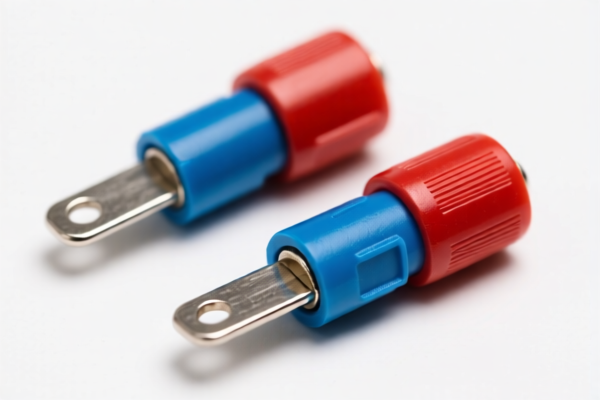
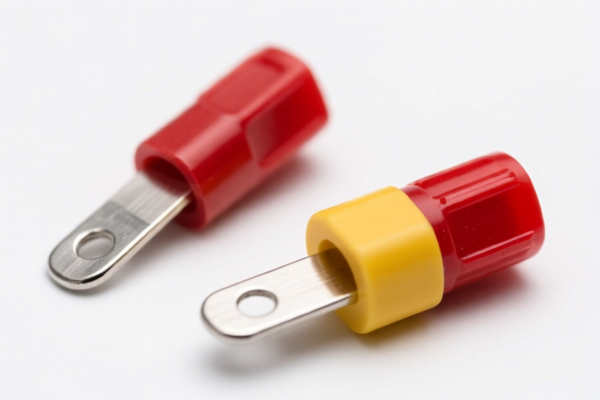
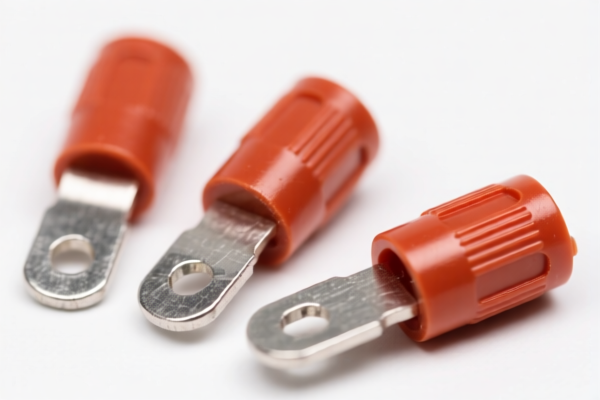
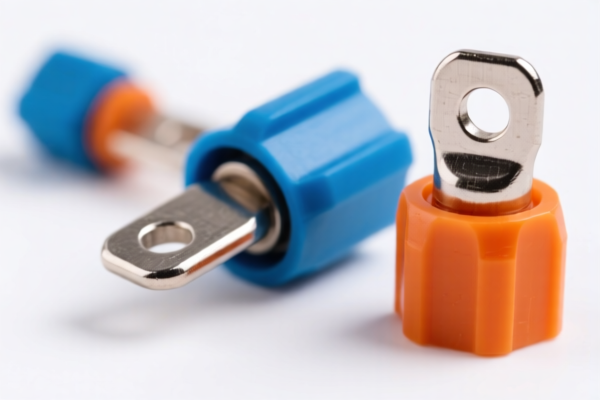
AI Analysis
🔌 Insulated Fork Terminal (Electrical Connectors)
🌐 HS Code Reference & Customs Clearance Guide | 2026 Latest Tariff Analysis | Professional-Level Compliance Strategy
📌 I. Product Definition & Classification: Do You Really Understand “Fork Terminals”?
An Insulated Fork Terminal is a type of electrical connector used to make secure, solderless connections between wires and terminals (such as on switches, relays, or battery posts). It consists of a metal fork-shaped contact point and a plastic insulation sleeve.
In international trade, these fall under Chapter 85 (Electrical machinery and equipment), specifically Heading 8536 (Electrical apparatus for switching or protecting circuits... connectors... junction boxes... for a voltage not exceeding 1,000 V).
⚠️ Key Distinction:
- These are not standalone appliances but accessories/components for electrical circuits.
- They must be classified based on whether they are standard terminals/couplings or other miscellaneous connectors.
- Voltage Limit: The classification applies only if the rated voltage does not exceed 1,000 V.
📦 II. HS Code Classification Details (2026 Latest Tariff Authority Comparison)
Based on the provided data, there are two primary HS Codes for Insulated Fork Terminals, depending on their specific structural classification under “Other apparatus”:
| HS Code | Product Description | Applicable Scenario | Tax Rate |
|---|---|---|---|
8536.90.40.00 |
Terminals, electrical splices and electrical couplings | Standard insulated fork terminals, ring terminals, spade terminals; standard wire connectors | 25.0% |
8536.90.85.85 |
Other apparatus: Other | Specialty connectors, non-standard couplings, or terminals that do not fit the strict definition of “terminals/splices/couplings” | 75.0% |
🔍 Critical Note:
- The difference lies in the legal definition of “terminal” vs. “other apparatus”.
- Most common insulated fork terminals fall under8536.90.40.00because they are explicitly defined as “terminals” for making connections.
- If the product is a specialized, non-standard connector (e.g., proprietary automotive clips, high-frequency RF connectors), it may fall under8536.90.85.85.
- Both codes carry significant additional tariffs for Chinese-origin goods.
💰 III. 2026 Latest Tariff Rate Details (Including Additional Duties & Policy Surcharges)
✅ Applicable Country: United States (US)
✅ Country of Origin: China (CN)
✅ Effective Date: Current rates apply as per USITC Section 301 and IEEPA regulations.
🎯 1. 8536.90.40.00 —— Terminals, Electrical Splices and Electrical Couplings
| Item | Content |
|---|---|
| Basic Duty Rate | 0% (ad valorem) |
| Section 301 Additional Duty | +25.0% (Steel, Aluminum, Copper Products) |
| Total Tax Rate | 25.0% |
| Tax Calculation | CIF Value × 25% |
| De Minimis Exemption | ❌ Not Eligible (Most Section 301 goods are excluded) |
| Legal Basis Path | USITC:8536.90.40.00 → SECTION301:Footnote 9903.88.01 |
📌 Explanation:
- The 25% additional duty is applied because electrical terminals (often made of copper, aluminum, or steel) are classified under materials targeted by Section 301 tariffs.
- There is no base duty, so the total cost burden is exactly 25% of the CIF value.
- This is a standard, well-defined category for most fork terminals.
🎯 2. 8536.90.85.85 —— Other Other
| Item | Content |
|---|---|
| Basic Duty Rate | 0% (ad valorem) |
| Section 301 Additional Duty | +25.0% (General) + 50.0% (Steel/Aluminum/Copper Products Surcharge) |
| Total Tax Rate | 75.0% |
| Tax Calculation | CIF Value × 75% |
| De Minimis Exemption | ❌ Not Eligible |
| Legal Basis Path | USITC:8536.90.85.85 → SECTION301:Steel/Aluminum/Copper Surcharge |
📌 Explanation:
- This code is for “Other” apparatus that doesn’t fit into specific subcategories like “terminals” or “junction boxes.”
- The 75% total rate is extremely high, comprising a 25% base Section 301 duty plus an additional 50% surcharge specifically for steel, aluminum, and copper products.
- Risk: Misclassifying a standard fork terminal as “Other apparatus” can lead to a 50% increase in tariff costs. However, if the product is indeed a non-standard connector, this higher rate may be unavoidable.
🛠️ IV. Customs Clearance Operational Advice (Practical Pitfall Avoidance Guide)
✅ 1. Preparation Checklist (Missing Documents = Delay/Seizure)
| Document | Mandatory? | Description |
|---|---|---|
| ✅ Product Specification Sheet | ✔️ | Must include: Voltage rating (≤1,000 V), material (Copper/Alloy), insulation material (PVC/Nylon), wire gauge range. |
| ✅ Photos (Clear & Detailed) | ✔️ | Show the fork shape, insulation sleeve, crimping area, and any markings (e.g., UL, CE, voltage rating). |
| ✅ Commercial Invoice | ✔️ | Clearly state: “Insulated Fork Terminal, Electrical Connector, For Voltage Not Exceeding 1,000V.” Avoid vague terms like “Hardware” or “Metal Parts.” |
| ✅ Packing List | ✔️ | Indicate net/gross weight accurately. |
| ✅ Origin Certificate | ❌ (Optional) | If claiming benefits via other FTAs, but Section 301 applies regardless of origin for US imports from China. |
✅ 2. Declaration Strategy (Key Mnemonic)
🔥 “Specify Voltage, Identify Material, Choose ‘Terminal’ Not ‘Other’!”
| Scenario | Correct HS Code | Wrong Practice |
|---|---|---|
| Standard Insulated Fork Terminal | 8536.90.40.00 |
Declaring as “Other” → 75% Tax |
| Specialty Non-Standard Connector | 8536.90.85.85 |
Declaring as “Terminal” → 25% Tax (But may be flagged for misclassification) |
| Non-Insulated Bare Terminal | May differ | Do not mix insulated/non-insulated in same shipment without clear separation |
| Voltage > 1,000 V | Not Covered Here | Must reclassify under different HS Code (e.g., 8536.90.90) |
📌 Critical Tip:
- Always declare “Insulated” and “Fork Terminal” explicitly.
- If the product is bare metal (no insulation), it may still fall under 8536.90.40.00, but the description must reflect that.
- Avoid declaring as “Electrical Hardware” or “Fasteners” — this will trigger customs audits and potential penalties.
✅ 3. Special Cases & Handling
| Situation | Handling Advice |
|---|---|
| Mixed Shipments (Fork + Ring + Spade Terminals) | Group under 8536.90.40.00 if all are standard terminals. Clearly list each type in the invoice. |
| Proprietary/Automotive Connectors | If these are not standard “fork terminals” but proprietary clips, consider 8536.90.85.85. Prepare technical docs to justify. |
| High Voltage (>1,000V) | DO NOT use 8536.90.40.00. These are out of scope. Re-classify appropriately to avoid rejection. |
| Plastic-Only Parts | If the terminal is purely plastic (e.g., boot, cap), it may fall under Chapter 39. Do not mix with metal terminals. |
🌍 V. Global Market Comparison (2026 Latest)
| Country/Region | Recommended HS Code | Tariff (CN Origin) | Certification Requirements | Notes |
|---|---|---|---|---|
| 🇺🇸 USA | 8536.90.40.00 |
25% | UL, CE (if marketed) | High duty due to Section 301. |
| 🇨🇳 China | 8536.90.40.00 |
0% | CCC (if applicable) | No additional duties for domestic trade. |
| 🇪🇺 EU | 8536.90.80 |
0% - 2.7% | CE, RoHS | Favorable tariffs under EU-China relations. |
| 🇬🇧 UK | 8536.90.80 |
0% - 2.7% | UKCA, RoHS | Post-Brexit rules apply. |
| 🇯🇵 Japan | 8536.90.90 |
0% - 3% | PSE | Low tariffs, high quality standards. |
📌 Conclusion:
- USA is the only major market with high additional tariffs (25%) for standard electrical terminals from China.
- EU and Asia offer much lower tariff barriers, making them more competitive for Chinese exports.
- Cost Impact: A $10,000 shipment of fork terminals entering the US will incur $2,500 in duties alone.
📌 VI. Common Mistakes & Pitfall Avoidance (Lessons Learned)
❌ Mistake 1: Declaring as “Hardware” or “Metal Fasteners”
👉 Consequence: Customs may reclassify to a higher duty rate or penalize for misdeclaration.
👉 Correct: Always use “Electrical Connector” or “Terminal.”
❌ Mistake 2: Ignoring the Voltage Limit
👉 Consequence: If voltage > 1,000V, 8536.90.40.00 is invalid. Shipment delayed for re-classification.
👉 Correct: Verify rated voltage on product markings.
❌ Mistake 3: Confusing “Insulated” vs. “Bare” Terminals
👉 Consequence: While both may fall under 8536.90.40.00, unclear descriptions cause scrutiny.
👉 Correct: Specify “Insulated Fork Terminal” or “Bare Fork Terminal” in the invoice.
❌ Mistake 4: Using “Other” Code for Standard Terminals
👉 Consequence: Unnecessarily high 75% tax if misclassified under 8536.90.85.85.
👉 Correct: Standard terminals belong in 8536.90.40.00.
✅ Correct Declaration Example:
“INSULATED FORK TERMINAL, COPPER, PVC INSULATION, FOR 10-12 AWG WIRE, VOLTAGE RATING 600V, BRAND: XYZ, HS CODE: 8536.90.40.00”
🎯 VII. Conclusion: Precision Classification Saves Costs!
🎯 Remember the Mantra:
🔹 “Terminal = 25%, Other = 75%, Voltage ≤ 1,000V, Specify Clearly!”
🔹 “Don’t guess the HS Code, it costs you dearly!”
📌 Pro Tip:
- If your fork terminals are non-Chinese origin (e.g., Vietnam, Thailand), Section 301 duties may not apply. Verify origin rules carefully.
- Consider Advance Ruling from US Customs (CBP) for new product lines to secure classification certainty.
📣 Immediate Action:
📞 Consult a licensed customs broker.
📄 Prepare technical specs showing voltage, material, and insulation.
🚀 Ensure your invoice reflects the correct HS Code to avoid costly delays and penalties.
✨ Professional Customs Clearance Starts with Accurate Classification!
💼 Every Percent in Duty is Your Profit Margin!
Customer Reviews
About HS Code Classification
The Harmonized System (HS) is an internationally standardized nomenclature developed by the World Customs Organization (WCO) to classify traded products. Over 200 countries use the HS system as the basis for customs tariffs, trade statistics, and import/export regulations.
Each HS code follows a hierarchical structure:
- Chapter (2 digits) — Broad category of goods (e.g., Chapter 84: Machinery and Mechanical Appliances)
- Heading (4 digits) — More specific grouping within the chapter
- Subheading (6 digits) — Internationally standardized breakdown, used by all WCO member countries
- National subdivisions (8-10 digits) — Country-specific extensions for further classification, such as US HTSUS 10-digit codes
Correct HS code classification is essential for smooth customs clearance, accurate duty payment, and compliance with trade regulations. Misclassification can lead to customs delays, overpayment of duties, or penalties.
When importing from CN to US, the applicable tariff rates may include:
- Most-Favored-Nation (MFN) rate — The standard duty rate applied to WTO members
- General rate — Applied to countries without trade agreements
- Trade remedy duties — Additional tariffs such as Section 301 (anti-dumping), Section 232 (national security), or countervailing duties
The information provided on this page is for reference purposes only. For official classification, please consult with your local customs authority or a licensed customs broker.