Insulated Phone Pocket Bag
CN → US| HS Code | Tariff Rate | Origin | Destination | Doc |
|---|---|---|---|---|
| 3923900080 | 38.0% | CN | US | Official Doc |
| 6307909875 | 24.5% | CN | US | Official Doc |
| 6307909891 | 24.5% | CN | US | Official Doc |
| 4202920809 | 42.0% | CN | US | Official Doc |
| 4202920807 | 42.0% | CN | US | Official Doc |
Product Images
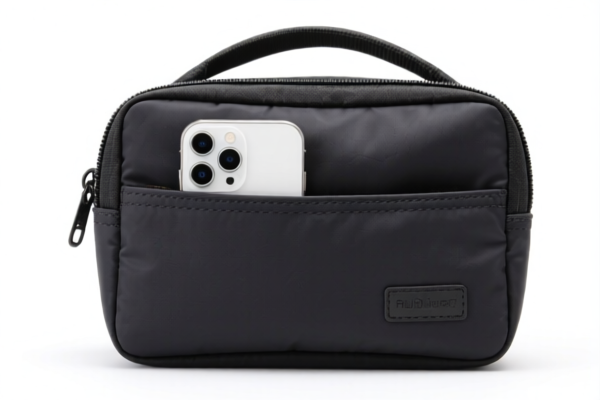
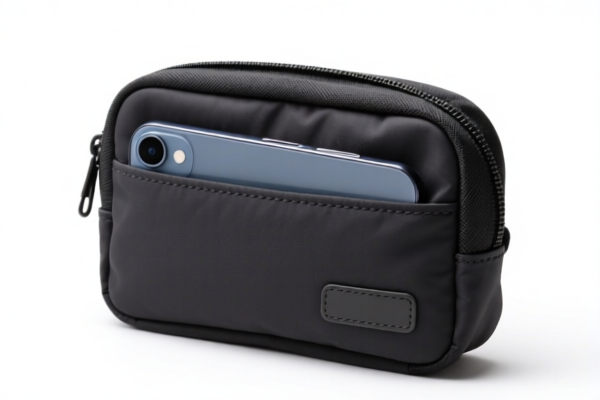
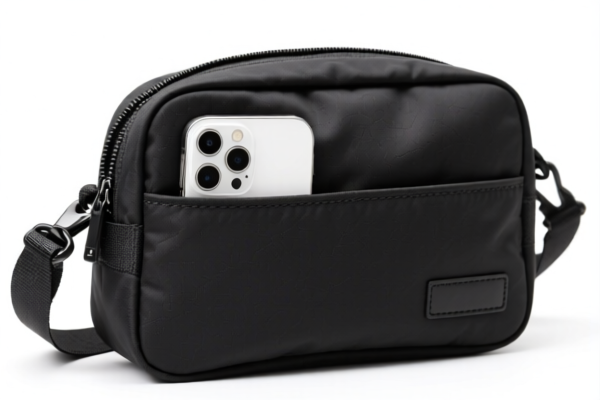
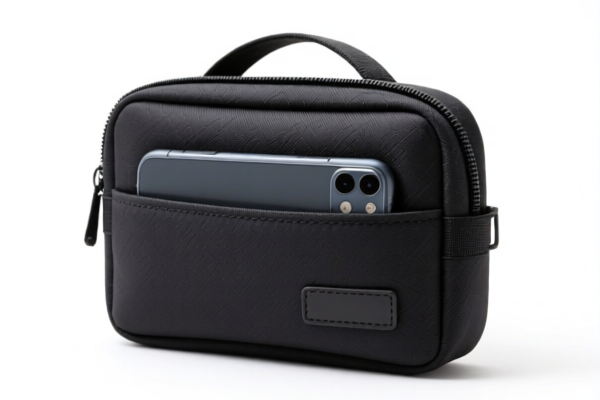
AI Analysis
🎒 Insulated Phone Pocket Bag (Thermal Phone Pouch)
🌐 HS Code Reference & Clearance Guide | 2026 Latest Tariff Analysis | Professional Customs Strategy
📌 I. Product Definition & Classification: What is an "Insulated Phone Pocket Bag"?
An Insulated Phone Pocket Bag is a small, portable accessory designed to protect smartphones from extreme temperatures (heat or cold), shock, and scratches. In international trade, its classification is complex because it straddles the line between packaging, textile goods, and personal accessories. The key to accurate classification lies in material composition and primary function.
⚠️ Critical Distinction:
- If the bag is primarily a storage/transport container for packaging purposes → It may fall under Chapter 39 (Plastics) or Chapter 63 (Other Made-Up Articles).
- If the bag is primarily a fashion/accessory item with insulation features → It may fall under Chapter 42 (Leather/Textile Articles).
- Clue for AI Analysis: The provided data suggests ambiguity. Some classifications assume a plastic/synthetic material (packaging logic), while others assume textile/linen material (accessory logic).
📦 II. HS Code Classification Details (2026 Latest Tariff Authority Comparison)
Based on the provided data, there are 5 potential HS Codes for this product, depending on the specific material and perceived primary use.
| HS Code | Product Description | Material Assumption | Primary Logic | Total Tax Rate (US/China) |
|---|---|---|---|---|
| 3923.90.00.80 | Plastic Packaging Supplies | Plastic / Synthetic | Classified as packaging/container. Logic: It’s a "bag" for holding an item, made of plastic. | 38.0% |
| 6307.90.98.75 | Other Made-Up Articles (Mask/Bag Logic) | Other Textile / Coated Fabric | Classified as finished consumer good. Logic: "Other" category for non-specific functional items like face masks or bags. | 24.5% |
| 6307.90.98.91 | Other Made-Up Articles (Bag Logic) | Plastic / Coated Textile | Classified as finished bag. Logic: Fits the "Other" category for bag-shaped manufactured goods. | 24.5% |
| 4202.92.08.09 | Articles of Apparel & Accessories (Textile Surface) | Textile outer surface | Classified as fashion accessory. Logic: Assumes outer surface is textile (e.g., nylon, polyester), treated as a personal accessory. | 42.0% |
| 4202.92.08.07 | Articles of Apparel & Accessories (Textile Surface) | Textile outer surface | Classified as fashion accessory. Logic: Same as above, slight sub-category difference in US HTS. | 42.0% |
🔍 Key Insight:
- Lowest Risk/Cost:6307.90.98.75/6307.90.98.91(24.5%)
- Medium Risk/Cost:3923.90.00.80(38.0%)
- Highest Risk/Cost:4202.92.08.07/09(42.0%)
- Critical Variable: Is the outer layer Textile (4202) or Plastic/Non-Textile (6307/3923)? Most insulated phone bags use nylon/polyester (textile) with a thermal foil lining. Therefore, 4202 or 6307 are most likely.
💰 III. 2026 Latest Tariff Rate Breakdown (Including Surtaxes)
✅ Applicable Country: United States (US)
✅ Origin: China (CN)
✅ Effective Date: From November 10, 2025 (including subsequent imports)
🎯 1. 3923.90.00.80 – Plastic Packaging Supplies
| Item | Content |
|---|---|
| Base Tariff | 3.0% |
| Section 301 Surtax | +25.0% |
| 122 Clause Tariff | +10.0% |
| Total Rate | 38.0% |
| Calculation | CIF Value × 38.0% |
| De Minimis Exemption | ❌ Not Eligible |
| Legal Basis | USITC:3923.90.00.80 → FOOTNOTE:301 → 122Clause |
📌 Explanation:
- This classification treats the phone bag as a package/container.
- High tariff due to Section 301 (301 tariff is typically 25% for plastic goods from China).
- Risk: If the bag is clearly a fashion item (not packaging), this classification may be challenged as misdeclaration.
🎯 2. 6307.90.98.75 & 6307.90.98.91 – Other Made-Up Articles (Textile/Coated)
| Item | Content |
|---|---|
| Base Tariff | 7.0% |
| Section 301 Surtax | +7.5% |
| 122 Clause Tariff | +10.0% |
| Total Rate | 24.5% |
| Calculation | CIF Value × 24.5% |
| De Minimis Exemption | ❌ Not Eligible |
| Legal Basis | USITC:6307.90.98.75/91 → FOOTNOTE:301 → 122Clause |
📌 Explanation:
- This is often the most cost-effective classification for insulated bags made of coated fabrics or non-textile materials.
- The "7.5% Section 301" is lower than the 25% for plastics or textiles in some categories.
- Logic: The USITC footnote for Chapter 63 often has lower surtax rates for "other articles" compared to specific apparel or plastic packaging.
🎯 3. 4202.92.08.07 & 4202.92.08.09 – Articles of Apparel (Textile Surface)
| Item | Content |
|---|---|
| Base Tariff | 7.0% |
| Section 301 Surtax | +25.0% |
| 122 Clause Tariff | +10.0% |
| Total Rate | 42.0% |
| Calculation | CIF Value × 42.0% |
| De Minimis Exemption | ❌ Not Eligible |
| Legal Basis | USITC:4202.92.08.07/09 → FOOTNOTE:301 → 122Clause |
📌 Explanation:
- This classification assumes the outer surface is textile (e.g., nylon, polyester).
- High Risk: Section 301 tariffs on textile-based apparel/accessories from China are often 25% (or higher depending on specific footnote).
- Caution: If your bag is made of nylon/polyester, customs may classify it here. The 42% rate is significantly higher than the 6307 option.
🛠️ IV. Customs Clearance Practical Advice (Avoiding Pitfalls)
✅ 1. Preparation Checklist (Essential Documents)
| Document | Required | Description |
|---|---|---|
| ✅ Product Specifications | ✔️ | Must clearly state: Outer Material (e.g., 100% Polyester) and Lining Material (e.g., EPE Foam, Aluminum Foil). |
| ✅ Product Photos | ✔️ | Clear images of the exterior (to identify material) and interior (to show insulation). |
| ✅ Bill of Materials (BOM) | ✔️ | Detailed breakdown of fabrics, zippers, foam, etc. |
| ✅ Commercial Invoice | ✔️ | Description: "Insulated Phone Pouch, Outer: Polyester, Inner: Thermal Foam, Model: XYZ" |
| ✅ Packing List | ✔️ | Unit weight and dimensions. |
| ✅ Origin Certificate | ✔️ | To prove CN origin (and apply correct 301 tariffs). |
✅ 2. Declaration Strategy (Key Tips)
🔥 Golden Rule: "Declare Material First, Function Second!"
| Scenario | Correct Declaration | Wrong Declaration | Consequence |
|---|---|---|---|
| Outer is Polyester/Nylon | 4202.92.08.07 or 6307.90.98.91 |
"Plastic Bag" | 42% Tax (if 4202) or Audit for misclassification. |
| Outer is PVC/Vinyl | 3923.90.00.80 or 6307.90.98.75 |
"Textile Pouch" | 38% Tax (if 3923) or Audit. |
| Mixed Material (e.g., Leather + Textile) | 4202.92.08.07 (if textile > 50%) |
Generic "Bag" | High tax + Delay. |
| Small Sample/Shipment | Use De Minimis if eligible (but 122 Clause blocks it) | Under-declare Value | Seizure/Fine. |
📌 Note on 122 Clause:
The 122 Clause (Section 122 of the Trade Act of 1974) applies to all these HS Codes for Chinese origin goods, adding a 10% surtax. This means no de minimis exemption (under $800) applies. You must pay taxes on every shipment.
✅ 3. Special Circumstances
| Situation | Handling Advice |
|---|---|
| OEM Custom Bag | Provide design files to prove it’s a "made-up article" and not a generic commodity. |
| Promotional Item | Still subject to 122 Clause taxes. Cannot use de minimis. |
| Material Change | If you switch from Nylon (Textile) to PVC (Plastic), the HS Code and Tax Rate change drastically (24.5% vs 38%). Verify material specs! |
| Insulation Type | If insulation is foam (EPE), it supports Chapter 63 or 42. If it’s just a plastic pouch with no insulation, it’s definitely 3923. |
🌍 V. Global Market Clearance Comparison (2026 Latest)
| Country/Region | Recommended HS Code | Tariff (China Origin) | Key Certifications | Notes |
|---|---|---|---|---|
| 🇺🇸 USA | 6307.90.98.91 (Best) or 4202.92.08.07 |
24.5% or 42.0% | FCC (if electronic), CPSIA (if for kids) | 122 Clause applies. No de minimis. |
| 🇨🇳 China | 4202.92.00.00 |
5% - 10% | CCC (if electronic) | Low tariff, easy clearance. |
| 🇪🇺 EU | 4202.92.00 |
12% | CE (if electronic) | No additional surtaxes like 301. |
| 🇦🇺 Australia | 4202.92.00 |
5% | RCM | GST applies (10%). |
| 🇯🇵 Japan | 4202.92.00 |
10% | PSE (if electronic) | No surtaxes. |
📌 Conclusion:
- USA is the most expensive market due to Section 301 + 122 Clause.
- Optimization Tip: If the outer material can be classified as "Other Made-Up Articles" (6307) rather than "Apparel" (4202), you save 17.5% in taxes (24.5% vs 42%).
- Key Argument: "The bag is a functional accessory for temperature control, not primarily an article of apparel." This supports 6307.
📌 VI. Common Errors & Pitfall Guide (Lessons Learned)
❌ Error 1: Classifying as 9801.01.00 (De Minimis)
👉 Consequence: Seizure. 122 Clause explicitly removes de minimis exemption for Chinese goods.
❌ Error 2: Declaring as "Plastic Bag" when outer is Nylon
👉 Consequence: Audit for misclassification. Potential 42% tax or penalty for undervaluation.
❌ Error 3: Ignoring the 122 Clause
👉 Consequence: Unexpected 10% surtax at customs. Budget failure.
❌ Error 4: Using generic "Phone Case"
👉 Consequence: May be classified as 8517.62 (Electronics) or 3926.90 (Plastics), with different tariffs. Be specific!
✅ Correct Declaration Example:
"Insulated Phone Pouch, Outer: 100% Polyester Fabric, Inner: EPE Foam & Aluminum Foil, For Protection Against Heat/Cold, Model: IPB-2026"
🎯 VII. Conclusion: Professional Classification Saves Money!
🎯 Remember the Rule:
🔹 "Material Dictates HS Code, 122 Clause Dictates Tax."
🔹 6307 (24.5%) < 3923 (38.0%) < 4202 (42.0%)
🔹 Always verify outer material! Nylon = 4202/6307, PVC = 3923/6307.
📌 Pro Tip:
If you have high volume, consider Advance Ruling (CBP Ruling) to lock in the 6307.90.98.91 classification (24.5%) by proving the bag is a "made-up article" and not an "article of apparel." This can save 17.5% compared to the 4202 classification.
📣 Immediate Action:
📞 Consult your customs broker with material specs.
🚀 Optimize your supply chain by selecting materials that fall under Chapter 63 if possible, to minimize US tariff exposure.
✨ Professional Clearance, Start with Precise Classification!
💼 Every Percent of Tax Savings Counts!
Customer Reviews
About HS Code Classification
The Harmonized System (HS) is an internationally standardized nomenclature developed by the World Customs Organization (WCO) to classify traded products. Over 200 countries use the HS system as the basis for customs tariffs, trade statistics, and import/export regulations.
Each HS code follows a hierarchical structure:
- Chapter (2 digits) — Broad category of goods (e.g., Chapter 84: Machinery and Mechanical Appliances)
- Heading (4 digits) — More specific grouping within the chapter
- Subheading (6 digits) — Internationally standardized breakdown, used by all WCO member countries
- National subdivisions (8-10 digits) — Country-specific extensions for further classification, such as US HTSUS 10-digit codes
Correct HS code classification is essential for smooth customs clearance, accurate duty payment, and compliance with trade regulations. Misclassification can lead to customs delays, overpayment of duties, or penalties.
When importing from CN to US, the applicable tariff rates may include:
- Most-Favored-Nation (MFN) rate — The standard duty rate applied to WTO members
- General rate — Applied to countries without trade agreements
- Trade remedy duties — Additional tariffs such as Section 301 (anti-dumping), Section 232 (national security), or countervailing duties
The information provided on this page is for reference purposes only. For official classification, please consult with your local customs authority or a licensed customs broker.