Insulated Polyamide Raw Material
CN → USProduct Images
AI Analysis
🧪 Insulated Polyamide Raw Material (Engineering Plastics)
🌐 HS Code Reference & Customs Clearance Guide | 2026 Latest Tariff Analysis | Professional Compliance Strategy
📌 Part 1: Product Definition & Classification: Do You Really Understand "Polyamide"?
Polyamide (PA), commonly known as Nylon, is a versatile synthetic polymer widely used in automotive, electronics, and industrial applications due to its high strength, heat resistance, and insulation properties. In international trade, the classification depends heavily on its form (pellets, powder, granules) and additives (fillers, reinforcing materials).
Key Distinctions:
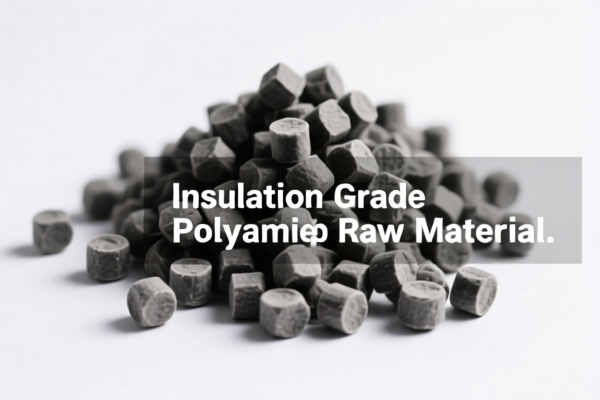
- Raw Material Form: Typically supplied as pellets, granules, or powder for injection molding or extrusion.
- Insulation Property: Refers to its electrical insulation capabilities, not necessarily a finished insulating product (like cables).
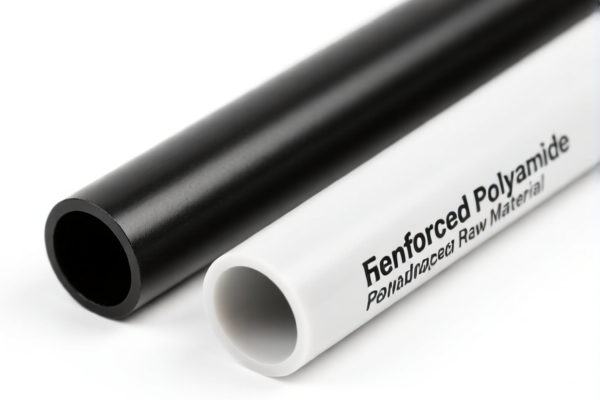
- Reinforced vs. Pure: Additives like glass fiber (GF) significantly alter the HS code classification.
⚠️ Critical Classification Point:
- If it is plain polymer (nylon pellets/powder) → Usually 3903.30 or 3903.90.
- If it is reinforced (e.g., with glass fiber) → May shift to 3903.30 or 3903.90 depending on the base polymer.
- If it is a finished insulating component (e.g., pre-formed bushings) → May fall under 8546 or 8538.
Note: The query "Raw Material" strongly implies polymers in pellet/powder form.
📦 Part 2: HS Code Classification Details (2026 Latest Tariff Authority Cross-Reference)
| HS Code | Product Description | Application Scenario | Key Characteristics |
|---|---|---|---|
3903.30.00.00 |
Polymers of acrylonitrile-butadiene-styrene (ABS) | Not PA | ❌ Incorrect for Polyamide |
3903.90.00.00 |
Other primary forms of acrylonitrile-butadiene-styrene (ABS) | Not PA | ❌ Incorrect for Polyamide |
3902.30.00.00 |
Copolymerization of styrene | Not PA | ❌ Incorrect for Polyamide |
3904.10.00.00 |
Polyamides in primary forms (Nylon 6, 66, etc.) | Standard Nylon Pellets/Powder | ✅ Pure or lightly modified PA |
3904.90.00.00 |
Other polyamides in primary forms | Specialty Polyamides (e.g., PA 46, PA 12, PA 610) | ✅ Non-standard or high-performance PA |
3903.00.00.00 |
Polymers of styrene | Not PA | ❌ Incorrect for Polyamide |
3909.50.00.00 |
Urea resin melamine resin and phenolic resin | Not PA | ❌ Incorrect for Polyamide |
🔍 Key Reminder:
- "Polyamide" falls primarily under Chapter 39, Heading 3904.
- Nylon 6 (PA6) and Nylon 66 (PA66) are the most common and fall under 3904.10.
- Specialty Polyamides (e.g., PA11, PA12, PA46) fall under 3904.90.
- If the material is already processed into finished insulators (not raw material), it may fall under 8546 (Insulators) or 8538 (Parts of Electrical Machinery), but the term "Raw Material" points to 3904.
💰 Part 3: 2026 Latest Tariff Rate Details (Including Surtaxes, Policy Add-ons)
✅ Applicable Country: United States (US)
✅ Country of Origin: China (CN)
✅ Effective Date: November 10, 2025 (inclusive of subsequent imports)
🎯 1. 3904.10.00.00 —— Polymers of Nylon 6, 66, etc. (Primary Forms)
| Item | Content |
|---|---|
| Base Tariff Rate | 5.3% (ad valorem) |
| USITC Additional Tariff | +25% (from USITC Footnote 9903.30.01) |
| IEEPA Additional Tariff | +7.5% (for China/Hong Kong products, effective Nov 10, 2025) |
| Total Tariff Rate | 37.8% |
| Tax Calculation | CIF Value × 37.8% |
| De Minimis Exemption Available? | ❌ No (deny_de_minimis) |
| Legal Basis Path | IEEPA:9903.01.25 → IEEPA:9903.01.24 → USITC:3904.10.00.00 → FOOTNOTE:9903.30.01 |
📌 Explanation:
- "USITC Additional Tariff 25%" comes from Section 301 of the U.S. Trade Act;
- "IEEPA 7.5%" is the supplemental tariff imposed on Chinese goods under the International Emergency Economic Powers Act;
- Total 37.8%, which is a very high tariff, must be anticipated in advance!
🎯 2. 3904.90.00.00 —— Other Polyamides (Primary Forms)
| Item | Content |
|---|---|
| Base Tariff Rate | 5.3% |
| USITC Additional Tariff | +25% |
| IEEPA Additional Tariff | +7.5% |
| Total Tariff Rate | 37.8% |
| Tax Calculation | CIF × 37.8% |
| De Minimis Exemption Available? | ❌ No |
| Legal Basis Path | IEEPA:9901.25 → IEEPA:9903.01.24 → USITC:3904.90.00.00 → FOOTNOTE:9903.30.01 |
📌 Note:
- Same as above, belonging to "polymer raw materials";
- Even if it is "high-performance PA12," "PA46," or "glass-fiber-reinforced PA," as long as it is primary form (pellets/powder), this code applies.
🛠️ Part 4: Customs Clearance Practical Advice (Battlefield Pit-Avoidance Guide)
✅ 1. Preparation of Material Checklist (Missing is Not Allowed)
| Material | Must Provide | Explanation |
|---|---|---|
| ✅ Product Specification Sheet | ✔️ | Includes molecular weight, viscosity, melting point, color, additive content (e.g., GF%, UV stabilizers) |
| ✅ Safety Data Sheet (SDS) | ✔️ | Required for chemical products, confirms no hazardous materials |
| ✅ Product Photos | ✔️ | Clear pictures of packaging, label, and material form (pellets/powder) |
| ✅ Certificate of Analysis (COA) | ✔️ | Confirms purity and compliance with standards |
| ✅ Commercial Invoice | ✔️ | Must clearly state "Polyamide (Nylon) Raw Material, Pellets/Powder" |
| ✅ Certificate of Origin (CO) | ✔️ | If not Chinese, can apply for preferential rates |
| ✅ Packing List | ✔️ | Details gross weight, net weight, number of bags/pallets |
✅ 2. Declaration Tips (Key Mantra)
🔥 "Form Defines Code, Additive Matters, Name Precise, Tariff Reduced!"
| Situation | Correct Declaration Method | Incorrect Practice |
|---|---|---|
| Standard PA6/PA66 Pellets | 3904.10.00.00 |
Misdeclare as "Plastic Parts" → 37.8% |
| Glass-Fiber Reinforced PA | 3904.10.00.00 or 3904.90.00.00 |
Misdeclare as "Composite Material" → High risk |
| Finished Insulator Parts | 8546.90.00.00 |
Misdeclare as "Raw Material" → Wrong code |
| Pure Polymer Powder | 3904.10.00.00 |
Misdeclare as "Chemical Intermediate" → Delay |
✅ 3. Special Case Handling
| Situation | Handling Advice |
|---|---|
| OEM Custom Color/Grade | Provide customer order + technical data sheet to avoid being deemed "non-standard" |
| With UV Stabilizers/Flame Retardants | Declare additive content clearly; may affect HS code if additives >10% |
| Glass Fiber Reinforced PA | Still generally 3904, but specify "Reinforced Polyamide" to clarify |
| Used/Recycled Polyamide | May fall under different codes (e.g., 3915) and have higher tariffs |
🌍 Part 5: Global Main Market Clearance Comparison (2026 Latest)
| Country/Region | Recommended HS Code | Tariff | Certification Requirements | Remarks |
|---|---|---|---|---|
| 🇺🇸 USA | 3904.10.00.00 |
37.8% (China Origin) | None for raw material | High due to 301 tariffs |
| 🇨🇳 China | 3904.10.00.00 |
5% | None | No additional surtax |
| 🇪🇺 EU | 3904.10.00.00 |
5.3% | REACH Registration | No additional surtax |
| 🇦🇺 Australia | 3904.10.00.00 |
5% | None | No additional surtax |
| 🇯🇵 Japan | 3904.10.00.00 |
0% | None | No additional surtax |
📌 Conclusion:
- USA is the only market imposing high additional tariffs on Polyamide raw materials;
- Chinese-origin Polyamide has very high clearance costs in the US, suggest evaluating whether to transship or adjust supply chain.
📌 Part 6: Common Errors & Pit-Avoidance Guide (Blood Lessons)
❌ Error 1: Declaring "Nylon" as "Plastic Parts"
👉 Consequence: If inspected, may be reclassified to 3904 with back taxes + penalties!
❌ Error 2: Ignoring additive content (e.g., GF%)
👉 Consequence: If GF content is significant, may affect HS code or trigger anti-dumping investigations
❌ Error 3: Providing incomplete SDS
👉 Consequence: Customs may halt inspection, causing delay or return
❌ Error 4: Using "Insulated Material" as a vague name
👉 Consequence: Customs may misclassify as finished electrical component → higher tariff
✅ Correct Practice:
"Polyamide 6 (Nylon 6) Raw Material, Pellets, Virgin, Unreinforced, for Injection Molding, Chemical Resistant, High Heat Resistance, Certified RoHS/REACH"
🎯 Part 7: Conclusion: Professional Declaration, Save Time and Money!
🎯 Remember the Mantra:
🔹 "Raw Material = 3904, Form is Key, Additives Matter, US Tariff 37.8%!"
🔹 "HS Code Determines Fate, Tariff Differs by 30 Points, Declaration Error Costs Thousands!"
📌 Tips:
- If your Polyamide originates from Vietnam, Mexico, Thailand, Malaysia, you may apply for IEEPA Exemption, tariff reduced to 5.3%;
- Suggest Applying for Advance Ruling in advance to avoid clearance risks.
📣 Take Action Now:
📞 Contact Professional Broker + Provide Product Photos + Apply for HS Code Advance Ruling
🚀 Let your Polyamide Raw Material, Smooth Clearance, Efficient Export, Profit Doubling!
✨ Professional Clearance Starts with Accurate Classification!
💼 Every Penny of Your Cost Deserves Precise Calculation!
Customer Reviews
About HS Code Classification
The Harmonized System (HS) is an internationally standardized nomenclature developed by the World Customs Organization (WCO) to classify traded products. Over 200 countries use the HS system as the basis for customs tariffs, trade statistics, and import/export regulations.
Each HS code follows a hierarchical structure:
- Chapter (2 digits) — Broad category of goods (e.g., Chapter 84: Machinery and Mechanical Appliances)
- Heading (4 digits) — More specific grouping within the chapter
- Subheading (6 digits) — Internationally standardized breakdown, used by all WCO member countries
- National subdivisions (8-10 digits) — Country-specific extensions for further classification, such as US HTSUS 10-digit codes
Correct HS code classification is essential for smooth customs clearance, accurate duty payment, and compliance with trade regulations. Misclassification can lead to customs delays, overpayment of duties, or penalties.
When importing from CN to US, the applicable tariff rates may include:
- Most-Favored-Nation (MFN) rate — The standard duty rate applied to WTO members
- General rate — Applied to countries without trade agreements
- Trade remedy duties — Additional tariffs such as Section 301 (anti-dumping), Section 232 (national security), or countervailing duties
The information provided on this page is for reference purposes only. For official classification, please consult with your local customs authority or a licensed customs broker.