Insulation Protective Film
CN → US| HS Code | Tariff Rate | Origin | Destination | Doc |
|---|---|---|---|---|
| 3919905030 | 40.8% | CN | US | Official Doc |
| 3920991000 | 41.0% | CN | US | Official Doc |
| 3920992000 | 39.2% | CN | US | Official Doc |
| 3919102020 | 40.8% | CN | US | Official Doc |
| 8547200000 | 35.0% | CN | US | Official Doc |
Product Images
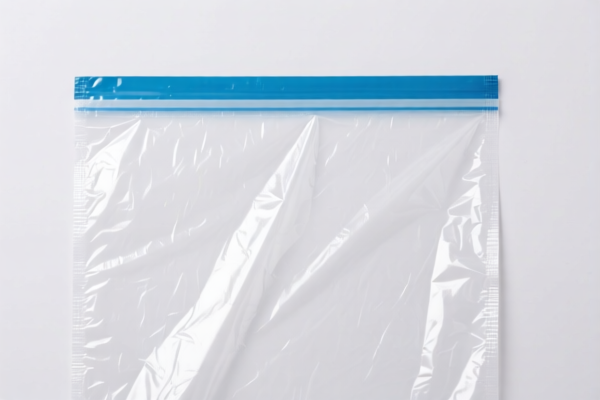
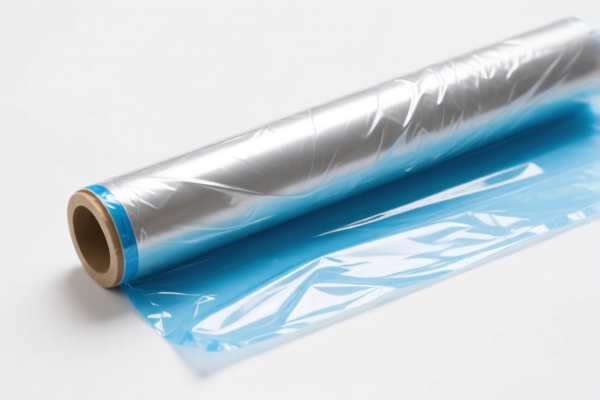
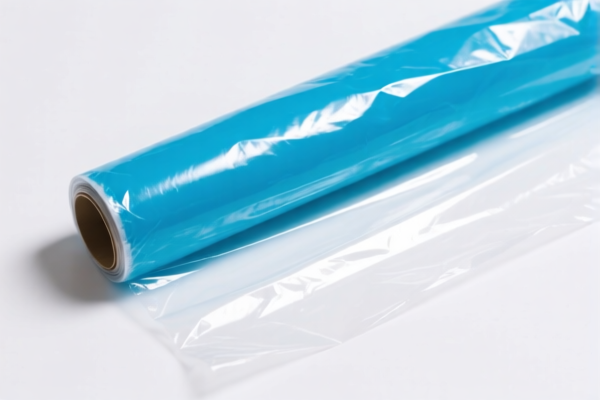
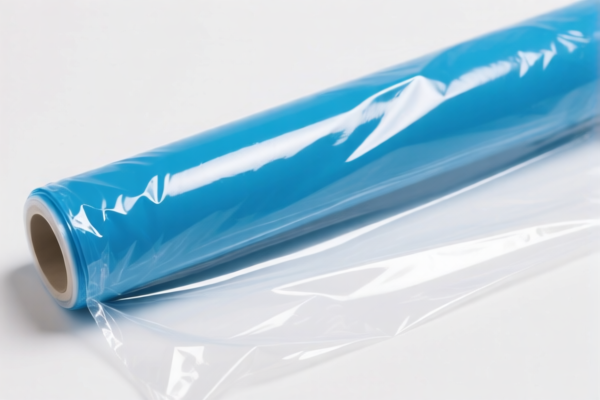
AI Analysis
🛡️ Insulation Protective Film (Industrial & Electrical Grade)
🌐 HS Code Reference & Customs Clearance Guide | 2026 Latest Tariff Analysis | Professional Compliance Strategy
📌 I. Product Definition & Classification: What is "Insulation Protective Film"?
Insulation Protective Films are thin, flexible sheets primarily made of plastic or composite materials, designed to provide electrical insulation, physical protection, or moisture barrier properties in industrial, electrical, and manufacturing applications.
In international trade, these products are categorized based on material composition, form factor (sheet/film/roll), and specific function (e.g., electrical insulation vs. general packaging). Misclassification can lead to significant tariff discrepancies due to US-China trade policies (Section 301 & IEEPA).
⚠️ Key Classification Distinctions:
- If the product is flat, plastic-based, and used for insulation → Likely 3919.90.50.30 or 3919.10.20.20.
- If it is a general-purpose plastic sheet/film without specific electrical certification → Likely 3920.99.10.00 or 3920.99.20.00.
- If it is considered an insulating fitting/component rather than raw material → Potentially 8547.20.00.00.
📦 II. HS Code Classification Details (2026 Latest Tariff Authority Cross-Reference)
| HS Code | Product Description | Application Scenario | Key Characteristics |
|---|---|---|---|
3919.90.50.30 |
Self-adhesive plates, sheets, film, tape, tape and other flat shapes, of plastics, other than those of heading 3918 or 3920 | Electrical Insulation Tape/Film; plastic-based, sheet form | Plastic material; form matches sheet/film; inferred for insulation |
3920.99.10.00 |
Other plates, sheets, film, foil and strip, of plastics, not cellular, not reinforced, laminated, supported or similarly combined with other materials, unworked or merely surface-worked or merely cut into squares or rectangles | General Plastic Insulation Sheets; non-cellular plastic sheet/film | Plastic material; form matches sheet/film; no obvious conflict |
3920.99.20.00 |
Other plates, sheets, film, foil and strip, of plastics, not cellular, not reinforced, laminated, supported or similarly combined with other materials, unworked or merely surface-worked or merely cut into squares or rectangles | Composite/Non-Metallic Thin Sheets; thin shape, non-metallic inference | Thin shape; material inferred as non-metal (plastic/composite) |
3919.10.20.20 |
Self-adhesive plates, sheets, film, tape, tape and other flat shapes, of plastics, in rolls of a width not exceeding 20 cm, other | Electrical Insulation Tape; narrow roll, electrical function | Electrical function; flat shape consistent with electrical tape |
8547.20.00.00 |
Insulating fittings for electrical machines, appliances or equipment, for electric circuits, insulators of all kinds, insulating tubes and their fittings, of materials other than ceramic | Insulating Fittings/Components; plastic/ceramic-like insulation accessories | Form and function match insulating accessories; material inferred as plastic/insulating material |
🔍 Critical Reminder:
- "Self-adhesive" (3919 series) vs. "Non-adhesive Sheets" (3920 series): If the film has an adhesive backing, it must fall under 3919. If it is a standalone protective layer without adhesive, 3920 is more appropriate.
- "Electrical" Specificity: If the product is explicitly marketed and certified for high-voltage electrical insulation, 3919.10.20.20 (tape) or 3919.90.50.30 may be more precise than generic plastic sheets.
- Component vs. Raw Material: If the film is pre-cut into specific insulating bushings or parts, 8547.20.00.00 might apply, but this is less common for "films" and more for "fittings."
💰 III. 2026 Latest Tariff Rate Breakdown (Including Surcharges & Policy Add-ons)
✅ Applicable Country: United States (US)
✅ Country of Origin: China (CN)
✅ Effective Date: From November 10, 2025 (including subsequent imports)
🎯 1. 3919.90.50.30 —— Self-Adhesive Plastic Sheets/Films for Insulation
| Item | Content |
|---|---|
| Base Tariff | 5.8% (ad valorem) |
| USITC Surcharge (Section 301) | +25.0% |
| IEEPA Surcharge (China/HK) | +10.0% |
| Total Tax Rate | 40.8% |
| Tax Calculation | CIF Value × 40.8% |
| De Minimis Exemption | ❌ Not Eligible (deny_de_minimis) |
| Legal Pathway | Base: 5.8% → Section 301: 25.0% → IEEPA: 10.0% |
📌 Explanation:
- This code is often used for adhesive insulation tapes or films.
- The 35% additional tariff (25% + 10%) makes this category expensive. Ensure the product is clearly described as "self-adhesive" to justify this code.
🎯 2. 3920.99.10.00 —— Non-Cellular Plastic Sheets/Films (General)
| Item | Content |
|---|---|
| Base Tariff | 6.0% (ad valorem) |
| USITC Surcharge (Section 301) | +25.0% |
| IEEPA Surcharge (China/HK) | +10.0% |
| Total Tax Rate | 41.0% |
| Tax Calculation | CIF Value × 41.0% |
| De Minimis Exemption | ❌ Not Eligible (deny_de_minimis) |
| Legal Pathway | Base: 6.0% → Section 301: 25.0% → IEEPA: 10.0% |
📌 Note:
- Slightly higher base rate (6.0% vs. 5.8%) than 3919.90.50.30.
- Use this if the film is non-adhesive and general-purpose plastic sheet used for insulation or protection.
🎯 3. 3920.99.20.00 —— Other Plastic Sheets/Films (Thin/Composite)
| Item | Content |
|---|---|
| Base Tariff | 4.2% (ad valorem) |
| USITC Surcharge (Section 301) | +25.0% |
| IEEPA Surcharge (China/HK) | +10.0% |
| Total Tax Rate | 39.2% |
| Tax Calculation | CIF Value × 39.2% |
| De Minimis Exemption | ❌ Not Eligible (deny_de_minimis) |
| Legal Pathway | Base: 4.2% → Section 301: 25.0% → IEEPA: 10.0% |
📌 Advantage:
- Lowest total rate (39.2%) among plastic sheet codes.
- Ideal for thin, non-adhesive, composite, or non-metallic films that don’t fit the "self-adhesive" or "electrical tape" definitions precisely.
🎯 4. 3919.10.20.20 —— Self-Adhesive Plastic Tape (Width ≤ 20cm) for Electrical Use
| Item | Content |
|---|---|
| Base Tariff | 5.8% (ad valorem) |
| USITC Surcharge (Section 301) | +25.0% |
| IEEPA Surcharge (China/HK) | +10.0% |
| Total Tax Rate | 40.8% |
| Tax Calculation | CIF Value × 40.8% |
| De Minimis Exemption | ❌ Not Eligible (deny_de_minimis) |
| Legal Pathway | Base: 5.8% → Section 301: 25.0% → IEEPA: 10.0% |
📌 Specific Use:
- Strictly for narrow rolls (≤ 20cm width) with adhesive.
- If your "film" comes in narrow rolls for electrical taping, this is the most accurate code despite the high tariff.
🎯 5. 8547.20.00.00 —— Insulating Fittings (Plastic/Ceramic)
| Item | Content |
|---|---|
| Base Tariff | 0.0% (ad valorem) |
| USITC Surcharge (Section 301) | +25.0% |
| IEEPA Surcharge (China/HK) | +10.0% |
| Total Tax Rate | 35.0% |
| Tax Calculation | CIF Value × 35.0% |
| De Minimis Exemption | ❌ Not Eligible (deny_de_minimis) |
| Legal Pathway | Base: 0.0% → Section 301: 25.0% → IEEPA: 10.0% |
🎯 Best Rate Opportunity!
- Lowest total rate (35.0%).
- Risk: Must prove the product is an "insulating fitting" (e.g., pre-formed bushings, spacers, specific components) rather than a raw "film" or "sheet".
- If the product is just a flat roll of plastic, using this code may trigger customs audits for misclassification. Only use if the product is clearly a finished insulating component.
🛠️ IV. Customs Clearance Practical Advice (Real-World Pitfall Guide)
✅ 1. Documentation Checklist (Non-Negotiable)
| Document | Required | Notes |
|---|---|---|
| ✅ Product Specification Sheet | ✔️ | Must detail material (e.g., PET, PVC, Kapton), thickness, width, length, and electrical properties (dielectric strength). |
| ✅ Product Photos | ✔️ | Clear images showing rolls, cut sheets, or fitted components. Highlight any labels ("Insulation," "Adhesive," "Electrical Grade"). |
| ✅ Commercial Invoice | ✔️ | Describe item precisely. Avoid vague terms like "Plastic Sheet." Use "Self-Adhesive Electrical Insulation Film, Material: PET, Thickness: 0.1mm." |
| ✅ Certificate of Origin (CO) | ✔️ | Mandatory for China-origin goods to apply Section 301/IEEPA rules. |
| ✅ Packaging List | ✔️ | Specify net/gross weight and dimensions. |
| ✅ Technical Data Sheet (TDS) | ✔️ | Prove insulation properties if claiming 8547.20.00.00. |
✅ 2. Declaration Tips (Key Mnemonic)
🔥 "Adhesive = 3919, Non-Adhesive = 3920, Fittings = 8547. Width & Form Matter!"
| Scenario | Correct HS Code | Common Mistake | Consequence |
|---|---|---|---|
| Self-adhesive electrical tape/film | 3919.90.50.30 or 3919.10.20.20 |
Declared as 3920 (Non-adhesive) |
Customs reclassification → Delay + Penalties |
| Narrow roll (<20cm), adhesive | 3919.10.20.20 |
Declared as 3919.90 (Other) |
Minor risk, but narrower code is more accurate |
| Wide roll (>20cm), adhesive | 3919.90.50.30 |
Declared as 3919.10 |
Misclassification → Section 301 may still apply, but base rate differs |
| Non-adhesive plastic sheet | 3920.99.10.00 or 3920.99.20.00 |
Declared as 3919 (Adhesive) |
Customs may demand proof of non-adhesiveness |
| Pre-formed insulating bushings | 8547.20.00.00 |
Declared as 3920 |
Lower tariff (35%) vs. Higher (40.8%) – Save money if eligible! |
| Raw film for cutting into bushings | 3920 or 3919 |
Declared as 8547 |
High Risk → Customs may reject "fitting" claim for raw material |
✅ 3. Special Handling Scenarios
| Scenario | Recommendation |
|---|---|
| OEM Custom Film | Provide customer design specs. If cut to specific shapes for a machine, argue for 8547.20.00.00 (Fitting) if possible. |
| Composite Materials | If film has metal layers or fiberglass reinforcement, 3920 or 3919 still apply unless it becomes a "wire/cable" (Chapter 85). |
| High-Temp Insulation (e.g., Kapton) | Explicitly state material. Kapton (Polyimide) is often classified under 3920.99.10.00 unless adhesive. |
| Sample Shipments | Even samples are subject to full tariffs. Do not claim "Free" unless using a specific exemption program (rare for China-origin plastics). |
🌍 V. Global Market Clearance Comparison (2026 Latest)
| Country/Region | Recommended HS Code | Tariff Rate (China Origin) | Certification Requirements | Notes |
|---|---|---|---|---|
| 🇺🇸 USA | 3919.90.50.30 / 3920.99.10.00 |
40.8% - 41.0% | FCC (if electrical noise relevant), RoHS | High tariffs due to Section 301 & IEEPA. |
| 🇺🇸 USA | 8547.20.00.00 |
35.0% | UL, CSA (if used in end-product) | Best rate, but strict classification criteria. |
| 🇨🇳 China | 3919 / 3920 |
5.0% - 6.0% | CCC (if for electrical equipment) | No Section 301/IEEPA. |
| 🇪🇺 EU | 3919.90 / 3920.99 |
0% - 6.5% | REACH, RoHS | No major surcharges. |
| 🇬🇧 UK | 3919.90 / 3920.99 |
0% - 6.5% | UKCA, REACH | Post-Brexit rules apply. |
| 🇨🇦 Canada | 3919.90 / 3920.99 |
0% - 6.0% | Health Canada (if food contact) | CUSMA may offer 0% for qualified goods. |
📌 Conclusion:
- USA remains the most expensive market for plastic insulation films due to cumulative tariffs (Base + 25% + 10%).
- Canada & EU offer significantly lower costs if supply chains are adjusted.
- Strategic Tip: If the product is a finished insulating component, try to classify under 8547.20.00.00 in the US to save 5.8%–6.0% in base tariffs.
📌 VI. Common Errors & Pitfall Guide (Lessons Learned)
❌ Error 1: Using 8547.20.00.00 for a simple roll of plastic film
👉 Consequence: Customs rejects "fitting" classification → Back to 3919/3920 → No savings, just audit risk.
❌ Error 2: Declaring self-adhesive tape as 3920 (Non-adhesive)
👉 Consequence: Customs tests adhesive presence → Penalty + Potential fraud allegations.
❌ Error 3: Ignoring width for 3919.10.20.20
👉 Consequence: If width > 20cm, it falls under 3919.90 → Base rate difference (5.8% vs. 4.2% or 6.0%).
❌ Error 4: Not providing material specs for 3920.99.20.00
👉 Consequence: Customs cannot verify "non-metallic/composite" claim → Default to higher tariff codes.
✅ Correct Practice:
"Self-Adhesive Polyimide Insulation Film, 0.1mm x 100cm Roll, Electrical Grade, for PCB Protection"
→ Use3919.90.50.30(40.8%)"Non-Adhesive Polyethylene Insulating Sheet, 1mm x 120cm, Cut to Size"
→ Use3920.99.20.00(39.2%)"Pre-Molded Plastic Insulating Bushing, 1/4 inch"
→ Use8547.20.00.00(35.0%) ← Best Rate!
🎯 VII. Conclusion: Precision Classification for Cost Savings!
🎯 Key Takeaways:
🔹 "Adhesive = 3919, Non-Adhesive = 3920, Finished Fitting = 8547."
🔹 "USA Tariff Shock: 35% to 41% – Plan Ahead!"
🔹 "Save 6% by proving it's a 'Fitting' (8547), not a 'Sheet' (3920)."
📌 Pro Tip:
If your Insulation Protective Film is used in high-voltage transformers or specific electrical assemblies, consult a customs broker to argue for 8547.20.00.00. This single change can save 5.8%–6.0% on the CIF value, which is substantial for high-volume shipments.
📣 Immediate Action:
📞 Engage a Licensed Customs Broker to review product samples.
📄 Prepare Technical Datasheets proving material and form.
🚀 Optimize HS Code to minimize Section 301 + IEEPA impact.
✨ Smart Clearance Starts with Accurate Classification!
💼 Every Percent Saved is Pure Profit in Tariff-Heavy Markets!
Customer Reviews
About HS Code Classification
The Harmonized System (HS) is an internationally standardized nomenclature developed by the World Customs Organization (WCO) to classify traded products. Over 200 countries use the HS system as the basis for customs tariffs, trade statistics, and import/export regulations.
Each HS code follows a hierarchical structure:
- Chapter (2 digits) — Broad category of goods (e.g., Chapter 84: Machinery and Mechanical Appliances)
- Heading (4 digits) — More specific grouping within the chapter
- Subheading (6 digits) — Internationally standardized breakdown, used by all WCO member countries
- National subdivisions (8-10 digits) — Country-specific extensions for further classification, such as US HTSUS 10-digit codes
Correct HS code classification is essential for smooth customs clearance, accurate duty payment, and compliance with trade regulations. Misclassification can lead to customs delays, overpayment of duties, or penalties.
When importing from CN to US, the applicable tariff rates may include:
- Most-Favored-Nation (MFN) rate — The standard duty rate applied to WTO members
- General rate — Applied to countries without trade agreements
- Trade remedy duties — Additional tariffs such as Section 301 (anti-dumping), Section 232 (national security), or countervailing duties
The information provided on this page is for reference purposes only. For official classification, please consult with your local customs authority or a licensed customs broker.