Insulation Tape Easy Tear
CN → US| HS Code | Tariff Rate | Origin | Destination | Doc |
|---|---|---|---|---|
| 3919102020 | 40.8% | CN | US | Official Doc |
| 3919905030 | 40.8% | CN | US | Official Doc |
| 3926909989 | 22.8% | CN | US | Official Doc |
| 3926904590 | 38.5% | CN | US | Official Doc |
Product Images
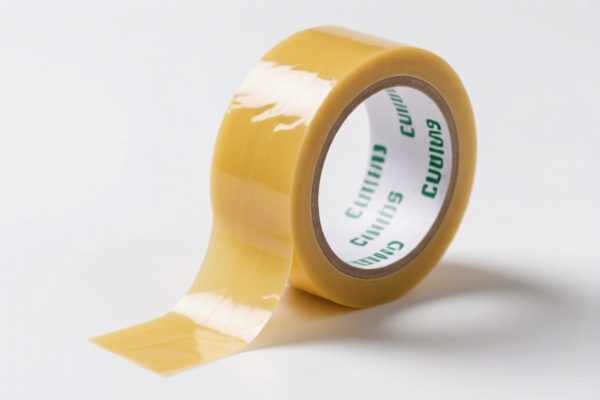
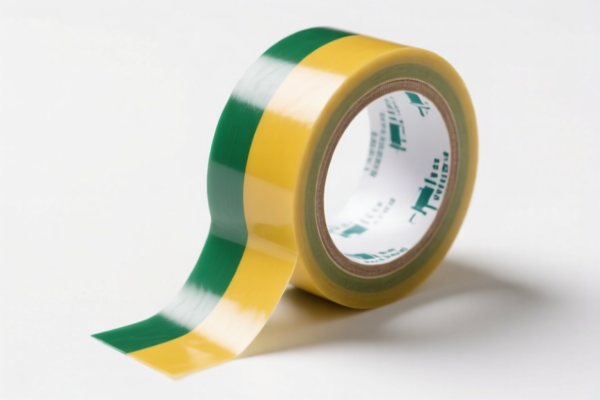
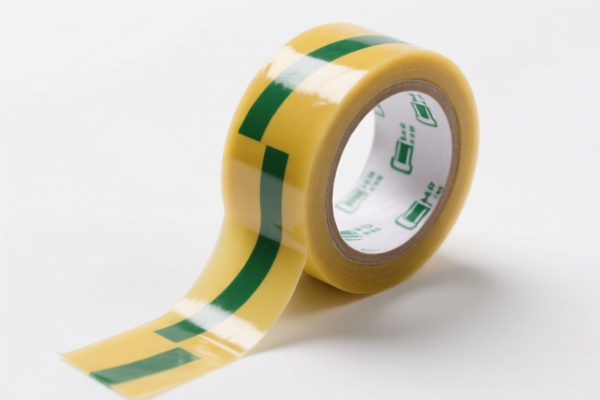
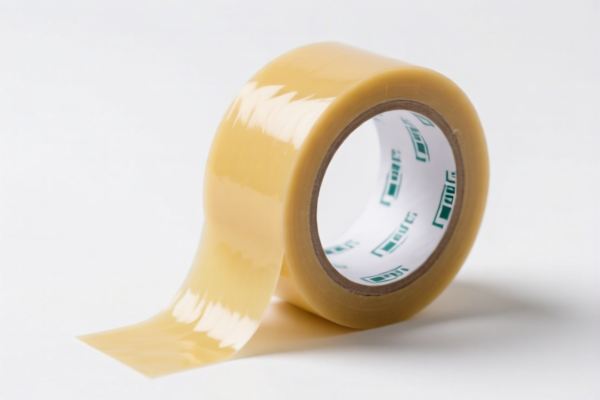
AI Analysis
🛡️ Insulation Tape – Easy Tear (电工绝缘胶带/易撕胶带)
🌐 HS Code Reference & Customs Clearance Guide | 2026 Latest Tariff Analysis | Professional Clearance Strategy
📌 I. Product Definition & Classification: What is "Easy Tear" Insulation Tape?
Insulation Tape (Easy Tear) is a specialized self-adhesive tape primarily used for electrical insulation, wire bundling, and protection in residential, commercial, and industrial electrical applications. The "Easy Tear" attribute indicates the material is designed to be torn by hand without scissors, a common feature in PVC-based tapes.
In international trade, the classification depends heavily on the material composition (typically PVC/Plastic) and the specific use (Electrical Insulation vs. General Packing). Misclassification can lead to significant duty differences.
⚠️ Key Distinction:
- If the tape is specifically designed for electrical insulation (high dielectric strength) and matches the description in Chapter 39.19 → HS 3919.10.20.20 or 3919.90.50.30.
- If classified as a general plastic article not elsewhere specified → HS 3926.90.99.89 or 3926.90.45.90.
📦 II. HS Code Classification Details (2026 Latest Tariff Authority Comparison)
Based on the provided data, here are the four potential HS Codes and their logical derivations:
| HS Code | Product Description | Matching Logic (From Data) | Total Tax Rate |
|---|---|---|---|
3919.10.20.20 |
Self-adhesive plates, sheets, film, foil, tape, strip and other flat shapes, of plastics, whether or not in rolls (Electrical Insulation) | Match Basis: The 'Insulation' attribute aligns with 'Electrical' use. Common sense infers plastic material (PVC), fitting the definition of electrical tape. | 40.8% |
3919.90.50.30 |
Other self-adhesive plastic products (Electrical Insulation) | Match Success: Product name "Insulation Tape" matches the use (Electrical Insulation). Although material isn't explicit, it's reasonably inferred as plastic self-adhesive tape. | 40.8% |
3926.90.99.89 |
Other plastic articles and articles of other materials (General Plastic Articles) | Match Basis: Material inferred as plastic/polymer (PVC). Fits the characteristic of "Other articles of plastic" not listed in specific subheadings. | 22.8% |
3926.90.45.90 |
Plastic gaskets, washers, and other sealing devices (Plastic Parts) | Match Basis: Material inferred as plastic/polymer. Shape/Use considered as垫片 (gaskets/seals) or other plastic articles. No obvious conflict with scope. | 38.5% |
🔍 Critical Note:
- 3919 Series: Specifically for self-adhesive plastic products. This is the most direct classification for insulation tape if the adhesive layer is integral and the product is recognized as "tape." - 3926 Series: A "residual" category for other plastic articles. Using this often results in different tax structures or potential disputes if the product is clearly "tape."
💰 III. 2026 Latest Tariff Rate Breakdown (Including Additional Taxes & Policy Add-ons)
✅ Applicable Country: United States (US)
✅ Origin: China (CN)
✅ Effective Time: From November 10, 2025 (Including subsequent imports)
🎯 1. HS Code 3919.10.20.20 & 3919.90.50.30 —— Electrical Insulation Tape (Self-Adhesive)
| Item | Content |
|---|---|
| Base Tariff | 5.8% (Ad Valorem) |
| Section 301 Add-on Tariff | +25.0% |
| 122-Clause Tariff | +10.0% |
| Total Effective Rate | 40.8% |
| Tax Calculation | CIF Value × 40.8% |
| De Minimis Eligibility | ❌ No (Deny_de_minimis applies to these codes under current restrictions) |
| Legal Basis Path | Base: 3919/3919 → Section 301: 25% → 122-Clause: 10% |
📌 Explanation:
- The 40.8% rate is high, driven by the base tariff, the aggressive Section 301 tariffs (25%), and the specific 122-Clause tariff (10%) applied to Chinese-origin plastic adhesives. - These codes are preferred for true electrical tapes due to their specific functional description.
🎯 2. HS Code 3926.90.99.89 —— General Plastic Articles (Non-Specific)
| Item | Content |
|---|---|
| Base Tariff | 5.3% (Ad Valorem) |
| Section 301 Add-on Tariff | +7.5% |
| 122-Clause Tariff | +10.0% |
| Total Effective Rate | 22.8% |
| Tax Calculation | CIF Value × 22.8% |
| De Minimis Eligibility | ❌ No |
| Legal Basis Path | Base: 3926.90.99.89 → Section 301: 7.5% → 122-Clause: 10% |
📌 Explanation:
- While the 22.8% rate is significantly lower, classifying "Insulation Tape" under "Other Plastic Articles" is risky. Customs may argue that the product clearly falls under 3919 (Self-adhesive plastic products). If audited, you may face back-taxes and penalties for incorrect classification.
🎯 3. HS Code 3926.90.45.90 —— Plastic Gaskets/Seals
| Item | Content |
|---|---|
| Base Tariff | 3.5% (Ad Valorem) |
| Section 301 Add-on Tariff | +25.0% |
| 122-Clause Tariff | +10.0% |
| Total Effective Rate | 38.5% |
| Tax Calculation | CIF Value × 38.5% |
| De Minimis Eligibility | ❌ No |
| Legal Basis Path | Base: 3926.90.45.90 → Section 301: 25% → 122-Clause: 10% |
📌 Explanation:
- Although the base tariff is low (3.5%), the 25% Section 301 surcharge brings the total to 38.5%. - Classification as "Gaskets/Seals" for insulation tape is weak unless the tape is specifically manufactured as a sealing gasket, not for electrical insulation.
🛠️ IV. Customs Clearance Operational Advice (Practical Pitfall Avoidance)
✅ 1. Documentation Checklist (Essential for Smooth Clearance)
| Document | Required | Explanation |
|---|---|---|
| ✅ Product Specification Sheet | ✔️ | Must clearly state: Material (PVC), Use (Electrical Insulation), Width, Thickness, Length. |
| ✅ Product Photos (Label & Roll) | ✔️ | Show the "Easy Tear" perforation and any safety warnings (e.g., "For Electrical Use Only"). |
| ✅ Commercial Invoice | ✔️ | Description must match HS Code. Use "Self-Adhesive PVC Insulation Tape." |
| ✅ Material Safety Data Sheet (MSDS) | ✔️ | Proves chemical composition (PVC/Polymer), supporting the Chapter 39 classification. |
| ✅ Certification (UL/CSA) | ✔️ | If marketed as electrical insulation, safety certifications prove its specialized nature. |
| ✅ Packing List | ✔️ | Confirm quantity (rolls/packs) and weight. |
✅ 2. Declaration Strategy (Key Mantra)
🔥 “Material Defines Chapter, Use Defines Heading, Adhesive Defines 3919!”
| Scenario | Correct Declaration | Risk if Incorrect |
|---|---|---|
| Standard Electrical Tape | 3919.10.20.20 or 3919.90.50.30 |
Risk of 40.8% duty. High Accuracy. |
| Generic Packing Tape (No Insulation) | 3919.10.20.20 (if self-adhesive) |
Lower risk of "Special Use" scrutiny. |
| Plastic Seal/Washers | 3926.90.45.90 |
High Risk for Tapes. Customs will reclassify. |
| Unspecified Plastic Roll | 3926.90.99.89 |
Audit Risk. May be seen as evasion of higher 3919 duties. |
✅ 3. Special Handling Tips
- "Easy Tear" Feature: Ensure this is visible in photos or descriptions. It confirms the product is a consumer/industrial tape, not an industrial adhesive film, supporting the 3919 classification.
- PVC Composition: Most insulation tapes are PVC. If your tape is rubber-based or fabric-based, HS Codes may change entirely (e.g., Chapter 40 or 59). The provided data assumes Plastic/PVC.
- Avoid "Gasket" Classification: Do not use
3926.90.45.90for standard insulation tape unless it is a pre-cut seal. It will likely be rejected as misclassification.
🌍 V. Global Market Comparison (2026 Latest)
| Country/Region | Recommended HS Code | Approx. Tariff | Certification | Note |
|---|---|---|---|---|
| 🇺🇸 USA | 3919.10.20.20 |
40.8% | UL/CSA (Recommended) | High tariff due to 301 & 122-Clause. |
| 🇨🇳 China | 3919.10.20.20 |
~5-6% | CCC (if applicable) | No additional tariffs. |
| 🇪🇺 EU | 3919.10.10 |
~4.5% | CE/REACH | Lower duties, no Section 301. |
| 🇬🇧 UK | 3919.10.10 |
~4.5% | UKCA | Post-Brexit alignment with EU. |
📌 Conclusion:
- The USA presents the highest barrier due to the 40.8% effective rate for electrical tapes. - Cost Planning: Factor in the 40.8% duty for US imports. For other markets, tariffs are significantly lower.
📌 VI. Common Errors & Pitfalls (Lessons Learned)
❌ Error 1: Declaring "Insulation Tape" as "Plastic Gasket" (3926.90.45.90) to avoid 3919 tariffs.
👉 Consequence: Customs audit → Reclassification to 3919 + Back Taxes + Penalties.
❌ Error 2: Omitting "Self-Adhesive" in the description.
👉 Consequence: Customs may classify under non-adhesive plastics (Chapter 39.18 or 39.26), leading to confusion and delays.
❌ Error 3: Assuming "Easy Tear" changes the HS Code.
👉 Consequence: "Easy Tear" is a user feature, not a material/use change. It does not affect the HS Code but supports the "Tape" classification.
✅ Correct Approach:
"Self-Adhesive PVC Electrical Insulation Tape, Easy Tear, 19mm x 20m, UL Listed"
HS Code:3919.10.20.20
🎯 VII. Conclusion: Precision in Classification Saves Money!
🎯 Remember the Mantra:
🔹 "Insulation + Self-Adhesive = 3919"
🔹 "USA Tariff = 40.8% (Base 5.8% + 301 25% + 122 10%)"
🔹 "Don't guess the Gasket code for Tape!"
📌 Pro Tip:
If you are importing into the USA, ensure your supplier provides UL/CSA certification for electrical tapes. This proves the "Electrical Use" nature, justifying the 3919 classification and reducing the risk of being misclassified as a generic plastic product.
📣 Immediate Action:
📞 Verify the material (PVC vs. Rubber) with your supplier.
📝 Prepare detailed specs including "Self-Adhesive" and "Electrical Insulation."
🚀 Clear customs efficiently with the correct HS Code!
✨ Professional Clearance, Starting with Accurate Classification!
💼 Every percentage point of duty counts!
Customer Reviews
About HS Code Classification
The Harmonized System (HS) is an internationally standardized nomenclature developed by the World Customs Organization (WCO) to classify traded products. Over 200 countries use the HS system as the basis for customs tariffs, trade statistics, and import/export regulations.
Each HS code follows a hierarchical structure:
- Chapter (2 digits) — Broad category of goods (e.g., Chapter 84: Machinery and Mechanical Appliances)
- Heading (4 digits) — More specific grouping within the chapter
- Subheading (6 digits) — Internationally standardized breakdown, used by all WCO member countries
- National subdivisions (8-10 digits) — Country-specific extensions for further classification, such as US HTSUS 10-digit codes
Correct HS code classification is essential for smooth customs clearance, accurate duty payment, and compliance with trade regulations. Misclassification can lead to customs delays, overpayment of duties, or penalties.
When importing from CN to US, the applicable tariff rates may include:
- Most-Favored-Nation (MFN) rate — The standard duty rate applied to WTO members
- General rate — Applied to countries without trade agreements
- Trade remedy duties — Additional tariffs such as Section 301 (anti-dumping), Section 232 (national security), or countervailing duties
The information provided on this page is for reference purposes only. For official classification, please consult with your local customs authority or a licensed customs broker.