Intake Manifold
CN → US| HS Code | Tariff Rate | Origin | Destination | Doc |
|---|---|---|---|---|
| 9026102080 | 35.0% | CN | US | Official Doc |
| 8543709860 | 37.6% | CN | US | Official Doc |
| 8543908885 | 85.0% | CN | US | Official Doc |
| 8708994850 | 35.0% | CN | US | Official Doc |
| 9026204000 | 35.0% | CN | US | Official Doc |
Product Images
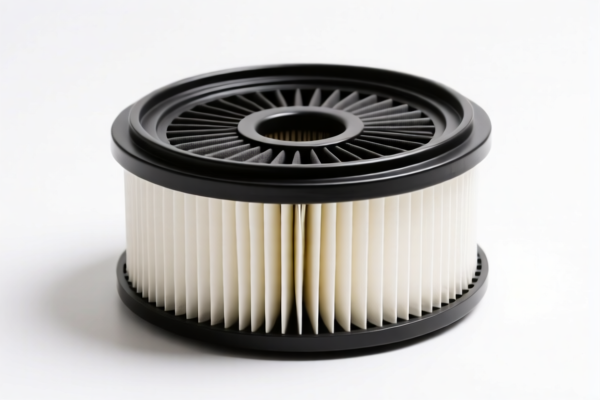
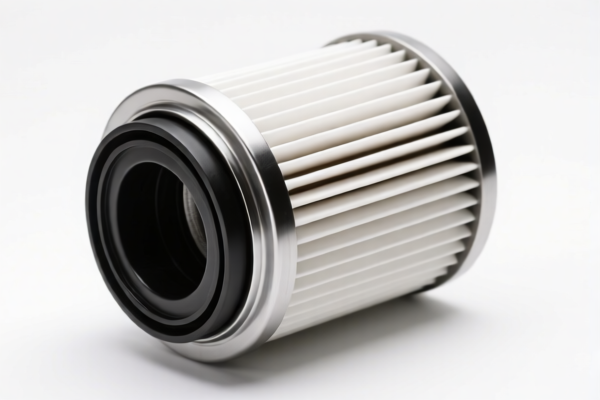
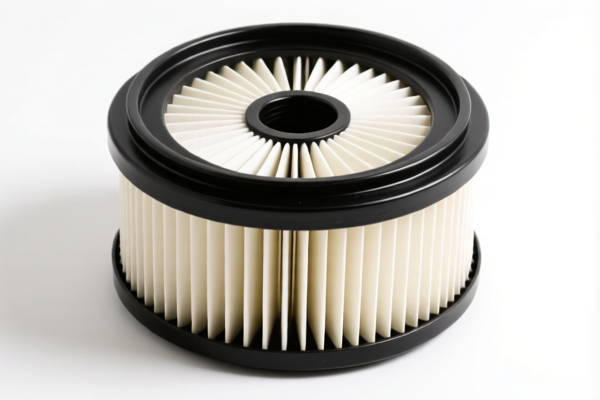
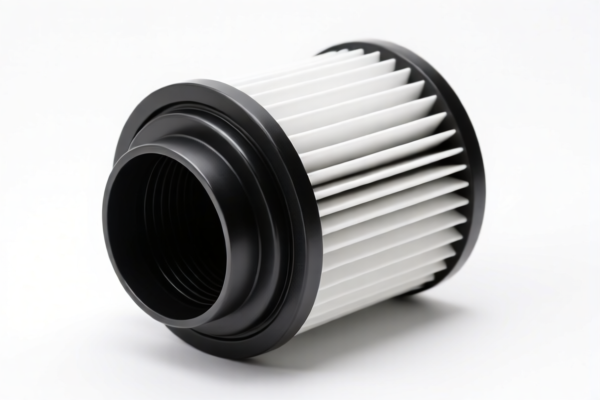
AI Analysis
🚗 Intake Manifold Sensor (进气歧管传感器)
🌐 HS Code Reference & Customs Clearance Guide | 2026 Latest Tariff Analysis | Professional Clearance Strategy
📌 1. Product Definition & Classification: Do You Really Understand the "Intake Manifold Sensor"?
The Intake Manifold Sensor is a critical component in modern automotive engine management systems. It typically measures pressure, temperature, or airflow within the intake manifold to optimize fuel injection and ignition timing. In international trade, its classification is complex because it straddles the line between automotive parts and precision measuring instruments.
Two Main Classification Pathways:
- Instrument Pathway (Measurement Focus): If the primary function is defined as measuring pressure or flow and it is considered an electrical detection device for liquid/flow levels.
- Target HS Codes:
9026.10.20.80or9026.20.40.00
- Target HS Codes:
- Automotive Part Pathway (Component Focus): If viewed primarily as a structural or functional component of the engine intake system or a general electrical apparatus part.
- Target HS Codes:
8543.70.98.60,8543.90.88.85, or8708.99.48.50
- Target HS Codes:
⚠️ Key Distinction Point:
- If the customs officer emphasizes "Measurement Function" → It falls under Chapter 90 (Instruments), leading to 35.0% tax.
- If the customs officer emphasizes "Automotive Part/Electrical Component" → It falls under Chapters 85 or 87.
- Note: Some automotive part classifications here carry massive penalties due to steel/aluminum or general component add-ons, reaching up to 85.0% or 37.6%.
📦 2. HS Code Classification Details (2026 Latest Tariff Authority Comparison)
| HS Code | Product Description | Application Scenario | Tax Rate | Key Reasoning from Data |
|---|---|---|---|---|
9026.10.20.80 |
Instruments/Apparatus for Measuring or Checking Viscosity, Porosity, Expansion, Surface Tension or the Like | Flow/Pressure Measurement | 35.0% | Summarized as: Belongs to instruments measuring pressure/flow, fitting electrical detection for level/flow. |
9026.20.40.00 |
Electrical Apparatus for Measuring or Checking Pressure | Gas Pressure/Variable Measurement | 35.0% | Summarized as: Instruments for measuring gas pressure/variables, fitting electrical pressure measurement definitions. |
8543.70.98.60 |
Electrical machines and apparatus, having individual functions, not specified or included elsewhere | Engine Intake System Component | 37.6% | Summarized as: Part of the engine intake system, fitting the "other machines/apparatus" catch-all category. |
8543.90.88.85 |
Parts of Electrical Machines/Apparatus | Electronic/Metal/Plastic Component | 85.0% | Summarized as: Electrical equipment part, electronic component inferred as electronic/metal/plastic. Note: Steel/Aluminum/Copper products have an additional 50% tariff. |
8708.99.48.50 |
Parts and Accessories of Motor Vehicles | Vehicle Engine Part | 35.0% | Summarized as: Part of the vehicle engine, fitting the definition of components for other tractor/parts. |
🔍 Critical Alert:
- The 35.0% rate is the "standard" safe harbor for this component if classified as a measuring instrument (9026) or general vehicle part (8708).
- DANGER ZONE: The8543.90.88.85classification leads to 85.0%. This is likely due to the "Steel/Aluminum/Copper" add-on tariff (50%) combined with other duties. Avoid this classification if possible!
- The8543.70.98.60classification results in 37.6%, slightly higher than the 35% options due to a 2.6% base duty.
💰 3. 2026 Latest Tariff Rate Breakdown (Including Surcharges & Policy Add-ons)
✅ Applicable Country: United States (US)
✅ Origin: China (CN)
✅ Effective Time: Post-November 2025 (Including subsequent imports)
🎯 1. 9026.10.20.80 & 9026.20.40.00 —— Measurement Instruments (Pressure/Flow)
| Item | Content |
|---|---|
| Base Duty | 0.0% (ad valorem) |
| Section 301 Additional Duty | +25.0% |
| Section 122 Additional Duty | +10.0% |
| Total Rate | 35.0% |
| Tax Calculation | CIF Value × 35.0% |
| De Minimis Eligibility | ❌ No (deny_de_minimis) |
| Legal Basis Path | Section 301: 25% + Section 122: 10% → USITC: 9026.xxxxxxxx |
📌 Explanation:
- "Base 0%": Measurement instruments often enjoy zero base duty.
- "Section 301 (25%)": The standard tariff on Chinese goods under trade restrictions.
- "Section 122 (10%)": A significant recent policy addition targeting national security/import balances.
- Total 35% is a manageable, predictable cost for exporters.
🎯 2. 8708.99.48.50 —— Vehicle Parts (Engine Components)
| Item | Content |
|---|---|
| Base Duty | 0.0% |
| Section 301 Additional Duty | +25.0% |
| Section 122 Additional Duty | +10.0% |
| Total Rate | 35.0% |
| Tax Calculation | CIF Value × 35.0% |
| De Minimis Eligibility | ❌ No |
| Legal Basis Path | Section 301: 25% + Section 122: 10% → USITC: 8708.99.48.50 |
📌 Note:
- Same tariff structure as the instrument classification. This is a viable alternative if the product is deemed a "part" rather than an "instrument."
🎯 3. 8543.70.98.60 —— Other Electrical Apparatus (Catch-all)
| Item | Content |
|---|---|
| Base Duty | 2.6% |
| Section 301 Additional Duty | +25.0% |
| Section 122 Additional Duty | +10.0% |
| Total Rate | 37.6% |
| Tax Calculation | CIF Value × 37.6% |
| De Minimis Eligibility | ❌ No |
📌 Note:
- Slightly more expensive than the 35% options due to the 2.6% base duty. Use only if other classifications are rejected.
🎯 4. 8543.90.88.85 —— Electrical Parts (High Risk!)
| Item | Content |
|---|---|
| Base Duty | 0.0% |
| Section 301 Additional Duty | +25.0% |
| Section 122 Additional Duty | +10.0% |
| Steel/Alu/Cu Surcharge | +50.0% (Added to total) |
| Total Rate | 85.0% |
| Tax Calculation | CIF Value × 85.0% |
| De Minimis Eligibility | ❌ No |
| Legal Basis Path | Base 0% + 301 (25%) + 122 (10%) + Steel/Alu Surcharge (50%) |
📌 DANGER:
- This classification triggers a 50% additional tariff specifically for products containing Steel, Aluminum, or Copper components.
- Total 85% is catastrophic for margins. Do NOT declare as this HS Code unless absolutely unavoidable.
🛠️ 4. Customs Clearance Practical Advice (Combat Pitfall Guide)
✅ 1. Documentation Checklist (Missing Items = Delay)
| Document | Must Provide | Description |
|---|---|---|
| ✅ Product Data Sheet | ✔️ | Must highlight measurement functions (e.g., "Measures manifold pressure," "Output: 4-20mA") to support Chapter 90. |
| ✅ Circuit Diagram/Structure | ✔️ | Proves it's a sensor/electronic component, not just a plastic pipe. |
| ✅ Photos (Clear Labels) | ✔️ | Show model number, brand, and electrical connections. |
| ✅ Commercial Invoice | ✔️ | Description should be precise: "Electronic Intake Manifold Pressure Sensor" rather than just "Car Part." |
| ✅ Origin Certificate (CO) | ✔️ | If not Chinese origin, to avoid China-specific tariffs. |
| ✅ Packing List | ✔️ | Detail contents clearly. |
✅ 2. Declaration Strategy (Key Mantras)
🔥 "Emphasize Measurement, Avoid 'Steel' Keywords, Choose 35% Path!"
| Scenario | Correct Declaration | Wrong Practice |
|---|---|---|
| Sensor with Electrical Output | 9026.10.20.80 or 9026.20.40.00 |
Calling it "Plastic Intake Pipe" → Might be misclassified as part, risking higher duties or wrong chapter. |
| Purely Mechanical Part | 8708.99.48.50 |
Calling it "Instrument" when it has no electronics → Misdeclaration. |
| Product containing Steel/Aluminum housing | AVOID 8543.90.88.85 |
Declaring as "Electrical Part" under 8543.90 → 85% Tax! |
| General Electrical Component | 8543.70.98.60 |
If Chapter 90 is rejected, use this as a backup (37.6%). |
✅ 3. Special Situation Handling
| Situation | Handling Advice |
|---|---|
| OEM Sensor for Car Brand | Provide the OEM part number and engineering specs. Emphasize its role in data measurement for the ECU. |
| Sensor with Metal Housing | Ensure the description highlights the electronic function (Chapter 90) rather than the metal content to avoid the 50% steel surcharge on 8543.90.88.85. |
| Dispute on Classification | If Customs insists on 8543, argue for 9026 by providing technical manuals that define the device primarily as a pressure/flow transmitter. |
| Mixed Packaging (Sensors + Pipes) | Declare separately. Sensors go to 9026 (35%), Pipes go to 8708 or 8409. Do not lump them into one "kit" if it triggers complex rules. |
🌍 5. Global Market Comparison (2026 Latest)
| Country/Region | Recommended HS Code | Tariff | Certification | Remarks |
|---|---|---|---|---|
| 🇺🇸 USA | 9026.10.20.80 / 8708.99.48.50 |
35.0% | No special certs needed for entry | Avoid 8543.90.88.85 (85%). |
| 🇨🇳 China | 9026 / 8708 |
~5-10% | CCC (if applicable) | No Section 301/122 surcharges. |
| 🇪🇺 EU | 9026 / 8708 |
0-4% | CE | No major add-on tariffs. |
| 🇲🇽 Mexico | 9026 / 8708 |
0-5% | NOM | Good for USMCA supply chains. |
📌 Conclusion:
- The US market is the most challenging due to Section 301 (25%) and Section 122 (10%) tariffs.
- 35% is the target rate. Achieving this requires positioning the product as either a Measuring Instrument (Ch 90) or a Standard Vehicle Part (Ch 87).
- Positioning is Key: Describing it as a "Sensor" and "Instrument" helps secure the 35% rate under9026.
📌 6. Common Mistakes & Pitfalls (Lessons Learned)
❌ Mistake 1: Declaring as 8543.90.88.85 (Electrical Parts)
👉 Consequence: Triggers the 50% Steel/Aluminum surcharge. Total tax hits 85%.
👉 Fix: Always prefer Chapter 90 (Instruments) or Chapter 87 (Parts) for this specific item.
❌ Mistake 2: Vague Description: "Car Part"
👉 Consequence: Customs may choose the worst-case scenario classification.
👉 Fix: Use precise terms: "Electronic Pressure Sensor for Internal Combustion Engine Intake Manifold."
❌ Mistake 3: Ignoring Section 122
👉 Consequence: Underestimating costs by 10%.
👉 Fix: Factor in the additional 10% on top of the 25% for all Chinese-origin goods.
✅ Correct Approach:
"Electronic Intake Manifold Pressure Sensor, Output 0-5V, for Automotive Engine Control, Model XYZ, Origin: China"
🎯 7. Conclusion: Precise Classification Saves Money!
🎯 Remember the Mantra:
🔹 "Instrument First (9026), Part Second (8708), Avoid Electrical Parts Trap (8543.90)."
🔹 "35% is Sweet, 85% is Bitter. Choose 9026 or 8708!"
📌 Pro Tip:
If your sensor is originated in Vietnam, Mexico, or Thailand, you may qualify for IEEPA Exemptions or lower tariffs.
Consider applying for a Pre-Ruling (Advance Ruling) from US Customs to lock in the 35% rate under9026or8708before shipping.
📣 Immediate Action:
📞 Contact a professional customs broker.
📄 Provide technical datasheets proving measurement function.
🚀 Secure the 35% rate, avoid the 85% trap!
✨ Professional Clearance Starts with Accurate Classification!
💼 Every percentage point saved is pure profit!
Customer Reviews
About HS Code Classification
The Harmonized System (HS) is an internationally standardized nomenclature developed by the World Customs Organization (WCO) to classify traded products. Over 200 countries use the HS system as the basis for customs tariffs, trade statistics, and import/export regulations.
Each HS code follows a hierarchical structure:
- Chapter (2 digits) — Broad category of goods (e.g., Chapter 84: Machinery and Mechanical Appliances)
- Heading (4 digits) — More specific grouping within the chapter
- Subheading (6 digits) — Internationally standardized breakdown, used by all WCO member countries
- National subdivisions (8-10 digits) — Country-specific extensions for further classification, such as US HTSUS 10-digit codes
Correct HS code classification is essential for smooth customs clearance, accurate duty payment, and compliance with trade regulations. Misclassification can lead to customs delays, overpayment of duties, or penalties.
When importing from CN to US, the applicable tariff rates may include:
- Most-Favored-Nation (MFN) rate — The standard duty rate applied to WTO members
- General rate — Applied to countries without trade agreements
- Trade remedy duties — Additional tariffs such as Section 301 (anti-dumping), Section 232 (national security), or countervailing duties
The information provided on this page is for reference purposes only. For official classification, please consult with your local customs authority or a licensed customs broker.