Intake Pipe
CN → US| HS Code | Tariff Rate | Origin | Destination | Doc |
|---|---|---|---|---|
| 8409915081 | 37.5% | CN | US | Official Doc |
| 8409915085 | 37.5% | CN | US | Official Doc |
| 7304390008 | 10.0% | CN | US | Official Doc |
| 7304598065 | 35.0% | CN | US | Official Doc |
| 8414909180 | 35.0% | CN | US | Official Doc |
| 8414909140 | 35.0% | CN | US | Official Doc |
| 4009410000 | 37.5% | CN | US | Official Doc |
| 4009420050 | 20.0% | CN | US | Official Doc |
| 3917210000 | 38.1% | CN | US | Official Doc |
| 3917220000 | 38.1% | CN | US | Official Doc |
Product Images
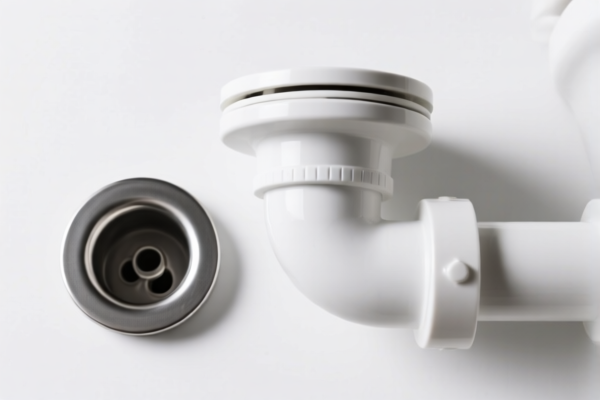

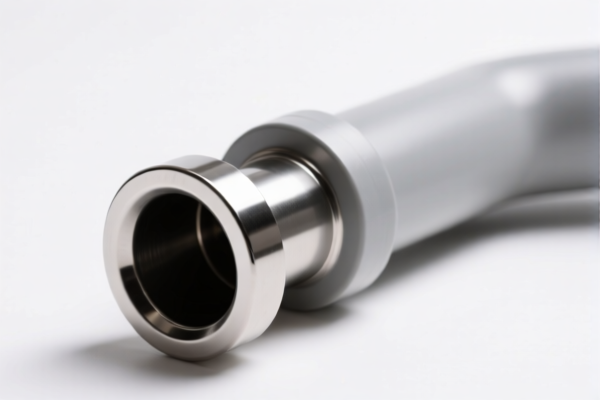
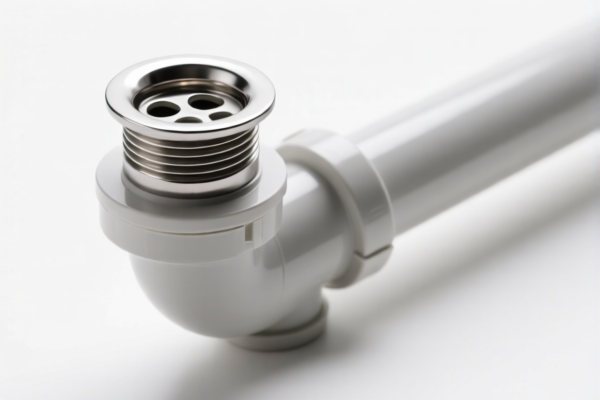
AI Analysis
🛣️ Intake Pipe (Intake Piping Systems)
🌐 HS Code Reference & Customs Clearance Guide | 2024-2025 Latest Tariff Analysis | Professional Clearance Strategy
📌 I. Product Definition & Classification: What Exactly is an "Intake Pipe"?
The term "Intake Pipe" is a functional description rather than a standardized HS Code description. In international trade, the classification depends entirely on what it carries, its material, and its specific application (e.g., automotive, industrial, or general fluid transfer).
Based on the provided data, these pipes fall into three distinct categories: 1. Rubber Hoses/Pipes: Flexible tubes for air/fuel/vacuum in vehicles. 2. Plastic Pipes: Rigid polymers for non-pressure or low-pressure applications. 3. Steel Pipes: Seamless tubes for high-pressure environments (boilers, engines).
⚠️ Key Distinction Point:
- If it is a flexible rubber tube with fittings → Likely 4009 (Rubber).
- If it is a rigid plastic tube → Likely 3917 (Plastics).
- If it is a seamless steel tube for engines/boilers → Likely 7304 (Iron/Steel).
📦 II. HS Code Classification Details (Based on Provided Data)
| HS Code | Product Description | Application Scenario | Material & Feature |
|---|---|---|---|
4009.41.00.00 |
Tubes, pipes and hoses, of vulcanized rubber... Reinforced... Without fittings | Automotive air intake hoses, vacuum lines, coolant hoses (bare) | 🟥 Rubber |
4009.42.00.50 |
Tubes, pipes and hoses... of vulcanized rubber... Reinforced... With fittings | Complete intake assembly, pre-assembled rubber lines | 🟥 Rubber |
3917.21.00.00 |
Tubes, pipes... of plastics... Rigid... Of polymers of ethylene (PE) | Low-pressure air intake ducts, pneumatic lines | 🟦 Plastic |
3917.22.00.00 |
Tubes, pipes... of plastics... Rigid... Of polymers of propylene (PP) | Chemical air intake, low-pressure fluid transfer | 🟦 Plastic |
8409.91.50.81 |
Parts suitable for use with engines of heading 8407/8408... Other Steel forgings | Special Note: While named "Intake Pipe," this HS Code refers to Steel Forgings (e.g., intake manifolds or rigid steel components) for spark-ignition engines (gasoline) for tractors/vehicles (8701.21-29, 8702-8704) | 🟩 Steel |
8409.91.50.85 |
Parts suitable for use with engines... Other | General engine parts not specified above | 🟩 Steel/Other |
7304.39.00.08 |
Tubes, pipes... seamless, of iron or nonalloy steel... OD > 285.8 mm | Large-scale industrial boiler tubes, heat exchanger pipes | 🟪 Steel |
7304.59.80.65 |
Tubes, pipes... seamless, of other alloy steel... OD 285.8-406.4 mm | High-pressure alloy steel pipes for boilers/superheaters | 🟪 Alloy Steel |
🔍 Critical Insight:
- Do NOT confuse "Intake Pipe" (functional) with "Steel Forging" (manufacturing process).
- HS Code8409.91.50.81is for parts (like manifolds or rigid steel intake components) for gasoline engines, not simple hollow tubes.
- HS Codes7304.xxxxare for seamless tubes used in boilers/heat exchangers, not necessarily automotive "intake" pipes.
💰 III. 2024-2025 Latest Tariff Rate Details (China Origin to US)
✅ Applicable Country: United States (US)
✅ Country of Origin: China (CN)
✅ Effective Time: Current tariff structure applies (Section 301 + Base Rate)
🎯 1. Rubber Intake Hoses (4009.41.00.00 / 4009.42.00.50)
| Item | Content |
|---|---|
| Base Tariff | 0.0% |
| Section 301 Surcharge | 0.0% |
| Total Tax Rate | 0.0% |
| Calculation | CIF Value × 0% = $0 |
| De Minimis Eligibility | ✅ Yes (if < $800) |
| Legal Basis | General Harmonized Tariff Schedule (HTSUS) |
📌 Explanation:
- Rubber hoses and pipes (4009) generally enjoy 0% duty.
- Notably, they are NOT subject to the 25% Section 301 tariff that applies to many steel/plastic parts.
- Cost Advantage: This is a low-tariff category for automotive rubber components.
🎯 2. Plastic Intake Pipes (3917.21.00.00 / 3917.22.00.00)
| Item | Content |
|---|---|
| Base Tariff | 0.0% |
| Section 301 Surcharge | 0.0% |
| Total Tax Rate | 0.0% |
| Calculation | CIF Value × 0% = $0 |
| De Minimis Eligibility | ✅ Yes (if < $800) |
| Legal Basis | General Harmonized Tariff Schedule (HTSUS) |
📌 Explanation:
- Rigid plastic pipes (3917) also have 0% base duty and 0% surcharge.
- Cost Advantage: Ideal for cost-sensitive plastic intake ducts.
🎯 3. Steel Engine Parts / Forgings (8409.91.50.81 / 8409.91.50.85)
| Item | Content |
|---|---|
| HS Code | 8409.91.50.81 |
| Base Tariff | 0.0% |
| Section 301 Surcharge | 0.0% |
| Total Tax Rate | 0.0% |
| Applicability | Spark-ignition engines (Gasoline), for tractors/vehicles |
| Item | Content |
|---|---|
| HS Code | 8409.91.50.85 |
| Base Tariff | 2.5% |
| Section 301 Surcharge | 25.0% |
| Total Tax Rate | 27.5% |
| Applicability | Other engine parts (not specified in 81) |
📌 Critical Warning:
- If your "Intake Pipe" is classified as a steel forging for a gasoline engine, check the subheading carefully.
-8409.91.50.81(Specific forgings) is 0%.
-8409.91.50.85(Other parts) is 27.5% (2.5% base + 25% surcharge).
- Misclassification Risk: Declaring a steel manifold as "8409.91.50.85" when it fits "8409.91.50.81" could lead to underpayment, but declaring a non-forging part as "8409.91.50.81" is illegal.
🎯 4. Seamless Steel Tubes (7304.39.00.08 / 7304.59.80.65)
| Item | Content |
|---|---|
| HS Code | 7304.39.00.08 (Non-alloy steel, OD > 285.8mm) |
| Base Tariff | 0.0% |
| Section 301 Surcharge | 0.0% |
| Total Tax Rate | 0.0% |
| Item | Content |
|---|---|
| HS Code | 7304.59.80.65 (Alloy steel, OD 285.8-406.4mm) |
| Base Tariff | 0.0% |
| Section 301 Surcharge | 25.0% |
| Total Tax Rate | 25.0% |
| Applicability | Boilers, heat exchangers, alloy steel |
📌 Explanation:
- Non-alloy steel seamless tubes (7304.39) are 0%.
- Alloy steel seamless tubes (7304.59) incur a 25% Section 301 surcharge.
- Note: These are industrial boiler tubes, not typically "car intake pipes."
🎯 5. Air Pump Parts (8414.90.91.40 / 8414.90.91.80)
| Item | Content |
|---|---|
| HS Code | 8414.90.91.40 (Parts of vacuum pumps) |
| Base Tariff | 0.0% |
| Section 301 Surcharge | 25.0% |
| Total Tax Rate | 25.0% |
| Item | Content |
|---|---|
| HS Code | 8414.90.91.80 (Other parts) |
| Base Tariff | 0.0% |
| Section 301 Surcharge | 25.0% |
| Total Tax Rate | 25.0% |
📌 Explanation:
- If the "Intake Pipe" is actually a component of an air/vacuum pump (e.g., a vacuum hose connected to a pump), it may fall under8414.90.
- 25% Surcharge applies.
🛠️ IV. Customs Clearance Practical Advice (Avoid Pitfalls)
✅ 1. Documentation Checklist (Must-Haves)
| Document | Required | Notes |
|---|---|---|
| ✅ Product Specification Sheet | ✔️ | Material (Rubber/Plastic/Steel), Dimensions, Pressure Rating |
| ✅ Material Certificate | ✔️ | Proof of material (e.g., EPDM for rubber, PE for plastic) |
| ✅ Photos (Clear) | ✔️ | Show fittings, markings, and overall shape |
| ✅ Commercial Invoice | ✔️ | Describe accurately (e.g., "Rubber Intake Hose, No Fittings") |
| ✅ Packing List | ✔️ | Weight and dimensions |
| ✅ Usage Declaration | ✔️ | "For use in automotive engine intake systems" or "For industrial vacuum systems" |
✅ 2. Classification Tips (Golden Rules)
🔥 "Material First, Function Second, Fittings Count!"
| Scenario | Correct HS Code | Wrong Approach | Consequence |
|---|---|---|---|
| Rubber hose, bare | 4009.41.00.00 |
Declaring as 4009.42 (with fittings) |
Over-declaration risk |
| Rubber hose, with joints | 4009.42.00.50 |
Declaring as 4009.41 |
Misclassification |
| Plastic rigid pipe | 3917.21.00.00 |
Declaring as 8409 (engine part) |
27.5% tax vs 0% tax |
| Steel manifold/forging | 8409.91.50.81 |
Declaring as 8409.91.50.85 |
Save 27.5% if correct |
| Steel seamless tube (Boiler) | 7304.39.00.08 |
Declaring as automotive part | Wrong duty rate |
✅ 3. Special Cases
| Scenario | Handling Advice |
|---|---|
| Intake Manifold (Plastic) | Often 8409.91.50.85 (27.5%) or 3917.21 (0%) depending on if it's a "part of engine" vs "pipe." Check structural integration. |
| Intake Hose (Rubber) | Always 4009. No surcharge. |
| Intake Pipe (Steel) | If it's a seamless tube for boilers → 7304. If it's a forged manifold for gasoline engine → 8409.91.50.81 (0%) or 8409.91.50.85 (27.5%). |
| Vacuum Line (Small) | If part of a vacuum pump system → 8414.90.91.40 (25%). |
🌍 V. Global Market Comparison (2024-2025)
| Country | Recommended HS Code | Tariff (China Origin) | Notes |
|---|---|---|---|
| 🇺🇸 USA | 4009.41.00.00 (Rubber) |
0.0% | No Section 301 surcharge. |
| 🇺🇸 USA | 8409.91.50.85 (Steel Part) |
27.5% | High tariff. Check 8409.91.50.81 for 0%. |
| 🇺🇸 USA | 7304.59.80.65 (Alloy Steel Tube) |
25.0% | Surcharge applies. |
| 🇨🇳 China | 4009.41.00.00 |
0.0% | Import duty |
| 🇪🇺 EU | 4009.41.00.00 |
0.0% | Most rubber pipes have 0% duty in EU. |
| 🇬🇧 UK | 4009.41.00.00 |
0.0% | Post-Brexit tariff often 0% for rubber. |
📌 Conclusion:
- Rubber and Plastic pipes are tariff-friendly (0% in US).
- Steel engine parts and Alloy steel tubes carry 25-27.5% tariffs.
- Strategy: Use rubber/plastic where possible to reduce costs. For steel, ensure correct classification (8409.91.50.81vs8409.91.50.85).
📌 VI. Common Mistakes & Pitfalls
❌ Mistake 1: Calling a rubber hose "Intake Pipe" and declaring it as 8409.91.50.85
👉 Result: Pay 27.5% instead of 0%. Loss: 27.5%!
❌ Mistake 2: Declaring a plastic intake duct as 8409.91.50.85
👉 Result: Pay 27.5% instead of 0%. Loss: 27.5%!
❌ Mistake 3: Confusing Seamless Steel Tubes (7304) with Engine Parts (8409)
👉 Result: If it's a boiler tube, it's 7304. If it's an engine manifold, it's 8409. Wrong code = Customs delay.
❌ Mistake 4: Ignoring Fittings for rubber hoses
👉 Result: 4009.41 (No fittings) vs 4009.42 (With fittings). Different subheadings, different risk profiles.
✅ Correct Action:
"Rubber Intake Hose, EPDM, Reinforced, 10mm ID, No Fittings, For Automotive Engine"
🎯 VII. Conclusion: Smart Classification, Lower Costs!
🎯 Remember the Mantra:
🔹 "Rubber & Plastic = 0% (Save Big!)"
🔹 "Steel Forging = Check Subheading (0% vs 27.5%)"
🔹 "Alloy Steel Tube = 25% (Budget Accordingly)"
📌 Pro Tip:
If your "Intake Pipe" is a plastic manifold for a gasoline engine, argue for 3917.21.00.00 (Plastic Pipe) if it's not structurally an engine part, to get 0% duty. If it's a steel forging, ensure it fits 8409.91.50.81 for 0% duty.
📣 Immediate Action:
📞 Consult a customs broker with product photos and material specs.
🚀 Classify accurately to save 27.5% on steel/plastic misdeclarations!
✨ Professional clearance starts with precise classification!
💼 Every dollar saved in tariff is profit in your pocket!
Customer Reviews
About HS Code Classification
The Harmonized System (HS) is an internationally standardized nomenclature developed by the World Customs Organization (WCO) to classify traded products. Over 200 countries use the HS system as the basis for customs tariffs, trade statistics, and import/export regulations.
Each HS code follows a hierarchical structure:
- Chapter (2 digits) — Broad category of goods (e.g., Chapter 84: Machinery and Mechanical Appliances)
- Heading (4 digits) — More specific grouping within the chapter
- Subheading (6 digits) — Internationally standardized breakdown, used by all WCO member countries
- National subdivisions (8-10 digits) — Country-specific extensions for further classification, such as US HTSUS 10-digit codes
Correct HS code classification is essential for smooth customs clearance, accurate duty payment, and compliance with trade regulations. Misclassification can lead to customs delays, overpayment of duties, or penalties.
When importing from CN to US, the applicable tariff rates may include:
- Most-Favored-Nation (MFN) rate — The standard duty rate applied to WTO members
- General rate — Applied to countries without trade agreements
- Trade remedy duties — Additional tariffs such as Section 301 (anti-dumping), Section 232 (national security), or countervailing duties
The information provided on this page is for reference purposes only. For official classification, please consult with your local customs authority or a licensed customs broker.