Intake Pipe Sensor
CN → US| HS Code | Tariff Rate | Origin | Destination | Doc |
|---|---|---|---|---|
| 9026204000 | 35.0% | CN | US | Official Doc |
| 8708998180 | 37.5% | CN | US | Official Doc |
| 9026102080 | 35.0% | CN | US | Official Doc |
| 8543709860 | 37.6% | CN | US | Official Doc |
| 8543908885 | 85.0% | CN | US | Official Doc |
Product Images
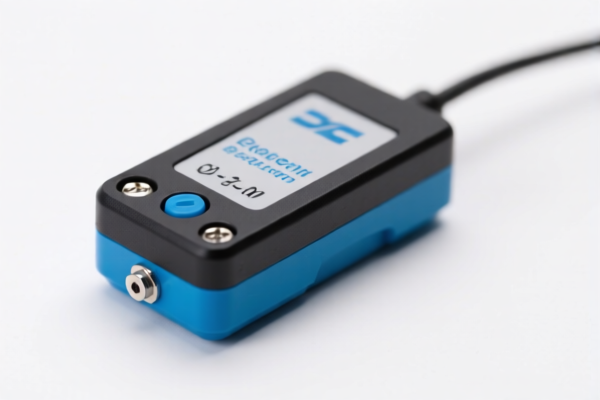
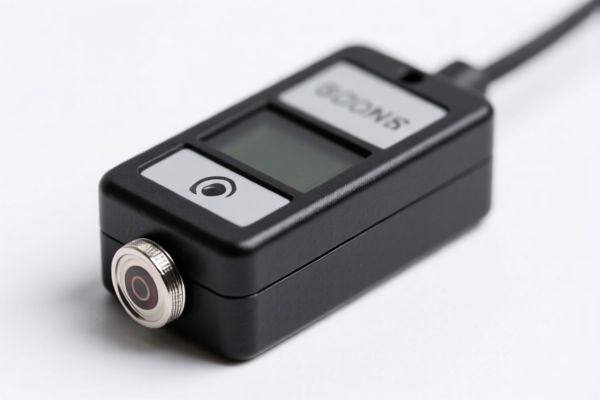
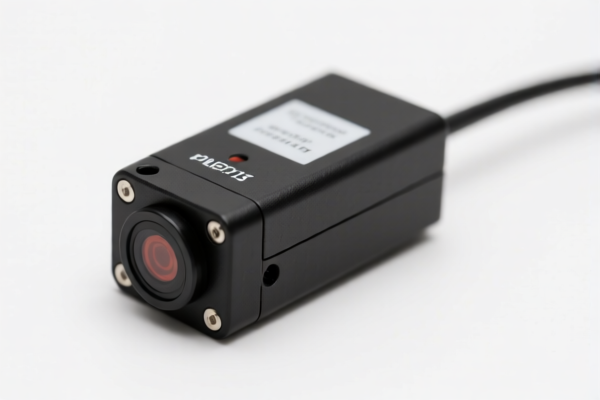
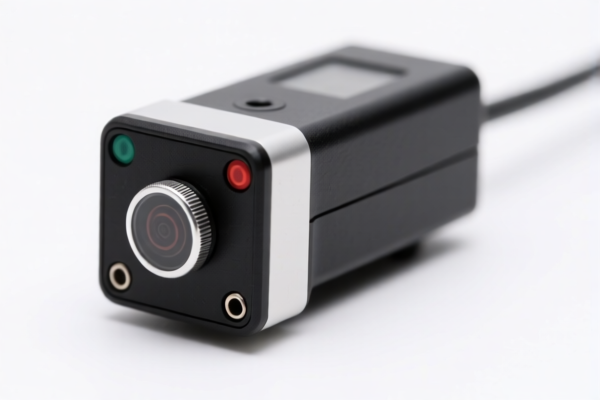
AI Analysis
🚗 Intake Manifold Sensor (Intake Pipe Sensor)
🌐 HS Code Reference & Customs Clearance Guide | 2026 Latest Tariff Analysis | Professional Clearance Strategy
📌 I. Product Definition & Classification: Do You Really Understand the "Intake Manifold Sensor"?
The Intake Manifold Sensor (also known as Intake Pipe Sensor) is a critical component in automotive engine management systems. In international trade, its classification is complex because it straddles two major categories: Automotive Parts and Measuring Instruments.
The classification depends heavily on the primary function declared in the commercial invoice and the technical specifications: 1. As a Measuring Instrument: If emphasized as a pressure/temperature sensor for data measurement → Chapter 90. 2. As an Auto Part: If emphasized as a functional component of the engine intake system → Chapter 87. 3. As an Electrical Machine/Device: If considered a generic electrical device without specific automotive function → Chapter 85.
⚠️ Key Distinction Point:
- If the sensor is sold with the vehicle or as a specific engine replacement part intended solely for automotive use → HS 8708.99 (Auto Parts) is often preferred to avoid misclassification risks, but HS 9026 is technically accurate for the instrument aspect.
- Customs authorities may challenge HS 8543 as a "catch-all" if a more specific code exists.
- HS 8543.90 is extremely high risk due to high tariffs and is generally discouraged unless no other fit exists.
📦 II. HS Code Classification Details (2026 Latest Tariff Authority Comparison)
| HS Code | Product Description | Application Scenario | Primary Function |
|---|---|---|---|
9026.20.40.00 |
Gas Pressure/Variable Measuring Instruments (Electrical) | Sensors measuring pressure/temperature in intake manifolds for data processing | ✅ Pressure Measurement |
8708.99.81.80 |
Parts and Accessories of Motor Vehicles | Automotive engine intake system sensors, specific to auto parts | ✅ Auto Part |
9026.10.20.80 |
Liquid Level or Flow Measuring Instruments | Sensors measuring flow rate or related electrical detection | ✅ Flow/Level Detection |
8543.70.98.60 |
Other Machines and Appliances | Generic machine components, catch-all category for industrial devices | ✅ Generic Machine Part |
8543.90.88.85 |
Parts of Other Electrical Machines | Electrical equipment parts, electronic components with specific functions | ✅ Electrical Part |
🔍 Key Reminder:
- HS 9026 is often considered the most technically accurate for the sensor's function (measuring pressure/variable).
- HS 8708 is common for auto parts, but may attract higher total duties if not properly justified as a "part" vs. "instrument".
- HS 8543.90 is high-risk and high-cost (85% total tax); avoid unless necessary.
💰 III. 2026 Latest Tariff Rate Details (Including Additional Taxes, Policy Add-ons)
✅ Applicable Country: United States (US)
✅ Country of Origin: China (CN)
✅ Effective Date: From November 10, 2025 (including subsequent imports)
🎯 1. 9026.20.40.00 —— Gas Pressure/Variable Measuring Instruments
| Item | Details |
|---|---|
| Base Tariff | 0% (ad valorem) |
| USITC Additional Tax | +25% (from USITC Footnote regarding 301 Tariffs) |
| IEEPA Additional Tax | +10% (Targeting China/HK products, effective from Nov 10, 2025) |
| Total Tariff Rate | 35.0% |
| Tax Calculation | CIF Value × 35% |
| De Minimis Exemption | ❌ Not Applicable (deny_de_minimis) |
| Legal Basis Path | IEEPA:9903.01.25 → IEEPA:9903.01.24 → USITC:9026.20.40.00 |
📌 Explanation:
- The 25% USITC tax is under Section 301 of the Trade Act.
- The 10% IEEPA tax is the additional China-specific tariff.
- Total 35% is moderate compared to other HS codes.
- No Base Tariff makes this code relatively cost-effective despite additional taxes.
🎯 2. 8708.99.81.80 —— Parts and Accessories of Motor Vehicles
| Item | Details |
|---|---|
| Base Tariff | 2.5% |
| USITC Additional Tax | +25% |
| IEEPA Additional Tax | +10% |
| Total Tariff Rate | 37.5% |
| Tax Calculation | CIF Value × 37.5% |
| De Minimis Exemption | ❌ Not Applicable (deny_de_minimis) |
| Legal Basis Path | IEEPA:9903.01.25 → IEEPA:9903.01.24 → USITC:8708.99.81.80 |
📌 Note:
- Higher total rate than9026.20.40.00due to the 2.5% base tariff.
- Commonly used for auto parts, but slightly more expensive than the instrument classification.
- Ensure documentation clearly states "Auto Part" to justify this code.
🎯 3. 9026.10.20.80 —— Liquid Level or Flow Measuring Instruments
| Item | Details |
|---|---|
| Base Tariff | 0% |
| USITC Additional Tax | +25% |
| IEEPA Additional Tax | +10% |
| Total Tariff Rate | 35.0% |
| Tax Calculation | CIF Value × 35% |
| De Minimis Exemption | ❌ Not Applicable (deny_de_minimis) |
| Legal Basis Path | IEEPA:9903.01.25 → IEEPA:9903.01.24 → USITC:9026.10.20.80 |
📌 Note:
- Same total rate as9026.20.40.00(35%).
- Use this only if the sensor is specifically measuring flow rate or liquid level, not just pressure.
- Avoid if the primary function is pressure measurement to prevent misclassification penalties.
🎯 4. 8543.70.98.60 —— Other Machines and Appliances
| Item | Details |
|---|---|
| Base Tariff | 2.6% |
| USITC Additional Tax | +25% |
| IEEPA Additional Tax | +10% |
| Total Tariff Rate | 37.6% |
| Tax Calculation | CIF Value × 37.6% |
| De Minimis Exemption | ❌ Not Applicable (deny_de_minimis) |
| Legal Basis Path | IEEPA:9903.01.25 → IEEPA:9903.01.24 → USITC:8543.70.98.60 |
📌 Note:
- Highest base tariff among the first four codes (2.6%).
- Considered a "catch-all" and less precise for sensors.
- Use only if the sensor cannot be classified under Chapter 90 or 87.
🎯 5. 8543.90.88.85 —— Parts of Other Electrical Machines
| Item | Details |
|---|---|
| Base Tariff | 0% |
| USITC Additional Tax | +25% |
| IEEPA Additional Tax | +10% |
| Steel/Aluminum/Copper Surcharge | +50% (Specific additional tariff for metal products) |
| Total Tariff Rate | 85.0% |
| Tax Calculation | CIF Value × 85% |
| De Minimis Exemption | ❌ Not Applicable (deny_de_minimis) |
| Legal Basis Path | IEEPA:9903.01.25 → IEEPA:9903.01.24 → USITC:8543.90.88.85 |
📌 Critical Warning:
- EXTREMELY HIGH TARIFF (85%).
- The 50% steel/aluminum/copper surcharge is applied in addition to the 25% USITC and 10% IEEPA taxes.
- AVOID THIS CODE UNLESS NECESSARY. It is the most expensive option and likely incorrect for a plastic/electronic sensor.
- Misclassification here can lead to significant cost overruns and audits.
🛠️ IV. Customs Clearance Practical Advice (Combat Pitfall Guide)
✅ 1. Preparation Checklist (Mandatory)
| Document | Required | Description |
|---|---|---|
| ✅ Product Spec Sheet | ✔️ | Dimensions, measurement range, output signal (4-20mA, 0-5V), operating temperature |
| ✅ Circuit/Structural Diagram | ✔️ | To prove if it contains specific automotive control units |
| ✅ Product Photos (with Label) | ✔️ | Clear view of model number, brand, input/output parameters |
| ✅ Third-Party Test Report | ✔️ | ISO, IATF 16949 (for auto parts), CE, FCC (if applicable) |
| ✅ Commercial Invoice | ✔️ | Clearly state: "Intake Manifold Pressure Sensor for Automotive Use" |
| ✅ Certificate of Origin (CO) | ✔️ | If not China-origin, may qualify for lower tariffs |
| ✅ Packing List | ✔️ | Show relationship between main unit and accessories |
✅ 2. Declaration Tips (Key Mantra)
🔥 “Function First, Document Clear, Name Accurate, Tariff Lower!”
| Situation | Correct Declaration | Wrong Practice |
|---|---|---|
| Sensor measuring Pressure | 9026.20.40.00 |
Misdeclare as Auto Part → 37.5% |
| Sensor as Auto Part | 8708.99.81.80 |
Misdeclare as Generic Machine → 37.6% |
| Sensor measuring Flow | 9026.10.20.80 |
Misdeclare as Pressure → Risk of audit |
| Any Sensor | Never use 8543.90.88.85 |
Using catch-all → 85% Tariff! |
| Sensor + Wiring Harness | Declare Together | Split declaration → Higher total cost |
✅ 3. Special Cases Handling
| Situation | Handling Advice |
|---|---|
| OEM Custom Sensors | Provide customer order + design drawings to justify "Auto Part" status |
| Sensors with Integrated ECU | May still be 8708 if primarily for auto control; consult customs broker |
| Sensors for Non-Auto Use | If used in industrial machinery, declare under 9026 or 8543.70 |
| Sensors with Metal Housing | Be cautious of 8543.90 steel surcharge; ensure correct material description |
🌍 V. Global Market Customs Comparison (2026 Latest)
| Country/Region | Recommended HS Code | Tariff | Certification Requirements | Notes |
|---|---|---|---|---|
| 🇺🇸 USA | 9026.20.40.00 or 8708.99.81.80 |
35% / 37.5% | FCC (if electronic), IATF 16949 | 85% for 8543.90 – Avoid! |
| 🇨🇳 China | 9026.20.40.00 |
0% - 5% | CCC (if applicable) | No additional US tariffs |
| 🇪🇺 EU | 9026.20.40.00 |
0% - 2.7% | CE, RoHS | No additional tariffs |
| 🇦🇺 Australia | 9026.20.40.00 |
5% - 10% | RCM | No additional tariffs |
| 🇯🇵 Japan | 9026.20.40.00 |
0% - 3% | PSE | No additional tariffs |
📌 Conclusion:
- USA is the most complex market due to additional tariffs (301 + IEEPA).
- China-origin sensors face 35-37.5% duties, while8543.90faces 85%.
- EU/JP/AU are favorable with low or zero tariffs.
- Recommendation: Use9026.20.40.00for 35% total tax as it is the most balanced between technical accuracy and cost.
📌 VI. Common Errors & Pitfall Guide (Lessons Learned)
❌ Error 1: Using 8543.90.88.85 (85% Tariff) for a standard sensor
👉 Consequence: Massive cost increase; likely misclassification → Audit & Back Taxes!
❌ Error 2: Declaring "Sensor" without specifying function (Pressure vs. Flow)
👉 Consequence: Customs may choose the higher base rate code → Delay & Penalties
❌ Error 3: Failing to provide technical specs
👉 Consequence: Customs cannot verify Chapter 90 vs. Chapter 87 → Hold for Inspection
❌ Error 4: Using "Auto Part" for a generic sensor sold to industrial clients
👉 Consequence: Misdeclaration → Legal Risk & Fines
✅ Correct Practice:
"Intake Manifold Pressure Sensor, Model XYZ, 0-5V Output, 100 PSI Range, For Automotive Engine Control, FCC Certified, HS Code 9026.20.40.00"
🎯 VII. Conclusion: Precise Declaration, Save Costs, Ensure Smooth Clearance!
🎯 Remember the Mantra:
🔹 "Pressure Sensor = 9026 (35%) | Auto Part = 8708 (37.5%) | Generic = 8543 (37.6%) | Metal Part = 8543.90 (85% - AVOID!)"
🔹 "HS Code Determines Tax, 2% Base Tariff Difference Can Save Thousands!"
📌 Pro Tip:
If your sensors are originating from Vietnam, Mexico, Thailand, or Malaysia, you may apply for IEEPA Exemption, reducing tariffs to 0%~5%.
Recommend Advance Ruling to secure HS Code classification before shipment.
📣 Immediate Action:
📞 Contact a Professional Customs Broker + Provide Product Specs + Apply for Advance Ruling
🚀 Let your Intake Sensors Clear Customs Smoothly, Export Efficiently, and Maximize Profits!
✨ Professional Clearance Starts with Accurate Classification!
💼 Every Penny of Cost Deserves Precise Calculation!
Customer Reviews
About HS Code Classification
The Harmonized System (HS) is an internationally standardized nomenclature developed by the World Customs Organization (WCO) to classify traded products. Over 200 countries use the HS system as the basis for customs tariffs, trade statistics, and import/export regulations.
Each HS code follows a hierarchical structure:
- Chapter (2 digits) — Broad category of goods (e.g., Chapter 84: Machinery and Mechanical Appliances)
- Heading (4 digits) — More specific grouping within the chapter
- Subheading (6 digits) — Internationally standardized breakdown, used by all WCO member countries
- National subdivisions (8-10 digits) — Country-specific extensions for further classification, such as US HTSUS 10-digit codes
Correct HS code classification is essential for smooth customs clearance, accurate duty payment, and compliance with trade regulations. Misclassification can lead to customs delays, overpayment of duties, or penalties.
When importing from CN to US, the applicable tariff rates may include:
- Most-Favored-Nation (MFN) rate — The standard duty rate applied to WTO members
- General rate — Applied to countries without trade agreements
- Trade remedy duties — Additional tariffs such as Section 301 (anti-dumping), Section 232 (national security), or countervailing duties
The information provided on this page is for reference purposes only. For official classification, please consult with your local customs authority or a licensed customs broker.