Integrated Circuits (Other)
CN → US| HS Code | Tariff Rate | Origin | Destination | Doc |
|---|---|---|---|---|
| 8543906800 | 35.0% | CN | US | Official Doc |
| 8542390070 | 60.0% | CN | US | Official Doc |
| 8543908885 | 85.0% | CN | US | Official Doc |
| 8542390090 | 60.0% | CN | US | Official Doc |
Product Images
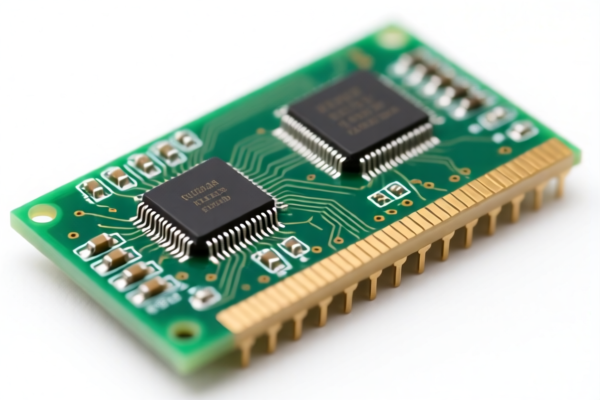
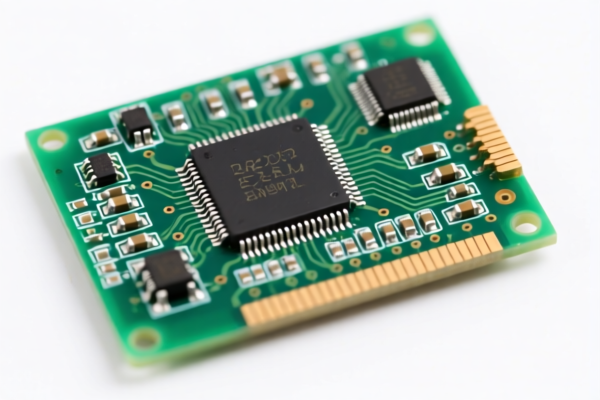
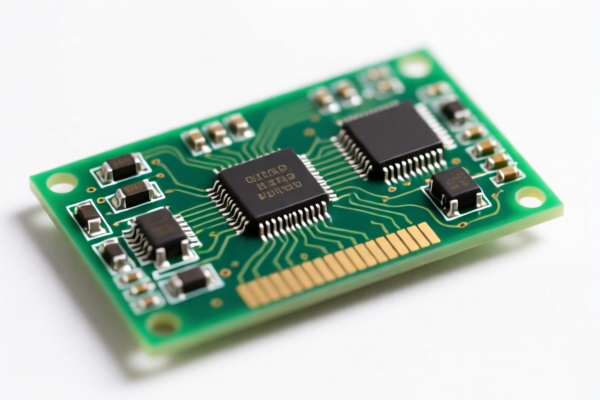
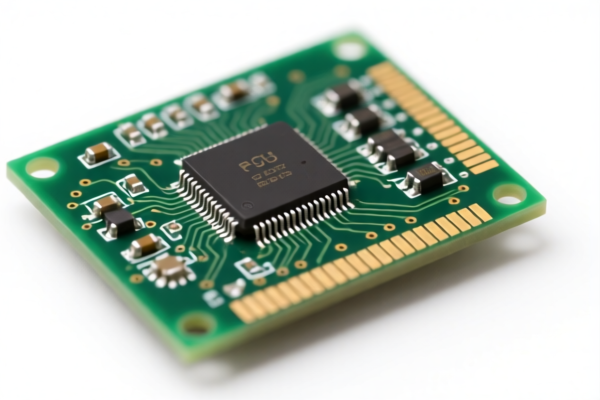
AI Analysis
🧠 Integrated Circuits (Other / 8542.39)
🌐 HS Code Reference & Customs Clearance Guide | 2026 Latest Tariff Breakdown | Professional Strategy for "Other" ICs
📌 I. Product Definition: What Exactly Are "Other" Integrated Circuits?
Integrated Circuits (ICs) are the fundamental building blocks of modern electronics. While many ICs fall into specific categories like memory, processors, or logic devices, "Other" ICs (Heading 8542.39) refer to electronic integrated circuits that do not fit into the primary classifications such as: * Processors & Controllers (8542.31/32) * Memory Devices (DRAM, Flash, EEPROM, etc.) * Logic Devices (Gates, Flip-flops, etc.)
⚠️ Key Distinction:
- If the chip is a standard memory (e.g., DDR4, NAND) → It is NOT "Other".
- If the chip is a custom ASIC, Analog IC, Power Management IC (PMIC), or Mixed-Signal IC without a specific sub-heading → It IS "Other".
- "Parts" of ICs (like bare die or unmounted wafers) are generally classified under 8542.90, but if they are complete integrated circuits, they stay under 8542.3x.
📦 II. HS Code Classification Matrix (2026 Latest Rules)
Based on the provided data, here are the specific HS Codes for "Other" ICs and their associated tax liabilities.
| HS Code | Product Description | Key Characteristics | Applicable Scenario |
|---|---|---|---|
| 8542.39.00.90 | Electronic Integrated Circuits: Other (General Category) | General "Other" ICs not elsewhere specified. Includes basic analog, mixed-signal, or custom logic chips not covered by specific sub-headings. | Standard export of generic "other" ICs. |
| 8542.39.00.70 | Electronic Integrated Circuits: Other With Adjustable Performance Characteristics | ICs whose electrical parameters (e.g., gain, frequency, voltage threshold) can be adjusted or programmed post-manufacture or via external signals. | Programmable analog chips, tunable RF ICs, variable gain amplifiers. |
| 8543.90.68.00 | Parts: Printed Circuit Assemblies (PCBA) | ⚠️ CRITICAL DISTINCTION: This is NOT an IC itself, but a PCBA containing electronic machines/apparatus. Only applies if the item is a board with components, not a bare chip. | If you are shipping a circuit board with the IC, not the IC alone. |
| 8543.90.88.85 | Parts: Other (General) | ⚠️ CRITICAL DISTINCTION: This is for other parts of electrical machines, not ICs. Includes non-IC components like connectors, housings, or other mechanical/electrical parts. | If the item is a housing, bracket, or non-IC component. |
🔍 Crucial Warning:
- HS Code 8542.39 is for Integrated Circuits (the chips themselves).
- HS Code 8543.90 is for Parts of Electrical Machines (like PCBA or other components).
- Do not mix them! Shipping an IC as a "PCBA" (8543.90) is a misdeclaration. Shipping a PCBA as an "IC" (8542.39) is also a misdeclaration.
💰 III. 2026 Tariff Rate Breakdown (US Imports from China)
✅ Origin: China (CN)
✅ Destination: United States (US)
✅ Effective Date: Current rates apply (50% Additional Tariff for ICs)
🎯 1. HS Code 8542.39.00.90 & 8542.39.00.70 —— Integrated Circuits (Other)
| Item | Detail |
|---|---|
| Base Tariff | 0.0% (Free for most ICs under USHTS) |
| Additional Tariff (Section 301 / IEEPA) | 50.0% |
| Total Tax Rate | 50.0% |
| Tax Calculation | CIF Value × 50% |
| De Minimis Exemption | ❌ NOT Applicable (Section 321 de minimis does not apply to these HS codes due to high additional tariffs) |
| Legal Basis | 301 Tariff: 8542.39.00.90 / 8542.39.00.70 → 50% Additional Duty |
📌 Explanation:
- Both "General Other" and "Adjustable Performance" ICs fall under the same 50% additional tariff.
- The base duty is 0%, but the 50% surcharge is significant. This is part of the ongoing US-China trade tensions affecting semiconductor components.
- No de minimis exemption: Even small packages (under $800) may be subject to inspection and duty if declared under these codes, as Section 321 exclusions often apply to certain electronic components.
🎯 2. HS Code 8543.90.68.00 —— Printed Circuit Assemblies (PCBA)
| Item | Detail |
|---|---|
| Base Tariff | 0.0% |
| Additional Tariff | 25.0% |
| Total Tax Rate | 25.0% |
| Tax Calculation | CIF Value × 25% |
| De Minimis Exemption | ⚠️ Check Specifics: Some PCBAs may be eligible for de minimis, but many electronic assemblies are excluded. Verify with current 301 lists. |
| Legal Basis | 301 Tariff: 8543.90.68.00 → 25% Additional Duty |
📌 Explanation:
- If your product is a PCBA (a board with the IC soldered on), it is classified here, not under 8542.
- The tariff is lower (25%) than for bare ICs (50%).
- Strategy: If possible, and if legally permissible (i.e., the product is indeed a functional assembly), classifying as a PCBA may reduce tax burden. However, misclassification is fraud.
🎯 3. HS Code 8543.90.88.85 —— Other Parts (Non-IC)
| Item | Detail |
|---|---|
| Base Tariff | 0.0% |
| Additional Tariff (Steel/Aluminum/Copper Products) | 50.0% |
| Total Tax Rate | 75.0% |
| Tax Calculation | CIF Value × 75% |
| Legal Basis | Steel/Aluminum/Copper Surcharge + 25% Base = 75% |
📌 Explanation:
- This code applies to non-IC parts that contain or are made of steel, aluminum, or copper.
- If your "other parts" include metal housings or copper-based connectors, this 75% rate applies.
- Avoid this code for electronic components unless they are truly non-functional parts (e.g., metal brackets).
🛠️ IV. Customs Clearance Practical Advice
✅ 1. Preparation Checklist (Mandatory Documents)
| Document | Requirement | Purpose |
|---|---|---|
| ✅ Product Specification Sheet | ✔️ Must include: Part Number, Manufacturer, Function (e.g., "Linear Regulator," "Sensor IC"), Package Type (SOP, QFN, BGA) | Proves it is an IC (8542), not a PCBA (8543). |
| ✅ Circuit Diagram / Block Diagram | ✔️ Show internal structure (if available) | Confirms it is an Integrated Circuit with defined function. |
| ✅ High-Resolution Photos | ✔️ Top/bottom view, legible markings, package type | Helps CBP officer verify it is not a "board" or "module." |
| ✅ Commercial Invoice | ✔️ Clearly state: "Electronic Integrated Circuit, Other, HS 8542.39.00.90" | Avoids ambiguity. Do NOT use generic terms like "Electronics." |
| ✅ Packing List | ✔️ Item count, weight, volume | Essential for de minimis claims (if applicable). |
| ✅ FCC/CE Certification | ✔️ If applicable | Some ICs require certification if they emit RF or are used in regulated equipment. |
✅ 2. Classification Strategy (Key Tips)
| Scenario | Correct HS Code | Why? |
|---|---|---|
| Bare Chip (e.g., STM32, TI PMIC) | 8542.39.00.90 or 8542.39.00.70 |
It is an IC. Not a board. |
| Chip with Adjustable Parameters | 8542.39.00.70 |
Specify "Adjustable" in description to justify this code. |
| PCB Board with Multiple ICs Soldered | 8543.90.68.00 (PCBA) |
It is an assembly, not a single IC. |
| Metal Bracket for IC Housing | 8543.90.88.85 |
It is a part, not an IC. High tariff applies. |
| Complete Module (IC + Antenna + Board) | 8543.90.68.00 or 8543.90.88.85 |
Depends on primary function. Not an IC. |
🔥 Golden Rule:
"If it's a chip, it's 8542. If it's a board, it's 8543. If it's metal, check for 75%!"
✅ 3. Special Considerations
| Issue | Advice |
|---|---|
| De Minimis (Section 321) | Do NOT assume exemption. Section 301 tariffs (50% for ICs) often override de minimis. Check the latest CBP rulings. Many ICs are excluded from de minimis. |
| Entity List / BIS Restrictions | Check if the manufacturer or end-user is on the BIS Entity List. Even if the HS code is correct, export may require a license. |
| Misclassification Risk | Declaring a PCBA as an IC to save 25% tax is risky. CBP uses AI and physical inspections. Fines can be 2-3x the duty evaded. |
| Supply Chain Diversification | Consider sourcing ICs from Vietnam, Malaysia, or Singapore to avoid the 50% US additional tariff on China-origin ICs. |
🌍 V. Global Market Comparison (2026)
| Market | HS Code | Total Tariff (China Origin) | Notes |
|---|---|---|---|
| 🇺🇸 USA | 8542.39.00.90 |
50% | High additional tariff. No de minimis for many ICs. |
| 🇺🇸 USA | 8543.90.68.00 (PCBA) |
25% | Lower tariff if classified as PCBA. |
| 🇪🇺 EU | 8542.39.90 |
0% (General) | No additional Section 301-style tariffs. Check for local VAT. |
| 🇨🇳 China | 8542.39.90 |
0% | Import duty is 0%. No additional tariffs. |
| 🇯🇵 Japan | 8542.39.90 |
0% | No additional tariffs. |
| 🇬🇧 UK | 8542.39.90 |
0% | Post-Brexit, no additional tariffs on ICs. |
📌 Conclusion:
- USA is the most expensive market for importing Chinese ICs due to the 50% additional tariff.
- EU, UK, Japan, and China have 0% tariff on ICs, making them more cost-effective for re-export or local use.
📌 VI. Common Mistakes & Pitfalls (Learn from Others' Losses)
❌ Mistake 1: Declaring a PCBA as an IC (8542.39) to save 25% tax.
👉 Result: CBP inspection finds soldered components. Backpay + Penalty + Delay.
❌ Mistake 2: Assuming De Minimis ($800) applies to all ICs.
👉 Result: CBP rejects de minimis for Section 301 items. Package held, duty collected.
❌ Mistake 3: Using vague descriptions like "Electronics Part" on Invoice.
👉 Result: CBP assigns default higher tariff or requires manual classification. Delay.
❌ Mistake 4: Not checking BIS Entity List for suppliers.
👉 Result: Shipment seized for violating export controls, even if HS code is correct.
✅ Best Practice:
Use precise descriptions:
"Integrated Circuit, Analog, Linear Regulator, SOP-8 Package, Manufacturer: XYZ, Part#: ABC123, HS 8542.39.00.90"
🎯 VII. Conclusion: Strategic Recommendations
🎯 Key Takeaways:
🔹 ICs (8542.39) are taxed at 50% in the US.
🔹 PCBAs (8543.90.68) are taxed at 25%.
🔹 Metal Parts (8543.90.88.85) are taxed at 75%.
🔹 De Minimis is NOT safe for ICs from China.
🚀 Action Plan:
1. Verify Classification: Ensure you are shipping bare ICs vs. PCBAs.
2. Calculate Landed Cost: Include 50% tariff for ICs in your pricing.
3. Consider Origin Shift: Explore sourcing from non-China countries to avoid the 50% surcharge.
4. Professional Advice: Consult a licensed customs broker for Advance Rulings if unsure.
📣 Final Tip:
"In the world of ICs, a single misclassification can cost you half the value of your shipment. Precision is profit!"
✨ Accurate Classification, Transparent Tariffs, Smooth Customs!
💼 Your Supply Chain, Optimized for 2026!
Customer Reviews
About HS Code Classification
The Harmonized System (HS) is an internationally standardized nomenclature developed by the World Customs Organization (WCO) to classify traded products. Over 200 countries use the HS system as the basis for customs tariffs, trade statistics, and import/export regulations.
Each HS code follows a hierarchical structure:
- Chapter (2 digits) — Broad category of goods (e.g., Chapter 84: Machinery and Mechanical Appliances)
- Heading (4 digits) — More specific grouping within the chapter
- Subheading (6 digits) — Internationally standardized breakdown, used by all WCO member countries
- National subdivisions (8-10 digits) — Country-specific extensions for further classification, such as US HTSUS 10-digit codes
Correct HS code classification is essential for smooth customs clearance, accurate duty payment, and compliance with trade regulations. Misclassification can lead to customs delays, overpayment of duties, or penalties.
When importing from CN to US, the applicable tariff rates may include:
- Most-Favored-Nation (MFN) rate — The standard duty rate applied to WTO members
- General rate — Applied to countries without trade agreements
- Trade remedy duties — Additional tariffs such as Section 301 (anti-dumping), Section 232 (national security), or countervailing duties
The information provided on this page is for reference purposes only. For official classification, please consult with your local customs authority or a licensed customs broker.