Integrated Soap Dispenser
CN → US| HS Code | Tariff Rate | Origin | Destination | Doc |
|---|---|---|---|---|
| 8424201000 | 37.9% | CN | US | Official Doc |
| 8424209000 | 35.0% | CN | US | Official Doc |
| 3926909950 | 22.8% | CN | US | Official Doc |
| 3926909989 | 22.8% | CN | US | Official Doc |
| 7323999080 | 88.4% | CN | US | Official Doc |
| 7323999030 | 88.4% | CN | US | Official Doc |
Product Images
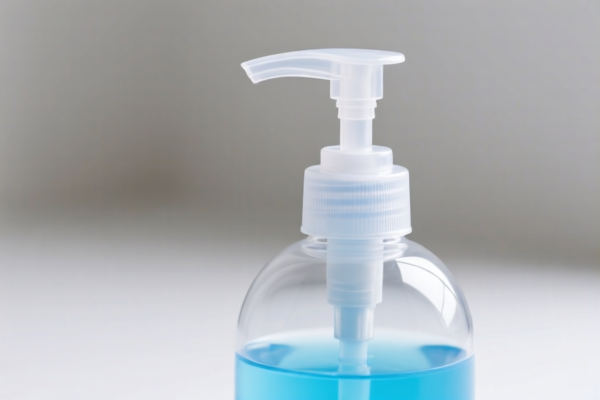
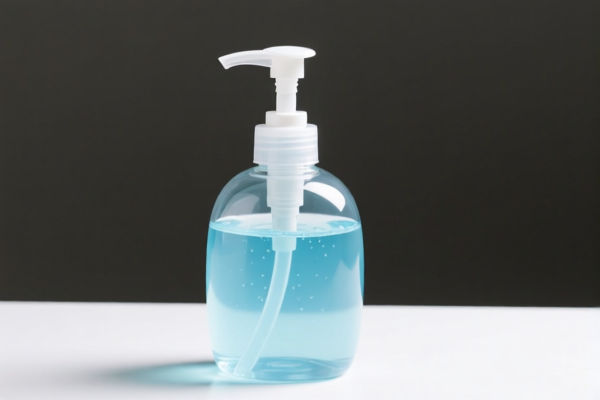
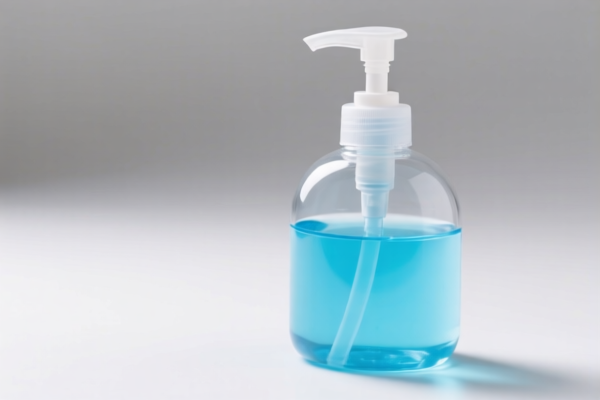
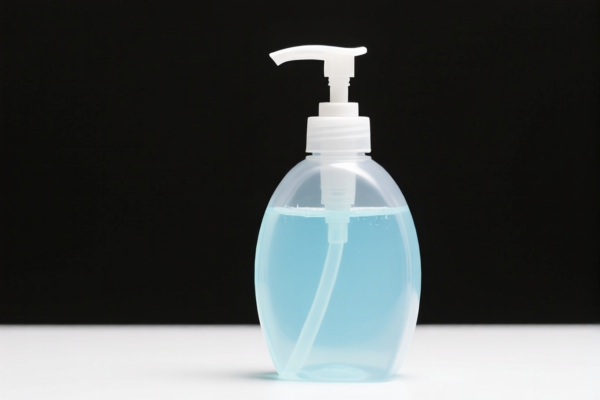
AI Analysis
🧴 The Integrated Soap Dispenser (Hygiene & Dispensing Tech)
🌐 HS Code Reference & Customs Clearance Guide | 2026 Latest Tariff Analysis | Professional Level Clearance Strategy
📌 I. Product Definition & Classification: Do You Really Know "Integrated Soap Dispenser"?
The Integrated Soap Dispenser is a household or commercial appliance designed to automatically or manually project/disperse liquid or foam soap. In international trade, its classification depends heavily on its power source, mechanism, and intended use.
Key Distinction:
- Manual/Airless/Pump Sprays: Hand-operated mechanical devices without external power. These fall under Chapter 84 (Machinery).
- Electric/Sensor/Automated Dispensers: Powered devices. These may fall under Chapter 84 if viewed as "spraying appliances" or Chapter 39 if considered "Plastic Articles" depending on specific design and function, but Chapter 84 is the primary category for "projecting/dispersing" mechanical appliances.
⚠️ Critical Classification Point:
- If it is a simple piston pump (hand-operated) or a power sprayer for liquids → 8424.20 (Spray guns and similar appliances).
- If it is made of plastic and lacks complex mechanical "projecting" mechanisms (e.g., simple gravity feed or basic plastic housing with a manual pump that is considered part of the article itself rather than a machine), it might be misclassified, but 8424 is the standard for "appliance for projecting liquids."
- Note: The provided data includes specific plastic items under 3926.90.99, but these are for "Face masks, shields, medical pads, waste containers," NOT soap dispensers. Therefore, soap dispensers generally do not fit here unless explicitly marketed as medical disposables. We must stick to 8424 for mechanical spray/dispense functions.
📦 II. HS Code Classification Details (Based on Provided DATA)
| HS Code | Product Description | Scenario | Tax Rate |
|---|---|---|---|
8424.20.10.00 |
Simple piston pump sprays and powder bellows (Mechanical appliances for projecting/dispersing liquids... Simple piston pump sprays) |
Manual pump soap dispensers, hand-squeeze foam dispensers, simple mechanical sprayers. | 0.0% |
8424.20.90.00 |
Other (Mechanical appliances for projecting/dispersing liquids... Other spray guns and similar appliances) |
Electric soap dispensers, sensor-activated foam dispensers, advanced mechanical spray systems that do not fit "simple piston" definition. | 25.0% |
🔍 Important Clarification on Plastic Codes (3926.90.99):
- The data provided for3926.90.99.50and3926.90.99.89specifically lists "Face masks and shields, medical positioning or transport pads, medical waste containers" and "Other" plastics.
- Soap dispensers are NOT listed here.
- Do NOT classify soap dispensers under 3926 unless they are strictly defined as "medical waste containers" or similar (which they are not). Using 3926 for a soap dispenser would be an incorrect classification, leading to potential penalties or delays.
- Correct Path: All mechanical dispensing devices (manual or electric) for liquids fall under 8424.
💰 III. 2026 Latest Tariff Rate Details (Including Additional Taxes)
✅ Applicable Country: United States (US)
✅ Origin: China (CN)
✅ Effective Time: Current rates apply (Data reflects latest available tariff structure)
🎯 1. 8424.20.10.00 —— Simple Piston Pump Sprays (Manual/Airless)
| Item | Detail |
|---|---|
| Product | Manual pump soap dispenser, hand-squeeze foam dispenser |
| Basic Tariff | 0.0% |
| Additional Tariff | 0.0% |
| Total Tariff | 0.0% |
| Tax Calculation | CIF Value × 0% = $0 |
| De Minimis Eligibility | ✅ Yes (Low/No duty impact) |
| Legal Basis | 8424.20.10.00 → No Section 301 or IEEPA footnote applies |
📌 Explanation:
- This code is highly favorable. Simple mechanical devices (like hand pumps) are exempt from additional tariffs.
- Ideal for budget-friendly, manual, or battery-free soap dispensers.
🎯 2. 8424.20.90.00 —— Other Spray Appliances (Electric/Sensor/Advanced)
| Item | Detail |
|---|---|
| Product | Electric sensor soap dispenser, automatic foam dispenser, motorized spray unit |
| Basic Tariff | 0.0% |
| Additional Tariff | +25.0% (Steel/Aluminum/Copper Additional Tariff or Section 301 equivalent for "Other" machinery) |
| Total Tariff | 25.0% |
| Tax Calculation | CIF Value × 25% |
| De Minimis Eligibility | ❌ No (High duty impact) |
| Legal Basis | 8424.20.90.00 → Subject to 25% additional tax |
📌 Explanation:
- Electric or complex mechanical dispensers fall under "Other."
- These are subject to the 25% additional tariff.
- This is a significant cost increase for automated products.
🛠️ IV. Customs Clearance Practical Advice (Combat Pitfalls)
✅ 1. Document Preparation Checklist (Must-Have)
| Document | Required | Description |
|---|---|---|
| ✅ Product Specifications | ✔️ | Include: Power source (Manual/Electric), Dispense mechanism (Pump/Sensor), Material (Plastic/Metal) |
| ✅ Operation Manual | ✔️ | Clearly state if it is "Hand-operated" (for 8424.20.10) or "Electric/Sensor" (for 8424.20.90) |
| ✅ Product Photos | ✔️ | Show the dispensing head, power source (battery compartment, plug), and brand/model |
| ✅ Commercial Invoice | ✔️ | Use precise description: "Mechanical Soap Dispenser, Manual Piston Pump Type" or "Electric Automatic Soap Dispenser" |
| ✅ HS Code Declaration | ✔️ | Explicitly declare 8424.20.10.00 or 8424.20.90.00 |
| ✅ Origin Certificate | ✔️ | To prove country of origin for tariff application |
✅ 2. Declaration Tips (Key Mnemonic)
🔥 "Manual = 0%, Electric = 25%! Don't Mix Them!"
| Scenario | Correct HS Code | Incorrect Action | Consequence |
|---|---|---|---|
| Manual Pump Dispenser | 8424.20.10.00 |
Declare as Electric | Overpay taxes? No, but risk of audit if misdescribed. |
| Sensor/Electric Dispenser | 8424.20.90.00 |
Declare as Manual | Tax Evasion Risk! CBP will assess 25% + penalties. |
| Plastic Dispenser (No Mechanism) | 8424.20.10.00 (if pump) |
Declare under 3926 |
Incorrect Classification! Leads to delays, audits, and potential fines. |
| Medical Waste Container | 3926.90.99.50 |
Declare as Soap Dispenser | Wrong Product! Only for medical waste/disposables. |
✅ 3. Special Cases Handling
| Scenario | Handling Advice |
|---|---|
| OEM Private Label | Ensure the invoice matches the manufacturer's technical specs. Do not alter the functional description. |
| Mixed Container | If a shipment contains both manual and electric dispensers, must split into two HS codes. Do not mix. |
| Sensor-Activated | Must declare as 8424.20.90.00. Provide proof of electric/sensor functionality (e.g., battery type, IR sensor diagram). |
| Plastic Housing + Manual Pump | Still 8424.20.10.00. The material (plastic) does not change the function (mechanical spray/dispense). |
🌍 V. Global Market Clearance Comparison (2026)
| Country/Region | Recommended HS Code | Tariff (China Origin) | Certification | Notes |
|---|---|---|---|---|
| 🇺🇸 USA | 8424.20.10.00 (Manual)8424.20.90.00 (Electric) |
0% (Manual) 25% (Electric) |
FCC (if electric), UL | Critical to separate manual vs. electric. |
| 🇨🇳 China | 8424.20 |
Varies (Check latest) | CCC (if electric) | No additional tariffs usually. |
| 🇪🇺 EU | 8424.20 |
0% - 2.7% (MFN) | CE, RoHS | No additional "Section 301" style taxes. |
| 🇯🇵 Japan | 8424.20 |
0% - 3% | PSE (if electric) | No additional tariffs. |
| 🇦🇺 Australia | 8424.20 |
5% | RCM (if electric) | No additional tariffs. |
📌 Conclusion:
- The US is the only market with a 25% additional tariff on electric/complex soap dispensers.
- Manual dispensers enjoy 0% duty in the US.
- Strategic Advice: If possible, market manual piston pump dispensers to the US to avoid the 25% tax. For electric models, factor in the 25% cost.
📌 VI. Common Errors & Pitfalls (Lessons Learned)
❌ Error 1: Classifying Electric Sensor Dispensers under 3926 (Plastics)
👉 Consequence: Incorrect classification. Customs may reject the entry or assess 8424.20.90.00 + 25% + penalties.
Reason: Even if made of plastic, the function (mechanical/electrical dispensing) dictates Chapter 84.
❌ Error 2: Declaring Manual Pumps as "Other" (8424.20.90.00)
👉 Consequence: Paying 25% tax unnecessarily instead of 0%.
Reason: Simple piston pumps are explicitly listed under
.10.
❌ Error 3: Using Medical Waste Container Code (3926.90.99.50) for Soap Dispensers
👉 Consequence: Total Misclassification. The code is for "medical waste containers/disinfectant wipes dispensers," not general soap.
Reason: Regulatory mismatch. Leads to detention and audit.
❌ Error 4: Mixing Manual and Electric units in one HS Code line item
👉 Consequence: Customs seizure or liquidation audit.
Reason: Different tax rates require separate line items.
✅ Correct Declaration Example:
"Manual Soap Dispenser, Plastic Body, Piston Pump Mechanism, No Electric Components, Model XYZ"
→ HS Code:8424.20.10.00→ Duty: 0%
🎯 VII. Conclusion: Precise Classification Saves Money!
🎯 Remember the Mnemonic:
🔹 "Manual Pump = 0% Duty!"
🔹 "Electric Sensor = 25% Duty!"
🔹 "Plastic Body ≠ Plastic Code! Function Rules!"
📌 Pro Tip:
- For US Imports: If your product is electric, consider designing a manual pump version for the US market to save 25% in tariffs.
- Always provide clear technical specs to CBP to prove whether the device is "Simple Piston" or "Other."
- Never use 3926 codes for soap dispensers unless they are medical waste containers.
📣 Immediate Action:
📞 Contact your Customs Broker with the following:
1. Product Photos (Show power source/mechanism)
2. Technical Specification Sheet
3. Request HS Code Pre-Ruling for8424.20.10.00or8424.20.90.00🚀 Accurate Classification = Lower Costs + Faster Clearance!
✨ Professional Clearance Starts with Accurate Codes!
💼 Every Percent Counts in International Trade!
Customer Reviews
About HS Code Classification
The Harmonized System (HS) is an internationally standardized nomenclature developed by the World Customs Organization (WCO) to classify traded products. Over 200 countries use the HS system as the basis for customs tariffs, trade statistics, and import/export regulations.
Each HS code follows a hierarchical structure:
- Chapter (2 digits) — Broad category of goods (e.g., Chapter 84: Machinery and Mechanical Appliances)
- Heading (4 digits) — More specific grouping within the chapter
- Subheading (6 digits) — Internationally standardized breakdown, used by all WCO member countries
- National subdivisions (8-10 digits) — Country-specific extensions for further classification, such as US HTSUS 10-digit codes
Correct HS code classification is essential for smooth customs clearance, accurate duty payment, and compliance with trade regulations. Misclassification can lead to customs delays, overpayment of duties, or penalties.
When importing from CN to US, the applicable tariff rates may include:
- Most-Favored-Nation (MFN) rate — The standard duty rate applied to WTO members
- General rate — Applied to countries without trade agreements
- Trade remedy duties — Additional tariffs such as Section 301 (anti-dumping), Section 232 (national security), or countervailing duties
The information provided on this page is for reference purposes only. For official classification, please consult with your local customs authority or a licensed customs broker.