Intelligent Brushless Fan
CN → US| HS Code | Tariff Rate | Origin | Destination | Doc |
|---|---|---|---|---|
| 8414591500 | 35.0% | CN | US | Official Doc |
| 8414596595 | 37.3% | CN | US | Official Doc |
| 8501104040 | 39.4% | CN | US | Official Doc |
| 8501106040 | 37.8% | CN | US | Official Doc |
Product Images
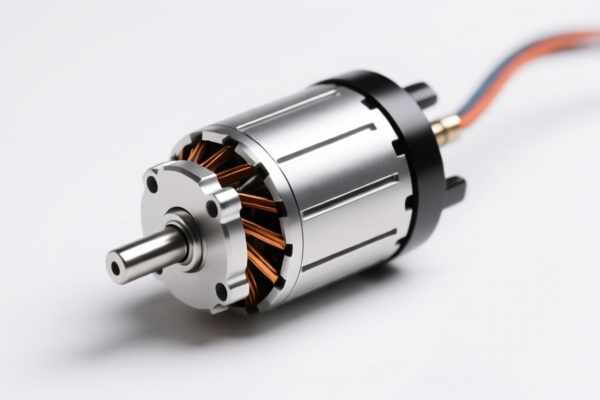
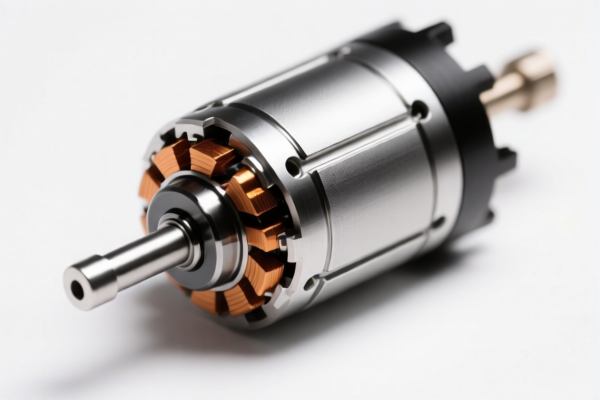


AI Analysis
🌀 Intelligent Brushless Fan: The Ultimate HS Code & Customs Clearance Guide (2026 Edition)
🚀 High-Efficiency Cooling Solutions for Tech Giants | Tax Rates, Classification Logic & Strategic Customs Advice
🌐 Introduction: What is an "Intelligent Brushless Fan"?
In the world of high-performance computing, 5G infrastructure, and AI data centers, the Intelligent Brushless Fan is not just a cooling component; it is the heartbeat of thermal management.
- Definition: A fan powered by a Brushless DC (BLDC) motor that eliminates carbon brushes (reducing friction and wear), often integrated with sensors (speed, temp, vibration) and controllers for "intelligent" variable speed operation.
- Primary Applications:
- Cooling Microprocessors (CPUs/GPUs).
- Telecommunications base stations.
- Automatic Data Processing (ADP) machines (Servers, Racks).
- Critical Distinction: Unlike standard household fans, these are engineered for high RPMs, low noise, and precise airflow control in sensitive electronic environments.
⚠️ The "Intelligence" Factor: If the fan includes an internal PCB to modulate speed based on temperature, it is a specialized electronic component, not a simple mechanical fan. This distinction heavily influences HS Code classification.
📦 II. HS Code Classification & Logic (2026 Tariff Analysis)
Based on the provided data, Intelligent Brushless Fans fall into two distinct categories depending on their power output (for motors) and specific application (for fans).
📊 Category A: The Motor Component (If Sold as a Spare Part)
If the fan is disassembled and sold solely as the motor unit.
| HS Code | Product Description | Logic for Classification |
|---|---|---|
| 8501.10.40.40 | DC Motor (Output < 18.65 W) Brushless, Output under 18.65W |
Applies to low-power brushless motors used in small devices or fans with very low wattage. |
| 8501.10.60.40 | DC Motor (Output ≥ 18.65 W) Brushless, Output between 18.65W & 37.5W |
Applies to higher-power brushless motors typical in server cooling or industrial fans. |
📊 Category B: The Complete Fan Unit (Most Common Scenario)
If the fan is sold as a complete assembly including blades, housing, and motor.
| HS Code | Product Description | Logic for Classification |
|---|---|---|
| 8414.59.15.00 | Specialized Cooling Fan "Fans of a kind used solely or principally for cooling microprocessors, telecommunications apparatus, or ADP machines" |
✅ MOST LIKELY CODE. Since the product is an "Intelligent" fan, it is almost certainly designed specifically for Microprocessors or ADP machines. This code targets the application (cooling electronics) rather than just the mechanical type. |
| 8414.59.65.95 | Other Fans (General Purpose) "Other fans" not fitting the specialized criteria above |
❌ Avoid if Possible. Only used if the fan is generic, used for general ventilation, air circulation, or cooling equipment not listed in 8414.59.15. If your fan is for a PC or Server, this is incorrect. |
🔍 Classification Logic Summary: * If the fan is specifically for cooling CPUs/ADP → 8414.59.15.00 (Target). * If the fan is a generic motor (no blades/housing sold separately) → 8501.10.40.40 or 8501.10.60.40. * If the fan is not for ADP/Microprocessors → 8414.59.65.95.
💰 III. 2026 Tariff & Tax Rate Breakdown
✅ Context: Imports from China (CN) to USA (US) (Based on "Additional Tariff" data). ⚠️ Critical Note: The "Additional Tariff" (加征关税) represents Section 301 penalties and IEEPA measures, significantly impacting cost.
🎯 1. HS Code: 8414.59.15.00 (Specialized Cooling Fans)
The "Hot" Code for Server/PC Fans.
| Tax Component | Rate | Legal Basis |
|---|---|---|
| Base Tariff (MFN) | 0.0% | Standard Most Favored Nation rate. |
| Additional Tariff (Section 301) | +25.0% | USITC Footnote 301 on cooling equipment for electronics. |
| Total Tax | 25.0% | High Risk |
📌 Tax Detail Explanation: * "Base Tariff 0.0%": Normally, simple fans might be duty-free. * "Additional 25.0%": This is the killer tax. Fans used for cooling microprocessors are considered critical IT components targeted by trade restrictions. * Impact: On a $100 fan, you pay $25 in tariffs immediately upon entry.
🎯 2. HS Code: 8414.59.65.95 (Other General Fans)
The "Generic" Code.
| Tax Component | Rate | Legal Basis |
|---|---|---|
| Base Tariff (MFN) | 2.3% | Standard rate for miscellaneous fans. |
| Additional Tariff (Section 301) | +25.0% | Applies broadly to "Other" fans under the 301 list. |
| Total Tax | 27.3% | Even Higher! |
📌 Tax Detail Explanation: * While the base rate is 2.3%, the 25% addition makes the total 27.3%. * Strategic Warning: 8414.59.15.00 (25%) is CHEAPER than 8414.59.65.95 (27.3%). Misclassifying a specialized server fan as a "General Fan" increases your tax burden!
🎯 3. HS Codes: 8501.10.40.40 & 8501.10.60.40 (Brushless Motors Only)
If selling motors separately.
| Tax Component | Rate | Legal Basis |
|---|---|---|
| Base Tariff | 0.0% | |
| Additional Tariff | 0.0% | |
| Total Tax | 0.0% | Sweet Spot! |
📌 Tax Detail Explanation: * 0% Total Tax: If you can legally classify and ship the product as a standalone motor (without housing/blade assembly) for integration by the buyer, you pay ZERO tariffs. * Risk: This requires strict compliance. If the product is assembled and sold as a "Fan Unit," this code is illegal and will lead to penalties.
🛠️ IV. Customs Clearance Strategy & Operational Advice
✅ 1. Classification Strategy: "Fit for Purpose"
- Primary Rule: Do NOT use the "General Fan" code (8414.59.65.95) if your fan is for a server or PC. You will pay 27.3% instead of 25%.
- Optimal Strategy: Use 8414.59.15.00.
- Why: It explicitly mentions "Microprocessors" and "ADP Machines."
- Requirement: Your Commercial Invoice must state: "Fan designed solely for cooling microprocessors/ADP machines."
✅ 2. Motor vs. Assembly Strategy (Advanced)
- Scenario: If you are shipping to a manufacturer who assembles the fans themselves.
- Strategy: Ship the Brushless Motor (HS 8501.10.40.40 or 8501.10.60.40).
- Benefit: 0% Tax.
- Condition: The shipment must not include the fan blades, housing, or mounting brackets in the same box as the motor.
- Documentation: Invoice must clearly state "Brushless DC Motor, No Housing/Blades."
✅ 3. Essential Documentation Checklist
To clear customs smoothly, prepare these specific documents:
| Document | Critical Content Required |
|---|---|
| Commercial Invoice | Description: "Intelligent Brushless Cooling Fan for Server/ADP" Usage: Must explicitly state "For cooling microprocessors." HS Code: List the specific HS Code. |
| Technical Datasheet | Power Output: Must clearly show Watts (to distinguish between 18.65W cut-off for motors). Application: Must specify target equipment (CPU, Server, Telecom). |
| Product Photos | Show the blades, housing, and connector. If shipping as a "Motor Only," ensure photos show NO blades/housing. |
| Bill of Materials (BOM) | Prove if the product is an assembly (Fan) or just a motor. |
✅ 4. Avoiding Pitfalls (The "Don'ts")
- ❌ DO NOT call it a "Ventilation Fan" if it's for a PC. (Risk: Misclassification to 8414.59.65.95 = 27.3% tax).
- ❌ DO NOT claim it's a "Motor" if it comes with blades. (Risk: Customs Seizure for Fraud).
- ❌ DO NOT ignore the 18.65W threshold. If your motor is 19W, it must be 8501.10.60.40, not the lower tier.
🌍 V. Global Market Comparison (2026 Snapshot)
| Region | Recommended HS Code | Tariff Rate (China Origin) | Key Challenge |
|---|---|---|---|
| 🇺🇸 USA | 8414.59.15.00 |
25.0% | High Section 301 penalties. Must prove "ADP usage". |
| 🇪🇺 EU | 8414.59.15 |
0% | Generally duty-free for cooling fans, but strict RoHS/CE. |
| 🇨🇳 China | 8414.59.15 |
0% - 5% | Low export duty, but complex internal logistics. |
| 🇩🇪 Germany | 8414.59.15 |
0% | Requires TUV certification for intelligent controls. |
📌 Insight: The USA is the most expensive market for these fans due to the 25% additional tariff. If possible, consider third-country assembly (e.g., Vietnam, Malaysia) to bypass Section 301, provided rules of origin are met.
🎯 VI. Conclusion: Smart Shipping for Maximum Profit
- Identify the Use Case: If it cools a Microprocessor/ADP, use 8414.59.15.00.
- Check the Power: If shipping as a motor, verify if < 18.65W or > 18.65W to avoid misclassification.
- Maximize Savings: 0% tax is only achievable by shipping Motors Only (8501 series). Shipping complete Fans incurs 25-27.3% tax.
- Declare Clearly: Your invoice description is your first line of defense against misclassification audits.
💡 Pro Tip: "Intelligent" implies embedded electronics. Ensure your description highlights the control capability to justify the "Specialized Cooling" classification over a generic fan code.
✨ Ready to Ship? Ensure your product specs align with 8414.59.15.00 to minimize costs. Professional Classification = Cost Reduction. 🚀
Customer Reviews
About HS Code Classification
The Harmonized System (HS) is an internationally standardized nomenclature developed by the World Customs Organization (WCO) to classify traded products. Over 200 countries use the HS system as the basis for customs tariffs, trade statistics, and import/export regulations.
Each HS code follows a hierarchical structure:
- Chapter (2 digits) — Broad category of goods (e.g., Chapter 84: Machinery and Mechanical Appliances)
- Heading (4 digits) — More specific grouping within the chapter
- Subheading (6 digits) — Internationally standardized breakdown, used by all WCO member countries
- National subdivisions (8-10 digits) — Country-specific extensions for further classification, such as US HTSUS 10-digit codes
Correct HS code classification is essential for smooth customs clearance, accurate duty payment, and compliance with trade regulations. Misclassification can lead to customs delays, overpayment of duties, or penalties.
When importing from CN to US, the applicable tariff rates may include:
- Most-Favored-Nation (MFN) rate — The standard duty rate applied to WTO members
- General rate — Applied to countries without trade agreements
- Trade remedy duties — Additional tariffs such as Section 301 (anti-dumping), Section 232 (national security), or countervailing duties
The information provided on this page is for reference purposes only. For official classification, please consult with your local customs authority or a licensed customs broker.