Interchangeable Hand Tool with Working Part
CN → US| HS Code | Tariff Rate | Origin | Destination | Doc |
|---|---|---|---|---|
| 8206000000 | 0.0% | CN | US | Official Doc |
| 8207904500 | 39.8% | CN | US | Official Doc |
| 8207907585 | 38.7% | CN | US | Official Doc |
| 8205593080 | 35.0% | CN | US | Official Doc |
| 8205513060 | 38.7% | CN | US | Official Doc |
Product Images
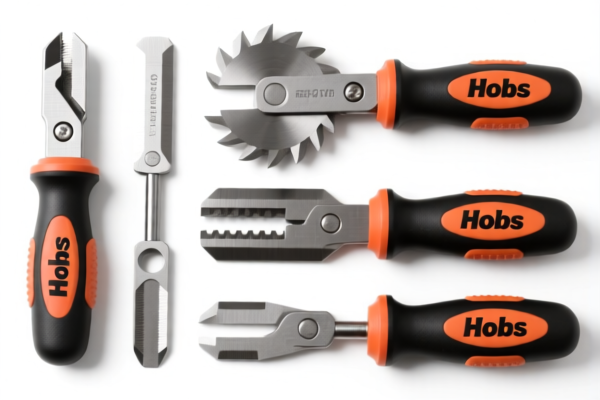
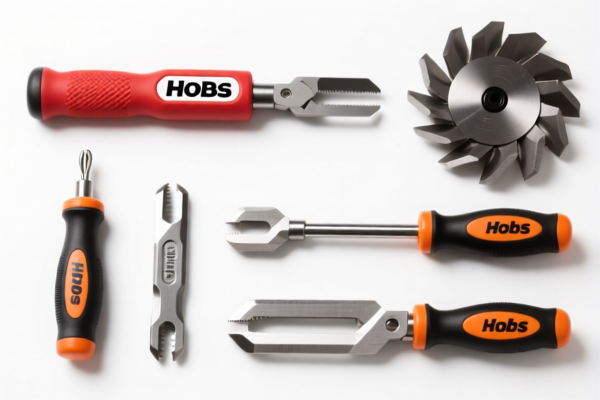
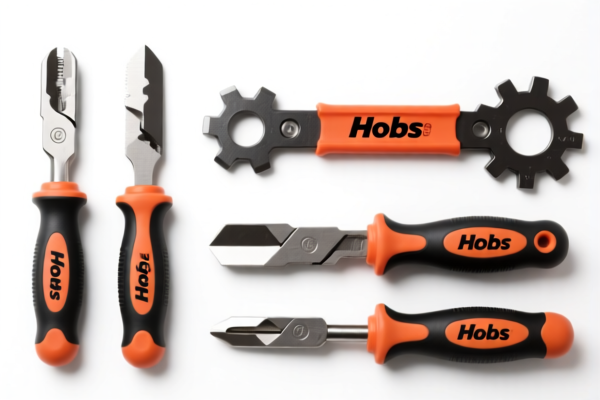
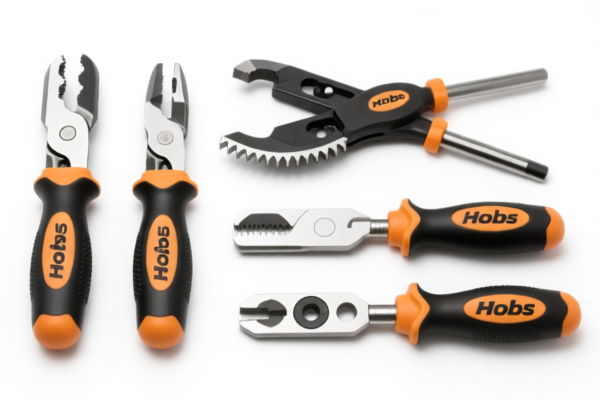
AI Analysis
🔧 Interchangeable Hand Tool with Working Part
🌐 HS Code Reference & Customs Clearance Guide | 2024/2025 Latest Tariff Analysis | Professional Clearance Strategy
📌 I. Product Definition & Classification: What is an "Interchangeable Hand Tool"?
An Interchangeable Hand Tool (often referring to tools with removable bits, sockets, or blades) is a category of manual equipment where the working part can be detached, replaced, or swapped. In international trade, these are generally classified under Chapter 82 (Tools, Implements, Cutlery, etc. of base metal).
Key Distinction: * Set of Tools (e.g., 8206): If sold together in a box for retail sale as a complete set. * Individual Interchangeable Parts (e.g., 8207): If the tool itself is defined by its interchangeable nature (like a screwdriver handle with bit holder) or specific function. * Other Hand Tools (e.g., 8205): General manual tools without specific interchangeable mechanisms defined in 8207.
⚠️ Critical Classification Point:
- If it is a complete set (handle + multiple bits/packs) for retail → 8206 may apply.
- If it is a specific tool with interchangeable parts (like a drill bit holder or specialized screwdriver) → 8207 is more likely.
- If it is a general hand tool where "interchangeable" is just a feature, not the primary definition → 8205 might be used.
📦 II. HS Code Classification Details (2024/2025 Latest Tariff对照)
| HS Code | Product Description | Application Scenario | Tax Rate (China to US) |
|---|---|---|---|
8206.00.00.00 |
Set of interchangeable hand tools | Retail packs containing multiple tools/bits for general use | 35.0% |
8207.90.45.00 |
Interchangeable hand tools (metal working parts) | Tools with metal interchangeable parts (e.g., drill chucks, specific bit holders) | 39.8% |
8207.90.75.85 |
Other interchangeable hand tools (residual) | Interchangeable tools not specifically listed elsewhere (residual category) | 38.7% |
8205.59.30.80 |
Other hand tools (residual) | General hand tools; "interchangeable" is a secondary feature | 35.0% |
8205.51.30.60 |
Hand tools with interchangeable parts | Hand tools specifically described as having "other" interchangeable parts | 38.7% |
🔍 Key Reminder:
- 8207 is specifically for "Interchangeable Tools" (e.g., tool holders, specific bits).
- 8206 is for "Sets" of tools.
- 8205 is a "Residual" category for hand tools that don’t fit 8206 or 8207.
- The "Interchangeable" keyword strongly points to 8207 or 8205, depending on whether it’s a set or a specific tool.
💰 III. 2024/2025 Latest Tariff Rate Breakdown (Including Additional Duties)
✅ Applicable Country: United States (US)
✅ Country of Origin: China (CN)
✅ Effective Date: Since November 10, 2025 (and ongoing)
🎯 1. 8206.00.00.00 —— Set of Interchangeable Hand Tools
| Item | Details |
|---|---|
| Base Tariff | The rate applicable to that article in the set subject to duty |
| Section 301 Tariff | +25.0% |
| IEEPA Tariff (122) | +10.0% |
| Total Rate | 35.0% |
| Tax Calculation | CIF Value × 35.0% |
| De Minimis Exemption | ❌ Not Eligible |
| Legal Basis Path | IEEPA:9903.01.25 → USITC:8206.00.00.00 → FOOTNOTE:301 |
📌 Explanation:
- Base Rate: Varies by specific subheading within the set.
- Additional Tariffs: 301 (25%) + IEEPA (10%) = 35% total.
- High Risk: Sets are often scrutinized for proper classification to avoid under-declaring.
🎯 2. 8207.90.45.00 —— Interchangeable Hand Tools (Metal Working Parts)
| Item | Details |
|---|---|
| Base Tariff | 4.8% |
| Section 301 Tariff | +25.0% |
| IEEPA Tariff (122) | +10.0% |
| Total Rate | 39.8% |
| Tax Calculation | CIF Value × 39.8% |
| De Minimis Exemption | ❌ Not Eligible |
| Legal Basis Path | IEEPA:9903.01.25 → USITC:8207.90.45.00 |
📌 Explanation:
- Base Rate: 4.8% for specific metal interchangeable tools.
- Total Rate: 4.8% + 25% + 10% = 39.8%.
- High Risk: This is one of the highest tariff rates for hand tools due to specific metal classification.
🎯 3. 8207.90.75.85 —— Other Interchangeable Hand Tools (Residual)
| Item | Details |
|---|---|
| Base Tariff | 3.7% |
| Section 301 Tariff | +25.0% |
| IEEPA Tariff (122) | +10.0% |
| Total Rate | 38.7% |
| Tax Calculation | CIF Value × 38.7% |
| De Minimis Exemption | ❌ Not Eligible |
| Legal Basis Path | IEEPA:9903.01.25 → USITC:8207.90.75.85 |
📌 Explanation:
- Base Rate: 3.7% for residual interchangeable tools.
- Total Rate: 3.7% + 25% + 10% = 38.7%.
- Residual Category: Used when no other specific 8207 subheading applies.
🎯 4. 8205.59.30.80 —— Other Hand Tools (Residual)
| Item | Details |
|---|---|
| Base Tariff | 0.0% |
| Section 301 Tariff | +25.0% |
| IEEPA Tariff (122) | +10.0% |
| Total Rate | 35.0% |
| Tax Calculation | CIF Value × 35.0% |
| De Minimis Exemption | ❌ Not Eligible |
| Legal Basis Path | IEEPA:9903.01.25 → USITC:8205.59.30.80 |
📌 Explanation:
- Base Rate: 0.0% for general other hand tools.
- Total Rate: 0.0% + 25% + 10% = 35.0%.
- Best Case: If classified here, the base tariff is lower, but still high due to additional duties.
🎯 5. 8205.51.30.60 —— Hand Tools with Interchangeable Parts
| Item | Details |
|---|---|
| Base Tariff | 3.7% |
| Section 301 Tariff | +25.0% |
| IEEPA Tariff (122) | +10.0% |
| Total Rate | 38.7% |
| Tax Calculation | CIF Value × 38.7% |
| De Minimis Exemption | ❌ Not Eligible |
| Legal Basis Path | IEEPA:9903.01.25 → USITC:8205.51.30.60 |
📌 Explanation:
- Base Rate: 3.7% for hand tools with "other" interchangeable parts.
- Total Rate: 3.7% + 25% + 10% = 38.7%.
- Conflict Risk: If the tool is primarily a "set" (8206) or specific "interchangeable tool" (8207), this classification may be challenged.
🛠️ IV. Customs Clearance Practical Advice (Avoid Pitfalls)
✅ 1. Preparation Checklist (All Required)
| Document | Required | Notes |
|---|---|---|
| ✅ Product Specification Sheet | ✔️ | Must detail if it’s a set, individual tool, or part |
| ✅ Product Photos (Clear) | ✔️ | Show interchangeable parts, handles, and working ends |
| ✅ Commercial Invoice | ✔️ | Clearly state "Interchangeable Hand Tool" |
| ✅ Packing List | ✔️ | Indicate if items are sold as a "Set" or individually |
| ✅ Origin Certificate | ✔️ | Essential for IEEPA 122 Section application |
| ✅ Third-Party Test Report | ✔️ | If applicable (e.g., durability, safety) |
✅ 2. Declaration Strategy (Key Tips)
🔥 “Define the Set, Specify the Part, Avoid Ambiguity, Lower the Risk!”
| Scenario | Correct Declaration | Incorrect Action |
|---|---|---|
| Sold as a Box with Multiple Bits | 8206.00.00.00 (Set) |
Declare as individual tools → High Tax + Penalty |
| Single Handle with Removable Bit Holder | 8207.90.45.00 or 8207.90.75.85 |
Declare as 8205 → Potential Rejection |
| General Screwdriver with Swappable Tips | 8205.59.30.80 or 8205.51.30.60 |
Declare as 8207 → Unnecessary Higher Tax |
| Metal Drill Bits for Hand Drills | 8207.90.45.00 |
Declare as 8206 → Incorrect Classification |
✅ 3. Special Cases
| Scenario | Recommendation |
|---|---|
| OEM Custom Tools | Provide design drawings to prove it’s a specific tool, not a set |
| Plastic vs. Metal Parts | If working parts are metal, lean towards 8207.90.45.00; if non-metal, 8207.90.75.85 |
| Retail Sets | Must declare as 8206; do not split into individual items |
| Industrial vs. Consumer | Industrial tools may have different documentation needs; clarify use |
🌍 V. Global Market Clearance Comparison (2024/2025)
| Country/Region | Recommended HS Code | Tariff | Certification | Notes |
|---|---|---|---|---|
| 🇺🇸 USA | 8207.90.45.00 |
39.8% (China) | None | High tariff due to 301 + IEEPA |
| 🇨🇳 China | 8207.90.45.00 |
6.5% | None | No additional duties |
| 🇪🇺 EU | 8207.90.45.00 |
0% | CE + RoHS | Free trade for many goods |
| 🇦🇺 Australia | 8207.90.45.00 |
5% | None | Moderate tariff |
| 🇯🇵 Japan | 8207.90.45.00 |
0% | None | Low/No tariff |
📌 Conclusion:
- USA is the most expensive market for Chinese-made interchangeable hand tools due to 301 + IEEPA duties.
- EU, Japan, and Australia offer significantly lower or no tariffs.
- Strategy: Consider re-routing or re-packaging if shipping to the US.
📌 VI. Common Mistakes & Pitfalls (Lessons Learned)
❌ Mistake 1: Declaring a Retail Set as individual tools
👉 Consequence: Customs may impose 39.8% on each item instead of 35.0% for the set → Higher Cost
❌ Mistake 2: Misclassifying Metal Working Parts as general hand tools (8205)
👉 Consequence: Under-declared tariff → Back Taxes + Penalties
❌ Mistake 3: Failing to specify "Interchangeable" in the description
👉 Consequence: Customs may classify under a higher duty category → Delays & Confiscation
❌ Mistake 4: Ignoring IEEPA 122 Section (10% surcharge)
👉 Consequence: Unexpected 10% charge on all shipments from China → Profit Erosion
✅ Correct Practice:
"Interchangeable Hand Tool Set, 10-Piece, Metal Bits, Plastic Handle, Retail Pack, Model ABC, Made in China"
🎯 VII. Conclusion: Professional Classification Saves Money!
🎯 Remember the Golden Rule:
🔹 “Sets go to 8206, Specific Tools go to 8207, General Tools go to 8205.”
🔹 “USA Tariffs are High (35-40%),” but “”EU/Japan are Low (0-5%).””
🔹 “Declare Clearly, Document Fully, Avoid Penalties!”**
📌 Pro Tip:
If your tools are made in Vietnam, Mexico, or Thailand, you may be exempt from IEEPA 122 and 301 Section duties.
Recommendation: Apply for Advance Ruling from US Customs (CBP) to confirm the correct HS Code before shipping.
📣 Act Now:
📞 Contact a Professional Broker + Provide Product Photos + Apply for HS Code Pre-Ruling
🚀 Ensure Smooth Clearance, Maximize Profit, and Avoid Customs Nightmares!
✨ Professional Customs Clearance Starts with Accurate Classification!
💼 Every Cent Counts in International Trade!
Customer Reviews
About HS Code Classification
The Harmonized System (HS) is an internationally standardized nomenclature developed by the World Customs Organization (WCO) to classify traded products. Over 200 countries use the HS system as the basis for customs tariffs, trade statistics, and import/export regulations.
Each HS code follows a hierarchical structure:
- Chapter (2 digits) — Broad category of goods (e.g., Chapter 84: Machinery and Mechanical Appliances)
- Heading (4 digits) — More specific grouping within the chapter
- Subheading (6 digits) — Internationally standardized breakdown, used by all WCO member countries
- National subdivisions (8-10 digits) — Country-specific extensions for further classification, such as US HTSUS 10-digit codes
Correct HS code classification is essential for smooth customs clearance, accurate duty payment, and compliance with trade regulations. Misclassification can lead to customs delays, overpayment of duties, or penalties.
When importing from CN to US, the applicable tariff rates may include:
- Most-Favored-Nation (MFN) rate — The standard duty rate applied to WTO members
- General rate — Applied to countries without trade agreements
- Trade remedy duties — Additional tariffs such as Section 301 (anti-dumping), Section 232 (national security), or countervailing duties
The information provided on this page is for reference purposes only. For official classification, please consult with your local customs authority or a licensed customs broker.