Interchangeable Hand Tools
CN → US| HS Code | Tariff Rate | Origin | Destination | Doc |
|---|---|---|---|---|
| 8206000000 | 0.0% | CN | US | Official Doc |
| 8207904500 | 39.8% | CN | US | Official Doc |
| 8207907585 | 38.7% | CN | US | Official Doc |
| 8205593080 | 35.0% | CN | US | Official Doc |
| 8466100130 | 38.9% | CN | US | Official Doc |
Product Images
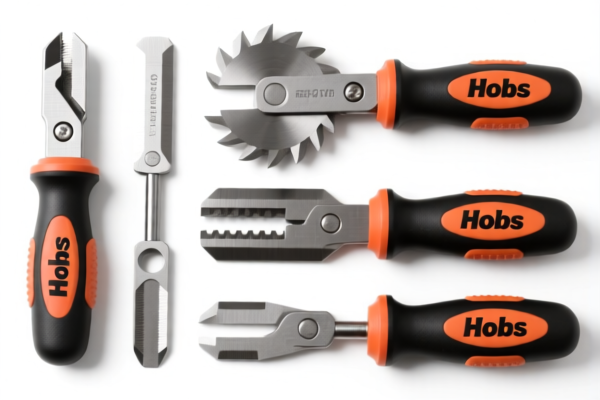
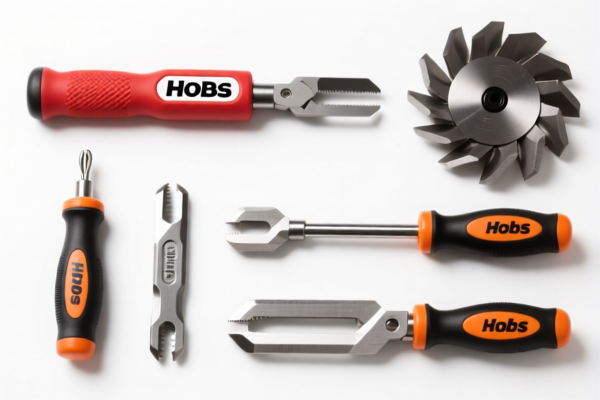
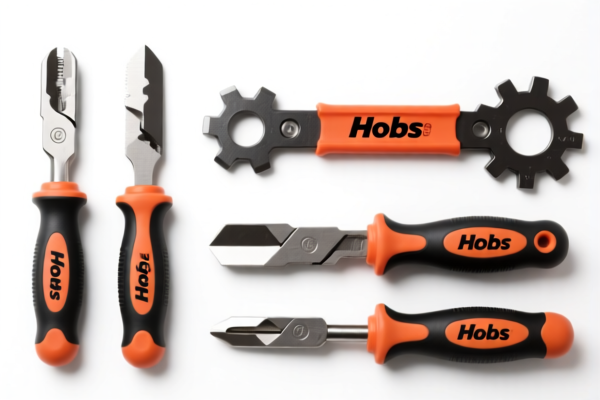
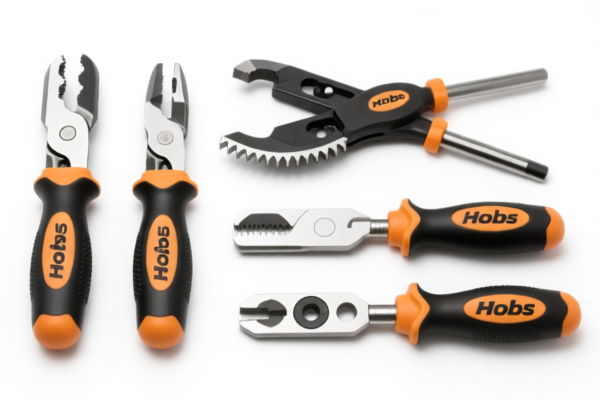
AI Analysis
🛠️ Interchangeable Hand Tools: HS Code Classification & US Customs Clearance Guide (2026)
🌐 HS Code Reference & Customs Clearance Strategy | 2026 Latest Tariff Analysis | Professional Tier-1 Compliance
📌 I. Product Definition & Classification: What Exactly Are "Interchangeable Hand Tools"?
"Interchangeable Hand Tools" refer to tools designed with a system where the working head or component can be detached and replaced with different attachments for various tasks (e.g., screwdriver bits, drill chucks, socket adapters). In international trade, these are strictly classified based on their material, function, and whether they are part of a set.
⚠️ Key Distinction:
- If the tool is a complete handheld tool (handle + interchangeable head) intended for manual use → Often falls under 8205 or 8206.
- If the tool is a detachable attachment/head without a permanent handle mechanism, or part of a machine system → May fall under 8207.
- If it is a set packaged for retail → 8206 is highly likely.
📦 II. HS Code Classification Matrix (2026 Latest Tariff Authority)
The following table details the five potential HS Codes derived from your input data, with precise matching logic and tax implications for US Imports from China.
| HS Code | Product Description & Logic | Key Classification Logic |
|---|---|---|
8206.00.00.00 |
Interchangeable Hand Tools (Sets) | Retail Sets: Matches "Interchangeable hand tool" in purpose. Since packaging isn't specified, it assumes potential inclusion in a retail kit. Risk: Broad category; requires proof of being a "set." |
8207.90.45.00 |
Interchangeable Tools for Tools/Machines | Metal Attribute: Matches "Interchangeable hand tool" directly. Assumes metal composition based on common sense. No conflict with classification. Note: Typically for tool bits/inserts. |
8207.90.75.85 |
Other Interchangeable Tools (General) | Fallback/兜底: Core purpose matches. Since specific function is unclear, it defaults to "Other." No material/usage conflict. Risk: Vague; may trigger extra scrutiny if function is not clearly defined. |
8205.59.30.80 |
Other Hand Tools | Direct Match: "Hand tool" matches category perfectly. "Interchangeable" is a functional feature, not a disqualifier. Material inferred as metal/composite. Advantage: 0% Base Duty. |
8466.10.01.30 |
Parts/Accessories for Machine Tools | Usage-Based: "Replacement" matches "Replaceable." Lacks material description; classified as "Part/Component." Risk: Only valid if these are parts for machinery, not standalone hand tools. |
🔍 Critical Warning:
- If the product is a standalone screwdriver with a bit set, it is NOT a machine part (8466). It is a Hand Tool (8205or8206).
- Misclassifying a hand tool as a machine part (8466) is a common error that leads to seizure if the "machine use" evidence is missing.
💰 III. 2026 Latest Tariff Rate Breakdown (Detailed Tax Clauses)
✅ Target Market: 🇺🇸 United States
✅ Origin: 🇨🇳 China (CN)
✅ Effective Date: November 10, 2025 (and ongoing)
🎯 1. 8206.00.00.00 — Interchangeable Hand Tools (Set)
| Item | Detail |
|---|---|
| Base Duty | The rate of duty applicable to that article in the set subject t (Variable/Complex) |
| Section 301 Add-On | +25.0% |
| IEEPA Section 122 | +10.0% |
| Total Effective Rate | ~35.0% (Estimated) |
| Calculation Basis | CIF Value × Total Rate |
| De Minimis Exemption | ❌ Denied (deny_de_minimis) |
| Legal Pathway | USITC:8206.00.00.00 → FOOTNOTE:301 → IEEPA:122 |
📌 Explanation:
- This code applies if the items are packaged together for retail sale.
- The "Base Rate" is complex because it depends on the most significant component in the set.
- Total Tax Load is High: Expect ~35% total duty impact.
🎯 2. 8207.90.45.00 — Interchangeable Tools (Metal Attribute)
| Item | Detail |
|---|---|
| Base Duty | 4.8% |
| Section 301 Add-On | +25.0% |
| IEEPA Section 122 | +10.0% |
| Total Effective Rate | 39.8% |
| Calculation Basis | CIF Value × 39.8% |
| De Minimis Exemption | ❌ Denied |
| Legal Pathway | USITC:8207.90.45.00 → FOOTNOTE:301 → IEEPA:122 |
📌 Explanation:
- Best for metal tool bits or detachable heads.
- Base duty is low (4.8%), but the 35% Add-Ons (25% + 10%) make it expensive.
🎯 3. 8207.90.75.85 — Other Interchangeable Tools (General)
| Item | Detail |
|---|---|
| Base Duty | 3.7% |
| Section 301 Add-On | +25.0% |
| IEEPA Section 122 | +10.0% |
| Total Effective Rate | 38.7% |
| Calculation Basis | CIF Value × 38.7% |
| De Minimis Exemption | ❌ Denied |
| Legal Pathway | USITC:8207.90.75.85 → FOOTNOTE:301 → IEEPA:122 |
📌 Explanation:
- A "catch-all" for interchangeable tools not specified elsewhere.
- Slightly lower base duty than8207.45, but still subject to full tariffs.
🎯 4. 8205.59.30.80 — Other Hand Tools (BEST OPTION)
| Item | Detail |
|---|---|
| Base Duty | 0.0% |
| Section 301 Add-On | +25.0% |
| IEEPA Section 122 | +10.0% |
| Total Effective Rate | 35.0% |
| Calculation Basis | CIF Value × 35.0% |
| De Minimis Exemption | ❌ Denied |
| Legal Pathway | USITC:8205.59.30.80 → FOOTNOTE:301 → IEEPA:122 |
📌 Explanation:
- Zero Base Duty makes this the most cost-effective option if the product qualifies as a "Hand Tool."
- "Interchangeable" is accepted as a functional feature of hand tools (e.g., multi-bit screwdrivers).
- Total Tax Load is Lowest among the options (~35%).
🎯 5. 8466.10.01.30 — Parts for Machine Tools (HIGH RISK)
| Item | Detail |
|---|---|
| Base Duty | 3.9% |
| Section 301 Add-On | +25.0% |
| IEEPA Section 122 | +10.0% |
| Total Effective Rate | 38.9% |
| Calculation Basis | CIF Value × 38.9% |
| De Minimis Exemption | ❌ Denied |
| Legal Pathway | USITC:8466.10.01.30 → FOOTNOTE:301 → IEEPA:122 |
📌 Explanation:
- Only use if the product is strictly a part/accessory for a machine tool (e.g., a CNC chuck, not a handheld screwdriver).
- If misused for hand tools, Customs will reclassify and penalize.
🛠️ IV. Customs Clearance Practical Advice (Avoid Pitfalls)
✅ 1. Documentation Checklist (Non-Negotiable)
| Document | Required? | Purpose |
|---|---|---|
| ✅ Product Specifications | ✔️ | Must define: Is it a handle? A bit? A set? |
| ✅ Composition/Material | ✔️ | Crucial for distinguishing 8205 (Hand Tool) vs 8207 (Tool Part). |
| ✅ Usage Description | ✔️ | Must state: "For manual use" (→ 8205/8206) OR "For machine use" (→ 8466). |
| ✅ Photographs | ✔️ | Show the tool in use. Does it have a handle? |
| ✅ Commercial Invoice | ✔️ | Clearly describe as "Interchangeable Hand Tool Set" or "Tool Bits." |
| ✅ Packing List | ✔️ | Confirm if items are sold together (Set) or separately. |
✅ 2. Classification Strategy (The "Golden Rules")
🔥 "Hand Tool or Machine Part? That is the question!"
| Scenario | Recommended HS Code | Why? |
|---|---|---|
| Screwdriver with changeable bits | 8205.59.30.80 |
It is a Hand Tool. Bits are accessories. |
| Boxed set of screwdrivers & bits | 8206.00.00.00 |
It is a Retail Set. |
| Drill Chuck (Metal, No Handle) | 8207.90.45.00 |
It is an Interchangeable Tool Part. |
| Part for a CNC Machine | 8466.10.01.30 |
It is a Machine Accessory. |
| Generic Metal Attachment | 8207.90.75.85 |
Fallback if function is unclear. |
⚠️ Critical Tip:
- If you claim8205(0% Base), be ready to prove it is used manually.
- If you claim8466(3.9% Base), be ready to prove it is a part for a machine, not a hand tool.
✅ 3. Special Circumstances
| Situation | Advice |
|---|---|
| OEM Private Label | Provide authorization letter to prove origin and brand ownership. |
| "Interchangeable" Definition | Clearly state that the tool allows changing heads. This supports 8205 or 8207. |
| Multi-Function Tools | If it does multiple things (e.g., screwdriver + pliers), 8205 is still best. |
| Raw Metal Bits Only | Use 8207. Do not call them "Hand Tools" if there is no handle. |
🌍 V. Global Market Comparison (2026 Update)
| Market | Recommended HS Code | Est. Total Duty (China Origin) | Notes |
|---|---|---|---|
| 🇺🇸 USA | 8205.59.30.80 |
35.0% | Best balance of Base Duty + Tariffs. |
| 🇺🇸 USA | 8206.00.00.00 |
~35.0% | For sets only. |
| 🇪🇺 EU | 8205.59.00.00 |
0% - 4.5% | No Section 301/IEEPA. Very low duty. |
| 🇨🇳 China | 8205.59.30.80 |
5% - 9% | Standard import duty. |
📌 Conclusion:
- USA is the most expensive market due to 35% Add-Ons.
- EU/China are significantly cheaper.
- Strategy: If targeting the US, ensure your classification is defensible to avoid penalties.8205is often the safest for hand tools.
📌 VI. Common Errors & Pitfalls (Blood Lessons)
❌ Error 1: Classifying a handheld screwdriver set as 8466 (Machine Part).
👉 Consequence: Customs rejects it as "Not a machine part." Re-classification delay + penalties.
❌ Error 2: Calling metal drill bits "Hand Tools" (8205).
👉 Consequence: Bits are "Interchangeable Tools" (8207), not hand tools. Potential misclassification risk.
❌ Error 3: Assuming De Minimis ($800) applies.
👉 Consequence: Absolutely Denied. All 82xx and 84xx from China are subject to Section 301 + IEEPA.
❌ Error 4: Vague Description: "Tool."
👉 Consequence: Customs assigns their own code, often with higher duty or hold for review.
✅ Correct Description Example:
"Interchangeable Hand Tool Set, 50 pcs, Includes Steel Screwdriver Handle and Magnetic Bit Holder, Model XYZ, For Manual Use Only"
🎯 VII. Conclusion: Precise Classification Saves Money!
🎯 Key Takeaway:
🔹 "Hand Tool = 8205 (0% Base), Machine Part = 8466 (3.9% Base)."
🔹 "Both pay 35% Add-Ons. No De Minimis!"
🔹 "Be Specific! Vague = Penalty!"
📌 Pro Tip:
If your product is not made in China (e.g., Vietnam, Taiwan), the Section 301 and IEEPA taxes may not apply, reducing the total duty to 0% - 10%.
Always check the Country of Origin!
📣 Immediate Action:
📞 Contact a Licensed Customs Broker
📄 Provide Product Photos + Material Specs
📋 Request an Advance Ruling (if high volume)
🚀 Ensure Smooth Clearance, Minimize Costs, Maximize Profit!
✨ Professional Customs Clearance Starts with Accurate Classification!
💼 Every Dollar Saved in Duties is Pure Profit!
Customer Reviews
About HS Code Classification
The Harmonized System (HS) is an internationally standardized nomenclature developed by the World Customs Organization (WCO) to classify traded products. Over 200 countries use the HS system as the basis for customs tariffs, trade statistics, and import/export regulations.
Each HS code follows a hierarchical structure:
- Chapter (2 digits) — Broad category of goods (e.g., Chapter 84: Machinery and Mechanical Appliances)
- Heading (4 digits) — More specific grouping within the chapter
- Subheading (6 digits) — Internationally standardized breakdown, used by all WCO member countries
- National subdivisions (8-10 digits) — Country-specific extensions for further classification, such as US HTSUS 10-digit codes
Correct HS code classification is essential for smooth customs clearance, accurate duty payment, and compliance with trade regulations. Misclassification can lead to customs delays, overpayment of duties, or penalties.
When importing from CN to US, the applicable tariff rates may include:
- Most-Favored-Nation (MFN) rate — The standard duty rate applied to WTO members
- General rate — Applied to countries without trade agreements
- Trade remedy duties — Additional tariffs such as Section 301 (anti-dumping), Section 232 (national security), or countervailing duties
The information provided on this page is for reference purposes only. For official classification, please consult with your local customs authority or a licensed customs broker.