Interchangeable Manual Tool Molds
CN → US| HS Code | Tariff Rate | Origin | Destination | Doc |
|---|---|---|---|---|
| 8480718020 | 38.1% | CN | US | Official Doc |
| 8480718045 | 38.1% | CN | US | Official Doc |
| 8466100110 | 38.9% | CN | US | Official Doc |
| 8466100130 | 38.9% | CN | US | Official Doc |
Product Images
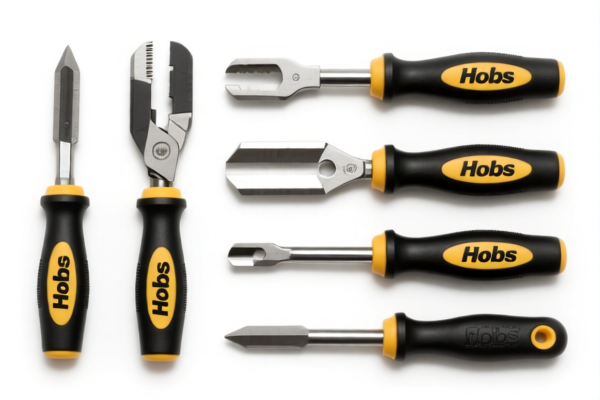
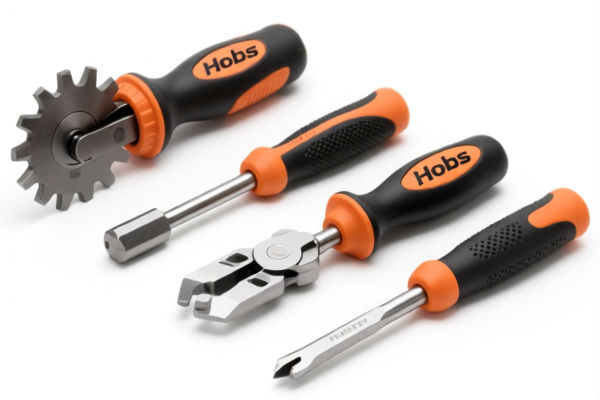
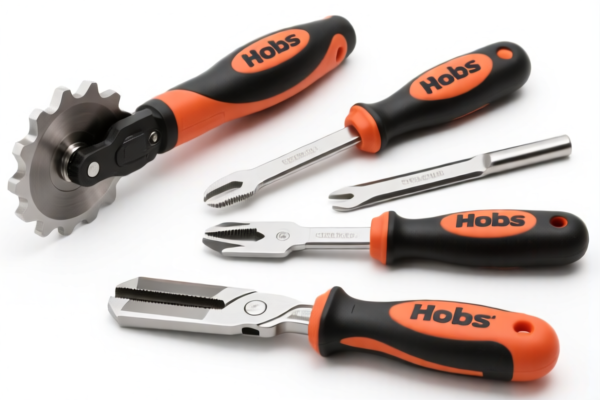
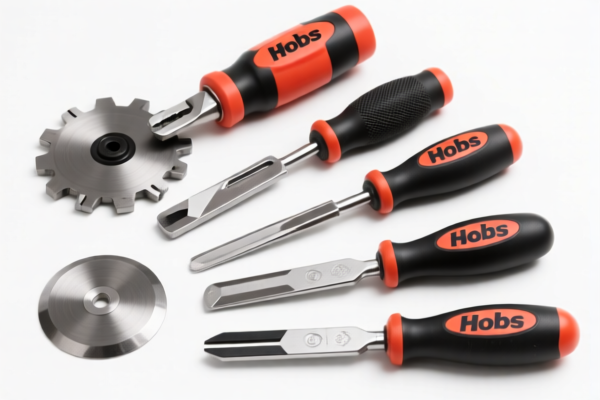
AI Analysis
🏭 Interchangeable Manual Tool Molds (Metal Foundry & Plastics/Rubber)
🌐 HS Code Reference & Customs Clearance Guide | 2026 Latest Tariff Analysis | Professional Classification Strategy
📌 I. Product Definition & Classification: What Exactly Are "Interchangeable Manual Tool Molds"?
In the context of international trade, "Interchangeable Manual Tool Molds" generally refer to specialized equipment used in metal foundries (for shaping molten metal) or plastics/rubber processing (for injection/compression molding). These are not simple hand tools, but complex apparatuses consisting of mold bases, patterns, and cores that allow for the creation of consistent shapes.
Key Distinctions in Classification: 1. Metal Foundry Molds: Specifically for casting metals, metal carbides, glass, or mineral materials (excluding ingot molds). 2. Plastics/Rubber Molds: Specifically for molding rubber or plastics using Injection or Compression techniques. 3. Special Status (Temporary Import): Items temporarily imported for testing, calibration, examination, repair, or alteration, which are returned after export.
⚠️ Critical Classification Point:
- If the mold is for metal/rubber/plastics and is of Injection or Compression type, it falls under Heading 8480.
- If the item is imported temporarily for testing/repair and must be re-exported, it may qualify for a specific sub-category under 8480.71.80.20.
- Note: Do not confuse these with tool holders (which attach to machines). These are the molds themselves.
📦 II. HS Code Classification Details (2026 Latest Tariff Authority Reference)
| HS Code | Product Description | Application Scenario | Key Characteristics |
|---|---|---|---|
8480.71.80.20 |
Molds for rubber or plastics (Injection/Compression); Other; Temporarily imported for testing, calibration, examination, repair or alteration; returned after being exported | Test samples, prototype molds, molds for temporary inspection | ✅ Temporary Import Status |
8480.71.80.45 |
Molds for rubber or plastics (Injection/Compression); Other; Other: Injection type | Standard production molds for plastic/rubber injection molding | ✅ Standard Production |
8466.10.01.10 |
Tool holders for forming-type or cutting-type dies (Part of Heads 8456-8465) | Not a mold! Holders for tools working by hand | ❌ Different Category |
8466.10.01.30 |
Holders for replaceable cutting or drill inserts (Part of Heads 8456-8465) | Not a mold! Insert holders for drilling/cutting | ❌ Different Category |
🔍 Important Reminder:
- The user input "Interchangeable Manual Tool Molds" most likely refers to molds for molding (8480 series), not tool holders (8466 series).
- Tool Holders (8466.10) are accessories for machine tools (like drills or mills) and are NOT molds for shaping material.
- If the product is a mold for casting metal or molding plastic/rubber, it belongs to 8480.
- If the product is a holder for a cutting tool, it belongs to 8466.
- Assumption for this guide: The term "Mold" takes precedence. We will focus on the 8480 codes. However, we will also address 8466 if there is confusion about "Tool" vs "Mold".
💰 III. 2026 Latest Tariff Rate Details (Including Surtaxes, Policy Add-ons)
✅ Applicable Country: United States (US)
✅ Origin: China (CN)
✅ Effective Date: 2025/2026 Tariff Period
🎯 1. 8480.71.80.20 —— Molds for Rubber/Plastics (Temporary Import for Testing/Repair)
| Item | Content |
|---|---|
| Base Tariff Rate | 0.0% (ad valorem) |
| USITC Surcharge | 0.0% |
| IEEPA Surcharge | 0.0% |
| Total Tariff Rate | 0.0% |
| Tax Calculation | CIF Value × 0% = $0 |
| Eligibility for De Minimis | ✅ Yes (If value < $800, can be shipped via courier without duty) |
| Legal Basis Path | USITC:8480.71.80.20 → No Footnote 9903 surcharge applies to this specific temporary import category |
📌 Explanation:
- This code is for molds temporarily imported for testing or repair and re-exported.
- The tariff is 0%, making it highly cost-effective for prototyping or inspection purposes.
- Condition: You must provide evidence that the goods are for temporary import and will be re-exported (e.g., ATA Carnet or specific temporary import bond).
🎯 2. 8480.71.80.45 —— Molds for Rubber/Plastics (Injection Type, Other)
| Item | Content |
|---|---|
| Base Tariff Rate | 0.0% (ad valorem) |
| USITC Surcharge | 0.0% |
| IEEPA Surcharge | 0.0% |
| Total Tariff Rate | 0.0% |
| Tax Calculation | CIF Value × 0% = $0 |
| Eligibility for De Minimis | ✅ Yes (If value < $800) |
| Legal Basis Path | USITC:8480.71.80.45 → No Footnote 9903 surcharge applies |
📌 Explanation:
- This code covers standard injection molds for rubber or plastics that do not fall under other specific sub-categories.
- Despite being a "mold," the USITC has assigned a 0% base tariff and no additional surcharges for this specific sub-heading under the current 2026 framework for these types of molds.
- Note: This is unusually low for manufacturing equipment; ensure the product strictly meets "Injection or Compression" criteria for rubber/plastics.
⚠️ Caution: If Misclassified as "Tool Holders" (8466 Series)
If customs determines the item is not a mold but a tool holder (e.g., a holder for a cutting die), the tariff skyrockets:
| Item | Content |
|---|---|
| HS Code | 8466.10.01.10 / 8466.10.01.30 |
| Base Tariff | 3.9% |
| USITC Surcharge | +25.0% |
| IEEPA Surcharge | Included in the 25%? (Note: Data shows 25% total surcharge from USITC/IEEPA combined effect or specific footnote) |
| Total Tariff Rate | 28.9% |
| Tax Calculation | CIF Value × 28.9% |
📌 Critical Warning:
- If you classify a mold as a tool holder, you might incorrectly apply a 0% rate.
- If customs disagrees and reclassifies it as a tool holder, you will face a 28.9% tariff.
- Conversely, if you classify a tool holder as a mold (0%), and customs reclassifies it, you will owe 28.9% plus penalties.
- Definition Check:
- Mold (8480): The cavity/inset that shapes the material.
- Tool Holder (8466): The device that holds the cutting tool (drill, mill) in a machine.
🛠️ IV. Customs Clearance Practical Advice (Real-World Pitfall Guide)
✅ 1. Preparation Checklist (No Compromise)
| Document | Required? | Description |
|---|---|---|
| ✅ Product Specification Sheet | ✔️ | Must clearly state: "Mold for Injection Molding of Plastics" or "Mold for Metal Foundry". |
| ✅ Technical Drawings | ✔️ | Show that it is a cavity/core assembly, not a hand-held tool. |
| ✅ Photos | ✔️ | Include shots of the mold halves, ejector pins, and cooling channels. |
| ✅ Declaration Statement | ✔️ | If using 8480.71.80.20, explicitly state: "Temporarily imported for testing purposes, subject to re-export." |
| ✅ Commercial Invoice | ✔️ | Description: "Plastic Injection Mold, Model XYZ". Do not write "Tool Holder". |
| ✅ Packing List | ✔️ | Detail all components (mold base, insert, etc.). |
✅ 2. Declaration Tips (Key Mnemonics)
🔥 "Mold is 8480, Tool is 8466. 0% if correct, 28.9% if wrong!"
| Scenario | Correct HS Code | Risk of Misclassification |
|---|---|---|
| Plastic Injection Mold | 8480.71.80.45 |
Low risk if described accurately. 0% duty. |
| Metal Foundry Mold | 8480.71.80.45 (or other 8480 subhead) |
Ensure it's not an "ingot mold" (which is different). |
| Temporary Test Mold | 8480.71.80.20 |
Must have proof of temporary import intent. |
| Tool Holder for Drill | 8466.10.01.30 |
High risk of being mistaken for a mold part. 28.9% duty. |
| Die Holder for Press | 8466.10.01.10 |
28.9% duty. |
✅ 3. Special Circumstances Handling
| Scenario | Handling Advice |
|---|---|
| OEM Molds | Provide client order and design specs. Clarify ownership. |
| Mold with Standard Components | Declare as a single unit. Do not split into "steel block" + "pin" to avoid separate classifications. |
| Temporary Import (ATA Carnet) | Use ATA Carnet for 8480.71.80.20 to avoid paying duties upfront if re-exporting within 1 year. |
| Confusion with "Hand Tools" | If the mold is operated manually (e.g., compression molding by hand), it is still a Mold (8480), not a Hand Tool (8207/8205). Hand tools are cutting/grinding tools. Molds are for shaping. |
🌍 V. Global Market Comparison (2026 Latest)
| Country/Region | Recommended HS Code | Tariff | Certification | Notes |
|---|---|---|---|---|
| 🇺🇸 USA | 8480.71.80.45 |
0% | None | No 301 tariff for this subheading. |
| 🇨🇳 China | 8480.71.80.45 |
~5-10% | N/A | Import duty may apply depending on origin. |
| 🇪🇺 EU | 8480.71.80 |
0% | CE (if for machinery) | General free trade for molds. |
| 🇯🇵 Japan | 8480.71.80 |
0-3% | None | Low tariff for industrial molds. |
📌 Conclusion:
- The US offers 0% duty for these specific molds, making it a competitive destination for mold exports.
- Ensure the description clearly distinguishes between Mold (8480) and Tool Holder (8466) to avoid the 28.9% surcharge.
📌 VI. Common Errors & Pitfall Guide (Blood Lessons)
❌ Error 1: Calling a Mold a "Tool" or "Holder"
👉 Consequence: Customs may assign 8466.10 → 28.9% Tariff instead of 0%.
❌ Error 2: Calling a Tool Holder a "Mold"
👉 Consequence: Customs may reject the 0% rate and reassess as 8466.10 → 28.9% Tariff + Penalties.
❌ Error 3: Missing "Temporary Import" Documentation for 8480.71.80.20
👉 Consequence: If you claim 0% temporary status but cannot prove re-export intent, customs may apply standard rates or deny entry.
❌ Error 4: Describing as "Metal Casting Tool" without specifying "Mold"
👉 Consequence: Ambiguity leads to manual review, delays, and potential misclassification.
✅ Correct Approach:
"Injection Mold for Plastic Parts, Model XYZ, Made of Steel, Used in Automated Injection Press"
OR
"Foundry Mold for Aluminum Casting, Temporary Import for Testing"
🎯 VII. Conclusion: Precise Classification Saves Money!
🎯 Remember the Mantra:
🔹 "Mold is 8480, Zero Duty. Holder is 8466, 28.9% Hit."
🔹 "Temporary Import? Use .20. Standard Production? Use .45."
🔹 "Don't Confuse Mold with Tool. Clarity is Key!"
📌 Pro Tip:
- If the mold is interchangeable within a system, ensure the declaration reflects that it is a complete mold unit or mold insert, not just a loose part.
- For temporary imports, always consult a customs broker about ATA Carnet usage to streamline the process and guarantee duty-free entry/exit.
📣 Immediate Action:
📞 Contact your customs broker with technical drawings and product photos.
📄 Request a Binding Tariff Ruling (BTR) from CBP if the product is high-value or ambiguous.
🚀 Clear Customs Efficiently, Minimize Duty Costs, Ensure Compliance!
✨ Professional Customs Clearance Starts with Accurate Classification!
💼 Your Bottom Line Depends on the HS Code!
Customer Reviews
About HS Code Classification
The Harmonized System (HS) is an internationally standardized nomenclature developed by the World Customs Organization (WCO) to classify traded products. Over 200 countries use the HS system as the basis for customs tariffs, trade statistics, and import/export regulations.
Each HS code follows a hierarchical structure:
- Chapter (2 digits) — Broad category of goods (e.g., Chapter 84: Machinery and Mechanical Appliances)
- Heading (4 digits) — More specific grouping within the chapter
- Subheading (6 digits) — Internationally standardized breakdown, used by all WCO member countries
- National subdivisions (8-10 digits) — Country-specific extensions for further classification, such as US HTSUS 10-digit codes
Correct HS code classification is essential for smooth customs clearance, accurate duty payment, and compliance with trade regulations. Misclassification can lead to customs delays, overpayment of duties, or penalties.
When importing from CN to US, the applicable tariff rates may include:
- Most-Favored-Nation (MFN) rate — The standard duty rate applied to WTO members
- General rate — Applied to countries without trade agreements
- Trade remedy duties — Additional tariffs such as Section 301 (anti-dumping), Section 232 (national security), or countervailing duties
The information provided on this page is for reference purposes only. For official classification, please consult with your local customs authority or a licensed customs broker.