Interchangeable accessories for power tools, rock impact drill bit
CN → US| HS Code | Tariff Rate | Origin | Destination | Doc |
|---|---|---|---|---|
| 8467990190 | 35.0% | CN | US | Official Doc |
| 8431438090 | 35.0% | CN | US | Official Doc |
| 8207196030 | 37.9% | CN | US | Official Doc |
| 8207193030 | 40.0% | CN | US | Official Doc |
Product Images
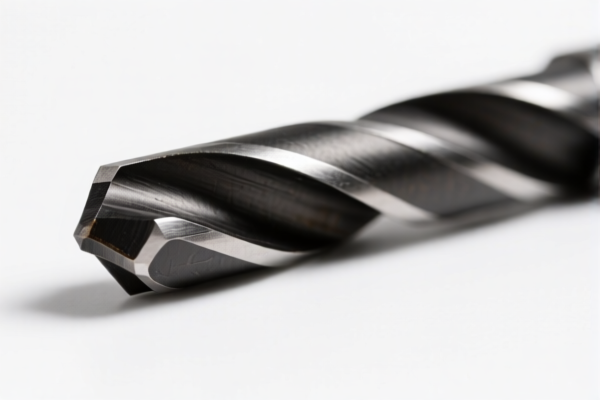
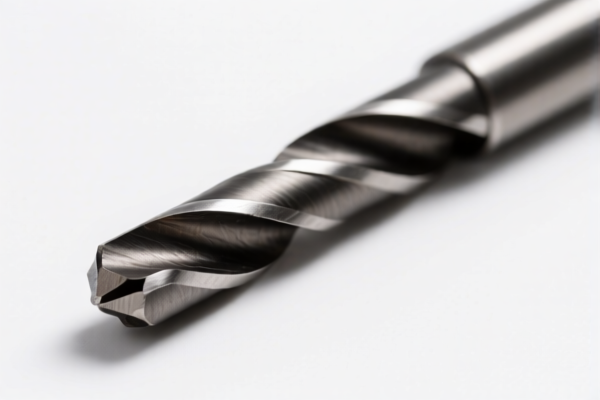
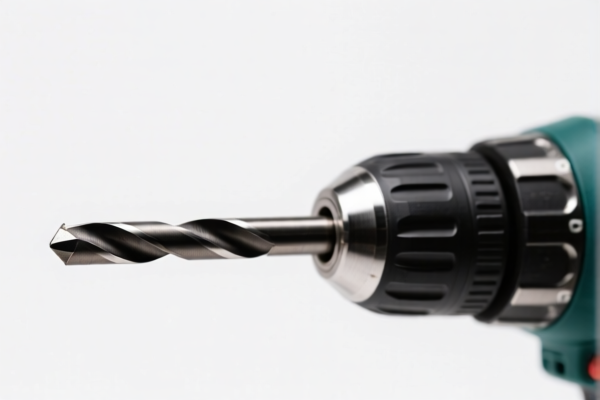
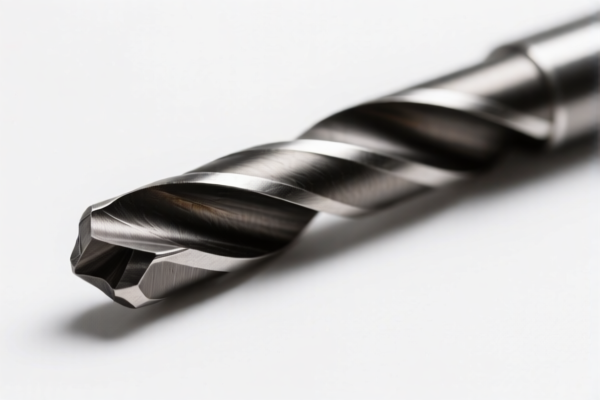
AI Analysis
⛏️ Rock Impact Drill Bits for Power Tools (Interchangeable Accessories)
🌐 HS Code Reference & Customs Clearance Guide | 2026 Latest Tariff Analysis | Professional-Level Clearance Strategy
📌 I. Product Definition & Classification: What Exactly Are "Rock Impact Drill Bits"?
Rock Impact Drill Bits are interchangeable accessories designed specifically for power tools (such as electric rotary hammers or pneumatic impact drills). Their primary function is to drill holes in hard materials like rock, concrete, masonry, or stone.
In international trade, these bits are classified based on: 1. Material Composition: Typically made of cemented carbide (tungsten carbide) tips welded to steel bodies, or entirely of hardened steel. 2. Functionality: They are "interchangeable tools" for power tools (Chapter 82/84) OR "parts" of drilling machinery (Chapter 84). 3. Specific Tool Type: "Percussion" or "Impact" type, distinct from standard twist drills for metal.
⚠️ Key Classification Divergence:
- If classified under Chapter 82 (Tools of Base Metal), it is treated as a specific type of drill bit with a higher base duty.
- If classified under Chapter 84 (Machinery Parts), it is treated as an accessory to power tools, often benefiting from 0% base duty but still subject to Section 301 tariffs.
- Misclassification Risk: Declaring a carbide-tipped rock bit as a simple steel tool part under 8407 can lead to re-classification penalties. The specific "percussion" nature and material (carbide) matter.
📦 II. HS Code Classification Details (2026 Latest Tariff Authority Comparison)
Based on the provided data, four potential HS Codes are identified. Here is the breakdown of why each applies and the resulting tax implications.
| HS Code | Product Description | Matching Logic & Rationale | Base Duty | Total Duty (US/CN) |
|---|---|---|---|---|
8467.99.01.90 |
Other Tools for Hand-Held Power Tools | Logic: Classified as an interchangeable accessory/component for hand-held power tools. Material (carbide/steel) has no conflict with the "Other" category. It fits the logic of a tool part for an electric device. | 0.0% | 35.0% |
8431.43.80.90 |
Parts for Drilling Machinery | Logic: The term "Rock Drill Bit" aligns with "Parts for drilling or sinking machinery." The "Impact" feature matches the operational characteristics of drilling machines. Classified as a "replaceable tool/part" without material conflict. | 0.0% | 35.0% |
8207.19.60.30 |
Other Impact Rock Drill Bits | Logic: Exact Match. The product name "Impact Rock Drill Bit" directly corresponds to the explanatory notes for "Percussion rock drill bits." This is the most specific classification for the tool type. | 2.9% | 37.9% |
8207.19.30.30 |
Other Drill Bits for Metalworking/Masonry | Logic: Matches the form (impact bit) and use (rock). Based on the description "interchangeable tool for power tools," it fits the logic of Chapter 82 tools, though less specific than 8207.19.60. | 5.0% | 40.0% |
🔍 Critical Distinction:
- Chapter 84 (Codes 8467.99 / 8431.43): Treats the bit as a part/accessory to the machine/tool. Lower base duty (0%).
- Chapter 82 (Codes 8207.19): Treats the bit as a base metal tool. Higher base duty (2.9% - 5.0%).
- Recommendation: Classification under 8467.99.01.90 or 8431.43.80.90 is generally preferred if the bit is strictly a replaceable accessory for a power tool, as it reduces the base duty burden, though the total duty remains high due to Section 301 tariffs.
💰 III. 2026 Latest Tariff Rate Breakdown (Including Surcharge, Policy Surcharges)
✅ Applicable Country: United States (US)
✅ Country of Origin: China (CN)
✅ Effective Date: November 10, 2025 onwards (includes subsequent imports)
🎯 1. 8467.99.01.90 & 8431.43.80.90 —— Parts/Accessories for Power Tools/Machinery
| Item | Content |
|---|---|
| Base Duty (MFN) | 0.0% (ad valorem) |
| USITC Surcharge (Section 301) | +25.0% (USITC Footnote applicable to Chinese goods) |
| IEEPA Surcharge (Section 122) | +10.0% (Additional duty on Chinese products under IEEPA) |
| Total Duty Rate | 35.0% |
| Tax Calculation | CIF Value × 35% |
| De Minimis Exemption? | ❌ No (Not eligible for de minimis relief for duties) |
| Legal Authority Path | IEEPA:9903.01.25 → Section 301 → USITC:8467.99.01.90 / 8431.43.80.90 |
📌 Explanation:
- "0% Base Duty": Both HS codes fall under machinery parts/accessories, which often have 0% base rates.
- "25% Section 301": Standard additional tariff for Chinese goods in these categories.
- "10% IEEPA": Specific additional tariff for Chinese imports under the International Emergency Economic Powers Act.
- Total 35%: This is the effective duty rate. Even though the base is 0%, the add-on tariffs make the cost significant.
🎯 2. 8207.19.60.30 —— Percussion Rock Drill Bits (Base Metal Tools)
| Item | Content |
|---|---|
| Base Duty (MFN) | 2.9% (ad valorem) |
| USITC Surcharge (Section 301) | +25.0% |
| IEEPA Surcharge (Section 122) | +10.0% |
| Total Duty Rate | 37.9% |
| Tax Calculation | CIF Value × 37.9% |
| De Minimis Exemption? | ❌ No |
| Legal Authority Path | IEEPA:9903.01.25 → Section 301 → USITC:8207.19.60.30 |
📌 Explanation:
- "2.9% Base Duty": Because this is classified under Chapter 82 (Base Metal Tools), the base rate is not 0%.
- "37.9% Total": Higher than the Chapter 84 options.
- Why it’s less optimal: Unless you can prove it is strictly a "percussion rock drill bit" defined in Chapter 82 explanatory notes and not a general power tool accessory, the higher base duty makes this category more expensive.
🎯 3. 8207.19.30.30 —— Other Drill Bits (Base Metal Tools)
| Item | Content |
|---|---|
| Base Duty (MFN) | 5.0% (ad valorem) |
| USITC Surcharge (Section 301) | +25.0% |
| IEEPA Surcharge (Section 122) | +10.0% |
| Total Duty Rate | 40.0% |
| Tax Calculation | CIF Value × 40.0% |
| De Minimis Exemption? | ❌ No |
| Legal Authority Path | IEEPA:9903.01.25 → Section 301 → USITC:8207.19.30.30 |
📌 Explanation:
- "5.0% Base Duty": The highest base duty among the options.
- "40.0% Total": The most expensive classification.
- Avoidance: This code is often a "catch-all" for drill bits not elsewhere specified. For rock impact bits, more specific codes (like 8207.19.60.30) or Chapter 84 codes should be preferred to avoid this highest tax bracket.
🛠️ IV. Customs Clearance Practical Advice (Real-World Pitfall Guide)
✅ 1. Documentation Checklist (Required)
| Document | Required? | Explanation |
|---|---|---|
| ✅ Product Specification Sheet | ✔️ | Must detail: Material (Carbide tip vs. Steel body), Type (Percussion/Impact), Shank Type (SDS-Plus, SDS-Max, etc.). |
| ✅ Technical Diagram/Photo | ✔️ | Shows the bit is a replaceable accessory, not a standalone machine. |
| ✅ Commercial Invoice | ✔️ | Clearly state: "Interchangeable Accessory for Power Tool," NOT "Machinery." |
| ✅ Declaration of Origin | ✔️ | Proof of Chinese origin is critical for calculating Section 301/IEEPA duties. |
| ✅ HS Code Pre-Ruling Application | ✔️ | Highly Recommended to confirm 8467.99.01.90 vs. 8207.19.60.30. |
✅ 2. Declaration Strategy (Key Mnemonics)
🔥 “Power Tool Accessory = 84; Specific Rock Bit = 82; Don’t Mix Up!”
| Scenario | Correct Declaration | Wrong Declaration | Consequence |
|---|---|---|---|
| Bit for Electric Rotary Hammer | 8467.99.01.90 (0% Base) |
8207.19.30.30 (5% Base) |
Higher Duty (40% vs 35%) |
| Bit for Pneumatic Rock Drill | 8431.43.80.90 (0% Base) |
8207.19.60.30 (2.9% Base) |
Higher Duty (35% vs 37.9%) |
| Generic "Steel Drill Bit" | 8207.19.30.30 |
8467.99.01.90 |
Penalty for Misclassification |
| Carbide-Tipped Impact Bit | Specify "Percussion Rock Drill Bit" | Vague term "Drill Bit" | Customs Request for Info, Delay |
📌 Critical Tip:
- If the bit is exclusively for a power tool (electric/pneumatic), Chapter 84 (8467 or 8431) is often better for base duty optimization.
- If the bit is a standalone tool (e.g., for hand-held pneumatic chisels that aren't "power tools" in the strict electrical sense), Chapter 82 might be more appropriate, but expect higher base duties.
✅ 3. Special Handling
| Situation | Handling Advice |
|---|---|
| Carbide Tip vs. Steel Body | Clearly declare the carbide composition if under Chapter 82 to justify "Rock Drill Bit." For Chapter 84, it’s just a "part." |
| Shank Type (SDS-Plus, etc.) | Include in description to prove it’s an interchangeable accessory, not a permanent part. |
| Bundle Sales (Tool + Bits) | Separate the value in the invoice. The tool is 8417/8467; the bits are 8467.99 or 8207.19. Do not lump them into one HS code. |
| Origin Marking | Ensure "Made in China" is marked on packaging/labels to trigger the 10% IEEPA and 25% Section 301 tariffs correctly. |
🌍 V. Global Market Comparison (2026 Latest)
| Country/Region | Recommended HS Code | Duty Rate | Certification | Notes |
|---|---|---|---|---|
| 🇺🇸 USA | 8467.99.01.90 / 8207.19.60.30 |
35.0% - 37.9% | N/A | High tariffs due to Section 301 & IEEPA. |
| 🇨🇳 China | 8207.19.60.30 |
10.0% (Import) | CCC (if tool) | Import duty for bits is lower. |
| 🇪🇺 EU | 8207.19.60.30 |
6.5% | CE (if power tool) | No Section 301/IEEPA equivalent. |
| 🇦🇺 Australia | 8207.19.60.30 |
5.0% | RCM | Lower duties than US. |
| 🇬🇧 UK | 8207.19.60.30 |
5.0% | UKCA | Post-Brexit tariff structure. |
📌 Conclusion:
- USA is the most expensive market due to 35-40% total duties.
- EU/UK/Australia are significantly cheaper (5-6.5%).
- Strategy: For US imports, optimize the HS code to Chapter 84 (8467.99.01.90) to save 2.9-5.0% on the base duty, reducing the total from ~40% to 35%.
📌 VI. Common Errors & Pitfall Guide (Blood & Tears Lessons)
❌ Error 1: Classifying as 8207.19.30.30 (5% base) for a specific percussion rock bit.
👉 Consequence: You pay 40% total instead of 37.9% (under 8207.19.60.30) or 35% (under 8467.99.01.90). Wasted 2.1-5% cost!
❌ Error 2: Declaring as "Drill Bit" without specifying "Percussion/Impact" or "Rock."
👉 Consequence: Customs may reject the description, delay clearance, or reclassify to a higher-tariff generic code.
❌ Error 3: Ignoring the IEEPA 10% surcharge.
👉 Consequence: Underestimating landed cost. Total duty is NOT just 25%; it’s 25% + 10% + Base.
❌ Error 4: Lumping bits with the power tool in one line item.
👉 Consequence: Complex valuation, potential penalties for incorrect valuation method.
✅ Correct Practice:
"SDS-Max Percussion Rock Drill Bit, Carbide-Tipped, Interchangeable Accessory for Electric Power Tools, Model XYZ, Made in China"
🎯 VII. Conclusion: Precision in Classification, Savings in Duty!
🎯 Remember the Mnemonic:
🔹 "Power Tool Accessory = 84 (0% Base), Rock Bit = 82 (2.9-5% Base).
Total Duty = Base + 25% (301) + 10% (IEEPA).
Choose 8467.99.01.90 to save 2.9% base duty!"
🔹 "HS Code determines duty, 35% is the floor for Chapter 84, 40% is the ceiling for Chapter 82. Don’t pay extra!"
📌 Pro Tip:
If your rock drill bits are originating in Vietnam, Mexico, or Malaysia, you may be eligible to avoid IEEPA/Section 301 tariffs, reducing the total duty to 0-2.9%.
Action: Apply for US Customs Pre-Ruling before shipping to confirm the best HS Code (8467.99.01.90is often the safest for power tool accessories).
📣 Immediate Action:
📞 Contact a Professional Customs Broker + Provide Product Photos + Request HS Code Pre-Ruling
🚀 Ensure smooth clearance, minimize duty costs, and maximize profit margins!
✨ Professional Clearance Starts with Accurate Classification!
💼 Every percentage point counts in your landed cost!
Customer Reviews
About HS Code Classification
The Harmonized System (HS) is an internationally standardized nomenclature developed by the World Customs Organization (WCO) to classify traded products. Over 200 countries use the HS system as the basis for customs tariffs, trade statistics, and import/export regulations.
Each HS code follows a hierarchical structure:
- Chapter (2 digits) — Broad category of goods (e.g., Chapter 84: Machinery and Mechanical Appliances)
- Heading (4 digits) — More specific grouping within the chapter
- Subheading (6 digits) — Internationally standardized breakdown, used by all WCO member countries
- National subdivisions (8-10 digits) — Country-specific extensions for further classification, such as US HTSUS 10-digit codes
Correct HS code classification is essential for smooth customs clearance, accurate duty payment, and compliance with trade regulations. Misclassification can lead to customs delays, overpayment of duties, or penalties.
When importing from CN to US, the applicable tariff rates may include:
- Most-Favored-Nation (MFN) rate — The standard duty rate applied to WTO members
- General rate — Applied to countries without trade agreements
- Trade remedy duties — Additional tariffs such as Section 301 (anti-dumping), Section 232 (national security), or countervailing duties
The information provided on this page is for reference purposes only. For official classification, please consult with your local customs authority or a licensed customs broker.