Interchangeable tools for manual tools
CN → US| HS Code | Tariff Rate | Origin | Destination | Doc |
|---|---|---|---|---|
| 8206000000 | 0.0% | CN | US | Official Doc |
| 8207904500 | 39.8% | CN | US | Official Doc |
| 8207907585 | 38.7% | CN | US | Official Doc |
| 8205593080 | 35.0% | CN | US | Official Doc |
| 8466100130 | 38.9% | CN | US | Official Doc |
Product Images
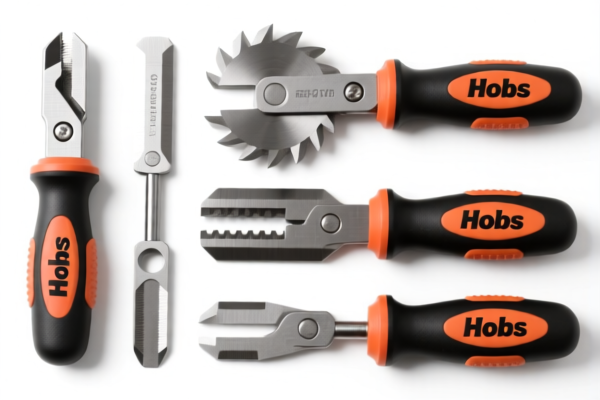
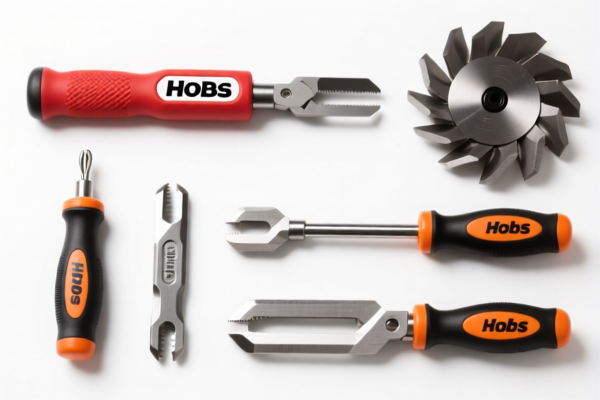
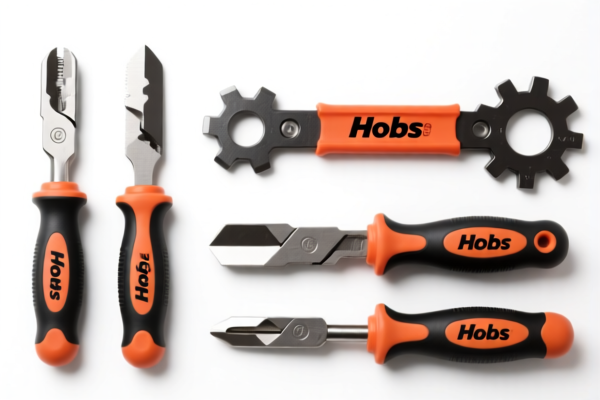
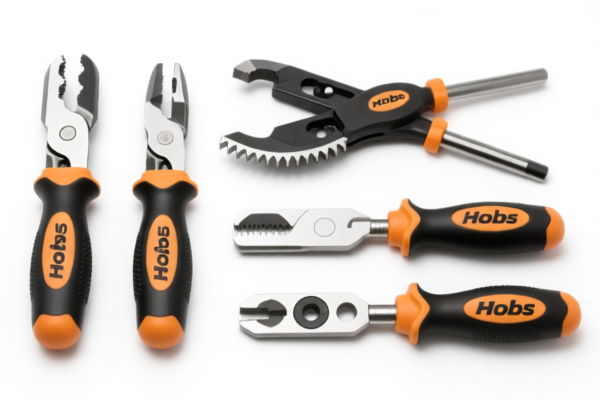
AI Analysis
🛠️ Interchangeable Hand Tools: HS Code Classification & U.S. Tariff Analysis (2026)
🌐 HS Code Reference & Customs Clearance Guide | 2026 Latest Tariff Breakdown | Professional Strategy for Importers
📌 I. Product Definition & Classification: What Are "Interchangeable Hand Tools"?
In international trade, "Interchangeable Hand Tools" refer to modular tool components (such as drill bits, screwdriver tips, saw blades, or specialized sockets) that are designed to be attached to a handle or power tool base. Unlike standalone hand tools, these items are often sold as parts, accessories, or kits.
Key Classification Challenges: 1. Modularity: Are they sold as a set (Kit) or individual pieces? 2. Material: Are the working parts metal, carbide, or other materials? 3. Function: Are they for manual use (Hand Tools) or machinery parts (Machinery Accessories)?
⚠️ Critical Distinction:
- If the item is a standalone manual tool (e.g., a wrench, pliers) with a replaceable head → Likely Chapter 82 (8205/8206).
- If the item is a modular attachment (e.g., a drill bit tip) → Likely Chapter 82 (8207) or Chapter 84 (8466).
- If it’s a complete kit with mixed functions → Potential Chapter 82 (8206) as a set.
📦 II. HS Code Classification Details (2026 Latest Tariff Reference)
Based on the provided data, here are the five most relevant HS Codes for "Interchangeable Hand Tools," categorized by their specific nature and tax implications.
| HS Code | Product Description | Application Scenario | Tax Rate (Total) | Key Characteristics |
|---|---|---|---|---|
8206.00.00.00 |
Interchangeable Hand Tools (Sets/Packs) | Retail kits where tools are sold together; generic classification for tool sets. | 35.0% | No specific material mentioned; assumes retail pack. |
8207.90.45.00 |
Interchangeable Tools (Metal/Specific) | Tools with metal working parts; high specificity for "interchangeable" function. | 39.8% | High duty due to specific sub-category for metal interchangeable parts. |
8207.90.75.85 |
Other Interchangeable Tools (Residual) | General fallback for interchangeable tools not meeting specific material/function criteria. | 38.7% | "Other" category; used when function is clear but specifics are vague. |
8205.59.30.80 |
Other Hand Tools (Interchangeable Features) | Manual tools where "interchangeable" is a feature, not the primary classification driver. | 35.0% | Lowest base duty (0%); "Interchangeable" is just a feature of a standard hand tool. |
8466.10.01.30 |
Parts & Accessories for Machinery (Replaceable) | Tools classified as "replaceable parts" for machinery, often due to lack of material clarity. | 38.9% | Classified as machinery accessories; high duty due to specific sub-heading. |
🔍 Analysis Note:
- The term "Interchangeable" strongly links to 8207 (Interchangeable tools for machines or for mechanical handling) and 8205 (Hand tools).
- 8206 is used when the item is a set or when the specific type is not clearly defined but falls under the general "tool" category.
- 8466 is a riskier classification, treating the tool as a machine part rather than a tool itself, often leading to higher duties if not properly justified.
💰 III. 2026 U.S. Tariff Breakdown (Detailed)
✅ Applicable Country: United States (US)
✅ Origin: China (CN)
✅ Effective Date: November 10, 2025 (and onwards)
All products fall under Section 301 and IEEPA tariffs due to their origin. Below is the detailed tax structure for each HS Code.
🎯 1. 8206.00.00.00 — Interchangeable Hand Tools (General/Set)
| Item | Content |
|---|---|
| Base Duty | 0.0% (ad valorem) |
| Section 301 Duty | +25.0% |
| IEEPA Duty | +10.0% |
| Total Duty | 35.0% |
| Calculation | CIF Value × 35% |
| De Minimis Exemption? | ❌ No (Denied) |
| Legal Path | USITC:8206.00.00.00 → FOOTNOTE:9903.88.01 (25%) → IEEPA:9903.01.25 (10%) |
📌 Explanation:
- This code is often used for retail kits or when the specific tool type is not clearly defined.
- The 25% is the standard Section 301 tariff for Chapter 82 tools.
- The 10% is the IEEPA tariff specifically targeting Chinese goods.
🎯 2. 8207.90.45.00 — Interchangeable Tools (Specific Metal/High-Specificity)
| Item | Content |
|---|---|
| Base Duty | 4.8% |
| Section 301 Duty | +25.0% |
| IEEPA Duty | +10.0% |
| Total Duty | 39.8% |
| Calculation | CIF Value × 39.8% |
| De Minimis Exemption? | ❌ No |
| Legal Path | USITC:8207.90.45.00 → FOOTNOTE:9903.88.01 → IEEPA:9903.01.25 |
📌 Explanation:
- This code applies when the working part is metal and the interchangeable nature is the primary feature.
- The higher base duty (4.8%) compared to 8205 or 8206 makes this the most expensive option.
- Use only if the product is clearly a metal interchangeable tool for machines or mechanical handling.
🎯 3. 8207.90.75.85 — Other Interchangeable Tools (Residual)
| Item | Content |
|---|---|
| Base Duty | 3.7% |
| Section 301 Duty | +25.0% |
| IEEPA Duty | +10.0% |
| Total Duty | 38.7% |
| Calculation | CIF Value × 38.7% |
| De Minimis Exemption? | ❌ No |
| Legal Path | USITC:8207.90.75.85 → FOOTNOTE:9903.88.01 → IEEPA:9903.01.25 |
📌 Explanation:
- This is a "catch-all" for interchangeable tools that don't fit into more specific sub-categories.
- Lower base duty than 8207.90.45, but still significant total cost.
🎯 4. 8205.59.30.80 — Other Hand Tools (Interchangeable Feature)
| Item | Content |
|---|---|
| Base Duty | 0.0% |
| Section 301 Duty | +25.0% |
| IEEPA Duty | +10.0% |
| Total Duty | 35.0% |
| Calculation | CIF Value × 35.0% |
| De Minimis Exemption? | ❌ No |
| Legal Path | USITC:8205.59.30.80 → FOOTNOTE:9903.88.01 → IEEPA:9903.01.25 |
📌 Explanation:
- This code is used for manual hand tools where "interchangeable" is just a feature, not the main classification.
- Lowest base duty (0%) makes this the most cost-effective option if the product can be classified as a standard hand tool.
- Suitable for items like screwdriver sets with interchangeable bits sold as a tool, not as machine parts.
🎯 5. 8466.10.01.30 — Parts & Accessories for Machinery (Replaceable)
| Item | Content |
|---|---|
| Base Duty | 3.9% |
| Section 301 Duty | +25.0% |
| IEEPA Duty | +10.0% |
| Total Duty | 38.9% |
| Calculation | CIF Value × 38.9% |
| De Minimis Exemption? | ❌ No |
| Legal Path | USITC:8466.10.01.30 → FOOTNOTE:9903.88.01 → IEEPA:9903.01.25 |
📌 Explanation:
- This code classifies the item as a part or accessory for machinery.
- Use this only if the tool is specifically designed to be a replacement part for a machine and cannot be classified as a hand tool.
- Risk: Customs may challenge this if the item can be used as a standalone hand tool.
🛠️ IV. Customs Clearance Practical Advice (Avoiding Pitfalls)
✅ 1. Documentation Checklist (All Required)
| Document | Mandatory? | Purpose |
|---|---|---|
| Product Specification Sheet | ✔️ | Defines material, function, and interchangeability. |
| Product Photos (Clear) | ✔️ | Shows the tool, handle, and interchangeable part. |
| Commercial Invoice | ✔️ | Must state "Interchangeable Hand Tools" or specific model. |
| Packing List | ✔️ | Clarifies if sold as a set or individual units. |
| Origin Certificate | ✔️ | Proves Chinese origin (triggers tariffs). |
| Third-Party Test Report | ✔️ | (If applicable) FCC, CE, or material compliance. |
✅ 2. Classification Strategy (Key Tips)
🔥 "Define the Primary Function: Tool or Part?"
| Scenario | Recommended HS Code | Why? |
|---|---|---|
| Sold as a retail kit (e.g., screwdriver + bits) | 8205.59.30.80 or 8206.00.00.00 |
Treated as a hand tool or set. Lower base duty. |
| Sold as individual interchangeable bits (metal) | 8207.90.45.00 |
Clearly interchangeable, metal, for mechanical use. |
| Sold as a replacement part for a machine | 8466.10.01.30 |
Classified as machinery accessory. |
| Unclear material/function | 8207.90.75.85 |
Fallback category. |
⚠️ Warning:
- Do not mix classifications in one shipment.
- If an item can be classified as both a hand tool and a machine part, choose the one with the lower duty if legally justifiable.
🌍 V. Global Market Comparison (2026)
| Country/Region | Recommended HS Code | Estimated Duty (China Origin) | Notes |
|---|---|---|---|
| 🇺🇸 USA | 8205.59.30.80 / 8206.00.00.00 |
35.0% | Highest tariffs globally due to Section 301 + IEEPA. |
| 🇨🇳 China | 8205 / 8206 |
0% - 5% | Import duty is low; no IEEPA penalty. |
| 🇪🇺 EU | 8205 / 8206 |
5% - 12% | No Section 301 tariffs; standard EU duty applies. |
| 🇯🇵 Japan | 8205 / 8206 |
5% - 8% | Moderate duty; no additional trade penalties. |
📌 Conclusion:
- USA is the most expensive market due to 35%+ total tariffs.
- EU and Japan offer significant cost advantages.
- Consider diversifying supply chains (e.g., Vietnam, Thailand) to avoid U.S. tariffs if targeting the American market.
📌 VI. Common Mistakes & Avoidance
❌ Mistake 1: Classifying interchangeable bits as "Machine Parts" (8466) when they are clearly "Hand Tool Accessories."
👉 Result: Higher duty (38.9% vs 35.0%) and potential customs disputes.
❌ Mistake 2: Using a generic description like "Tools" on the invoice.
👉 Result: Customs may reclassify based on their own interpretation, leading to delays and penalties.
❌ Mistake 3: Assuming "De Minimis" ($800) exemption applies.
👉 Result: ❌ Denied. Section 301 and IEEPA tariffs do not apply to the de minimis exemption. All shipments from China are subject to tariffs.
✅ Correct Approach:
"Interchangeable Screwdriver Bits, Carbon Steel, for Manual Use, Model XYZ" →
8205.59.30.80(35.0%)
🎯 VII. Final Recommendations
🎯 Cost-Saving Strategy:
1. Choose 8205.59.30.80 if the product is a hand tool with interchangeable features. It has the lowest base duty (0%).
2. Avoid 8207.90.45.00 unless necessary, as it has the highest total duty (39.8%).
3. Always declare accurately. Misclassification can lead to audits, fines, and shipment holds.
📌 Action Plan:
- Step 1: Review product specifications to determine if it's a "hand tool" or "machine part."
- Step 2: Prepare clear documentation (photos, specs).
- Step 3: File for Advance Ruling with U.S. Customs if the classification is unclear.
- Step 4: Consider supply chain diversification to mitigate U.S. tariff risks.
📣 Final Tip:
"HS Code is the key to profit. A 1% difference in duty can mean thousands in savings."
✨ Professional clearance starts with precise classification.
💼 Optimize your import strategy today!
Customer Reviews
About HS Code Classification
The Harmonized System (HS) is an internationally standardized nomenclature developed by the World Customs Organization (WCO) to classify traded products. Over 200 countries use the HS system as the basis for customs tariffs, trade statistics, and import/export regulations.
Each HS code follows a hierarchical structure:
- Chapter (2 digits) — Broad category of goods (e.g., Chapter 84: Machinery and Mechanical Appliances)
- Heading (4 digits) — More specific grouping within the chapter
- Subheading (6 digits) — Internationally standardized breakdown, used by all WCO member countries
- National subdivisions (8-10 digits) — Country-specific extensions for further classification, such as US HTSUS 10-digit codes
Correct HS code classification is essential for smooth customs clearance, accurate duty payment, and compliance with trade regulations. Misclassification can lead to customs delays, overpayment of duties, or penalties.
When importing from CN to US, the applicable tariff rates may include:
- Most-Favored-Nation (MFN) rate — The standard duty rate applied to WTO members
- General rate — Applied to countries without trade agreements
- Trade remedy duties — Additional tariffs such as Section 301 (anti-dumping), Section 232 (national security), or countervailing duties
The information provided on this page is for reference purposes only. For official classification, please consult with your local customs authority or a licensed customs broker.