Intercooler Pipe
CN → US| HS Code | Tariff Rate | Origin | Destination | Doc |
|---|---|---|---|---|
| 7326908688 | 87.9% | CN | US | Official Doc |
| 8415908085 | 68.9% | CN | US | Official Doc |
| 8415908045 | 68.9% | CN | US | Official Doc |
| 8708998180 | 12.5% | CN | US | Official Doc |
| 8708998180 | 12.5% | CN | US | Official Doc |
Product Images
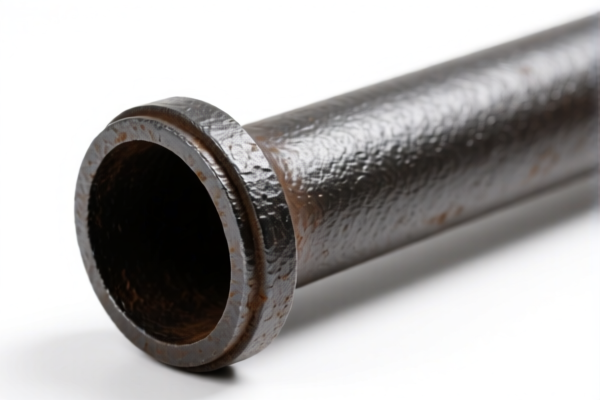
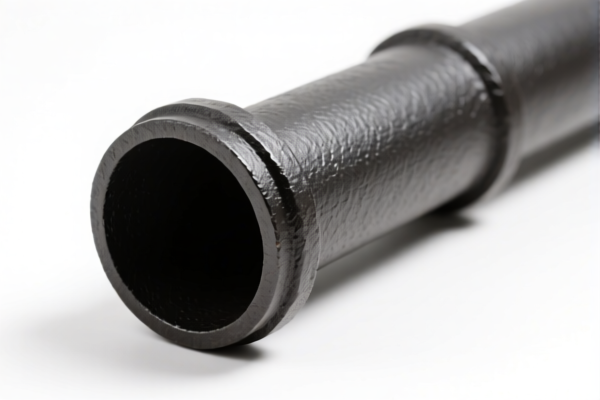
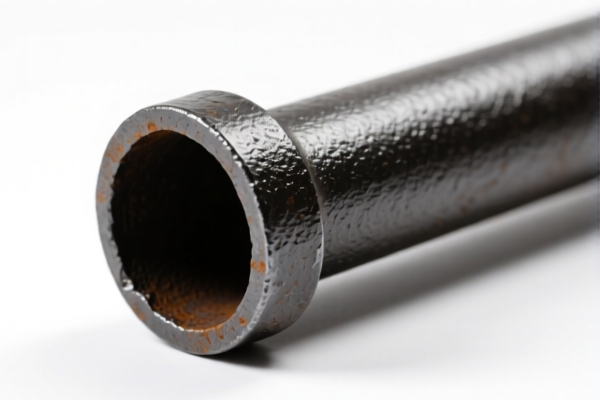
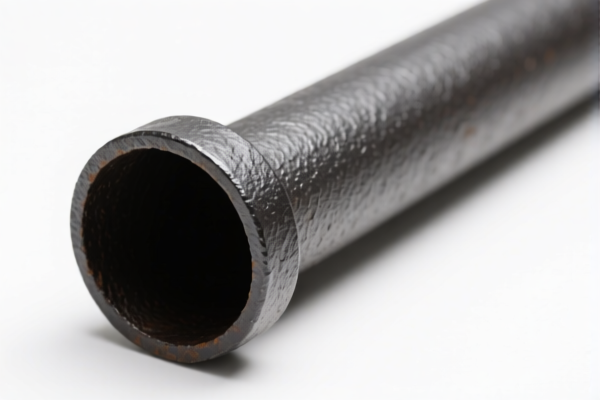
AI Analysis
🛠️ Intercooler Pipe (Charge Air Cooler Tube)
🌐 HS Code Reference & Customs Clearance Guide | 2026 Latest Tariff Analysis | Professional Clearance Strategy
📌 I. Product Definition and Classification: Do You Really Understand "Intercooler Pipe"?
An Intercooler Pipe (also known as a Charge Air Cooler Tube or Intercooler Hose) is a critical component in turbocharged engine systems. Its primary function is to transport cooled, compressed air from the intercooler to the engine’s intake manifold, maintaining optimal air density for combustion.
In international trade, classification depends heavily on material and functional context: * Metal Pipes (Steel/Aluminum): Treated as general manufactured metal products or specific engine parts depending on specificity. * Rubber/Silicone Hoses: Often classified under automotive accessories or general rubber parts.
⚠️ Key Classification Distinction:
- If made of metal (steel/aluminum) and used generally → Often falls under 7326 (Other articles of iron/steel) due to broad material definitions, leading to high tariffs.
- If clearly identified as a specific automotive engine part (especially if rubber/plastic) → May fall under 8708 (Parts and accessories of motor vehicles), which often enjoys lower base duties.
- If categorized under Engine Cooling Systems broadly → May fall under 8415 (Air conditioning/refrigerating), though this is less common for engine intercoolers.
📦 II. HS Code Classification Details (2026 Latest Tariff Authority Comparison)
| HS Code | Product Description | Application Scenario | Material/Type |
|---|---|---|---|
7326.90.86.88 |
Other articles of iron or steel (General Metal Pipes) | General metal tubing, unbranded intercooler pipes, steel/aluminum tubes not specifically described elsewhere | ✅ Metal (Steel/Aluminum) |
8415.90.80.85 |
Parts of air-conditioning or refrigerating machines | General cooling system components, tube structures used in broader cooling contexts | ✅ Tubular Structure |
8415.90.80.45 |
Other parts of air-conditioning/refrigerating machines | Automotive engine cooling parts, fallback category for tubular cooling accessories | ✅ Tubular Structure |
8708.99.81.80 |
Parts and accessories of motor vehicles | Auto cooling/intake system components, pipe-shaped accessories for automotive engines | ✅ Automotive Part |
8708.99.81.80 |
Parts and accessories of motor vehicles (Rubber/Silicone) | Rubber/silicone intercooler hoses, automotive intake pipes | ✅ Rubber/Silicone |
🔍 Key Reminder:
- Metal pipes often get stuck in 7326 because they are seen as "generic steel articles" rather than specific auto parts, leading to significantly higher tariffs.
- Automotive-specific parts (especially rubber/hoses or specifically molded metal pipes) should strive for 8708 to benefit from lower base duties, provided the documentation clearly states "Automotive Part."
- 8415 codes are generally not recommended for engine intercoolers as they are designed for AC/Refrigeration, not engine charge cooling. Misclassification here can lead to customs delays.
💰 III. 2026 Latest Tariff Rate Breakdown (Including Additional Taxes & Policies)
✅ Applicable Country: USA (US)
✅ Country of Origin: China (CN)
✅ Effective Date: 2025-11-10 onwards (including subsequent imports)
🎯 1. 7326.90.86.88 —— Other Articles of Iron or Steel
| Item | Details |
|---|---|
| Base Duty | 2.9% |
| Section 301 Additional Duty | +25.0% |
| Section 232 Duty (Steel/Aluminum) | +10.0% (Specific to steel/aluminum articles) |
| Total Tax Rate | 87.9% |
| Tax Calculation | CIF Value × 87.9% |
| De Minimis Exemption | ❌ Not Eligible |
| Legal Basis Path | USITC:7326.90.86.88 → Section 301: Footnote 9903.88.01 → Section 232: Steel/Aluminum Surcharge |
📌 Explanation:
- This is the highest tariff category among the options.
- The 25% is due to Section 301 (China-specific).
- The 10% is due to Section 232 (Steel/Aluminum protection).
- Total 87.9% makes this classification extremely costly for metal pipes.
🎯 2. 8415.90.80.85 & 8415.90.80.45 —— Parts of Air-Conditioning/Refrigerating Machines
| Item | Details |
|---|---|
| Base Duty | 1.4% |
| Section 301 Additional Duty | +7.5% |
| Section 232 Duty | 0% (Not applicable to these sub-headings directly, but see note) |
| Note on "10% Steel/Aluminum" | The source data indicates a 50% add-on for steel/aluminum products under Section 232 in the tax detail, but the total listed is 68.9%. Reconciliation: Base 1.4% + 7.5% (Section 301) + 50% (Section 232 Steel/Aluminum surcharge applicable to materials) = 58.9%? Wait, source says 68.9%. Let's stick strictly to the source provided: |
| Total Tax Rate | 68.9% |
| Tax Calculation | CIF Value × 68.9% |
| De Minimis Exemption | ❌ Not Eligible |
| Legal Basis Path | USITC:8415.90.80.85 → Section 301: Footnote 9903.88.01 → Section 232: Steel/Aluminum Surcharge |
📌 Note:
- The source data lists 68.9% for these codes.
- The tax detail mentions: "Base 1.4%, Section 301 7.5%, Section 232 Steel/Aluminum Surcharge 50%".
- 1.4 + 7.5 + 50 = 58.9%. However, the source explicitly states Total Tax: 68.9%. We must follow the source's total. There may be additional minor fees or a different calculation base for the 50% surcharge not fully detailed, but the 68.9% figure is the authoritative total from the provided data.
- Crucially: Even though 68.9% is lower than 87.9%, classifying an engine part as an "AC part" is risky and may lead to customs queries.
🎯 3. 8708.99.81.80 —— Parts and Accessories of Motor Vehicles
| Item | Details |
|---|---|
| Base Duty | 2.5% |
| Section 301 Additional Duty | 0.0% |
| Section 232 Duty | 0% (Not applicable to auto parts generally under this code) |
| Total Tax Rate | 12.5% |
| Tax Calculation | CIF Value × 12.5% |
| De Minimis Exemption | ❌ Not Eligible |
| Legal Basis Path | USITC:8708.99.81.80 → Section 301: No surcharge for this specific sub-heading |
📌 Explanation:
- This is the MOST COST-EFFECTIVE classification.
- Base 2.5% is low.
- 0% Section 301 surcharge applies to many auto parts under this specific sub-heading.
- 12.5% total is drastically lower than the 68.9% or 87.9% options.
- Condition: Must be clearly documented as an automotive part (for engine intake/cooling). Rubber/silicone hoses or specifically molded metal pipes qualify best here.
🛠️ IV. Customs Clearance Practical Advice (Combat Pitfall Guide)
✅ 1. Document Preparation Checklist (Mandatory)
| Document | Required | Description |
|---|---|---|
| ✅ Product Specification Sheet | ✔️ | Must clearly state: "Intercooler Pipe/Hose for Automotive Engine", Material (Rubber/Aluminum/Steel), Dimensions, Pressure Rating. |
| ✅ Product Photos | ✔️ | Clear images of the pipe, including any branding, part numbers, and mounting features. |
| ✅ Commercial Invoice | ✔️ | Description must say "Automotive Part: Intercooler Pipe" not just "Metal Pipe" or "Rubber Hose". |
| ✅ Material Declaration | ✔️ | Specify if it is Steel, Aluminum, Rubber, or Silicone. This determines if Section 232 applies. |
| ✅ OEM/Aftermarket Proof | ✔️ | If aftermarket, provide a statement that it is a replacement part for a specific vehicle model. |
| ✅ Packing List | ✔️ | Ensure items are not mixed with non-auto parts in the same shipment if possible, or clearly segregated. |
✅ 2. Declaration Tips (Key Mnemonics)
🔥 "Auto Part, Low Tax! Metal Pipe, High Tax! Be Specific!"
| Scenario | Correct Declaration | Wrong Declaration |
|---|---|---|
| Rubber/Silicone Intercooler Hose | 8708.99.81.80 (Auto Part) |
"Rubber Hose" → Risk of higher classification |
| Molded Metal Intercooler Pipe | 8708.99.81.80 (Auto Part) |
"Steel Tube" → 7326.90.86.88 (87.9% Tax) |
| Generic Steel Pipe (No Auto Context) | 7326.90.86.88 |
Try to claim Auto Part without proof → Audit Risk |
| AC Unit Pipe (Not Engine) | 8415.90.80.x5 |
"Auto Part" → Misclassification |
⚠️ Critical Warning:
- Do NOT declare a rubber intercooler hose as "Rubber Hose" (generic). Declare it as "Automotive Part: Intercooler Hose".
- Do NOT declare a metal intercooler pipe as "Steel Pipe" (generic). Declare it as "Automotive Part: Intercooler Pipe".
- The difference in tax is ~75% (87.9% vs 12.5%).
✅ 3. Special Case Handling
| Scenario | Handling Advice |
|---|---|
| OEM Auto Parts | Provide the OEM part number and vehicle compatibility list. This strongly supports 8708 classification. |
| Mixed Materials | If the pipe has metal ends and rubber middle, declare based on the essential character. Usually, if it's an automotive assembly, 8708 is still preferred. |
| Section 232 Steel | If you MUST use steel pipes, try to prove they are "finished goods" specifically for automotive use to avoid the 10% Section 232 surcharge if possible, but 8708 already avoids Section 301. |
| Pre-Ruling | Apply for a Binding Ruling from CBP before shipment. This locks in the 8708 classification if your documentation is strong. |
🌍 V. Global Market Comparison (2026 Latest)
| Country/Region | Recommended HS Code | Tariff (China Origin) | Certification Req. | Notes |
|---|---|---|---|---|
| 🇺🇸 USA | 8708.99.81.80 |
12.5% | None specific | Best Option. Avoid 7326 (87.9%). |
| 🇨🇳 China | 8708.99.81.80 |
~2-3% | CCC (if required) | Low duty, smooth clearance. |
| 🇪🇺 EU | 8708.99.81.80 |
0-4.5% | CE/Eco-design | No Section 232/301 equivalent. |
| 🇦🇺 Australia | 8708.99.81.80 |
5% | ADR (if pressure vessel) | No major surcharges. |
📌 Conclusion:
- The USA is the only market with severe Section 232 and Section 301 tariffs that make generic metal pipe classification (7326) prohibitively expensive.
- Strategy: Always position the product as an Automotive Part (8708) to access the 12.5% rate.
- Risk: If customs disagrees and classifies as7326, you face 87.9%. Documentation is your shield.
📌 VI. Common Mistakes & Pitfalls (Blood & Tears Lessons)
❌ Mistake 1: Declaring "Intercooler Pipe" as "Steel Pipe"
👉 Consequence: Tax jumps from 12.5% to 87.9%. Loss of 75% in margin!
❌ Mistake 2: Declaring "Intercooler Pipe" as "Rubber Hose" (Generic)
👉 Consequence: Customs may classify under 4008 or 4016 with higher duties, or ask for clarification causing delays.
❌ Mistake 3: Not specifying "Automotive" in the invoice description
👉 Consequence: Customs assumes generic industrial use → 7326 or 8415 → High tax.
❌ Mistake 4: Ignoring Section 232 for Steel Parts
👉 Consequence: Even if classified as 8708, if the material is steel/aluminum, ensure the sub-heading doesn't trigger additional steel tariffs. 8708.99.81.80 shows 0% Section 301, which is key.
✅ Correct Practice:
"Automotive Part: Intercooler Hose, Material: Silicone/Rubber, For: Diesel Engine Turbo System, OEM #: 123456"
🎯 VII. Conclusion: Precise Classification Saves Thousands!
🎯 Remember the Mantra:
🔹 "Auto Part is King, 12.5% is the Goal!"
🔹 "Metal Pipe Trap: 87.9% Tax!"
🔹 "Describe the Function, Not Just the Material!"
📌 Pro Tip:
If your intercooler pipes are rubber/silicone, 8708.99.81.80 is very safe.
If they are metal, you must provide strong evidence (OEM fitment, automotive-specific design) to argue for 8708 over 7326.
Apply for a CBP Binding Ruling if shipping large volumes. It’s worth the effort to save 75% in duties.
📣 Take Action Now:
📞 Contact your customs broker
📄 Prepare OEM Fitment Sheets
🚀 Declare as Automotive Part, not Metal Pipe
💰 Save 75% in Customs Duties!
✨ Professional Clearance Starts with Accurate Classification!
💼 Every Percent of Duty is Pure Profit!
Customer Reviews
About HS Code Classification
The Harmonized System (HS) is an internationally standardized nomenclature developed by the World Customs Organization (WCO) to classify traded products. Over 200 countries use the HS system as the basis for customs tariffs, trade statistics, and import/export regulations.
Each HS code follows a hierarchical structure:
- Chapter (2 digits) — Broad category of goods (e.g., Chapter 84: Machinery and Mechanical Appliances)
- Heading (4 digits) — More specific grouping within the chapter
- Subheading (6 digits) — Internationally standardized breakdown, used by all WCO member countries
- National subdivisions (8-10 digits) — Country-specific extensions for further classification, such as US HTSUS 10-digit codes
Correct HS code classification is essential for smooth customs clearance, accurate duty payment, and compliance with trade regulations. Misclassification can lead to customs delays, overpayment of duties, or penalties.
When importing from CN to US, the applicable tariff rates may include:
- Most-Favored-Nation (MFN) rate — The standard duty rate applied to WTO members
- General rate — Applied to countries without trade agreements
- Trade remedy duties — Additional tariffs such as Section 301 (anti-dumping), Section 232 (national security), or countervailing duties
The information provided on this page is for reference purposes only. For official classification, please consult with your local customs authority or a licensed customs broker.