Interior Decoration Textile Plastic Sheets
CN → US| HS Code | Tariff Rate | Origin | Destination | Doc |
|---|---|---|---|---|
| 3926400010 | 15.3% | CN | US | Official Doc |
| 3926909989 | 22.8% | CN | US | Official Doc |
| 4814900200 | 17.5% | CN | US | Official Doc |
| 3921901100 | 39.2% | CN | US | Official Doc |
| 3921901500 | 41.5% | CN | US | Official Doc |
Product Images
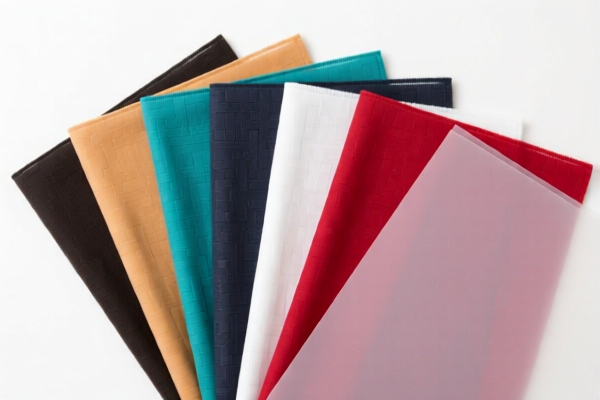
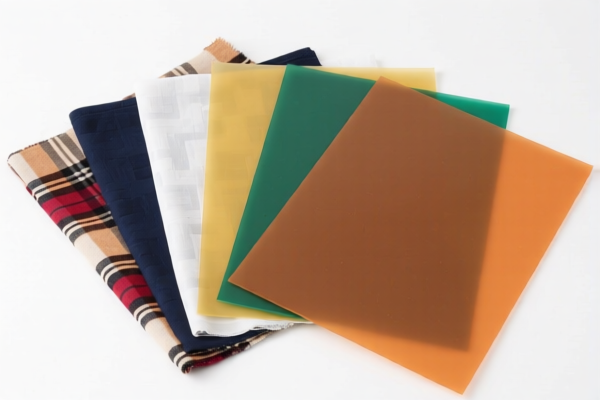
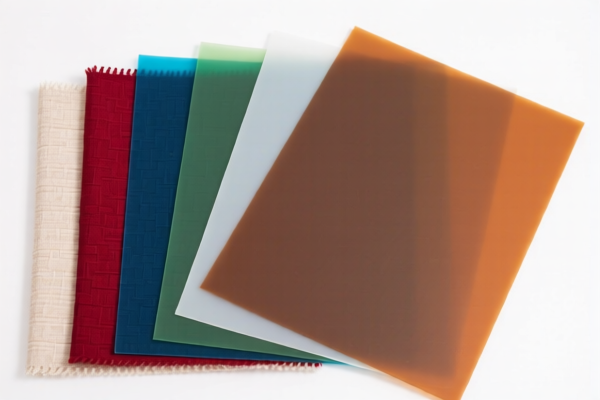
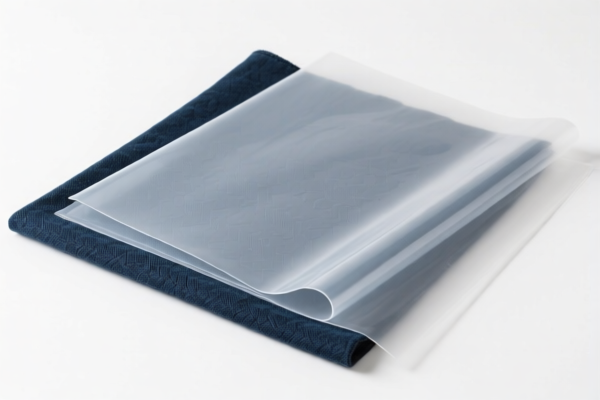
AI Analysis
🏠 Interior Decoration: Textile-Plastic Composite Sheets
🖥️ HS Code Reference & Customs Clearance Guide | 2026 Latest Tariff Analysis | Professional-Level Clearance Strategy
📌 一、Product Definition & Classification: Do You Really Understand "Interior Decoration Textile Plastic Sheets"?
Interior decoration sheets made from Textile and Plastic composites are widely used for wall coverings, wallpapers, and decorative linings. In international trade, the classification depends heavily on the material composition ratio and physical form (sheet vs. foil/film).
The key distinction lies in whether the plastic component is merely a backing or if it forms the essential character of the composite material.
⚠️ Key Classification Criteria: - Plastic Dominant (Sheets/Foils): If the plastic is the primary material (or if it's a plastic sheet used for decoration), it falls under Chapter 39 (Plastics). - Paper/Textile Dominant: If the base is paper or textile with a plastic coating, it may fall under Chapter 48 (Paper) or Chapter 59 (Impregnated Textiles). - Form Factor: "Sheet" vs. "Foil/Film" impacts the specific sub-heading.
📦 二、HS Code Classification Details (2026 Latest Tariff Authority Mapping)
| HS Code | Product Description | Application Scenario | Material/Logic |
|---|---|---|---|
3926.40.00.10 |
Articles of plastic, plates, sheets, film, foil and strip (other) | Decorative plastic sheets, wall panels | ✅ Plastic material, Sheet form. No conflict with textile logic if plastic is dominant. |
3926.90.99.89 |
Other articles of plastics and articles of other materials of heading 39 | General plastic decorative sheets | ✅ Plastic material, Sheet form. Fallback category for plastic sheets not specified elsewhere. |
4814.90.02.00 |
Wallpapers and window coverings of paper (other) | Paper-based wall coverings with plastic coating | ✅ Paper base (implied by HS 4814) + Plastic property. Suitable if the sheet is primarily paper with plastic attributes for transparency/decoration. |
3921.90.11.00 |
Other plates, sheets, film, foil and strip, of plastics (other) | Composite textile-plastic foils/films | ✅ Plastic + Textile combination. Classified as Foil form. High plastic content assumed. |
3921.90.15.00 |
Other plates, sheets, film, foil and strip, of plastics (other) | Composite textile-plastic sheets/films | ✅ Plastic + Textile combination. Fallback for plastic films/foils with textile reinforcement. |
🔍 Critical Reminder: - If the product is a pure plastic sheet used for decoration (e.g., PVC wall panels), it generally falls under 3926 or 3921. - If the product is a paper wallpaper with a plastic backing/coating, it falls under 4814. - If the product is a textile fabric coated with plastic, it might be 5903, but the provided data suggests classifications under 3921 (Plastic Sheets) for "Textile-Plastic" composites, implying the plastic component is significant or the form is "foil/sheet".
💰 三、2026 Latest Tariff Rate Breakdown (Including Surtaxes & Policy Add-ons)
✅ Applicable Country: United States (US)
✅ Origin: China (CN)
✅ Effective Date: Post-2025 (Includes Section 301 & IEEPA measures)
🎯 1. 3926.40.00.10 —— Plastic Sheets (Decorative)
| Item | Content |
|---|---|
| Base Tariff | 5.3% |
| Section 301 Surtax | 0.0% |
| IEEPA 122 Clause Tax | 10.0% |
| Total Rate | 15.3% |
| Tax Calculation | CIF Value × 15.3% |
| De Minimis Eligibility | ❌ No (High tariff risk) |
| Legal Basis Path | Base: 5.3% + IEEPA: 122 Clause 10% |
📌 Explanation: - This HS code benefits from exemption from Section 301 tariffs (25%) in the provided data, resulting in a lower total rate. - The 10% IEEPA tax applies to Chinese-origin plastic articles. - Advantage: Lowest tax burden among plastic sheet options (15.3%).
🎯 2. 3926.90.99.89 —— Other Plastic Articles
| Item | Content |
|---|---|
| Base Tariff | 5.3% |
| Section 301 Surtax | 7.5% |
| IEEPA 122 Clause Tax | 10.0% |
| Total Rate | 22.8% |
| Tax Calculation | CIF Value × 22.8% |
| De Minimis Eligibility | ❌ No |
| Legal Basis Path | Base: 5.3% + 301: 7.5% + IEEPA: 10% |
📌 Explanation: - This is a general "basket" code for plastic articles. - It attracts a 7.5% Section 301 surtax in addition to the 10% IEEPA tax. - Comparison: Higher than 3926.40 due to the 301 surtax.
🎯 3. 4814.90.02.00 —— Wallpapers/Window Coverings (Paper/Plastic Composite)
| Item | Content |
|---|---|
| Base Tariff | 0.0% |
| Section 301 Surtax | 7.5% |
| IEEPA 122 Clause Tax | 10.0% |
| Total Rate | 17.5% |
| Tax Calculation | CIF Value × 17.5% |
| De Minimis Eligibility | ❌ No |
| Legal Basis Path | Base: 0.0% + 301: 7.5% + IEEPA: 10% |
📌 Explanation: - Zero Base Tariff makes this competitive despite the surtaxes. - Applicable only if the product is classified as Paper-based wallpaper with plastic features (e.g., transparent plastic window coverings). - Key: Must meet the definition of "Wall Coverings" or "Wallpaper".
🎯 4. 3921.90.11.00 —— Plastic Foils (Textile-Plastic Composite)
| Item | Content |
|---|---|
| Base Tariff | 4.2% |
| Section 301 Surtax | 25.0% |
| IEEPA 122 Clause Tax | 10.0% |
| Total Rate | 39.2% |
| Tax Calculation | CIF Value × 39.2% |
| De Minimis Eligibility | ❌ No |
| Legal Basis Path | Base: 4.2% + 301: 25% + IEEPA: 10% |
📌 Explanation: - High tariff burden due to the full 25% Section 301 surtax. - Applies if the product is considered a Plastic Foil combined with textile. - Risk: Significantly higher cost than sheet classifications.
🎯 5. 3921.90.15.00 —— Other Plastic Foils/Sheets (Textile-Plastic)
| Item | Content |
|---|---|
| Base Tariff | 6.5% |
| Section 301 Surtax | 25.0% |
| IEEPA 122 Clause Tax | 10.0% |
| Total Rate | 41.5% |
| Tax Calculation | CIF Value × 41.5% |
| De Minimis Eligibility | ❌ No |
| Legal Basis Path | Base: 6.5% + 301: 25% + IEEPA: 10% |
📌 Explanation: - Highest tax rate among all options. - Used as a fallback for plastic textiles/films not covered by specific sub-headings. - Avoid if possible: Unless no other classification fits, this will incur massive duties.
🛠️ 四、Customs Clearance Practical Advice (Battle-Tested Pitfall Avoidance)
✅ 1. Required Documentation Checklist (Non-Negotiable)
| Document | Mandatory? | Description |
|---|---|---|
| ✅ Product Specification Sheet | ✔️ | Must detail material composition (e.g., "60% PVC, 40% Polyester"). |
| ✅ Product Photos (Clear Labels) | ✔️ | Show texture, backing, and any printed design. |
| ✅ Commercial Invoice | ✔️ | Description must match HS code logic (e.g., "Plastic Decorative Sheet" vs. "Textile Wallpaper"). |
| ✅ Packing List | ✔️ | Detail packaging to show units are sold as decorative sheets, not raw material rolls. |
| ✅ Certification (RoHS/REACH) | ✔️ | Often required for plastic products in US/EU markets. |
✅ 2. Declaration Tips (Key Mnemonics)
🔥 “Material Dictates Code, Form Determines Path, Name Must Be Precise!”
| Scenario | Correct Declaration | Incorrect Practice |
|---|---|---|
| Pure Plastic Decorative Sheet | 3926.40.00.10 |
Call it "Textile" → Misclassification |
| Paper Wallpaper with Plastic Coating | 4814.90.02.00 |
Call it "Plastic Sheet" → 15.3% vs 17.5% (Minor diff, but logic must hold) |
| Plastic Foil with Textile Backing | 3921.90.11.00 or 3921.90.15.00 |
Call it "Sheet" → Lower 25% 301 tax might be challenged |
| Generic "Decoration Material" | ❌ Ambiguous | Use specific HS codes only |
✅ 3. Special Case Handling
| Situation | Recommendation |
|---|---|
| Is it a Sheet or a Foil? | If thickness is <0.5mm and flexible, it might be "Foil" (3921, higher tax). If rigid/thick, it's "Sheet" (3926, lower tax). Measure thickness! |
| Textile Content High? | If textile is the essential character, reconsider Chapter 59 (Impregnated Textiles). However, data suggests 3921/3926 for "Textile-Plastic" composites. Consult customs if textile >50%. |
| USMCA/Mexico Origin? | If processed in Mexico, you might avoid IEEPA 10% and Section 301. Check rules of origin. |
| De Minimis (Section 321) | ❌ Not Eligible. All HS codes listed have taxes >$800 threshold impact or are explicitly denied de minimis in the data. |
🌍 五、Global Market Comparison (2026 Latest)
| Country/Region | Recommended HS Code | Total Tax Rate (CN Origin) | Notes |
|---|---|---|---|
| 🇺🇸 USA | 3926.40.00.10 |
15.3% | Lowest US rate for plastic sheets. Avoid 3921 series (39%+). |
| 🇺🇸 USA | 4814.90.02.00 |
17.5% | Competitive if product qualifies as Paper Wallpaper. |
| 🇪🇺 EU | Various (NCTS) | Varies (Usually 0-6.5%) | No Section 301/IEEPA. Focus on CE/RoHS compliance. |
| 🇨🇳 China | Various | Varies (Usually 0-9%) | Import duty depends on trade agreements. |
📌 Conclusion: - USA is the most expensive market due to layered tariffs (Base + 301 + IEEPA). - Prioritize
3926.40.00.10for pure plastic sheets to minimize duty at 15.3%. - Avoid3921codes unless technically necessary, as they trigger the full 25% Section 301 tax.
📌 六、Common Mistakes & Pitfall Guide (Blood Lessons)
❌ Mistake 1: Calling a Plastic Sheet a "Textile" to avoid plastic tariffs
👉 Consequence: Customs reclassifies to 3921/3926, applies 15-40% tax, adds penalties.
❌ Mistake 2: Declaring Paper Wallpaper as "Plastic Sheet"
👉 Consequence: Higher base tax (0% vs 5.3% difference might be offset, but logic must be sound). If caught misdeclaring, risk of audit.
❌ Mistake 3: Ignoring IEEPA 122 Clause
👉 Consequence: Failing to declare Chinese origin correctly leads to missed 10% tax, resulting in underpayment and seizure.
❌ Mistake 4: Using "Other Plastic Articles" (3926.90) when a specific code exists
👉 Consequence: Higher surtax (7.5% 301 vs 0%). Missed savings of 7.5%.
✅ Correct Approach:
"Interior Decoration Sheet, PVC-based, 1.2mm thick, Wall Covering, Model XYZ, Made in China"
HS Code:3926.40.00.10
Tax: 15.3%
🎯 七、Conclusion: Professional Declaration, Save Money, Ensure Smooth Clearance!
🎯 Remember the Mnemonic:
🔹 “Plastic Sheet 3926, Tax 15.3%, Low Risk.
🔹 Paper Wallpaper 4814, Tax 17.5%, Safe Choice.
🔹 Plastic Foil 3921, Tax 39%+, Avoid Unless Necessary!
🔹 Always Declare Origin, Avoid IEEPA Penalties!”
📌 Pro Tip:
If your product contains more than 50% Textile by weight, consult a customs broker for Chapter 59 (Impregnated Textiles) classification, which might offer different tariff structures. However, for standard "Plastic Sheets" with decorative textile patterns, 3926.40.00.10 is the most cost-effective option in the US.
📣 Immediate Action:
📞 Contact a Customs Broker + Provide Product Specs + Apply for Pre-Ruling if volume is high.
🚀 Optimize your supply chain to use 3926.40.00.10 for the best duty rate (15.3%).
✨ Professional Clearance Starts with Accurate Classification!
💼 Every Percent of Duty Saved is Pure Profit!
Customer Reviews
About HS Code Classification
The Harmonized System (HS) is an internationally standardized nomenclature developed by the World Customs Organization (WCO) to classify traded products. Over 200 countries use the HS system as the basis for customs tariffs, trade statistics, and import/export regulations.
Each HS code follows a hierarchical structure:
- Chapter (2 digits) — Broad category of goods (e.g., Chapter 84: Machinery and Mechanical Appliances)
- Heading (4 digits) — More specific grouping within the chapter
- Subheading (6 digits) — Internationally standardized breakdown, used by all WCO member countries
- National subdivisions (8-10 digits) — Country-specific extensions for further classification, such as US HTSUS 10-digit codes
Correct HS code classification is essential for smooth customs clearance, accurate duty payment, and compliance with trade regulations. Misclassification can lead to customs delays, overpayment of duties, or penalties.
When importing from CN to US, the applicable tariff rates may include:
- Most-Favored-Nation (MFN) rate — The standard duty rate applied to WTO members
- General rate — Applied to countries without trade agreements
- Trade remedy duties — Additional tariffs such as Section 301 (anti-dumping), Section 232 (national security), or countervailing duties
The information provided on this page is for reference purposes only. For official classification, please consult with your local customs authority or a licensed customs broker.