Interlocking Connector
CN → US| HS Code | Tariff Rate | Origin | Destination | Doc |
|---|---|---|---|---|
| 8536694020 | 35.0% | CN | US | Official Doc |
| 8536694030 | 35.0% | CN | US | Official Doc |
Product Images
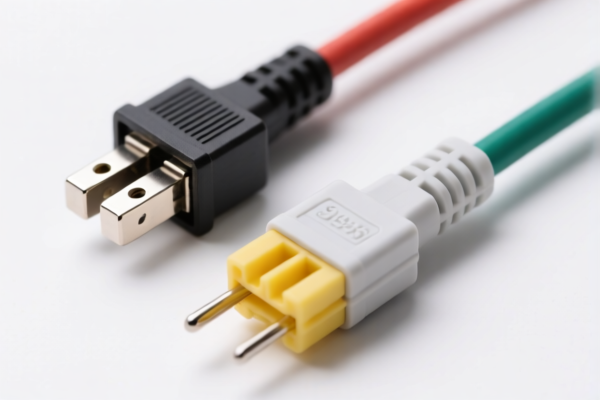
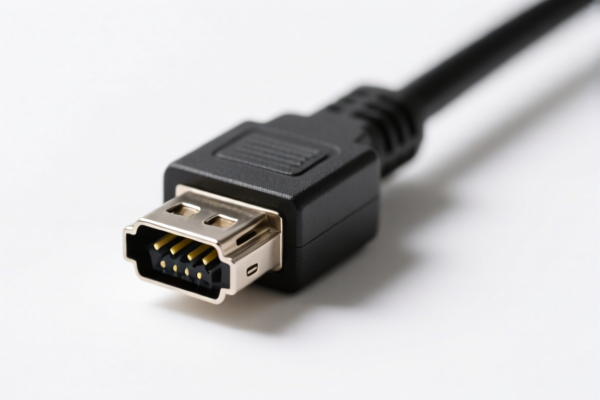
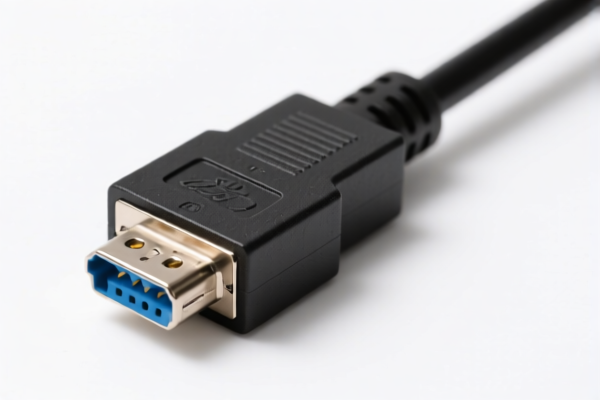
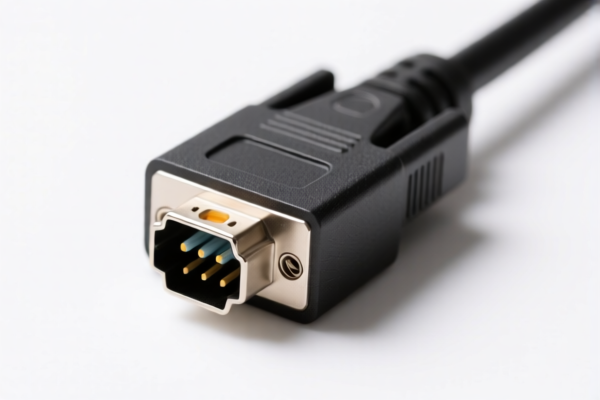
AI Analysis
🔌 Interlocking Connectors (Switching/Protecting Apparatus ≤ 1,000 V)
🌐 HS Code Reference & Customs Clearance Guide | 2026 Latest Tariff Analysis | Professional Clearance Strategy
📌 I. Product Definition: What Exactly is an "Interlocking Connector"?
In the context of international trade and electrical standards, "Interlocking Connectors" refer to a specific subset of electrical connectors designed to prevent the connection of incompatible plug and socket parts, or to ensure a specific mating sequence. These are classified under Chapter 85 (Electrical machinery and equipment), specifically under heading 8536 (Electrical apparatus for switching or protecting electrical circuits...).
The term "Interlocking" often implies safety features or specific mechanical designs found within Cylindrical multicontact connectors, Rack and panel connectors, or specialized industrial plugs/sockets for voltages not exceeding 1,000 V.
⚠️ Critical Distinction:
- If the connector is a simple plug/socket for domestic use (≤ 1,000 V) without specific "interlocking" safety mechanisms that change its fundamental nature, it may fall under general lamp-holder/plug categories.
- However, "Interlocking" features often push classification toward specialized industrial connectors, specifically Cylindrical multicontact or Rack and panel types, as described in the provided data.
📦 II. HS Code Classification Details (Based on Provided Data)
The provided data specifies two specific sub-categories for electrical connectors (≤ 1,000 V) that include interlocking types. Both carry the same tariff structure.
| HS Code | Product Description | Key Features | Typical Application |
|---|---|---|---|
8536.69.40.20 |
Cylindrical Multicontact Connectors | Multi-pin, circular shape, often used in industrial/aviation/military settings. May include interlocking mechanisms to prevent accidental disconnection. | Industrial automation, aircraft systems, heavy machinery, high-vibration environments. |
8536.69.40.30 |
Rack and Panel Connectors | Designed to connect front/rear panels to internal circuit boards or backplanes. Often feature interlocking rails or locking mechanisms for secure mounting. | Server racks, communication equipment, testing devices, electronic test benches. |
🔍 Key Insight:
- The term "Interlocking" in your input likely refers to either 8536.69.40.20 (if cylindrical/multi-pin) or 8536.69.40.30 (if rack/panel mount).
- Both codes fall under "Other" lamp-holders, plugs, and sockets, specifically listing Cylindrical multicontact connectors and Rack and panel connectors.
💰 III. 2026 Tariff Rate Detailed Explanation
✅ Applicable Country: United States (US)
✅ Origin: China (CN)
✅ Effective Date: As per current trade measures (subject to change; assumes current 25% additional duty regime)
🎯 1. 8536.69.40.20 – Cylindrical Multicontact Connectors
| Item | Content |
|---|---|
| Base Tariff | 0.0% |
| Additional Tariff (Section 301) | +25.0% |
| Total Tax Rate | 25.0% |
| Tax Calculation | CIF Value × 25% |
| De Minimis Exemption? | ❌ No (Generally not eligible for $800 de minimis if classified under specific 301-listed headings) |
| Legal Basis | USITC Harmonized Tariff Schedule HTSUS 2026, Footnote 9903.88.01 (or applicable 301 footnote) |
📌 Explanation:
- Electrical connectors under HS 8536.69.40 are subject to the 25% additional duty under Section 301 of the Trade Act of 1974 due to their origin in China.
- The base tariff is 0%, but the additional 25% makes the total cost significant.
- No de minimis exemption: Shipments valued under $800 may still be subject to this duty if the CBP determines it falls under specific enumerated goods or if the importer is not a bona fide recipient.
🎯 2. 8536.69.40.30 – Rack and Panel Connectors
| Item | Content |
|---|---|
| Base Tariff | 0.0% |
| Additional Tariff (Section 301) | +25.0% |
| Total Tax Rate | 25.0% |
| Tax Calculation | CIF Value × 25% |
| De Minimis Exemption? | ❌ No |
| Legal Basis | Same as above |
📌 Note:
- The tax rate is identical to cylindrical connectors.
- Whether you classify as "Cylindrical" or "Rack and Panel" depends on the physical form and application, not just the name.
- Rack and Panel connectors are typically flat, rectangular, or multi-pin strips designed for mounting on chassis.
- Cylindrical connectors are round, with pins arranged in a circle, often with threaded interlocking nuts.
🛠️ IV. Customs Clearance Practical Advice (Real-World Pitfall Guide)
✅ 1. Required Documentation Checklist (Do Not Miss)
| Document | Must Provide? | Notes |
|---|---|---|
| ✅ Product Specification Sheet | ✔️ | Must clearly state: Voltage (≤ 1,000 V), Number of Pins, Interlocking Mechanism Type (e.g., threaded, bayonet, latch). |
| ✅ Technical Diagrams | ✔️ | Show whether it's cylindrical (round) or rack/panel (flat/mounted). Critical for HS Code differentiation. |
| ✅ Product Photos | ✔️ | Clear images of front/rear, locking mechanism, and labeling. |
| ✅ Commercial Invoice | ✔️ | Must describe as "Electrical Connector, ≤ 1,000 V, Cylindrical/Rack-and-Panel Type." Avoid vague terms like "Plug." |
| ✅ Certificate of Origin | ✔️ | If non-China origin, may be eligible for lower/no duty (e.g., under USMCA, ASEAN, etc.). |
| ✅ FCC/CE Certification | ✔️ | Often required for electrical products entering the US/EU. |
✅ 2. Declaration Strategy (Key Tips)
🔥 “Form Defines Function, Voltage Defines Chapter!”
| Scenario | Correct HS Code | Wrong Approach |
|---|---|---|
| Round, multi-pin, with locking nut | 8536.69.40.20 |
Misclassifying as "Socket" (8536.30) → Risk of audit |
| Flat, multi-pin, mounts to rack | 8536.69.40.30 |
Misclassifying as "Cable Assembly" → Delay |
| Simple household plug (≤ 1,000 V) | 8536.30 (Not in provided data) |
Do not use 8536.69.40.20/30 |
| Optical Fiber Connector | 8517.71 |
Do not use 8536.69.40.xx |
📌 Important:
- The provided data only covers Cylindrical and Rack/Panel connectors.
- If your "Interlocking Connector" is a coaxial type (e.g., BNC, SMA), it may fall under 8536.69.40.10 (not listed in provided data but common).
- If it is a printed circuit connector (e.g., edge connector), it may fall under 8536.69.40.50 (not listed).
- Always verify if your specific interlocking design matches Cylindrical or Rack/Panel.
✅ 3. Special Cases & Optimization
| Situation | Advice |
|---|---|
| Non-China Origin | If manufactured in Vietnam, Mexico, or Malaysia, check for FTAs (USMCA, ASEAN-US) to avoid 25% duty. |
| Sample Shipments | Even samples may be subject to duty if classified under 8536.69.40.xx. Use "Gift" or "Sample" carefully; CBP often still assesses duty. |
| Interlocking Safety Feature | Highlight this in description to prove it's a specialized industrial connector, not a general-purpose plug. |
| Kit/Assembly | If sold as part of a larger panel, consider declaring the whole system if possible, but connectors are usually separately classified. |
🌍 V. Global Market Comparison (2026)
| Country/Region | Recommended HS Code | Tariff (China Origin) | Notes |
|---|---|---|---|
| 🇺🇸 USA | 8536.69.40.20 / .30 |
25.0% (Additional) | High duty; plan for cost impact. |
| 🇨🇳 China | 8536.69.40.20 / .30 |
~0%–5% | Low import duty for Chinese market. |
| 🇪🇺 EU | 8536.69 (General) |
0%–4% | No additional Section 301-like duties. |
| 🇬🇧 UK | 8536.69 |
0%–4% | Post-Brexit, no US-style penalties. |
| 🇯🇵 Japan | 8536.69 |
0%–5% | Low tariff; focus on safety standards (PSE). |
📌 Conclusion:
- USA is the only major market with a 25% additional duty on these connectors from China.
- Cost Planning: Include 25% in your FOB/CIF pricing model for US-bound shipments.
📌 VI. Common Mistakes & Pitfalls (Lessons Learned)
❌ Mistake 1: Classifying all "Connectors" under one generic code.
👉 Result: Wrong HS Code → Delays, fines, or 25% duty reassessment.
❌ Mistake 2: Ignoring the "Interlocking" feature's mechanical design.
👉 Result: Misclassifying a Cylindrical connector as Rack-and-Panel → Potential dispute.
❌ Mistake 3: Assuming "De Minimis" applies to all small shipments.
👉 Result: CBP may still assess duty if the product is specifically listed in 301 exclusions (or lacks exclusion).
❌ Mistake 4: Using vague terms like "Plugs" in commercial invoices.
👉 Result: Customs may reclassify or request more info → Delays.
✅ Correct Practice:
“Cylindrical Interlocking Electrical Connector, Multi-pin, 500V, Aluminum Housing, Model XYZ, for Industrial Use”
🎯 VII. Conclusion: Precision Classification Saves Money!
🎯 Remember:
🔹 “Voltage ≤ 1,000 V → Chapter 85”
🔹 “Cylindrical or Rack/Panel → 8536.69.40.20/30”
🔹 “China Origin → +25% Duty for US Imports”
📌 Pro Tip:
If you can prove your interlocking connector is not cylindrical or rack/panel (e.g., it’s a coaxial or printed circuit type), the duty may differ (though not covered in provided data).
Always apply for a Binding Ruling from US CBP if unsure.
📣 Immediate Action:
📞 Contact a Licensed Customs Broker
📎 Provide Product Specs + Photos
🚀 Pre-clear HS Code to Avoid 25% Surprise!
✨ Professional Clearance Starts with Precise Classification!
💼 Every Percentage Point Counts!
Customer Reviews
About HS Code Classification
The Harmonized System (HS) is an internationally standardized nomenclature developed by the World Customs Organization (WCO) to classify traded products. Over 200 countries use the HS system as the basis for customs tariffs, trade statistics, and import/export regulations.
Each HS code follows a hierarchical structure:
- Chapter (2 digits) — Broad category of goods (e.g., Chapter 84: Machinery and Mechanical Appliances)
- Heading (4 digits) — More specific grouping within the chapter
- Subheading (6 digits) — Internationally standardized breakdown, used by all WCO member countries
- National subdivisions (8-10 digits) — Country-specific extensions for further classification, such as US HTSUS 10-digit codes
Correct HS code classification is essential for smooth customs clearance, accurate duty payment, and compliance with trade regulations. Misclassification can lead to customs delays, overpayment of duties, or penalties.
When importing from CN to US, the applicable tariff rates may include:
- Most-Favored-Nation (MFN) rate — The standard duty rate applied to WTO members
- General rate — Applied to countries without trade agreements
- Trade remedy duties — Additional tariffs such as Section 301 (anti-dumping), Section 232 (national security), or countervailing duties
The information provided on this page is for reference purposes only. For official classification, please consult with your local customs authority or a licensed customs broker.