Intestinal Fragments
CN → US| HS Code | Tariff Rate | Origin | Destination | Doc |
|---|---|---|---|---|
| 3001900150 | 10.0% | CN | US | Official Doc |
| 3001900190 | 0.0% | CN | US | Official Doc |
Product Images
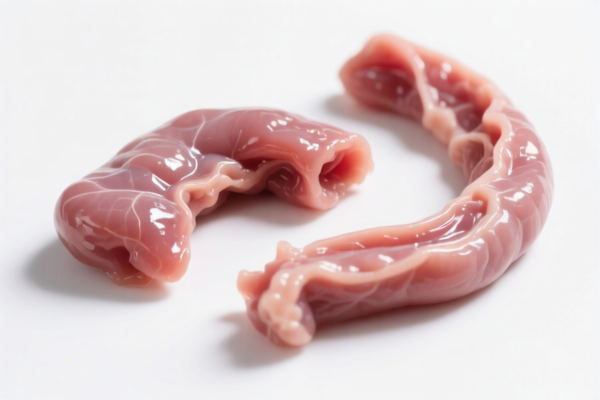
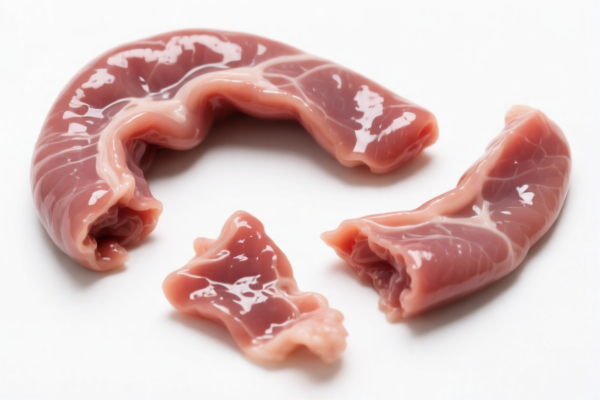
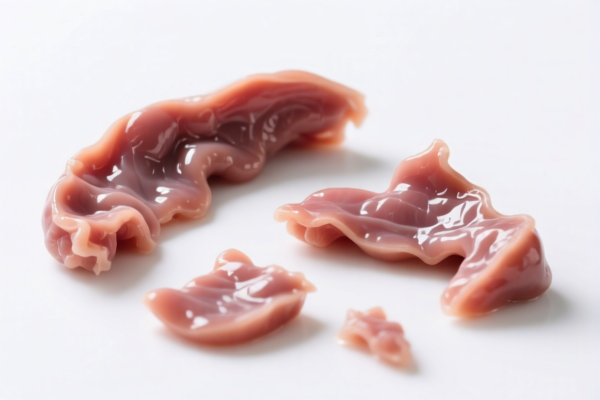
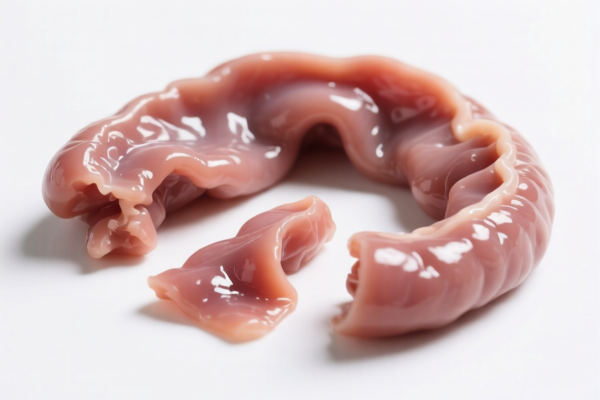
AI Analysis
🧬 Intestinal Fragments (Biological Tissue for Therapeutic Use)
🌐 HS Code Reference & Customs Clearance Guide | 2026 Latest Tariff Analysis | Professional Clearance Strategy
📌 I. Product Definition & Classification: What Are "Intestinal Fragments"?
In the context of international trade and pharmaceuticals, "Intestinal Fragments" typically refers to dried or processed portions of animal (or human) intestines prepared for organotherapeutic uses. These are classified under Chapter 30 of the Harmonized System (HS), specifically dealing with pharmaceutical products.
According to the provided data, these goods fall under:
"Glands and other organs for organotherapeutic uses, dried, whether or not powdered; extracts of glands or other organs or of their secretions for organotherapeutic uses..."
⚠️ Key Distinction:
- If the intestinal fragments are dried, powdered, or processed for therapeutic/prophylactic use → They are Pharmaceutical Products (HS 3001).
- If they are fresh, frozen, or intended for food/feed (e.g., natural casing for sausages) → They fall under Meat/Edible Offal (HS 0206/0504) or Animal Preparations (HS 0511).
- Crucial Note: The provided<DATA>strictly lists HS Codes under 3001.90, which are for therapeutic/pharmaceutical use. Therefore, this guide focuses on the Pharmaceutical Classification.
📦 II. HS Code Classification Details (Based on Provided Data)
| HS Code | Product Description | Applicable Scenario | Key Characteristics |
|--------|--------------------------|-----------------------------|
| 3001.90.01.50 | Glands and other organs, dried/powdered: Other | Dried intestinal tissue for organotherapy, non-specific therapeutic use | ✅ Dried/Powdered, Therapeutic |
| 3001.90.01.90 | Glands and other organs, dried/powdered: Other | Generic/Unspecified therapeutic intestinal substances | ✅ Dried/Powdered, Therapeutic |
🔍 Important Clarification:
- Both codes under 3001.90.01 refer to "Other" organs (not specifically identified as glands like pancreas or thyroid) prepared for therapeutic use.
- Difference between 50 and 90:
-3001.90.01.50: Specific sub-category often used for dried/powdered organ extracts where specific therapeutic application is defined but not further细分.
-3001.90.01.90: A catch-all for other unspecified intestinal/organ substances for therapeutic use.
- Both require precise documentation to prove therapeutic intent and processing state (dried/powdered).
💰 III. 2026 Tariff Rate Details (Based on Provided Data)
✅ Source: Provided
<DATA>
✅ Note: The tax data is limited.3001.90.01.50has explicit tax info;3001.90.01.90shows "Error".
🎯 1. 3001.90.01.50 – Other Dried/Powdered Organs (Therapeutic)
| Item | Content |
|---|---|
| Base Tariff | 0.0% |
| Additional Tariff | 0.0% |
| Total Tax Rate | 0.0% |
| Tax Detail | "基础关税: 0.0%, 加征关税: 0.0%" |
| Interpretation | Zero Duty for this specific sub-category under the provided data scope. |
📌 Explanation:
- The data explicitly states 0.0% base + 0.0% additional = 0.0% total.
- This suggests that dried/powdered intestinal organs for therapeutic use may enjoy duty-free treatment under the specific trade agreement or national tariff schedule reflected in the data.
- Caution: This 0% rate applies only to the specific HS code3001.90.01.50. Verify if this rate is country-specific (e.g., China-US, or internal national tariff).
🎯 2. 3001.90.01.90 – Other Unspecified Therapeutic Organ Substances
| Item | Content |
|---|---|
| Tax Status | Error / Failed to Retrieve |
| Total Tax | Error |
| Interpretation | Unknown Tax Rate. The system failed to retrieve tax information for this code. |
📌 Critical Warning:
- Do NOT assume 0% duty for3001.90.01.90.
- Since tax data is unavailable, this code carries high uncertainty.
- It may be subject to standard MFN tariffs (which can be 5–10% or higher) or additional punitive tariffs depending on the country of origin and current trade policies.
- Recommendation: Avoid using3001.90.01.90if possible. Prefer3001.90.01.50if your product fits its description, as its 0% rate is confirmed.
🛠️ IV. Customs Clearance Practical Advice (Real-World Pitfall Guide)
✅ 1. Documentation Checklist (Non-Negotiable)
| Document | Required? | Explanation |
|---|---|---|
| ✅ Product Specification Sheet | ✔️ | Must detail: Source animal, Processing method (dried/powdered), Intended therapeutic use. |
| ✅ Certificate of Analysis (CoA) | ✔️ | Proves purity, absence of pathogens, and therapeutic efficacy. |
| ✅ GMP/ISO Certification | ✔️ | Essential for pharmaceutical-grade biological products. |
| ✅ Veterinary Health Certificate | ✔️ | Proves origin from disease-free regions. |
| ✅ Import License (Pharmaceutical) | ✔️ | Many countries require a specific import license for organotherapeutic substances. |
| ✅ Commercial Invoice | ✔️ | Must clearly state: "Dried Intestinal Fragments for Therapeutic Use, HS 3001.90.01.50". Do NOT use vague terms like "Animal Casing" or "Food Ingredient". |
| ✅ Packing List | ✔️ | Specify net/gross weight and number of containers. |
✅ 2. Declaration Tips (Critical Keywords)
🔥 Golden Rule: "Therapeutic Intent + Dried/Powdered = HS 3001"
| Scenario | Correct Declaration | Incorrect Declaration | Risk |
|---|---|---|---|
| Dried intestinal tissue for medicine | "Dried Intestinal Fragments for Organotherapeutic Use" | "Intestinal Casings" or "Animal Parts" | Misclassification → Higher Tax + Seizure |
| Powdered extract | "Dried/Powdered Organ Extract for Therapeutic Use" | "Herbal Supplement" | Regulatory Violation |
| Fresh/Frozen (Non-Therapeutic) | Must use HS 0206/0504, NOT 3001 | "Intestinal Fragments" (without specifying therapeutic use) | Rejection at Customs |
⚠️ Key Alert:
- Do NOT declare as "Food Ingredient" or "Leather/Casing" if it is for therapeutic use.
- Do NOT omit the phrase "for organotherapeutic uses" in the description. This is the legal basis for HS 3001 classification.
✅ 3. Special Cases & Risk Management
| Situation | Handling Advice |
|---|---|
| Origin: High-Risk Countries | Even with 0% tariff for 3001.90.01.50, additional sanitary/phytosanitary checks may apply. Ensure origin certificates are flawless. |
Tax Error for 3001.90.01.90 |
Avoid this code if your product can be classified under 3001.90.01.50. If forced to use 3001.90.01.90, request a Pre-Ruling from customs to determine the exact tax rate. |
| Biological Contamination Risk | Intestinal products are high-risk for pathogens (E. coli, Salmonella). Provide sterilization records and sterility certificates. |
| CITES/Endangered Species | If intestines are from protected species, additional CITES permits are required. Verify source animal. |
🌍 V. Global Market Comparison (2026 Outlook)
| Country/Region | Recommended HS Code | Estimated Tariff | Key Certification | Notes |
|---|---|---|---|---|
| 🇺🇸 USA | 3001.90.01.50 |
0% (Base) + FDA Approval | FDA Drug License, CoA | High regulatory barrier. |
| 🇨🇳 China | 3001.90.01.50 |
0% | NMPA License, GMP | Zero tariff for this code. |
| 🇪🇺 EU | 3001.90.01.50 |
Varies (0–5%) | EMA Approval, GMP | Strict veterinary controls. |
| 🇯🇵 Japan | 3001.90.01.50 |
Varies | PMDA Approval | Biological safety standards high. |
📌 Conclusion:
-3001.90.01.50is the safest and most cost-effective code if your product is dried/powdered for therapeutic use.
-3001.90.01.90is risky due to unknown tax rates.
- Therapeutic intent must be explicitly stated in all documentation.
📌 VI. Common Mistakes & Pitfalls (Lessons Learned)
❌ Mistake 1: Declaring as "Natural Casings" (HS 0504) for therapeutic use
👉 Consequence: Misclassification. Customs will reclassify to HS 3001, apply back-taxes, and impose penalties.
❌ Mistake 2: Using 3001.90.01.90 without verifying tax rate
👉 Consequence: Unknown duty payment. Could be 0%, 5%, or even 25%+ depending on origin.
❌ Mistake 3: Omitting "Therapeutic Use" in the declaration
👉 Consequence: Customs may classify as animal by-products (HS 0511) or food (HS 0206), leading to quarantine delays or rejection.
❌ Mistake 4: Not providing Sterilization/Pathogen Test Reports
👉 Consequence: Seizure due to biological safety concerns.
✅ Correct Declaration Example:
"Dried Intestinal Fragments from Porcine Source, Powdered, for Organotherapeutic Use, Processed under GMP, HS Code 3001.90.01.50"
🎯 VII. Conclusion: Precise Classification Saves Costs!
🎯 Key Takeaways:
1. Use 3001.90.01.50 if possible – 0% tax confirmed.
2. Avoid 3001.90.01.90 unless necessary – tax unknown.
3. Always specify "Therapeutic/Organotherapeutic Use" in the description.
4. Provide full documentation (CoA, GMP, Veterinary Cert) to avoid quarantine issues.
📌 Pro Tip:
If your product is fresh or frozen, it does NOT belong in HS 3001. It belongs in HS 0206 (Meat) or HS 0504 (Intestines for Casings). Misclassifying fresh tissue as therapeutic dried product is a major red flag for customs.
📣 Immediate Action:
🔍 Verify Product State: Dried/Powdered? → HS 3001.
🔍 Verify Use: Therapeutic? → HS 3001.
🔍 Check Tax: Prefer3001.90.01.50(0%).
📞 Consult a Customs Broker: For3001.90.01.90, get a pre-ruling.
✨ Accurate Classification = Lower Taxes + Faster Clearance
💼 Don’t let biological products become a customs nightmare!
Customer Reviews
About HS Code Classification
The Harmonized System (HS) is an internationally standardized nomenclature developed by the World Customs Organization (WCO) to classify traded products. Over 200 countries use the HS system as the basis for customs tariffs, trade statistics, and import/export regulations.
Each HS code follows a hierarchical structure:
- Chapter (2 digits) — Broad category of goods (e.g., Chapter 84: Machinery and Mechanical Appliances)
- Heading (4 digits) — More specific grouping within the chapter
- Subheading (6 digits) — Internationally standardized breakdown, used by all WCO member countries
- National subdivisions (8-10 digits) — Country-specific extensions for further classification, such as US HTSUS 10-digit codes
Correct HS code classification is essential for smooth customs clearance, accurate duty payment, and compliance with trade regulations. Misclassification can lead to customs delays, overpayment of duties, or penalties.
When importing from CN to US, the applicable tariff rates may include:
- Most-Favored-Nation (MFN) rate — The standard duty rate applied to WTO members
- General rate — Applied to countries without trade agreements
- Trade remedy duties — Additional tariffs such as Section 301 (anti-dumping), Section 232 (national security), or countervailing duties
The information provided on this page is for reference purposes only. For official classification, please consult with your local customs authority or a licensed customs broker.