Intestinal Granules
CN → US| HS Code | Tariff Rate | Origin | Destination | Doc |
|---|---|---|---|---|
| 2106909998 | 16.4% | CN | US | Official Doc |
| 2106100000 | 41.4% | CN | US | Official Doc |
| 3004909250 | 10.0% | CN | US | Official Doc |
Product Images
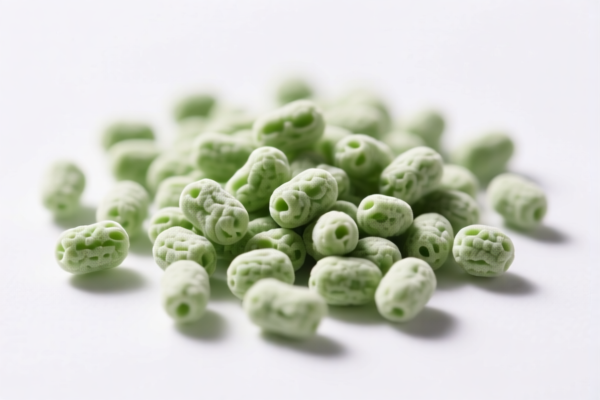
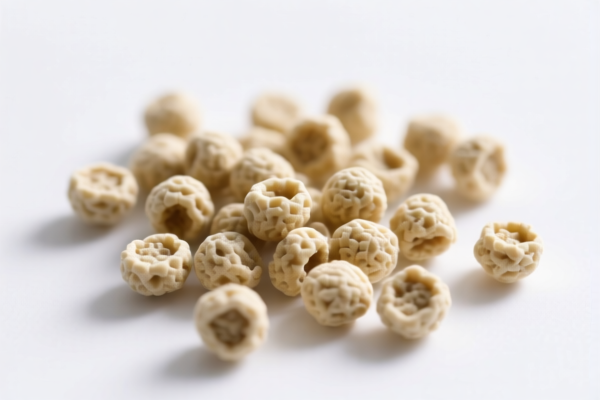


AI Analysis
🩺 Intestinal Granules (Powdered Form)
🌐 HS Code Reference & Customs Clearance Guide | 2026 Latest Tariff Full Analysis | Professional Clearance Strategy
📌 I. Product Definition & Classification: Do You Really Understand "Intestinal Granules"?
"Intestinal Granules" are primarily powdered food or pharmaceutical products designed to regulate intestinal function. However, their classification depends entirely on their intended use, formulation, and labeling:
🍽️ Food Supplements/Food Preparations: Powdered products for general dietary supplementation or mild intestinal regulation, falling under Chapter 21. 💊 Medicinal/Laxative Products: Powdered products with explicit therapeutic effects, such as laxatives or medical-grade intestinal regulators, falling under Chapter 30.
⚠️ Key Distinction Point:
- If it is a nutritional supplement (e.g., protein concentrate, dietary fiber) → Classify under 2106.90.99.98 / 2106.10.00.00
- If it is a medicinal laxative or explicitly for therapeutic purposes → Classify under 3004.90.92.50
📦 II. HS Code Classification Details (2026 Latest Tariff Authority Comparison)
| HS Code | Product Description | Applicable Scenario | Tax Rate |
|---|---|---|---|
2106.90.99.98 |
Other food preparations, not elsewhere specified or included | Mild intestinal regulation, dietary supplements, non-specific food preparations | 16.4% |
2106.10.00.00 |
Protein concentrates and textured protein substances | Nutritional supplements, protein concentrates, explicit nutritional function | 41.4% |
3004.90.92.50 |
Medicaments consisting of mixed or unmixed products for therapeutic or prophylactic uses | Medical laxatives, therapeutic intestinal regulators | 10.0% |
🔍 Important Reminder:
- Misclassification Risk: If a product is labeled as a "laxative" but declared as a "food supplement," customs may reclassify it, leading to tariff discrepancies and penalties. - Ingredient Dependency: Products with explicit protein concentrate attributes must be declared under 2106.10.00.00, even if they claim "intestinal health" benefits.
💰 III. 2026 Latest Tariff Rate Details (Including Additional Taxes & Policy Add-ons)
✅ Applicable Country: United States (US)
✅ Country of Origin: China (CN)
✅ Effective Time: November 10, 2025 onwards
🎯 1. 2106.90.99.98 —— Other Food Preparations
| Item | Content |
|---|---|
| Base Tariff Rate | 6.4% (ad valorem) |
| Section 301 Additional Tariff | +0.0% (No additional 301 tariff applied to this specific subheading) |
| Section 122 Additional Tariff | +10% (China-specific tariff) |
| Total Tariff Rate | 16.4% |
| Tax Calculation | CIF Value × 16.4% |
| De Minimis Eligibility | ❌ Not Eligible (deny_de_minimis) |
| Legal Basis Path | IEEPA:9903.01.25 → USITC:2106.90.99.98 → FOOTNOTE:122 |
📌 Explanation:
- "Section 122 Tariff 10%": Refers to the U.S. tariff on Chinese goods under Section 122 of the Trade Act, applicable to certain food preparations. - Total 16.4%: This is a moderate-high tariff level. Importers must account for the 10% Section 122 surcharge in cost calculations.
🎯 2. 2106.10.00.00 —— Protein Concentrates & Textured Protein Substances
| Item | Content |
|---|---|
| Base Tariff Rate | 6.4% (ad valorem) |
| Section 301 Additional Tariff | +25.0% (USITC Footnote 9903.88.01) |
| Section 122 Additional Tariff | +10% (China-specific tariff) |
| Total Tariff Rate | 41.4% |
| Tax Calculation | CIF Value × 41.4% |
| De Minimis Eligibility | ❌ Not Eligible (deny_de_minimis) |
| Legal Basis Path | IEEPA:9903.01.25 → IEEPA:9903.01.24 → USITC:2106.10.00.00 → FOOTNOTE:9903.88.01 |
📌 Note:
- This is the highest tariff category among the three options. - If your product contains protein concentrates or is labeled as a "protein supplement," it must be declared under this code. Do not attempt to classify it as a general food preparation to avoid higher tariffs.
🎯 3. 3004.90.92.50 —— Medicaments for Therapeutic Use
| Item | Content |
|---|---|
| Base Tariff Rate | 0.0% (ad valorem) |
| Section 301 Additional Tariff | +0.0% (No additional 301 tariff applied) |
| Section 122 Additional Tariff | +10% (China-specific tariff) |
| Total Tariff Rate | 10.0% |
| Tax Calculation | CIF Value × 10.0% |
| De Minimis Eligibility | ❌ Not Eligible (deny_de_minimis) |
| Legal Basis Path | IEEPA:9903.01.25 → USITC:3004.90.92.50 → FOOTNOTE:122 |
📌 Attention:
- This is the lowest tariff category. - Strict Condition: The product must be explicitly recognized as a medicament (e.g., laxative, therapeutic intestinal regulator). If FDA or customs determines it is not a drug, it will be reclassified, resulting in back taxes and penalties. - Advantage: If your product qualifies as a medicinal laxative, this code offers the most cost-effective clearance option.
🛠️ IV. Customs Clearance Practical Advice (Battle-Tested Pitfall Avoidance Guide)
✅ 1. Document Checklist (All Required)
| Document | Required | Notes |
|---|---|---|
| ✅ Product Specification Sheet | ✔️ | Must clearly state: Form (Powder), Intended Use (Food/Drug), Key Ingredients |
| ✅ FDA Registration / Drug Listing | ✔️ | If declared under 3004.90.92.50, FDA drug listing is mandatory |
| ✅ Ingredient Declaration | ✔️ | Specifically highlight if it contains "protein concentrates" |
| ✅ Commercial Invoice | ✔️ | Accurately describe as "Intestinal Regulation Granules (Food Supplement)" or "Laxative Granules (Medicine)" |
| ✅ Packing List | ✔️ | Show net weight, gross weight, and packaging type |
| ✅ Certificate of Origin (CO) | ✔️ | Essential for proving China origin and applying correct surcharges |
✅ 2. Declaration Strategy (Key Mantras)
🔥 "Use Determines Code, Don't Misclassify, Save Tax Dollars!"
| Scenario | Correct Declaration | Wrong Practice |
|---|---|---|
| Dietary Supplement (e.g., Fiber) | 2106.90.99.98 |
Misdeclare as Drug → 10% (but faces FDA seizure if not approved) |
| Protein Supplement | 2106.10.00.00 |
Misdeclare as General Food → 16.4% (Back tax + Penalty) |
| Therapeutic Laxative | 3004.90.92.50 |
Misdeclare as Food → 41.4% (Huge Tariff Difference) |
✅ 3. Special Cases Handling
| Situation | Handling Advice |
|---|---|
| Product Contains Protein | Must declare under 2106.10.00.00. Do not try to hide protein content. |
| Dual-Use Product (Food + Drug Claims) | If marketed as a drug but sold as food, customs may reclassify. Provide clear marketing materials to prove intent. |
| OEM Customized Granules | Provide client order + formulation. Avoid generic terms like "Health Powder." |
| Imported for Resale in US | Ensure FDA compliance for both food (FSMA) or drug (NDA/ANDA) pathways before shipment. |
🌍 V. Global Market Comparison (2026 Latest)
| Country/Region | Recommended HS Code | Tariff (China Origin) | Certification Required | Notes |
|---|---|---|---|---|
| 🇺🇸 USA | 3004.90.92.50 (if drug) |
10.0% | FDA Drug Approval | If food, 2106 codes apply (16.4%-41.4%) |
| 🇨🇳 China | 2106.90.99.98 |
5%-10% | CFDA/Food License | Lower base tariff, no Section 122 |
| 🇪🇺 EU | 2106.90.99.98 |
0%-12% | EFSA Food Safety | Varies by composition |
| 🇬🇧 UK | 2106.90.99.98 |
0%-12% | FSA Compliance | Post-Brexit rules apply |
📌 Conclusion:
- USA imposes Section 122 tariffs on all three codes, increasing costs by 10%. - Drug classification (3004) has the lowest total tariff (10%) but highest regulatory barriers (FDA). - Food classification (2106) has higher tariffs (16.4%-41.4%) but easier market access.
📌 VI. Common Errors & Pitfall Avoidance (Lessons Learned)
❌ Error 1: Declaring a laxative as a general food supplement
👉 Consequence: FDA seizure, product recall, or reclassification to drug code with back taxes.
❌ Error 2: Declaring a protein concentrate as a general food preparation
👉 Consequence: Tariff jumps from 16.4% to 41.4% → Back tax + Penalty!
❌ Error 3: Using vague terms like "Health Powder" without specifying use
👉 Consequence: Customs unable to classify → Delay in clearance or inspection
❌ Error 4: Ignoring Section 122 Tariff
👉 Consequence: Unexpected 10% surcharge on all three codes → Profit margin erosion
✅ Correct Approach:
"Intestinal Regulation Granules, Powdered, [Food Supplement / Laxative], Containing [Fiber / Polyethylene Glycol], Model XYZ, FDA Registered"
🎯 VII. Conclusion: Professional Declaration, Cost Savings, Efficient Clearance!
🎯 Remember the Mantra:
🔹 "Drug vs. Food, Choose Wisely; 10% vs. 41%, Save Big Money!"
🔹 "HS Code Determines Tax, Declaration Determines Speed; Mistake in One, Pay in Dollars!"
📌 Tip:
If your product is originally from Vietnam, Mexico, or Thailand, you may qualify for IEEPA Exemptions, reducing tariffs to 0%~5%.
Recommend pre-clearance ruling to avoid customs disputes.
📣 Immediate Action:
📞 Contact Professional Customs Broker + Provide Product Specs + Apply for HS Code Advance Ruling
🚀 Let Your Intestinal Granules Clear Customs Smoothly, Expand Markets Efficiently, and Boost Profits!
✨ Professional Clearance Starts with Accurate Classification!
💼 Every Penny of Your Cost Deserves Precise Calculation!
Customer Reviews
About HS Code Classification
The Harmonized System (HS) is an internationally standardized nomenclature developed by the World Customs Organization (WCO) to classify traded products. Over 200 countries use the HS system as the basis for customs tariffs, trade statistics, and import/export regulations.
Each HS code follows a hierarchical structure:
- Chapter (2 digits) — Broad category of goods (e.g., Chapter 84: Machinery and Mechanical Appliances)
- Heading (4 digits) — More specific grouping within the chapter
- Subheading (6 digits) — Internationally standardized breakdown, used by all WCO member countries
- National subdivisions (8-10 digits) — Country-specific extensions for further classification, such as US HTSUS 10-digit codes
Correct HS code classification is essential for smooth customs clearance, accurate duty payment, and compliance with trade regulations. Misclassification can lead to customs delays, overpayment of duties, or penalties.
When importing from CN to US, the applicable tariff rates may include:
- Most-Favored-Nation (MFN) rate — The standard duty rate applied to WTO members
- General rate — Applied to countries without trade agreements
- Trade remedy duties — Additional tariffs such as Section 301 (anti-dumping), Section 232 (national security), or countervailing duties
The information provided on this page is for reference purposes only. For official classification, please consult with your local customs authority or a licensed customs broker.