Intestine Segments
CN → US| HS Code | Tariff Rate | Origin | Destination | Doc |
|---|---|---|---|---|
| 3001900150 | 10.0% | CN | US | Official Doc |
| 3001900190 | 0.0% | CN | US | Official Doc |
| 3504001000 | 22.5% | CN | US | Official Doc |
| 3504005000 | 0.0% | CN | US | Official Doc |
| 9023000000 | 17.5% | CN | US | Official Doc |
| 0504000020 | 17.5% | CN | US | Official Doc |
| 0504000040 | 17.5% | CN | US | Official Doc |
Product Images
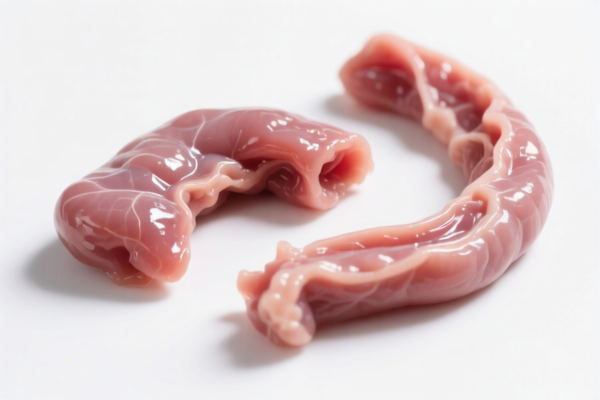
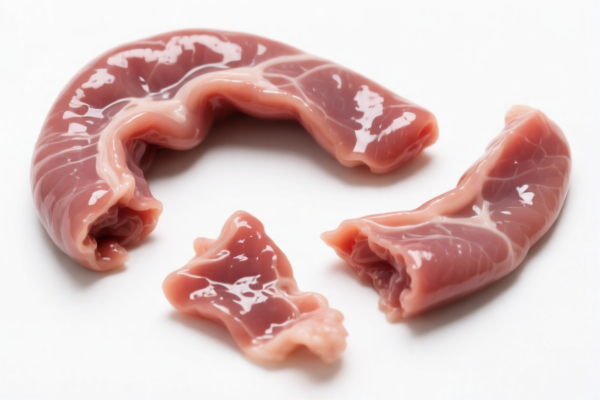
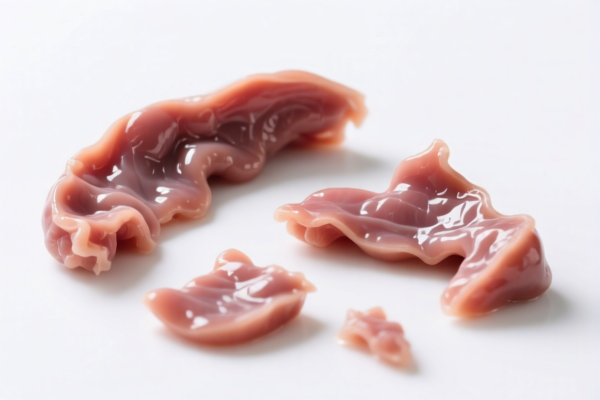
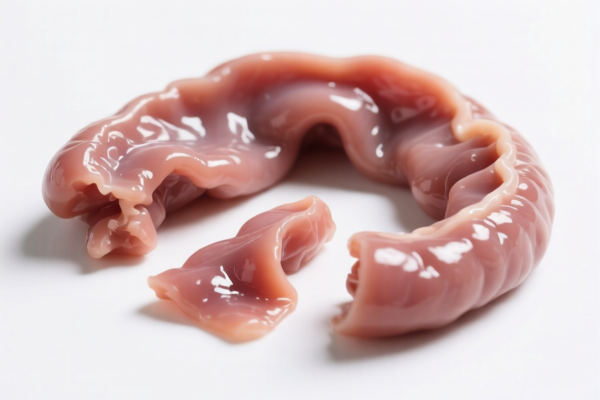
AI Analysis
🥓 Intestine Segments (Sausage Casings)
🌐 HS Code Reference & Customs Clearance Guide | 2026 Latest Tariff Analysis | Professional Clearance Strategy
📌 I. Product Definition & Classification: Do You Really Understand "Intestine Segments"?
Intestine segments, specifically those prepared as sausage casings, are biological products derived from the digestive tracts of animals (primarily pigs, sheep, and cattle). In international trade, these are categorized not just by the animal source, but by the preparation state. The critical distinction lies in whether the intestines are "hog" (pig) or "other", and whether they are prepared specifically for use as casings.
⚠️ Key Distinction Points:
- If the product is Hog Intestines prepared for sausage casings → Classified under 0504.00.00.20
- If the product is Other Animal Intestines (sheep, cattle, etc.) prepared for sausage casings → Classified under 0504.00.00.40
- Preparation State: Must be salted, in brine, dried, or smoked. Fresh/chilled intestines not specifically prepared as casings may fall under different subheadings, but for customs purposes, "prepared for use as sausage casings" is the key descriptor.
📦 II. HS Code Classification Details (2026 Latest Tariff Authority Comparison)
| HS Code | Product Description | Applicable Scenario | Animal Source |
|---|---|---|---|
0504.00.00.20 |
Guts, bladders, stomachs of animals (other than fish), whole and pieces thereof, fresh, chilled, frozen, salted, in brine, dried or smoked. Prepared for use as sausage casings: Hog | Pig intestines (small, medium, large) used as natural sausage casings | 🐖 Hog (Pig) |
0504.00.00.40 |
Guts, bladders, stomachs of animals (other than fish), whole and pieces thereof, fresh, chilled, frozen, salted, in brine, dried or smoked. Prepared for use as sausage casings: Other | Sheep, calf, cattle, or other animal intestines used as natural sausage casings | 🐑 Other (Sheep/Cattle/etc.) |
🔍 Important Reminder:
- The phrase "Prepared for use as sausage casings" is crucial. If the intestines are merely processed for rendering (fat/protein extraction) and not specifically sized and treated as casings, they may not qualify for these specific codes.
- "Other" in0504.00.00.40captures everything that is not hog, including sheep casings (the most common alternative to pork).
💰 III. 2026 Latest Tariff Rate Details (Including Surcharge Taxes & Policy Additions)
✅ Applicable Country: United States (US)
✅ Origin: China (CN)
✅ Effective Time: 2025 November 10 onwards (including subsequent imports)
🎯 1. 0504.00.00.20 —— Hog Intestines Prepared as Sausage Casings
| Item | Content |
|---|---|
| Base Tariff Rate | 0% (ad valorem) |
| USITC Surcharge Tax | +7.5% (Under USITC Footnote) |
| IEEPA Surcharge Tax | 0.0% (Not applicable under current data for this specific subheading) |
| Total Tax Rate | 7.5% |
| Tax Calculation | CIF Value × 7.5% |
| De Minimis Exemption Eligible | ❌ No (deny_de_minimis) |
| Legal Basis Path | USITC:0504.00.00.20 → FOOTNOTE:Surcharge_Applicable |
📌 Explanation:
- Base Rate 0%: Animal intestines often enjoy low base tariffs.
- 7.5% Surcharge: This is an additional duty applied to specific animal products.
- Total 7.5%: This is a moderate tariff compared to electronics or steel. However, it is not exempt.
- No IEEPA: Unlike many Chinese manufactured goods, this specific biological product does not currently attract the 10% IEEPA surcharge under the provided data.
🎯 2. 0504.00.00.40 —— Other Animal Intestines (Non-Hog) Prepared as Sausage Casings
| Item | Content |
|---|---|
| Base Tariff Rate | 0% (ad valorem) |
| USITC Surcharge Tax | +7.5% (Under USITC Footnote) |
| IEEPA Surcharge Tax | 0.0% (Not applicable under current data for this specific subheading) |
| Total Tax Rate | 7.5% |
| Tax Calculation | CIF Value × 7.5% |
| De Minimis Exemption Eligible | ❌ No (deny_de_minimis) |
| Legal Basis Path | USITC:0504.00.00.40 → FOOTNOTE:Surcharge_Applicable |
📌 Note:
- Identical tax treatment to hog intestines.
- Sheep casings (often considered higher quality for gourmet sausages) fall under "Other" and are taxed at the same 7.5% rate.
- Crucial: Do not misclassify sheep intestines as "hog" to avoid audit flags, nor misclassify as "other protein" (3504) which may have different tax treatments.
🛠️ IV. Customs Clearance Practical Advice (Real-World Pitfall Guide)
✅ 1. Required Documentation Checklist (Non-Negotiable)
| Document | Must Provide | Description |
|---|---|---|
| ✅ Product Specification Sheet | ✔️ | Details: Animal source (Hog/Sheep/Cattle), diameter size, salted/dried status, casings per package. |
| ✅ Processing Method Description | ✔️ | Explicitly state: "Prepared for use as sausage casings." Include salting, curing, or freezing methods. |
| ✅ Commercial Invoice | ✔️ | Must clearly identify HS Code 0504.00.00.20 or 0504.00.00.40. Do not use generic terms like "Animal Parts." |
| ✅ Packing List | ✔️ | Net weight and gross weight. Ensure units are consistent (e.g., kg, lbs). |
| ✅ Origin Certificate | ✔️ | If claiming preferential rates (though base is 0%, surcharge applies). |
| ✅ Veterinary/Health Certificate | ✔️ | Required for animal products to prove disease-free status (USDA/FDA requirements). |
✅ 2. Declaration Tips (Key Mnemonics)
🔥 "Hog is 20, Other is 40, Both 7.5%, Never Split!"
| Scenario | Correct Declaration Method | Wrong Practice |
|---|---|---|
| Pig Intestines | 0504.00.00.20 |
Misclassified as "Other" → Audit risk |
| Sheep Intestines | 0504.00.00.40 |
Misclassified as "Hog" → Penalty |
| Mixed Loads | Split Declaration | Combining Hog and Sheep in one line item → Rejection |
| Casings vs. Rendering | Specify "Sausage Casings" | Labeling as "Raw Intestines" → May be held for veterinary inspection or misclassified |
✅ 3. Special Circumstances Handling
| Scenario | Handling Advice |
|---|---|
| Frozen vs. Salted | Both are accepted under 0504. Ensure invoice reflects the condition. Frozen may require additional cold-chain documentation. |
| Human Consumption vs. Industrial | If for human consumption, FDA registration and prior notice are required. If for industrial (non-food), different health certs may apply, but HS remains the same. |
| Origin: Non-China | If from EU, Canada, or Australia, check for Free Trade Agreement (FTA) benefits. Base 0% may still apply, but verify surcharge exemptions. |
🌍 V. Global Major Market Clearance Comparison (2026 Latest)
| Country/Region | Recommended HS Code | Tariff | Certification Requirements | Notes |
|---|---|---|---|---|
| 🇺🇸 USA | 0504.00.00.20 / .40 |
7.5% | FDA Prior Notice, USDA Vet Cert | High scrutiny on animal health. |
| 🇨🇳 China | 0504.00.00 |
~5-10% | CIQ Inspection | Import quotas may apply. |
| 🇪🇺 EU | 0504.00 |
0-6% | Health Certificate, Hygiene Cert | Strict hygiene standards. |
| 🇬🇧 UK | 0504.00 |
0-6% | Health Certificate | Post-Brexit rules apply. |
| 🇯🇵 Japan | 0504.00 |
0-2.5% | Quarantine Certificate | Very strict entry controls. |
📌 Conclusion:
- USA is the primary market for natural casings and has a clear, moderate 7.5% surcharge.
- Animal health documentation is more critical than tax calculation. Delays are usually due to missing health certs, not tariff disputes.
📌 VI. Common Errors & Pitfall Guide (Blood & Tears Lessons)
❌ Error 1: Misidentifying Sheep Intestines as Hog Intestines
👉 Consequence: Customs may reject the shipment for misdeclaration or require re-classification, causing delays.
👉 Fix: Clearly state "Sheep Casings" or "Other Animal Casings" on the invoice.
❌ Error 2: Using Generic Terms like "Sausage Skin"
👉 Consequence: Customs may assign a higher, incorrect HS code (e.g., food products) with higher duties.
👉 Fix: Use the legal description: "Intestines, prepared as sausage casings."
❌ Error 3: Ignoring the 7.5% Surcharge
👉 Consequence: Underestimating landed cost. Many assume 0% base tax means free entry.
👉 Fix: Budget for the additional 7.5% on CIF value.
❌ Error 4: Missing FDA Prior Notice
👉 Consequence: Shipment held at port, possible destruction.
👉 Fix: Submit FDA Prior Notice at least 2 hours before arrival (or 4 hours if by rail).
🎯 VII. Conclusion: Professional Declaration, Save Time, Reduce Costs!
🎯 Remember the Mnemonic:
🔹 "Hog is 20, Other is 40, Both 7.5%, Always 7.5%!"
🔹 "Animal Health Docs are King, HS Code is Queen!"
🔹 "Never Split Hog and Sheep on One Line!"
📌 Pro Tip:
If your intestines are sourced from countries with specific animal health agreements (e.g., certain EU countries or North America), ensure your Veterinary Health Certificate explicitly mentions freedom from Foot and Mouth Disease (FMD) and other regulated pathogens, as this is the #1 reason for USA customs delays for animal products.
📣 Immediate Action:
📞 Contact your customs broker to verify the specific HS code for your animal source (Hog vs. Other).
📄 Prepare FDA Prior Notice in advance.
🚀 Ensure your commercial invoice clearly states "Prepared for use as sausage casings."
✨ Professional clearance starts with precise classification!
💼 Your landed cost includes that 7.5% — plan accordingly!
Customer Reviews
About HS Code Classification
The Harmonized System (HS) is an internationally standardized nomenclature developed by the World Customs Organization (WCO) to classify traded products. Over 200 countries use the HS system as the basis for customs tariffs, trade statistics, and import/export regulations.
Each HS code follows a hierarchical structure:
- Chapter (2 digits) — Broad category of goods (e.g., Chapter 84: Machinery and Mechanical Appliances)
- Heading (4 digits) — More specific grouping within the chapter
- Subheading (6 digits) — Internationally standardized breakdown, used by all WCO member countries
- National subdivisions (8-10 digits) — Country-specific extensions for further classification, such as US HTSUS 10-digit codes
Correct HS code classification is essential for smooth customs clearance, accurate duty payment, and compliance with trade regulations. Misclassification can lead to customs delays, overpayment of duties, or penalties.
When importing from CN to US, the applicable tariff rates may include:
- Most-Favored-Nation (MFN) rate — The standard duty rate applied to WTO members
- General rate — Applied to countries without trade agreements
- Trade remedy duties — Additional tariffs such as Section 301 (anti-dumping), Section 232 (national security), or countervailing duties
The information provided on this page is for reference purposes only. For official classification, please consult with your local customs authority or a licensed customs broker.