Inulin powder
CN → US| HS Code | Tariff Rate | Origin | Destination | Doc |
|---|---|---|---|---|
| 1212940000 | 17.5% | CN | US | Official Doc |
| 1212999200 | 35.0% | CN | US | Official Doc |
| 1108200000 | 37.6% | CN | US | Official Doc |
| 1108190090 | 35.0% | CN | US | Official Doc |
Product Images
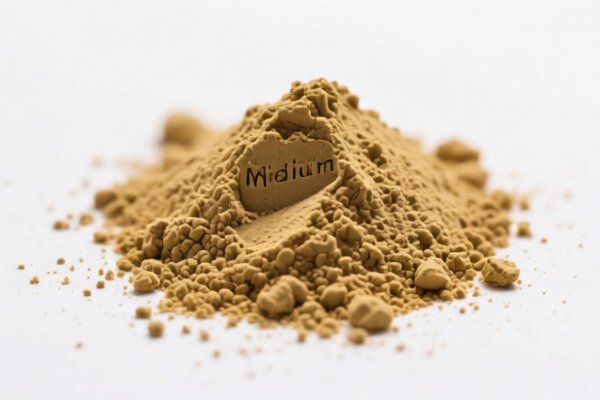
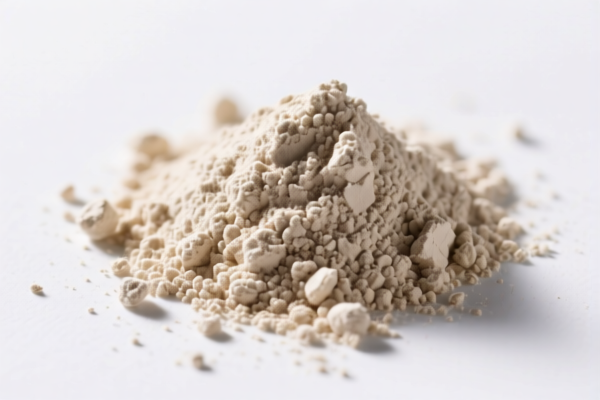
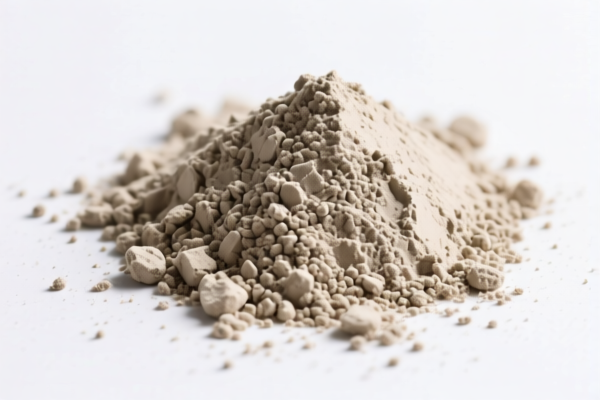
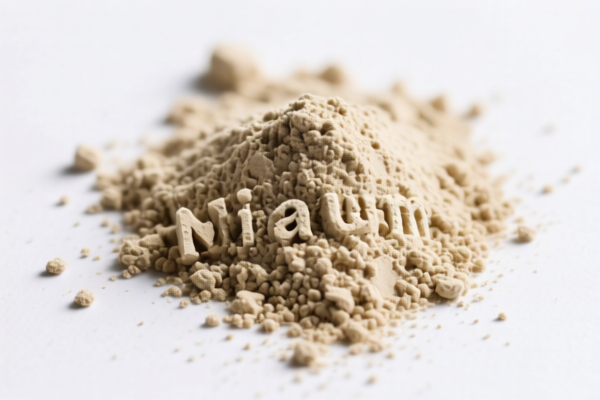
AI Analysis
🌿 Inulin Powder (Chicory Root Extract)
🌐 HS Code Reference & Clearance Guide | 2026 Latest Tariff Analysis | Professional Compliance Strategy
📌 I. Product Definition & Classification: What Exactly is "Inulin"?
Inulin is a type of soluble dietary fiber and prebiotic, naturally found in plants such as chicory root, Jerusalem artichoke, garlic, and bananas. In international trade, it is primarily classified as a food ingredient or nutritional supplement.
Key Distinctions: 1. Dietary Fiber / Prebiotic Ingredient: Powdered inulin extracted from chicory root, used in food, beverages, and supplements. This is the most common form. 2. Pharmaceutical Grade: Highly purified inulin used for diagnostic purposes (e.g., measuring kidney function). Rare in general commodity trade. 3. Raw Plant Material: Dried chicory root or powder (not isolated inulin) → Classified differently (e.g., Chapter 12).
⚠️ Critical Classification Point:
- If the product is isolated inulin powder (high purity, functional ingredient) → HS 2106.90 or HS 1302.19 (depending on processing/purity).
- If it is chicory root powder (not isolated inulin) → HS 1302.19 or HS 0902.90 (if roasted).
- Most commercial "Inulin Powder" for food/beverage use falls under 2106.90 or 1302.19.
📦 II. HS Code Classification Details (2026 Latest Tariff Schedule)
| HS Code | Product Description | Application | Purity/Processing Level |
|---|---|---|---|
2106.90.92.00 |
Food preparations not elsewhere specified (including inulin powder) | Food additives, prebiotic supplements, bakery products | High purity, isolated inulin |
1302.19.90.00 |
Vegetable saps and extracts (including inulin) | Industrial, food, or pharmaceutical use | Extracted, purified vegetable product |
1212.99.60.00 |
Chicory roots (other than fresh) | Raw material, not isolated inulin | Dried, powdered root (not pure inulin) |
0902.90.00.00 |
Other tea, whether or not flavored | If roasted chicory root used as coffee substitute | Roasted chicory root powder |
1901.90.00.00 |
Malt extract and other food preparations of flour | Blended food ingredients | Mixtures containing inulin |
🔍 Key Reminder:
- Most commercial Inulin Powder (from chicory root, used as a fiber/prebiotic) is typically classified under2106.90.92.00(as a food preparation) or1302.19.90.00(as a vegetable extract).
- Pure isolated inulin often falls under2106.90because it is a "preparation" for human consumption.
- Do not confuse with raw chicory root (1212.99.60.00) – if the inulin is extracted or isolated, it is no longer a simple root product.
💰 III. 2026 Latest Tariff Rate Breakdown (Including Surcharges)
✅ Applicable Country: United States (US)
✅ Origin: China (CN)
✅ Effective Date: November 10, 2025 (and subsequent imports)
🎯 1. 2106.90.92.00 – Food Preparations (Inulin Powder)
| Item | Detail |
|---|---|
| Base Rate | 6% (ad valorem) |
| USITC Surcharge | +25% (under USITC Footnote 9903.88.01) |
| IEEPA Surcharge | +10% (for Chinese/HK products, from Nov 10, 2025) |
| Total Rate | 41% |
| Tax Calculation | CIF Value × 41% |
| De Minimis Exemption? | ❌ Not Allowed (deny_de_minimis) |
| Legal Basis Path | IEEPA:9903.01.25 → IEEPA:9903.01.24 → USITC:2106.90.92.00 → FOOTNOTE:9903.88.01 |
📌 Explanation:
- The 25% USITC surcharge is part of the Section 301 tariffs on Chinese goods.
- The 10% IEEPA surcharge is an additional对华 tariff effective from late 2025.
- Total 41% is a high tariff rate, significantly impacting cost margins.
🎯 2. 1302.19.90.00 – Vegetable Saps and Extracts (Including Inulin)
| Item | Detail |
|---|---|
| Base Rate | 6% |
| USITC Surcharge | +25% |
| IEEPA Surcharge | +10% |
| Total Rate | 41% |
| Tax Calculation | CIF Value × 41% |
| De Minimis Exemption? | ❌ Not Allowed |
| Legal Basis Path | IEEPA:9901.25 → IEEPA:9903.01.24 → USITC:1302.19.90.00 → FOOTNOTE:9903.88.01 |
📌 Note:
- Same tax burden as2106.90.92.00.
- If your supplier provides a Certificate of Analysis (CoA) showing inulin is a "vegetable extract," customs may accept1302.19.90.00.
- However, if labeled as "food ingredient" or "prebiotic powder,"2106.90.92.00is more likely.
🛠️ IV. Clearance Practical Advice (Battle-Tested Pitfall Avoidance)
✅ 1. Required Documentation Checklist
| Document | Mandatory? | Details |
|---|---|---|
| ✅ Product Specification Sheet | ✔️ | Purity level, origin (chicory root), inulin content (e.g., 90%, 98%) |
| ✅ Certificate of Analysis (CoA) | ✔️ | Lab test results confirming inulin type and purity |
| ✅ Product Photos (Labeling) | ✔️ | Clear view of ingredient list, usage instructions |
| ✅ FCC/CE/RoHS Certificates | ✔️ | If marketed as a supplement, safety certifications are crucial |
| ✅ Commercial Invoice | ✔️ | Must specify "Inulin Powder, Dietary Fiber, Prebiotic" – do not use vague terms like "herbal powder" |
| ✅ Certificate of Origin (CO) | ✔️ | If from non-China country, to avoid Section 301 tariffs |
| ✅ Packing List | ✔️ | Net weight, gross weight, packaging type |
✅ 2. Declaration Tips (Key Mantra)
🔥 "Inulin is a food prep, not a root; declare purity, avoid confusion!"
| Scenario | Correct Declaration | Wrong Practice |
|---|---|---|
| Pure Inulin Powder (food grade) | 2106.90.92.00 – "Inulin Powder, Dietary Fiber" |
Declare as "Chicory Root Powder" (1212.99.60.00) → Customs will reclassify & penalize |
| Blended Fiber Mix | 1901.90.00.00 or 2106.90.92.00 |
Declare as single ingredient → Misclassification |
| Raw Dried Chicory Root | 1212.99.60.00 |
Declare as "Inulin" → Wrong HS Code |
| Supplement Capsules | 2106.90.92.00 |
Declare as "medicine" → FDA & Customs scrutiny |
✅ 3. Special Cases
| Situation | Handling Advice |
|---|---|
| OEM/Private Label Inulin | Provide contract + CoA; avoid generic names |
| Inulin Blended with Other Fibers | Declare as "Food Preparation" (2106.90.92.00) |
| Inulin for Pharmaceutical Use | May require FDA prior notice; higher scrutiny |
| Inulin from Non-China Origin | Apply for preferential tariff if from ASEAN, Mexico, etc. (IEEPA exemption possible) |
🌍 V. Global Market Comparison (2026 Latest)
| Country/Region | Recommended HS Code | Tariff | Certification | Notes |
|---|---|---|---|---|
| 🇺🇸 USA | 2106.90.92.00 |
41% (China origin) | FDA + GMP | High tariff; consider non-China origin |
| 🇨🇳 China | 2106.90.92.00 |
6% | GB Standard | No extra surcharges |
| 🇪🇺 EU | 2106.90.99 |
0% (if certified organic) | EU Organic + EFSA | Favorable for organic inulin |
| 🇦🇺 Australia | 2106.90.90 |
5% | FSANZ | Standard food import rules |
| 🇯🇵 Japan | 2106.90.90 |
0% | JAS Organic | No surcharges |
📌 Conclusion:
- USA has the highest tariff burden (41%) for Chinese-origin inulin powder.
- EU, Japan, Australia have 0–5% rates, making them more cost-effective markets.
- Consider shifting sourcing to Vietnam, Thailand, or Mexico to avoid Section 301 tariffs.
📌 VI. Common Mistakes & Pitfalls (Lessons Learned)
❌ Mistake 1: Declaring "Inulin Powder" as "Chicory Root Powder" (1212.99.60.00)
👉 Consequence: Customs reclassifies to 2106.90.92.00 → Penalty + Back Tax + Delay
❌ Mistake 2: Not providing a Certificate of Analysis (CoA)
👉 Consequence: Customs cannot verify purity → Hold for Inspection + Storage Fees
❌ Mistake 3: Vague invoice description: "Herbal Powder"
👉 Consequence: High risk of misclassification → Audit Trigger + Fines
❌ Mistake 4: Ignoring IEEPA Surcharge for non-China origin goods
👉 Consequence: If proven to be Chinese-origin, 10% IEEPA applies retroactively
✅ Correct Practice:
"Inulin Powder, 90% Purity, Chicory Root Extract, Dietary Fiber, Prebiotic Supplement, FDA Compliant, Model XYZ"
🎯 VII. Conclusion: Smart Classification, Lower Costs, Faster Clearance!
🎯 Remember the Mantra:
🔹 "Inulin is a preparation, not a root; declare purity, avoid penalties!"
🔹 "HS Code is key; 41% vs 0% – declare correctly, save thousands!"
📌 Pro Tip:
- If your inulin powder is originating from Vietnam, Thailand, or Mexico, you may qualify for IEEPA exemption, reducing tariffs to 0–5%.
- Consider applying for an Advance Ruling from CBP to confirm HS Code and tariff liability before shipment.
📣 Immediate Action:
📞 Contact a licensed customs broker + Provide Product Spec + Apply for Advance Ruling
🚀 Ensure smooth clearance, minimize costs, maximize profits!
✨ Professional clearance starts with accurate classification!
💼 Every percentage point counts – get it right from the start!
Customer Reviews
About HS Code Classification
The Harmonized System (HS) is an internationally standardized nomenclature developed by the World Customs Organization (WCO) to classify traded products. Over 200 countries use the HS system as the basis for customs tariffs, trade statistics, and import/export regulations.
Each HS code follows a hierarchical structure:
- Chapter (2 digits) — Broad category of goods (e.g., Chapter 84: Machinery and Mechanical Appliances)
- Heading (4 digits) — More specific grouping within the chapter
- Subheading (6 digits) — Internationally standardized breakdown, used by all WCO member countries
- National subdivisions (8-10 digits) — Country-specific extensions for further classification, such as US HTSUS 10-digit codes
Correct HS code classification is essential for smooth customs clearance, accurate duty payment, and compliance with trade regulations. Misclassification can lead to customs delays, overpayment of duties, or penalties.
When importing from CN to US, the applicable tariff rates may include:
- Most-Favored-Nation (MFN) rate — The standard duty rate applied to WTO members
- General rate — Applied to countries without trade agreements
- Trade remedy duties — Additional tariffs such as Section 301 (anti-dumping), Section 232 (national security), or countervailing duties
The information provided on this page is for reference purposes only. For official classification, please consult with your local customs authority or a licensed customs broker.