Inverter
CN → US| HS Code | Tariff Rate | Origin | Destination | Doc |
|---|---|---|---|---|
| 8504409570 | 10.0% | CN | US | Official Doc |
| 8501801000 | 12.5% | CN | US | Official Doc |
| 8537109170 | 37.7% | CN | US | Official Doc |
| 8501809000 | 37.4% | CN | US | Official Doc |
Product Images
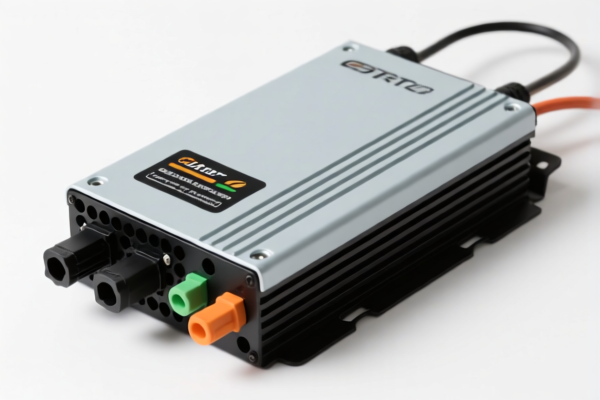
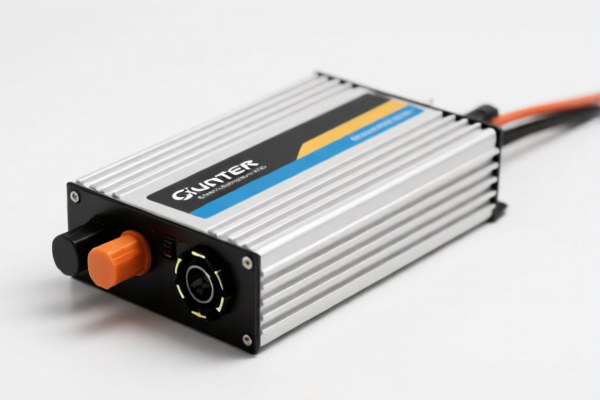
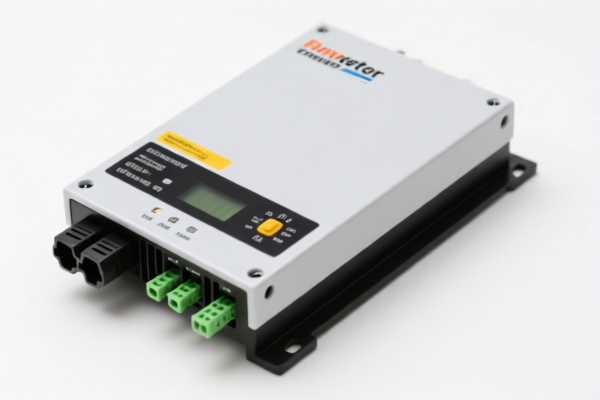
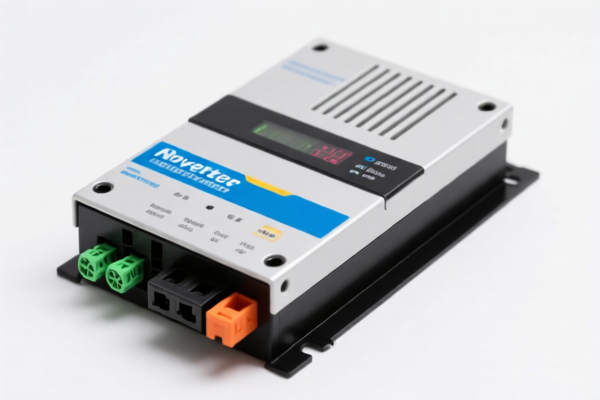
AI Analysis
⚡ Inverter (Power Conversion Equipment)
🌐 HS Code Reference & Customs Clearance Guide | 2026 Latest Tariff Analysis | Professional-Level Strategy
📌 Part 1: Product Definition & Classification: Do You Really Understand "Inverters"?
An inverter is a critical power conversion device that transforms Direct Current (DC) into Alternating Current (AC). In international trade, inverters are classified based on their specific function, voltage control capabilities, and end-use application. Misclassification can lead to severe tariff penalties, especially under current US trade policies.
⚠️ Key Distinction Points:
- If the device is strictly for power conversion (DC to AC) without primary control functions → Often falls under 8504 or 8501;
- If the device includes voltage control, regulation, or distribution features → May fall under 8537;
- If it is specifically a photovoltaic (PV) AC generator → Falls under 8501.80.
📦 Part 2: HS Code Classification Details (2026 Latest Tariff Authority Comparison)
Based on the provided data, here are the four potential HS Codes for Inverters, with detailed tax breakdowns:
| HS Code | Product Description | Logic for Classification | Total Tax Rate |
|---|---|---|---|
8504.40.95.70 |
Static Converters (Inverters) | Matches the specific use case of "Inverter" perfectly. Recognized as pure power conversion equipment. | 10.0% |
8501.80.10.00 |
Photovoltaic AC Generators | "Inverters" fit the characteristics of PV AC generators. Based on the "Possible Match" principle. | 12.5% |
8537.10.91.70 |
Electric Control Panels (<1kV) | Inverters involve voltage control and distribution. Fits the attribute of electrical control equipment for voltages ≤1,000V. | 37.7% |
8501.80.90.00 |
Other DC Machines/Generators | Function is DC-to-AC conversion, matching "PV AC Generator" conversion traits. No conflict with the "Other" category. | 37.4% |
🔍 Critical Reminder:
-8504.40.95.70offers the lowest tariff (10%) if the product is a standard static converter/inverter;
-8537.10.91.70and8501.80.90.00carry high tariffs (37.4%–37.7%) due to additional USITC Section 301 duties;
-8501.80.10.00is a mid-tier option (12.5%) but is specific to PV applications.
💰 Part 3: 2026 Latest Tariff Rate Details (Including Surcharges & Policy Add-ons)
✅ Applicable Country: United States (US)
✅ Country of Origin: China (CN)
✅ Effective Date: Post-2025 (including subsequent imports)
🎯 1. 8504.40.95.70 —— Static Converters (Inverters)
| Item | Details |
|---|---|
| Base Duty Rate | 0.0% |
| USITC Section 301 Surcharge | 0.0% |
| 122 Clause Tariff | 10% |
| Total Tax Rate | 10.0% |
| Tax Calculation | CIF Value × 10% |
| De Minimis Exemption | ❌ Not Available |
| Legal Basis Path | Section 122 → USITC:8504.40.95.70 |
📌 Explanation:
- This classification is the most favorable for standard inverters;
- The 10% tariff is attributed to the "122 Clause Tariff";
- No additional USITC Section 301 duties apply, keeping costs manageable.
🎯 2. 8501.80.10.00 —— Photovoltaic AC Generators
| Item | Details |
|---|---|
| Base Duty Rate | 2.5% |
| USITC Section 301 Surcharge | 0.0% |
| 122 Clause Tariff | 10% |
| Total Tax Rate | 12.5% |
| Tax Calculation | CIF Value × 12.5% |
| De Minimis Exemption | ❌ Not Available |
| Legal Basis Path | Section 122 → USITC:8501.80.10.00 |
📌 Note:
- Applicable if the inverter is explicitly designed for Photovoltaic (Solar) Systems;
- Slightly higher than8504.40.95.70but still significantly lower than the 37%+ brackets;
- Requires clear documentation proving PV-specific usage.
🎯 3. 8537.10.91.70 —— Electric Control Panels (≤1,000V)
| Item | Details |
|---|---|
| Base Duty Rate | 2.7% |
| USITC Section 301 Surcharge | 25.0% |
| 122 Clause Tariff | 10% |
| Total Tax Rate | 37.7% |
| Tax Calculation | CIF Value × 37.7% |
| De Minimis Exemption | ❌ Not Available |
| Legal Basis Path | Section 301 → Section 122 → USITC:8537.10.91.70 |
📌 Warning:
- This classification triggers both USITC Section 301 duties (25%) and 122 Clause duties (10%);
- Suitable only if the inverter is integrated into a larger control panel system for voltage regulation/distribution;
- High cost implication—avoid unless necessary for functional justification.
🎯 4. 8501.80.90.00 —— Other DC Machines/Generators
| Item | Details |
|---|---|
| Base Duty Rate | 2.4% |
| USITC Section 301 Surcharge | 25.0% |
| 122 Clause Tariff | 10% |
| Total Tax Rate | 37.4% |
| Tax Calculation | CIF Value × 37.4% |
| De Minimis Exemption | ❌ Not Available |
| Legal Basis Path | Section 301 → Section 122 → USITC:8501.80.90.00 |
📌 Warning:
- Classified under "Other" because it doesn't fit the specific "PV Generator" sub-heading precisely, but still involves conversion;
- Also subject to high combined duties (25% + 10%);
- Generally not recommended unless8501.80.10.00is not applicable.
🛠️ Part 4: Customs Clearance Practical Advice (Battle-Tested Pitfall Guide)
✅ 1. Preparation Checklist (All Mandatory)
| Document | Required? | Description |
|---|---|---|
| ✅ Product Specification Sheet | ✔️ | Must include input/output voltage, frequency, power rating, conversion efficiency |
| ✅ Circuit Diagram / Internal Structure | ✔️ | To prove whether it is a pure inverter (8504) or a control panel (8537) |
| ✅ Product Photos (with Nameplate) | ✔️ | Clear view of model number, brand, input/output terminals |
| ✅ Third-Party Test Reports | ✔️ | UL, CE, RoHS, FCC (if applicable) |
| ✅ Commercial Invoice | ✔️ | Must clearly state "Inverter" or "Power Conversion Equipment" |
| ✅ Certificate of Origin (CO) | ✔️ | To verify Country of Origin (China) |
| ✅ Packing List | ✔️ | Clarify if inverters are shipped as standalone units or integrated into panels |
✅ 2. Declaration Strategies (Key Mantra)
🔥 “Pure Conversion = 8504; Control Panel = 8537; PV Specific = 8501.80”
| Scenario | Correct Declaration | Wrong Practice |
|---|---|---|
| Standard DC-to-AC Inverter | 8504.40.95.70 |
Misdeclare as 8537 → 37.7% |
| Solar PV Inverter | 8501.80.10.00 |
Misdeclare as general converter → 10% (if eligible) or 12.5% |
| Inverter Integrated in Control Panel | 8537.10.91.70 |
Declare as separate inverter → Risk of Audit |
| Generic DC Machine | 8501.80.90.00 |
Misdeclare as 8504 → Underpayment Penalty |
✅ 3. Special Handling Cases
| Situation | Recommendation |
|---|---|
| OEM Custom Inverters | Provide client orders + technical drawings to justify 8504.40.95.70 |
| Inverter with Built-in Control Module | If control is secondary, stick with 8504; if primary, consider 8537 (but expect high tax) |
| Hybrid Inverters (Solar + Battery) | Clearly define primary function. If PV generation is key, use 8501.80.10.00 |
| High-Voltage Industrial Inverters | If >1,000V, different rules apply. Ensure voltage rating is clearly stated |
🌍 Part 5: Global Market Comparison (2026 Latest)
| Country/Region | Recommended HS Code | Tariff (China Origin) | Certification Requirements | Notes |
|---|---|---|---|---|
| 🇺🇸 USA | 8504.40.95.70 |
10% | UL + FCC | Lowest tax option for standard inverters |
| 🇺🇸 USA | 8537.10.91.70 |
37.7% | UL + FCC | Avoid unless functionally required |
| 🇨🇳 China | 8504.40.95.70 |
0% | CCC + RoHS | No extra surcharges |
| 🇪🇺 EU | 8504.40.95.70 |
0% (if CE compliant) | CE + ErP | No surcharges |
| 🇬🇧 UK | 8504.40.95.70 |
0% | UKCA | No surcharges |
| 🇦🇺 Australia | 8504.40.95.70 |
5% | RCM | No surcharges |
📌 Conclusion:
- The US is the only major market imposing significant surcharges on Chinese inverters;
-8504.40.95.70is the optimal classification to minimize costs (10% vs. 37%+);
- Accurate functional description is crucial to avoid reclassification by US Customs.
📌 Part 6: Common Errors & Pitfall Guide (Lessons Learned)
❌ Error 1: Declaring a "Control Panel with Inverter" as just "Inverter"
👉 Consequence: If Customs determines control function is primary, they may reclassify to 8537 → Back taxes + Penalties!
❌ Error 2: Declaring a "PV Inverter" as a generic converter (8504) without proof
👉 Consequence: Risk of rejection or audit. If approved, 8504 is cheaper (10%), but if rejected as "PV-specific," you might face different duties. Be transparent.
❌ Error 3: Missing Voltage Details
👉 Consequence: If voltage >1,000V, 8537 classification might not apply. Clear voltage specs prevent misclassification.
❌ Error 4: Using vague terms like "Power Adapter"
👉 Consequence: Delays in clearance. Use precise terms: "Static Inverter," "DC-AC Converter," "Photovoltaic Inverter."
✅ Correct Approach:
"Static Inverter, DC-to-AC, 5kW, 48V DC Input, 120V/240V AC Output, Model XYZ, UL Certified, for Solar PV System"
🎯 Part 7: Conclusion: Precise Classification Saves Money!
🎯 Key Takeaways:
🔹 “Pure Inverter = 8504.40.95.70 (10%)” is the cheapest and safest option for standard inverters;
🔹 “Control Panel Function = 8537.10.91.70 (37.7%)” is expensive—avoid unless necessary;
🔹 “PV Specific = 8501.80.10.00 (12.5%)” is a viable alternative for solar products;
🔹 Documentation is Key: Circuit diagrams and specifications must match the declared HS Code.
📌 Pro Tip:
If your inverters are shipped from Vietnam, Mexico, or Thailand, you may qualify for IEEPA Exemptions, reducing rates to 0%~5%.
Recommend Advance Rulings for high-value shipments to ensure classification certainty.
📣 Take Action Now:
📞 Contact a Professional Customs Broker + Provide Product Specs + Apply for HS Code Advance Ruling
🚀 Ensure your inverters clear customs smoothly, maximize profits, and scale efficiently!
✨ Professional Clearance Starts with Accurate Classification!
💼 Every Percentage Point Matters—Optimize Your Tariff Today!
Customer Reviews
About HS Code Classification
The Harmonized System (HS) is an internationally standardized nomenclature developed by the World Customs Organization (WCO) to classify traded products. Over 200 countries use the HS system as the basis for customs tariffs, trade statistics, and import/export regulations.
Each HS code follows a hierarchical structure:
- Chapter (2 digits) — Broad category of goods (e.g., Chapter 84: Machinery and Mechanical Appliances)
- Heading (4 digits) — More specific grouping within the chapter
- Subheading (6 digits) — Internationally standardized breakdown, used by all WCO member countries
- National subdivisions (8-10 digits) — Country-specific extensions for further classification, such as US HTSUS 10-digit codes
Correct HS code classification is essential for smooth customs clearance, accurate duty payment, and compliance with trade regulations. Misclassification can lead to customs delays, overpayment of duties, or penalties.
When importing from CN to US, the applicable tariff rates may include:
- Most-Favored-Nation (MFN) rate — The standard duty rate applied to WTO members
- General rate — Applied to countries without trade agreements
- Trade remedy duties — Additional tariffs such as Section 301 (anti-dumping), Section 232 (national security), or countervailing duties
The information provided on this page is for reference purposes only. For official classification, please consult with your local customs authority or a licensed customs broker.