Iron Shell Sealing Machine
CN → US| HS Code | Tariff Rate | Origin | Destination | Doc |
|---|---|---|---|---|
| 8422409160 | 35.0% | CN | US | Official Doc |
| 8422301100 | 35.0% | CN | US | Official Doc |
| 8422309160 | 35.0% | CN | US | Official Doc |
| 8422309150 | 35.0% | CN | US | Official Doc |
Product Images
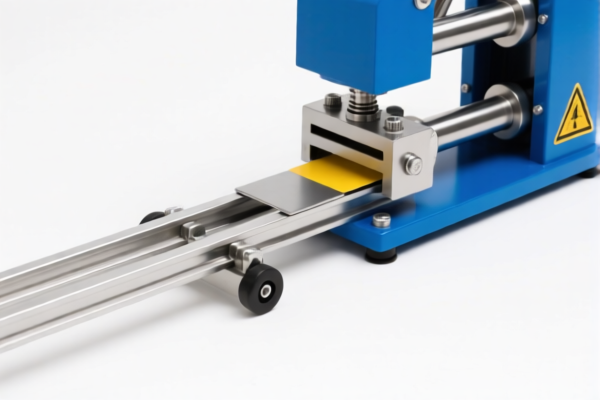
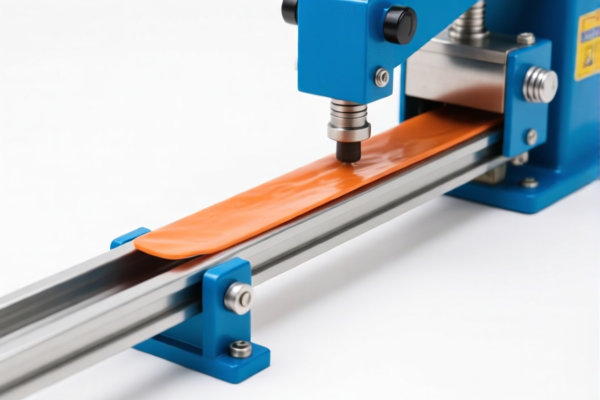
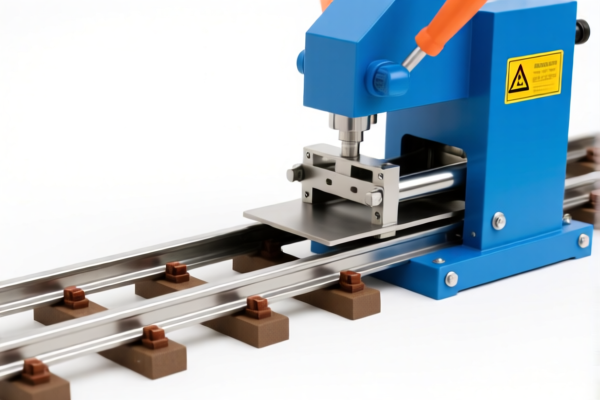
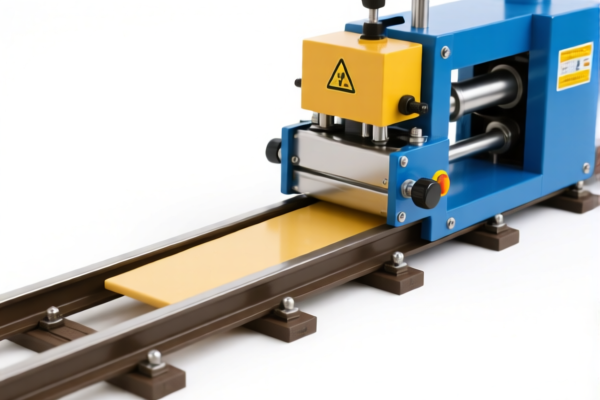
AI Analysis
🏭 Iron Shell Sealing Machine (Metal Casing Sealing Devices)
🌐 HS Code Reference & Customs Clearance Guide | 2026 Latest Tariff Analysis | Professional Clearance Strategy
📌 I. Product Definition & Classification: What Exactly Is an "Iron Shell Sealing Machine"?
An Iron Shell Sealing Machine refers to industrial packaging equipment used for closing, sealing, or hermetically sealing containers. The term "Iron Shell" (or Metal Casing) indicates the primary material of the machine’s body, which is metallic. In international trade, these devices fall under Chapter 84 (Nuclear reactors, boilers, machinery and mechanical appliances).
The core function is filling, closing, sealing, or labeling packaging materials (bottles, bags, cans, etc.). Due to the specific mention of "Iron Shell," we must determine if it is a specialized machine or a general-purpose sealing device.
⚠️ Key Distinction Point:
- If the machine is dedicated specifically to sealing and the description emphasizes its mechanical nature with a metal body, it generally falls under 8422.40 (Bottling or capping machines) or 8422.30 (Machinery for filling/closing/sealing).
- The provided data suggests four potential HS Codes, ranging from specific "Sealing Machines" (8422.40) to general "Closing/Sealing Machinery" (8422.30).
📦 II. HS Code Classification Details (Based on Provided Data)
The following HS Codes are derived from the provided dataset. All items share the same tax structure due to the origin (China) and destination (US) policy.
| HS Code | Product Description & Logic | Application Scenario | Key Feature |
|---|---|---|---|
8422.40.91.60 |
Sealing Machine (Specific) Matched use: Sealing machine; Form: Machine; Material: Iron shell (Metal); No conflict with general sealing machinery. |
Specialized sealing units where the primary identity is "Sealing." | ✅ Specific Match |
8422.30.11.00 |
Filling/Closing Machinery Matched use: Sealing machinery; Iron shell inferred as metal body; Consistent with standard packaging machinery norms. |
General packaging lines focusing on filling or closing. | ✅ Standard Match |
8422.30.91.60 |
Other Filling/Closing Machinery (Fallback) Matched function: Closing/Sealing operations; Fits the definition of filling, closing, sealing machinery; Falls under residual categories. |
Complex machines performing multiple functions or less specific sealing tasks. | ✅ Fallback/General |
8422.30.91.50 |
Other Filling/Closing Machinery Matched function: Sealing or closing operations; Fits the purpose description for filling, closing, sealing. |
Similar to above, distinct by specific sub-category coding for residual types. | ✅ Fallback/General |
🔍 Important Note:
- All four HS Codes listed in the data carry the exact same tax rate of 35%.
- The distinction lies in the customs interpretation of the machine's primary function.8422.40is typically for bottling/capping/sealing specific types, while8422.30is broader for filling/closing/sealing machinery.
- "Iron Shell": This physical characteristic confirms the material is metal, which supports the classification under machinery rather than plastic accessories or tools.
💰 III. 2026 Latest Tariff Rate Breakdown (Including Surtaxes & Policy Add-ons)
✅ Applicable Country: United States (US)
✅ Country of Origin: China (CN)
✅ Effective Time: Current policies apply (25% + 10% structure)
🎯 1. All Listed HS Codes (8422.40.91.60, 8422.30.11.00, 8422.30.91.60, 8422.30.91.50)
| Item | Content |
|---|---|
| Base Duty Rate | 0.0% (Ad Valorem) |
| Section 301 Surcharge | +25.0% (USITC Footnote for Section 301 tariffs) |
| Section 122/IEEPA Surcharge | +10.0% (Additional tariffs on Chinese imports) |
| Total Duty Rate | 35.0% |
| Tax Calculation | CIF Value × 35% |
| De Minimis Exemption | ❌ Not Eligible (Section 301 and IEEPA tariffs generally do not apply to de minimis shipments below $800) |
| Legal Basis Path | USITC:8422.xxxx → SECTION_301:25% → IEEPA/SECTION_122:10% |
📌 Explanation:
- The 0% base rate reflects the standard MFN (Most Favored Nation) duty for packing machinery.
- The 25% Section 301 tariff is the primary burden for Chinese-made machinery.
- The 10% Section 122/IEEPA tariff is an additional layer imposed on specific Chinese goods.
- Total 35% is a significant cost driver. Importers must factor this into their landed cost calculations.
🛠️ IV. Customs Clearance Practical Advice (Battle-Tested Pitfall Guide)
✅ 1. Required Documentation Checklist (Missing = Delays)
| Document | Mandatory? | Explanation |
|---|---|---|
| ✅ Product Specification Sheet | ✔️ | Must detail: Machine purpose (Sealing/Closing), Material (Metal/Iron Shell), Voltage, Power, Dimensions. |
| ✅ Technical Manual/Operation Guide | ✔️ | Helps Customs verify the "Primary Function." Does it seal? Does it fill? |
| ✅ Commercial Invoice | ✔️ | Must clearly state: "Iron Shell Sealing Machine, Model XYZ, Made in China." Avoid vague terms like "Packaging Part." |
| ✅ Packing List | ✔️ | Clearly list the main machine and any accessories. Do not split main machine and accessories into different HTS codes unless justified. |
| ✅ Photos of the Machine | ✔️ | Show the "Iron Shell" (metal casing) and any labels/model numbers. |
| ✅ Country of Origin Certificate | ✔️ | Confirming "Made in China" is critical for applying the correct surtaxes. |
✅ 2. Declaration Tips (Key Mnemonics)
🔥 "Metal Body, Sealing Function, Declare as Machinery, Not Tool!"
| Situation | Correct Declaration | Wrong Practice |
|---|---|---|
| Machine with metal casing performing sealing | 8422.40.91.60 or 8422.30.xx.xx |
Misclassifying as "Tool" (e.g., Chapter 82) → 100%+ tariff |
| "Iron Shell" mentioned | Explicitly state "Metal Casing" or "Iron Body" in description | Omitting material → Customs may question the classification |
| Function is "Sealing" | Use keywords: "Sealing Machine," "Closing Machine" | Using vague terms: "Packaging Helper" → Audit risk |
| Accessories (Nozzles, Jigs) | Declare with main machine if bundled | Splitting accessories separately → Higher combined duty |
✅ 3. Special Handling Scenarios
| Scenario | Handling Advice |
|---|---|
| OEM Sealing Machines | Provide the customer’s order and design specs. If the machine is customized, ensure the "Primary Function" (Sealing) is dominant over any auxiliary functions. |
| Combined Filling & Sealing | If the machine fills AND seals, it still falls under 8422.30. The "Sealing" aspect is covered. Do not split into two entries. |
| Manual vs. Automatic | The provided HS codes (8422.40/30) typically cover automatic or semi-automatic machinery. If it is a simple hand-held sealer, it might be classified differently (e.g., tools). Verify if this is an automatic machine. |
| Origin Fraud Risk | Ensure the "Made in China" label is accurate. Misdeclaration of origin to avoid 35% duties is a severe violation. |
🌍 V. Global Market Clearance Comparison (2026 Update)
| Country/Region | Recommended HS Code | Duty Rate (China Origin) | Certification Requirements | Notes |
|---|---|---|---|---|
| 🇺🇸 USA | 8422.40.91.60 / 8422.30.xx.xx |
35% (0% Base + 25% Sec 301 + 10% Sec 122) | None specific for duty | High Duty Impact. Critical to calculate landed cost accurately. |
| 🇨🇳 China | 8422.40.91.60 / 8422.30.xx.xx |
0% (Import Duty) | CCC (if applicable) | Standard trade flow. |
| 🇪🇺 EU | 8422.40.00 / 8422.30.00 |
0% - 1.7% | CE Marking, RoHS | No Section 301 equivalent. Much lower duty burden than US. |
| 🇬🇧 UK | 8422.40.00 / 8422.30.00 |
0% - 1.7% | UKCA Marking | Post-Brexit rules apply, but generally low duty for machinery. |
| 🇯🇵 Japan | 8422.40.000 / 8422.30.000 |
0% - 3.2% | PSE (if electrical) | No additional surtaxes for Chinese machinery. |
📌 Conclusion:
- The US market is the most challenging for "Iron Shell Sealing Machines" due to the 35% total tariff.
- EU, UK, and Japan are significantly more cost-effective for importing these machines from China.
- If targeting the US, consider supply chain diversification (e.g., sourcing from Vietnam/Malaysia if possible) to avoid the 25% Section 301 and 10% IEEPA tariffs.
📌 VI. Common Mistakes & Pitfall Guide (Lessons Learned)
❌ Mistake 1: Classifying as "Part of Machinery" (Chapter 84 Subheadings without full machine status)
👉 Consequence: If deemed a part, it might face 89.5% or higher rates if misclassified, or be rejected for lack of primary function proof.
❌ Mistake 2: Ignoring the "Iron Shell" Material
👉 Consequence: Customs may question if it’s a plastic tool. Clearly stating "Metal Casing" supports the Machinery classification.
❌ Mistake 3: Using Generic Terms like "Packaging Machine"
👉 Consequence: Vague descriptions lead to Customs Audits. Use specific terms: "Automatic Sealing Machine, Metal Body."
❌ Mistake 4: Assuming 0% Base Rate Means 0% Total Duty
👉 Consequence: Forgetting the 35% Surtax leads to massive unexpected costs. Always calculate CIF × 35%.
✅ Correct Declaration Example:
"Automatic Sealing Machine, Model XYZ, Main Body Material: Iron/Steel, Function: Sealing/Packaging, Made in China, HTS: 8422.40.91.60"
🎯 VII. Conclusion: Professional Declaration, Cost Optimization!
🎯 Key Takeaway:
🔹 "Iron Shell = Metal Body = Machinery (Ch 84)"
🔹 "China Origin = 35% Total Duty (0+25+10)"
🔹 "Accurate Description Prevents Audits"
📌 Pro Tip:
If you are shipping to the US, apply for an Advance Ruling with US Customs if the machine has complex functions (e.g., filling + sealing). This provides legal certainty on the correct HS Code and avoids post-entry adjustments.
📣 Action Plan:
📞 Consult a US Customs Broker to verify the specific subheading (
8422.40vs8422.30) based on your machine’s exact operation.
💰 Budget for 35% Duty in your pricing model.
🚀 Optimize Supply Chain if the 35% duty is prohibitive; consider non-China origins for US-bound goods.
✨ Precision in Classification = Profit in Pocket!
💼 Don't Let 35% Surtaxes Eat Your Margins!
Customer Reviews
About HS Code Classification
The Harmonized System (HS) is an internationally standardized nomenclature developed by the World Customs Organization (WCO) to classify traded products. Over 200 countries use the HS system as the basis for customs tariffs, trade statistics, and import/export regulations.
Each HS code follows a hierarchical structure:
- Chapter (2 digits) — Broad category of goods (e.g., Chapter 84: Machinery and Mechanical Appliances)
- Heading (4 digits) — More specific grouping within the chapter
- Subheading (6 digits) — Internationally standardized breakdown, used by all WCO member countries
- National subdivisions (8-10 digits) — Country-specific extensions for further classification, such as US HTSUS 10-digit codes
Correct HS code classification is essential for smooth customs clearance, accurate duty payment, and compliance with trade regulations. Misclassification can lead to customs delays, overpayment of duties, or penalties.
When importing from CN to US, the applicable tariff rates may include:
- Most-Favored-Nation (MFN) rate — The standard duty rate applied to WTO members
- General rate — Applied to countries without trade agreements
- Trade remedy duties — Additional tariffs such as Section 301 (anti-dumping), Section 232 (national security), or countervailing duties
The information provided on this page is for reference purposes only. For official classification, please consult with your local customs authority or a licensed customs broker.