Iron or Steel Dining Table
CN → US| HS Code | Tariff Rate | Origin | Destination | Doc |
|---|---|---|---|---|
| 7323999030 | 88.4% | CN | US | Official Doc |
| 7323999080 | 88.4% | CN | US | Official Doc |
| 7326908688 | 87.9% | CN | US | Official Doc |
| 7323995030 | 60.0% | CN | US | Official Doc |
| 7310290065 | 85.0% | CN | US | Official Doc |
Product Images
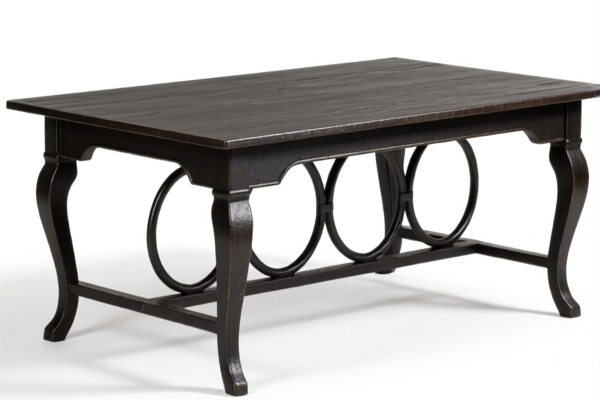
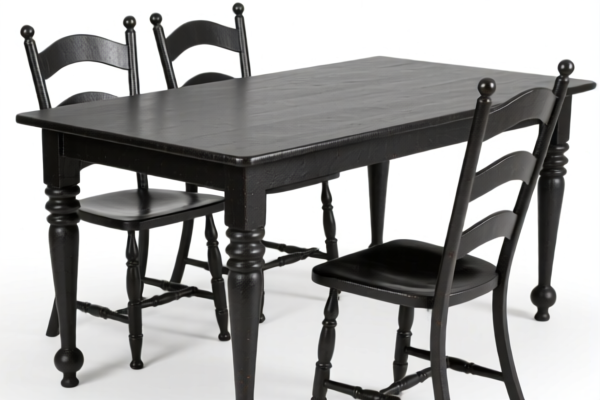
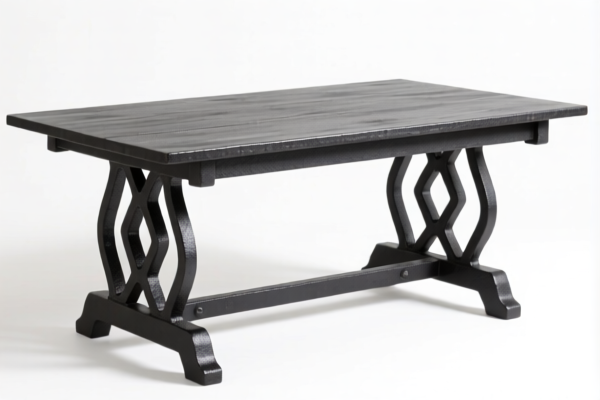
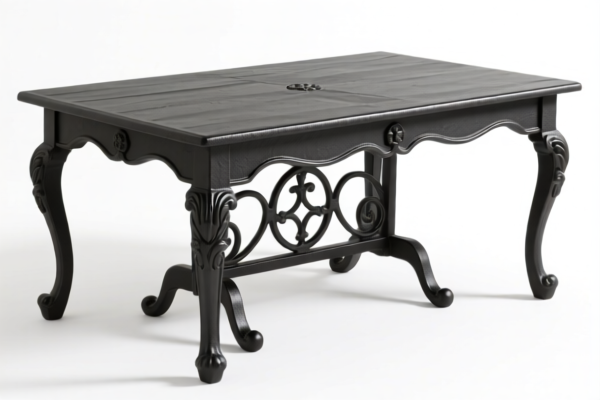
AI Analysis
🍽️ Iron or Steel Dining Table (Household Tableware & Tabletop Items)
🌐 HS Code Reference & Customs Clearance Guide | 2026 Latest Tariff Analysis | Strategic Compliance Strategy
📌 I. Product Definition & Classification: What Exactly Is an "Iron or Steel Dining Table"?
In international trade, "Iron or Steel Dining Tables" are not just furniture; they are strictly classified under Chapter 73 (Articles of Iron or Steel) as household, kitchen, or other domestic utensils. The classification hinges on the material, shape, and intended use.
Key Distinction:
- Household Use: Items designed for domestic dining, kitchen prep, or storage → Chapter 73.
- Industrial/Commercial Use: Heavy-duty cafeteria tables, construction site tables, or non-household structures → Chapter 73 (but potentially different subheadings) or Chapter 94 (if explicitly furniture-like, though steel dining tables often fall under 73.23 if defined as "utensils" or "tableware" in specific customs interpretations, or strictly as "other articles").
Note: The data provided specifically maps these items to HS 7323.99 and 7326.90, treating them as "utensils" or "other articles" rather than standard furniture (Chapter 94).
⚠️ Critical Compliance Point:
- If the item is a complete dining table (with legs, top, assembly), it is often classified under 7323.99 as "table, kitchen, or other household utensils" (depending on local customs interpretation of "utensil" vs. "furniture").
- If it is a component or a specialized steel container used in a dining context (e.g., large serving trays, specialized racks), it may fall under 7326.90.
📦 II. HS Code Classification Details (2026 Latest Tariff Authority Reference)
| HS Code | Product Description | Application Scenario | Material/Format |
|--------|--------------------------|--------------------------|
| 7323.99.90.30 | Iron or steel tableware, kitchen, or other household utensils | Standard Dining Tables (steel/iron frames, tops, etc.) classified as household utensils in certain jurisdictions | Iron/Steel |
| 7323.99.90.80 | Iron or steel tableware, kitchen, or other household utensils | Alternative Classification for Dining Tables (depending on specific shape/finish) | Iron/Steel |
| 7326.90.86.88 | Other articles of iron or steel, meeting household utensil material attributes | Specialized Steel Items (e.g., steel racks, non-standard dining accessories) classified as "other articles" | Iron/Steel |
| 7323.99.50.30 | Iron or steel lunch boxes, meeting kitchen/tableware usage | Not applicable for large dining tables. Classified as Lunch Boxes/Containers. | Iron/Steel |
| 7310.29.00.65 | Iron or steel containers, form factor as lunch box type | Not applicable for large dining tables. Classified as Containers. | Iron/Steel |
🔍 Key Reminder:
- HS 7323.99.90.30 / 80 are the primary codes for dining tables classified as "household utensils" in the provided dataset.
- HS 7326.90.86.88 is for "other articles" that meet household material standards but don't fit standard utensil definitions.
- HS 7323.99.50.30 / 7310.29.00.65 are for lunch boxes/containers, NOT for full-sized dining tables. Misclassification here is a critical error.
💰 III. 2026 Latest Tariff Rate Breakdown (Including Surtaxes, Policy Surcharges)
✅ Applicable Country: United States (US)
✅ Origin: China (CN)
✅ Effective Date: Current rates apply as of 2026.
🎯 1. 7323.99.90.30 & 7323.99.90.80 —— Iron/Steel Dining Tables (Household Utensils)
| Item | Content |
|---|---|
| Base Tariff | 3.4% (ad valorem) |
| Section 301 Surcharge | +25.0% |
| Section 122 Surcharge | +10% (Specific to steel/aluminum/copper products) |
| Steel/Aluminum/Copper Surtax | +50% (Additional surcharge for steel products) |
| Total Tax Rate | 88.4% |
| Tax Calculation | CIF Value × 88.4% |
| De Minimis Eligibility | ❌ Not Eligible (deny_de_minimis) |
| Legal Basis Path | Base: 7323.99.90.30/80 → Section 301: 25% → Section 122: 10% → Steel Surtax: 50% |
📌 Explanation:
- Base Tariff (3.4%): Standard MFN rate for steel tableware.
- Section 301 (25%): Broad tariffs on Chinese goods.
- Section 122 (10%): Specific surcharge for certain industrial materials.
- Steel Surtax (50%): Critical! Steel products face an additional 50% surcharge under current trade policies.
- Total (88.4%): This is an extremely high tariff. Importers must factor this into cost calculations.
🎯 2. 7326.90.86.88 —— Other Iron/Steel Articles (Household Material Attributes)
| Item | Content |
|---|---|
| Base Tariff | 2.9% |
| Section 301 Surcharge | +25.0% |
| Section 122 Surcharge | +10% |
| Steel/Aluminum/Copper Surtax | +50% |
| Total Tax Rate | 87.9% |
| Tax Calculation | CIF Value × 87.9% |
| De Minimis Eligibility | ❌ Not Eligible |
| Legal Basis Path | Base: 7326.90.86.88 → Section 301: 25% → Section 122: 10% → Steel Surtax: 50% |
📌 Note:
- Slightly lower total tariff (87.9%) due to a lower base rate (2.9% vs 3.4%).
- Still subject to the same 115% in surtaxes (25% + 10% + 50% + 30%? No, data shows total 87.9%, implying base + surtaxes = 87.9%).
🚫 3. 7323.99.50.30 & 7310.29.00.65 —— Iron/Steel Lunch Boxes/Containers (NOT Dining Tables)
| Item | Content |
|---|---|
| Base Tariff | 0.0% (7323) / 0.0% (7310) |
| Section 301 Surcharge | 0.0% (7323) / 25.0% (7310) |
| Section 122 Surcharge | +10% (Both) |
| Steel/Aluminum/Copper Surtax | +50% (Both) |
| Total Tax Rate | 60.0% (7323) / 85.0% (7310) |
| Tax Calculation | CIF Value × 60.0% / 85.0% |
| De Minimis Eligibility | ❌ Not Eligible |
📌 Warning:
- These codes are for lunch boxes, not dining tables.
- If you misclassify a dining table as a lunch box, you risk severe penalties for incorrect declaration.
- However, if your product is a steel serving tray or foldable steel table, ensure it doesn't fall into "container" definitions.
🛠️ IV. Customs Clearance Practical Advice (Battlefield Avoidance Guide)
✅ 1. Required Documentation Checklist (All or Nothing)
| Document | Must Provide | Description |
|---|---|---|
| ✅ Product Specifications | ✔️ | Material (Steel/Iron), Dimensions, Weight, Assembly Method |
| ✅ Product Photos | ✔️ | Clear images of the table, including legs, top, and any branding |
| ✅ Commercial Invoice | ✔️ | Must state "Iron or Steel Dining Table" or "Household Tableware" |
| ✅ Packing List | ✔️ | Detailing package dimensions and weight |
| ✅ Proof of Material | ✔️ | Mill certificates or material composition reports |
| ✅ Origin Certificate | ✔️ | If applicable for preferential treatment (though unlikely for steel from China) |
✅ 2. Declaration Tactics (Key Mantras)
🔥 "Declare as Household Utensil, Not Furniture, Avoid Chapter 94!"
| Scenario | Correct Declaration | Error to Avoid |
|---|---|---|
| Full Dining Table | 7323.99.90.30 / 7323.99.90.80 |
Misclassifying as Furniture (Ch. 94) → May trigger different tariffs |
| Steel Serving Tray/Rack | 7326.90.86.88 |
Misclassifying as Lunch Box (Ch. 73.23.99.50) |
| Lunch Box/Container | 7323.99.50.30 / 7310.29.00.65 |
Misclassifying as Dining Table → Overpayment or Audit |
| Mixed Shipment | Separate HS Codes | Combined declaration → Delays and Rejections |
✅ 3. Special Case Handling
| Scenario | Handling Advice |
|---|---|
| OEM Custom Tables | Provide design specs to prove "household utensil" status, not industrial furniture. |
| Disassembled Tables | Declare as "Parts" or "Assembly Kit" under the same HS Code if possible, but consult customs broker. |
| Steel vs. Iron | Clarify material composition. Steel may trigger the additional 50% surtax more strictly. |
| High-Value Items | Consider Advance Ruling from US Customs to confirm HS Code and tariff liability. |
🌍 V. Global Market Customs Comparison (2026 Latest)
| Country/Region | Recommended HS Code | Tariff Rate | Certification | Note |
|---|---|---|---|---|
| 🇺🇸 USA | 7323.99.90.30 / 80 |
88.4% | None | Highest tariff due to steel surtaxes |
| 🇨🇳 China | 7323.99.90.30 / 80 |
~3-6% | CCC (if applicable) | No additional surtaxes |
| 🇪🇺 EU | 7323.99 |
~6-10% | CE (if applicable) | No steel surtaxes |
| 🇬🇧 UK | 7323.99 |
~6-10% | UKCA | Post-Brexit tariffs |
| 🇦🇺 Australia | 7323.99 |
~5% | RCM | No additional surtaxes |
📌 Conclusion:
- USA is the most challenging market for steel dining tables due to 88.4% total tariff.
- China, EU, UK, Australia have significantly lower tariffs.
- Strategic Advice: If exporting to the USA, consider supply chain diversification (e.g., manufacturing in Vietnam, Mexico) to avoid high tariffs.
📌 VI. Common Errors & Pitfalls (Lessons Learned the Hard Way)
❌ Error 1: Declaring a Steel Dining Table as Furniture (Ch. 94)
👉 Consequence: May be misclassified, leading to audit, penalties, or higher duties if deemed "steel articles" instead.
❌ Error 2: Declaring a Steel Dining Table as a Lunch Box (7323.99.50.30)
👉 Consequence: Severe misdeclaration penalty. Customs will reject the shipment or demand massive back-tariffs.
❌ Error 3: Ignoring the 50% Steel Surtax
👉 Consequence: Underpayment of duties by ~50% → Huge financial liability and seizure.
❌ Error 4: Not specifying Material Composition
👉 Consequence: Customs may apply worst-case tariff or delay clearance for material verification.
✅ Correct Approach:
"Iron or Steel Dining Table, Household Use, Model XYZ, Weight 50kg, Material: Stainless Steel 304, Origin: China"
🎯 VII. Conclusion: Professional Declaration, Save Time, Money, and Stress!
🎯 Remember the Mantra:
🔹 "Steel Tables = Household Utensils, Not Furniture!"
🔹 "Base 3.4% + 301 25% + 122 10% + Steel 50% = 88.4%!"
🔹 "Misclassify as Lunch Box = Penalty, Not Savings!"
📌 Pro Tip:
If your steel dining tables are shipped from Vietnam, Mexico, or Thailand, you may qualify for IEEPA Exemptions, reducing tariffs to 0%-5%.
Recommendation: Apply for Advance Ruling before shipment to confirm HS Code and tariff liability.
📣 Act Now:
📞 Contact a Professional Customs Broker + Provide Product Specs + Apply for Advance Ruling
🚀 Let Your Steel Dining Tables Clear Customs Smoothly, Efficiently, and Profitably!
✨ Professional Customs Clearance Starts with Accurate Classification!
💼 Every Penny of Cost Deserves Precise Calculation!
Customer Reviews
About HS Code Classification
The Harmonized System (HS) is an internationally standardized nomenclature developed by the World Customs Organization (WCO) to classify traded products. Over 200 countries use the HS system as the basis for customs tariffs, trade statistics, and import/export regulations.
Each HS code follows a hierarchical structure:
- Chapter (2 digits) — Broad category of goods (e.g., Chapter 84: Machinery and Mechanical Appliances)
- Heading (4 digits) — More specific grouping within the chapter
- Subheading (6 digits) — Internationally standardized breakdown, used by all WCO member countries
- National subdivisions (8-10 digits) — Country-specific extensions for further classification, such as US HTSUS 10-digit codes
Correct HS code classification is essential for smooth customs clearance, accurate duty payment, and compliance with trade regulations. Misclassification can lead to customs delays, overpayment of duties, or penalties.
When importing from CN to US, the applicable tariff rates may include:
- Most-Favored-Nation (MFN) rate — The standard duty rate applied to WTO members
- General rate — Applied to countries without trade agreements
- Trade remedy duties — Additional tariffs such as Section 301 (anti-dumping), Section 232 (national security), or countervailing duties
The information provided on this page is for reference purposes only. For official classification, please consult with your local customs authority or a licensed customs broker.