Iron or Steel Rails for Railway or Tramway Tracks
CN → US| HS Code | Tariff Rate | Origin | Destination | Doc |
|---|---|---|---|---|
| 8608000000 | 38.8% | CN | US | Official Doc |
| 7302101010 | 35.0% | CN | US | Official Doc |
| 7302101035 | 35.0% | CN | US | Official Doc |
Product Images
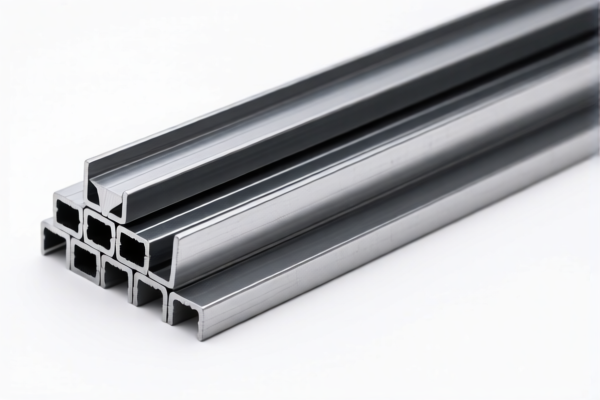
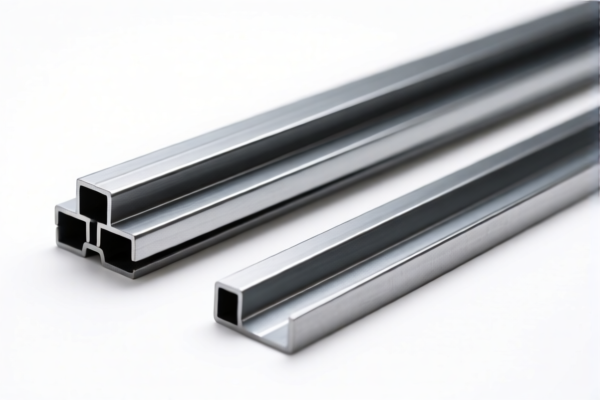
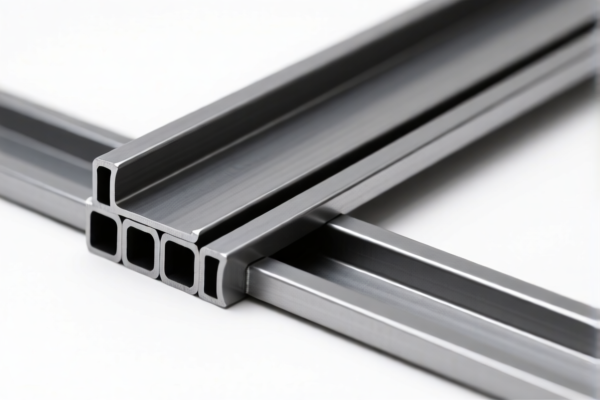
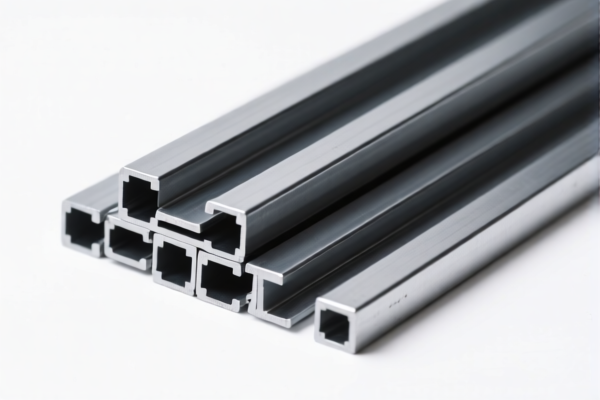
AI Analysis
🚂 Iron or Steel Rails for Railway or Tramway Tracks
🌐 HS Code Reference & Customs Clearance Guide | 2026 Latest Tariff Analysis | Professional Level Clearance Strategy
📌 I. Product Definition and Classification: What Exactly Are These Rails?
Iron or steel rails are the fundamental track construction materials for railways and tramways. They bear the weight of trains, guide the wheels, and withstand immense friction and stress. In international trade, these products are strictly classified based on material composition, treatment status, and weight specifications.
⚠️ Key Distinction Points:
- New vs. Heat-Treated: The physical and chemical properties differ significantly between standard new rails and heat-treated rails, affecting their durability and duty classification.
- Weight Threshold: The classification hinges on whether the rail weighs over 30 kg per meter. This is a critical threshold for "Standard Tee Rails."
- Accessory Exclusion: Components like sleepers, fish-plates, or switch blades are classified separately (often under 7302.10.90 or 8608), not under the main rail codes unless specified.
📦 II. HS Code Classification Details (2026 Latest Tariff Authority Comparison)
Based on the provided data, the classification for New standard tee rails over 30 kg/m falls into two specific categories depending on heat treatment:
| HS Code | Product Description | Applicable Scenario | Treatment Status |
|---|---|---|---|
7302.10.10.10 |
Rails: Of iron or nonalloy steel New: Not heat treated: Standard tee rails over 30 kg per meter | Standard industrial rails, general freight lines where extreme wear resistance is not the primary factor | ❌ Not Heat Treated |
7302.10.10.35 |
Rails: Of iron or nonalloy steel New: Heat treated: Standard tee rails over 30 kg per meter | High-speed rail, heavy-haul lines, or tracks requiring high wear resistance and tensile strength | ✅ Heat Treated |
🔍 Important Note:
- Both codes apply specifically to "Standard Tee Rails" (the classic I-beam shape).
- Both codes strictly require the rails to be "New" (not second-hand).
- If the rail weighs 30 kg/m or less, it would fall under a different subheading (e.g.,7302.10.10.00or similar, depending on local tariff structure), which is NOT included in the provided data.
- Accessories such as fish-plates, chairs, or switches are NOT covered by these two codes. They fall under8608.00.00.00(see below).
💰 III. 2026 Latest Tariff Rate Details (Including Additional Duties & Policy Add-ons)
✅ Applicable Country: United States (US)
✅ Origin: China (CN)
✅ Effective Time: Current as of 2026 analysis
🎯 1. 7302.10.10.10 —— Standard Tee Rails (>30 kg/m, Not Heat Treated)
| Item | Content |
|---|---|
| Base Tariff Rate | 0.0% (Ad Valorem) |
| Section 301 Additional Duty | +25.0% |
| Total Tax Rate | 25.0% |
| Tax Calculation | CIF Value × 25% |
| De Minimis Exemption | ❌ Not Applicable (Section 301 duties apply regardless of value) |
| Legal Basis Path | HTSUS:7302.10.10.10 → USITC:301 → Additional Duty: 25% |
📌 Explanation:
- The base tariff is 0%, reflecting that these are basic industrial materials.
- However, due to US-China trade relations, an additional 25% tariff is applied under Section 301 of the Trade Act of 1974.
- Total Effective Rate: 25%. This is a significant cost factor for importers.
- There is no de minimis exemption (Section 321) for Section 301 goods. Even small shipments are subject to the full duty.
🎯 2. 7302.10.10.35 —— Standard Tee Rails (>30 kg/m, Heat Treated)
| Item | Content |
|---|---|
| Base Tariff Rate | 0.0% (Ad Valorem) |
| Section 301 Additional Duty | +25.0% |
| Total Tax Rate | 25.0% |
| Tax Calculation | CIF Value × 25% |
| De Minimis Exemption | ❌ Not Applicable |
| Legal Basis Path | HTSUS:7302.10.10.35 → USITC:301 → Additional Duty: 25% |
📌 Note:
- Identical tax treatment to the non-heat-treated variant.
- The heat treatment process adds value and performance but does not change the duty rate structure in this context.
- Importers of high-performance rails must still budget for the 25% total duty.
🎯 3. 8608.00.00.00 —— Railway Track Fixtures, Fittings, Signaling, and Safety Equipment
Description: Railway or tramway track fixtures and fittings; mechanical (including electro-mechanical) signaling, safety, or traffic control equipment for railways... parts of the foregoing.
| Item | Content |
|---|---|
| Base Tariff Rate | 0.0% (Ad Valorem) |
| Section 301 Additional Duty | 0.0% |
| Total Tax Rate | 0.0% |
| Tax Calculation | CIF Value × 0% |
| De Minimis Exemption | ✅ Applicable (if value ≤ $800 and not on exclusion list) |
| Legal Basis Path | HTSUS:8608.00.00.00 |
📌 Explanation:
- This code covers accessories (fish-plates, chairs, switch blades) and signaling/safety equipment.
- Crucially, this code is NOT subject to the 25% additional duty.
- The total tariff is 0%.
- This creates a strong incentive for importers to correctly separate rails (25% duty) from fixtures/fittings (0% duty) in their commercial invoices.
🛠️ IV. Customs Clearance Practical Advice (Real-World Pitfall Avoidance Guide)
✅ 1. Document Preparation Checklist (Non-negotiable)
| Document | Mandatory? | Purpose |
|---|---|---|
| ✅ Commercial Invoice | ✔️ | Must clearly state: "Iron/Steel Rails," weight per meter, heat treatment status (Heat Treated/Not Heat Treated), and HS Code. |
| ✅ Packing List | ✔️ | Detail the exact weight and dimensions of each bundle. Ensure separation of rails from accessories. |
| ✅ Bill of Lading/Air Waybill | ✔️ | Standard shipping document. |
| ✅ Certificate of Origin | ✔️ | To prove origin (China) and confirm applicability of Section 301 duties. |
| ✅ Heat Treatment Certificate | ✔️ | Critical for 7302.10.10.35. Must confirm the heat treatment process to justify the higher HS Code and avoid misclassification penalties. |
| ✅ Product Specifications | ✔️ | Include cross-section diagram, weight per meter, steel grade (e.g., U71Mn, R260), and length. |
✅ 2. Declaration Strategies (Key Mantras)
🔥 "Split by Code, Declare by Type, Heat Treat Proof is Key!"
| Scenario | Correct Declaration | Wrong Practice | Consequence |
|---|---|---|---|
| Rails Only | 7302.10.10.10 or 7302.10.10.35 |
Declaring as "Steel Pipes" or "Structural Steel" | Misclassification penalty + retroactive duties |
| Rails + Fish-plates | Separate Lines: Line 1: Rails (7302.10.10.xx); Line 2: Fish-plates (8608.00.00.00) | Mixed declaration as one item | Risk of 25% duty applying to the entire shipment if not clearly split |
| Second-hand Rails | NOT covered in provided data (likely 7302.90 or excluded) | Declaring new rails as second-hand | Fraud detection, seizure, fines |
| Rails <30kg/m | NOT covered in provided data (likely 7302.10.10.00) | Using 7302.10.10.10 for light rails |
Incorrect classification, duty adjustment |
✅ 3. Special Handling Tips
| Situation | Recommendation |
|---|---|
| Mixed Container (Rails + Accessories) | Declare separately. Do not bundle rails and signaling equipment under one line item. This allows you to pay 25% on rails and 0% on accessories. |
| Proof of Heat Treatment | Provide mill certificates or third-party inspection reports confirming heat treatment for 7302.10.10.35. Customs may request this to prevent under-declaration (paying 0% base + 25% vs. correctly classifying). |
| De Minimis Shipment (<$800) | If shipping small quantities of accessories (fish-plates, clips) under 8608.00.00.00, they may enter duty-free under Section 321. Rails (even small ones) are NOT eligible for de minimis if they are classified under 7302.10 due to Section 301 exclusions. |
| Anti-Dumping/Countervailing Duties (AD/CVD) | Check if specific Chinese steel rails are subject to AD/CVD orders. While not in the provided data, this is a critical additional risk for steel products. |
🌍 V. Global Market Comparison (2026 Latest)
| Country/Region | Recommended HS Code | Duty Rate (China Origin) | Notes |
|---|---|---|---|
| 🇺🇸 USA | 7302.10.10.10 / .35 |
25% (Section 301) | High barrier. Must split accessories. |
| 🇺🇸 USA | 8608.00.00.00 |
0% | Applies to fixtures/signaling only. |
| 🇪🇺 EU | 7302.10 | Varies (often 0-6.5%) | No Section 301 equivalent, but check for AD/CVD. |
| 🇨🇳 China | 7302.10 | 0-5% | Import tariff for China itself. |
| 🇮🇳 India | 7302.10 | Varies (often 7.5-10%) | Plus SWS (Special Additional Duty). |
📌 Conclusion:
- The US market is uniquely expensive for steel rails due to the 25% Section 301 tariff.
- Accessories (8608.00.00.00) offer a 0% duty advantage in the US, making accurate separation vital.
- Heat treatment does not reduce duty; it only changes the HS code subheading.
📌 VI. Common Mistakes & Pitfalls (Lessons Learned)
❌ Mistake 1: Declaring fish-plates and rails together as "Railway Parts" under 8608.00.00.00.
👉 Consequence: Customs may reclassify the entire shipment as rails (7302.10...) and charge 25% duty on the accessories too, resulting in unnecessary tax loss.
❌ Mistake 2: Failing to prove heat treatment for 7302.10.10.35.
👉 Consequence: Customs may downgrade the code to 7302.10.10.10 or even reject the classification if documents are insufficient, causing delays.
❌ Mistake 3: Assuming all steel products are exempt from Section 301.
👉 Consequence: Rails are explicitly included. Ignorance of the 25% duty will wipe out profit margins.
✅ Correct Approach:
"Line 1: Standard Tee Rails, 60kg/m, Heat Treated, HS 7302.10.10.35, Origin: China, Value: $X"
"Line 2: Rail Fish-plates, HS 8608.00.00.00, Origin: China, Value: $Y"
🎯 VII. Conclusion: Precision Classification Saves Money!
🎯 Key Takeaways:
🔹 Rails = 25% Duty. Plan your margin accordingly.
🔹 Accessories = 0% Duty. Isolate them in the invoice.
🔹 Heat Treatment = Different HS Code, Same Duty. But requires documentation.
🔹 De Minimis Does NOT Apply to Rails. Small shipments still pay 25%.
📌 Pro Tip:
If you are importing both rails and accessories, work with a customs broker to pre-classify the line items. A simple misclassification can cost you 25% of the total shipment value instead of just the accessory portion.
📣 Immediate Action:
📞 Consult a licensed customs broker for Section 301 exclusions (if any apply to your specific steel grade).
📄 Prepare heat treatment certificates in advance.
📝 Separate rails and fixtures in your commercial invoice.
✨ Accurate Classification is the First Step to Smooth Clearance!
💼 Your Supply Chain Efficiency Depends on Correct HS Codes!
Customer Reviews
About HS Code Classification
The Harmonized System (HS) is an internationally standardized nomenclature developed by the World Customs Organization (WCO) to classify traded products. Over 200 countries use the HS system as the basis for customs tariffs, trade statistics, and import/export regulations.
Each HS code follows a hierarchical structure:
- Chapter (2 digits) — Broad category of goods (e.g., Chapter 84: Machinery and Mechanical Appliances)
- Heading (4 digits) — More specific grouping within the chapter
- Subheading (6 digits) — Internationally standardized breakdown, used by all WCO member countries
- National subdivisions (8-10 digits) — Country-specific extensions for further classification, such as US HTSUS 10-digit codes
Correct HS code classification is essential for smooth customs clearance, accurate duty payment, and compliance with trade regulations. Misclassification can lead to customs delays, overpayment of duties, or penalties.
When importing from CN to US, the applicable tariff rates may include:
- Most-Favored-Nation (MFN) rate — The standard duty rate applied to WTO members
- General rate — Applied to countries without trade agreements
- Trade remedy duties — Additional tariffs such as Section 301 (anti-dumping), Section 232 (national security), or countervailing duties
The information provided on this page is for reference purposes only. For official classification, please consult with your local customs authority or a licensed customs broker.