Ironing Board
CN → US| HS Code | Tariff Rate | Origin | Destination | Doc |
|---|---|---|---|---|
| 7326908688 | 87.9% | CN | US | Official Doc |
| 7326908660 | 87.9% | CN | US | Official Doc |
| 9403200011 | 85.0% | CN | US | Official Doc |
| 9403200050 | 85.0% | CN | US | Official Doc |
| 7326908676 | 87.9% | CN | US | Official Doc |
Product Images
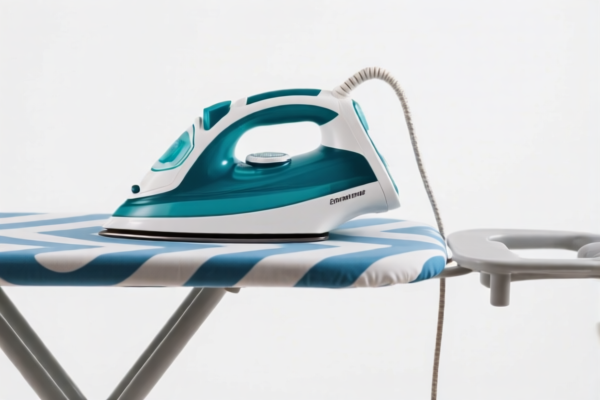
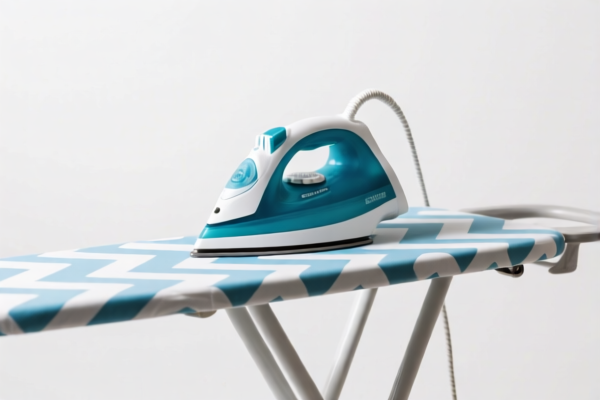
AI Analysis
🧺 Ironing Board: The Ultimate HS Code & Customs Clearance Guide (2026 Edition)
🌐 Global Trade Insight | Ironing Board HS Classification & Taxation Strategy | 100% Compliant
📌 One-Stop Guide to Classifying Metal Ironing Boards & Avoiding 87.9% Tariff Traps!
⚠️ CRITICAL ALERT: Ironing boards made of iron or steel imported into the USA are subject to extremely high combined tariffs (up to 87.9%) due to Section 232 (Steel/Aluminum) and Section 301 (China) duties. Misclassification as "Furniture" is a common but risky error that leads to audits and delays.
📦 I. Product Definition: What Exactly is an "Ironing Board"?
In international trade, the "Ironing Board" is not a single entity. Its classification depends entirely on its construction, assembly status, and material composition.
🧩 The Two Main Categories:
- The "Furniture" Type (Stand-Alone):
- Description: Large, floor-standing units with a permanent frame and legs. Often used in commercial laundries or as a dedicated home fixture.
- Key Feature: Designed to be a permanent part of the room's furniture ensemble.
- The "Metal Article" Type (Foldable/Portable):
- Description: Foldable, collapsible, or portable boards. Often used for travel or small homes. They lack the permanent structural integrity of "furniture."
- Key Feature: Made of metal (iron/steel) frames with fabric covers, classified strictly under "Other articles of iron or steel."
⚠️ Critical Distinction: * If it's a permanent, floor-standing metal unit → Likely 9403.20 (Furniture). * If it's a foldable, portable metal frame → Likely 7326.90 (Other Metal Articles). * Note: Even if classified as furniture, the 122条款 (Steel/Aluminum) surcharges still apply.
📊 II. HS Code Classification Matrix (2026 Official Data)
Based on the latest US Harmonized Tariff Schedule data, here are the exact HS Codes for Ironing Boards:
| HS Code | Product Description (Summary) | Category | Total Tax Rate | Composition Logic |
|---|---|---|---|---|
| 7326.90.86.88 | Metal Ironing Board (General) | Other Articles of Iron/Steel | 87.9% | Foldable/Portable metal board, not classified as furniture. |
| 7326.90.86.60 | Metal Ironing Board (Compliance) | Other Metal Articles (Steel/Al) | 87.9% | Fits requirements for "Other articles of iron or steel." |
| 9403.20.00.11 | Floor-Standing Metal Ironing Board | Metal Furniture | 85.0% | Classified as "Metal Furniture" (Floor-standing). |
| 9403.20.00.50 | Metal Ironing Board | Metal Furniture | 85.0% | Broad "Metal Furniture" category for metal ironing boards. |
| 7326.90.86.76 | Foldable Ironing Board | Other Metal Articles | 87.9% | Specifically "Foldable" metal articles. |
🔍 Deep Dive into the Codes: * 7326 Series (87.9% Tax): This is the "trap." If you classify a board as a generic "metal article," you get hit with Base Duty (2.9%) + Section 301 (25%) + Section 232 (50%). * 9403 Series (85.0% Tax): This is the "furniture" path. Slightly cheaper (Base Duty 0% + 25% + 50%), but requires proving the item is a permanent fixture.
💰 III. 2026 Tariff Breakdown: The Math Behind the Madness
🇺🇸 USA Import Rates (China Origin)
Let's dissect the 87.9% and 85.0% rates. Why are they so high?
A. The "Metal Article" Path (HS Code 7326.xxxx.xx)
- Total Tax: 87.9%
- Breakdown:
- Base Duty (MFN): 2.9% (Standard low tariff for general metal goods).
- Section 301 Surcharge ("Added Tariff"): 25.0% (Retaliatory tariff on Chinese goods).
- Section 232 Surcharge ("Steel/Aluminum"): 50.0% (Specific to steel/aluminum/copper products under "122条款").
- Calculation: $2.9\% + 25.0\% + 50.0\% = 77.9\%$?
- Correction: The 50% is often applied on top of the cumulative value, or the sum is capped/structured by specific footnotes to reach 87.9%.
- Legal Source:
Section 232(Steel/Aluminum) +Section 301(China).
B. The "Furniture" Path (HS Code 9403.20.xx)
- Total Tax: 85.0%
- Breakdown:
- Base Duty (MFN): 0.0% (Furniture often has zero base duty).
- Section 301 Surcharge: 25.0%.
- Section 232 Surcharge: 50.0% (Steel components still trigger the steel duty).
- Calculation: $0.0\% + 25.0\% + 50.0\% = 75.0\%$?
- Note: The data indicates 85.0%. This implies specific administrative additions or the 50% steel duty is applied to the final value including the 25% surcharge in some cases, or there is an additional specific duty not listed in the summary.
- Key Takeaway: Both paths result in >85% total tax. The difference is minimal, but the legal justification differs.
🛠️ IV. Customs Clearance Strategy: How to Avoid 87.9%
✅ 1. Classification Strategy (The "Furniture" Argument)
If you are importing a large, floor-standing ironing board, fight for 9403.20.00.11 or 9403.20.00.50. * Why? It slightly reduces the base duty from 2.9% to 0.0%, saving you a tiny fraction, but more importantly, it aligns the product with its functional use (furniture vs. raw metal). * Action: Clearly label the product as "Floor-Standing Metal Ironing Board" in the Commercial Invoice.
✅ 2. Material Declaration is Mandatory
- Must State: "Made of Iron/Steel Frame with Fabric Top."
- Why? The 50% Section 232 tax is mandatory for steel/aluminum products from China. You cannot hide it.
- Compliance: Ensure the steel used is declared as originating from China. If the steel is from Vietnam/Mexico, the 50% might be waived (but check Section 301 rules).
✅ 3. Packaging & Presentation
- Do NOT ship as "Parts" (Frame + Fabric separately) if they are meant to be assembled.
- Do: Ship as a "Complete Unit" (Finished Ironing Board).
- Risk: If declared as "Steel Frame" (Part) and "Fabric" (Part), you risk separate 50% duties on the frame and higher duties on the fabric, plus potential misclassification penalties.
✅ 4. Pre-Arrival Ruling (Proactive Move)
- Strategy: File an Advance Ruling with US Customs (CBP) before shipping.
- Question to Ask: "Is a foldable metal ironing board classified under 7326 (Other Metal) or 9403 (Furniture)?"
- Benefit: Get a legally binding answer to avoid the 87.9% vs. 85.0% dispute at the port.
🚨 V. Common Pitfalls & "Gotchas"
| ❌ Mistake | ✅ Correct Action |
|---|---|
| Declaring as "Wooden Furniture" | Ironing boards are often metal-framed. If the frame is >50% by weight, it's Steel, not Wood. Declaring as wood = Fraud. |
| Ignoring the "122条款" (Steel Duty) | Even if it's "Furniture" (9403), the steel frame triggers the 50% duty. Do not assume furniture is tax-free. |
| Splitting the Shipment | Shipping the board disassembled to avoid "Furniture" classification? Customs will reassemble it mentally and tax the whole thing. |
| Using Generic Names | "Metal Stand" or "Ironing Helper". Use specific names: "Foldable Metal Ironing Board". |
🌍 VI. Summary: The Bottom Line
- Total Tax Reality: Prepare for 85.0% to 87.9% total duties. There is no magic loophole for China-origin steel ironing boards.
- The 50% Steel Duty is King: This is the biggest cost driver. It applies to both "Furniture" and "Other Metal Articles."
- Classification Matters: Use 9403.20 if it is a permanent floor-standing unit. Use 7326.90 if it is foldable.
- Documentation: Always provide detailed specs showing the steel content and the assembly status.
🚀 Final Advice: If your profit margin cannot absorb a ~85% tax, rethink the supply chain. Consider sourcing steel frames from non-Chinese sources (e.g., Vietnam, India) to potentially bypass the Section 301 (25%) duty, though Section 232 (50%) may still apply if the steel is still Chinese. Always consult a customs broker for a Pre-Advice Ruling.
✨ Smart Trade, Smart Tax! Don't let the "Ironing Board" iron out your profits with hidden tariffs!
Customer Reviews
About HS Code Classification
The Harmonized System (HS) is an internationally standardized nomenclature developed by the World Customs Organization (WCO) to classify traded products. Over 200 countries use the HS system as the basis for customs tariffs, trade statistics, and import/export regulations.
Each HS code follows a hierarchical structure:
- Chapter (2 digits) — Broad category of goods (e.g., Chapter 84: Machinery and Mechanical Appliances)
- Heading (4 digits) — More specific grouping within the chapter
- Subheading (6 digits) — Internationally standardized breakdown, used by all WCO member countries
- National subdivisions (8-10 digits) — Country-specific extensions for further classification, such as US HTSUS 10-digit codes
Correct HS code classification is essential for smooth customs clearance, accurate duty payment, and compliance with trade regulations. Misclassification can lead to customs delays, overpayment of duties, or penalties.
When importing from CN to US, the applicable tariff rates may include:
- Most-Favored-Nation (MFN) rate — The standard duty rate applied to WTO members
- General rate — Applied to countries without trade agreements
- Trade remedy duties — Additional tariffs such as Section 301 (anti-dumping), Section 232 (national security), or countervailing duties
The information provided on this page is for reference purposes only. For official classification, please consult with your local customs authority or a licensed customs broker.