Irregular Wood Chip Fuel
CN → US| HS Code | Tariff Rate | Origin | Destination | Doc |
|---|---|---|---|---|
| 4401220000 | 35.0% | CN | US | Official Doc |
| 4401210000 | 35.0% | CN | US | Official Doc |
| 4401310000 | 35.0% | CN | US | Official Doc |
| 4401394210 | 35.0% | CN | US | Official Doc |
| 4401220000 | 35.0% | CN | US | Official Doc |
Product Images

AI Analysis
🪵 Irregular Wood Chip Fuel (Wood Fuel for Energy)
🌐 HS Code Reference & Customs Clearance Guide | 2024/2025 Tariff Analysis | Professional Customs Strategy
📌 I. Product Definition & Classification: What Exactly Is "Irregular Wood Chip Fuel"?
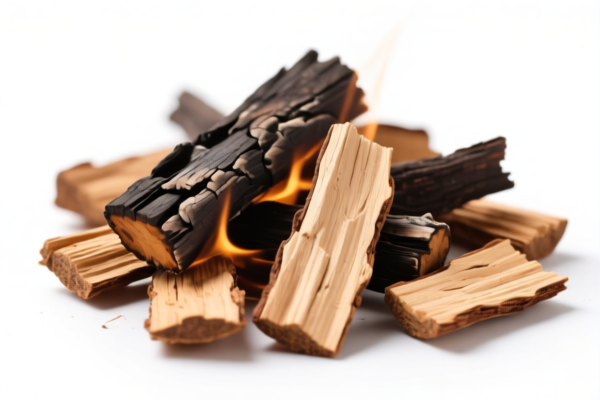
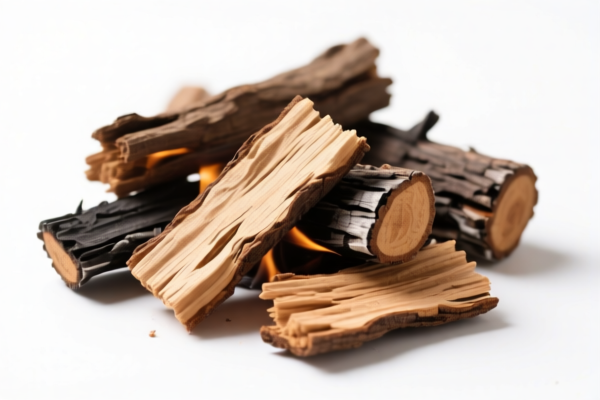
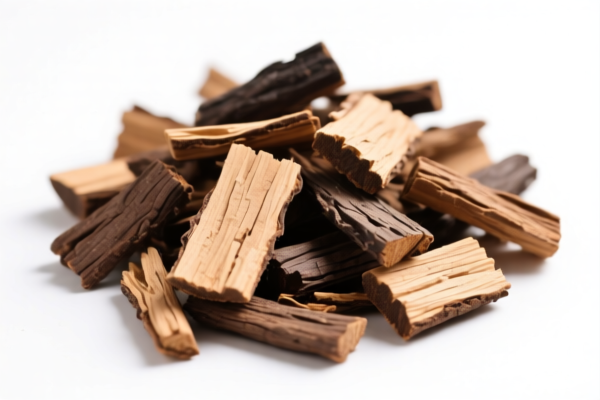
Irregular wood chip fuel refers to biomass material processed from wood residues, intended primarily for combustion or energy generation. In international trade, it is categorized based on its physical form (chips, particles, or agglomerates) and wood type (coniferous vs. non-coniferous).
Key Distinctions: * Chips/Particles: Irregular fragments, sawdust, or bark, often used in biomass power plants or industrial boilers. * Agglomerates: Wood chips or sawdust compacted into briquettes or blocks for efficient storage and transport.
⚠️ Critical Classification Point:
- If the fuel is in the form of chips, particles, or waste → Generally falls under 4401.2x or 4401.3x.
- The exact subheading depends on whether it is coniferous (pine, spruce, etc.) or non-coniferous (oak, beech, etc.), and whether it is agglomerated.
📦 II. HS Code Classification Details (2024/2025 Tariff Concordance)
| HS Code | Product Description | Application Scenario | Physical Form |
|---|---|---|---|
4401.21.00.00 |
Wood in chips or particles, Coniferous | Wood chips from pine/spruce forests for fuel | ✅ Chips/Particles |
4401.22.00.00 |
Wood in chips or particles, Non-Coniferous | Wood chips from oak/beech/etc. for fuel | ✅ Chips/Particles |
4401.31.00.00 |
Wood in agglomerates, Coniferous | Compressed wood blocks/briquettes from coniferous sources | ✅ Agglomerated Blocks |
4401.39.42.10 |
Other wood fuel, Non-Coniferous Agglomerates | Other forms of non-coniferous fuel wood agglomerates | ✅ Agglomerated Blocks |
🔍 Key Reminder:
- 4401.2x covers loose chips and particles.
- 4401.3x covers agglomerated (compressed) wood fuel.
- All listed HS codes below carry a total tax rate of 35% due to US trade policies.
💰 III. 2024/2025 Latest Tariff Rate Details (Including Additional Duties & Policy Surcharges)
✅ Applicable Country: United States (US)
✅ Origin: China (CN)
✅ Effective Time: Ongoing under current Section 301 and IEEPA provisions
🎯 1. 4401.21.00.00 – Wood in Chips/Particles (Coniferous)
| Item | Content |
|---|---|
| Base Duty Rate | 0.0% (ad valorem) |
| Section 301 Additional Duty | +25.0% |
| Section 122 IEEPA Duty | +10.0% (Specific provisions for Chinese wood products) |
| Total Tariff Rate | 35.0% |
| Tax Calculation | CIF Value × 35% |
| De Minimis Eligibility | ❌ Not Eligible (Subject to high duties) |
| Legal Basis Path | USITC:4401.21.00.00 → Section 301: Footnote 1 → IEEPA: 122 Clause |
📌 Explanation:
- Base Rate 0%: Standard MFN (Most Favored Nation) rate for wood fuel is often low or zero.
- 25% Section 301: Imposed under the US Trade Act of 1974, Section 301, targeting Chinese manufacturing and raw materials.
- 10% IEEPA Section 122: Specific surcharges applied under executive orders regarding national emergency economic powers.
- Total 35%: A significant cost burden. Must be factored into landing costs.
🎯 2. 4401.22.00.00 – Wood in Chips/Particles (Non-Coniferous)
| Item | Content |
|---|---|
| Base Duty Rate | 0.0% |
| Section 301 Additional Duty | +25.0% |
| Section 122 IEEPA Duty | +10.0% |
| Total Tariff Rate | 35.0% |
| Tax Calculation | CIF Value × 35% |
| De Minimis Eligibility | ❌ Not Eligible |
| Legal Basis Path | USITC:4401.22.00.00 → Section 301: Footnote 1 → IEEPA: 122 Clause |
📌 Note:
- Same tariff structure as coniferous chips.
- Whether it’s oak, maple, or other hardwoods, if it’s in chip/particle form, it falls here.
- No difference in rate between coniferous and non-coniferous chips under current US tariffs.
🎯 3. 4401.31.00.00 – Wood in Agglomerates (Coniferous)
| Item | Content |
|---|---|
| Base Duty Rate | 0.0% |
| Section 301 Additional Duty | +25.0% |
| Section 122 IEEPA Duty | +10.0% |
| Total Tariff Rate | 35.0% |
| Tax Calculation | CIF Value × 35% |
| De Minimis Eligibility | ❌ Not Eligible |
| Legal Basis Path | USITC:4401.31.00.00 → Section 301: Footnote 1 → IEEPA: 122 Clause |
📌 Note:
- Applies to compressed wood blocks or briquettes made from coniferous wood.
- Even though agglomerated, it remains subject to the same 35% total duty.
🎯 4. 4401.39.42.10 – Other Wood Fuel (Non-Coniferous Agglomerates)
| Item | Content |
|---|---|
| Base Duty Rate | 0.0% |
| Section 301 Additional Duty | +25.0% |
| Section 122 IEEPA Duty | +10.0% |
| Total Tariff Rate | 35.0% |
| Tax Calculation | CIF Value × 35% |
| De Minimis Eligibility | ❌ Not Eligible |
| Legal Basis Path | USITC:4401.39.42.10 → Section 301: Footnote 1 → IEEPA: 122 Clause |
📌 Note:
- This is a specific subheading for non-coniferous agglomerated wood fuel.
- Often used for specialized biomass briquettes from hardwoods.
- Same 35% total duty applies.
🛠️ IV. Customs Clearance Practical Advice (Actionable Pitfall Guide)
✅ 1. Required Documentation Checklist (Mandatory)
| Document | Required? | Notes |
|---|---|---|
| ✅ Product Specification Sheet | ✔️ | Must specify: wood type (coniferous/non-coniferous), form (chips/particles/agglomerates), moisture content |
| ✅ Commercial Invoice | ✔️ | Clearly state "Wood Fuel – Irregular Chips" or "Agglomerated Wood" |
| ✅ Packing List | ✔️ | Detail net/gross weight, packaging type |
| ✅ Certificate of Origin | ✔️ | Essential for origin verification; China-origin triggers 35% duty |
| ✅ Phytosanitary Certificate | ✔️ | Critical: US CBP requires proof of pest-free status to prevent invasive species |
| ✅ Bill of Lading | ✔️ | Standard shipping document |
✅ 2. Declaration Tips (Key Rules)
🔥 "Define Form, Define Wood, Declare Accurate!"
| Scenario | Correct Declaration | Wrong Practice |
|---|---|---|
| Loose wood chips (Pine) | 4401.21.00.00 – "Wood Chips, Coniferous" |
Mislabel as "General Wood Waste" |
| Loose wood chips (Oak) | 4401.22.00.00 – "Wood Chips, Non-Coniferous" |
Same as above |
| Compressed wood blocks (Pine) | 4401.31.00.00 – "Wood Agglomerates, Coniferous" |
Declare as "Chips" → Potential penalty |
| Compressed wood blocks (Oak) | 4401.39.42.10 – "Other Wood Agglomerates" |
Generic "Wood Fuel" → Audit risk |
✅ 3. Special Considerations
| Situation | Handling Advice |
|---|---|
| Moisture Content | High moisture may trigger quality issues; specify in specs to avoid rejection |
| Pest Control | Ensure treatment (fumigation/heat) is documented; lack of phytosanitary cert = Detention/Return |
| Mixed Wood Types | If chips are mixed, declare as Non-Coniferous (worst-case scenario for some classifications) or provide detailed composition |
| Briquettes vs. Chips | Clearly distinguish; agglomerates are classified differently (4401.3x vs 4401.2x) |
🌍 V. Global Market Comparison (2024/2025)
| Country/Region | Recommended HS Code | Duty (China Origin) | Certification | Notes |
|---|---|---|---|---|
| 🇺🇸 USA | 4401.2x / 4401.3x |
35% (Base 0% + 25% + 10%) | Phytosanitary | High duty burden |
| 🇨🇳 China | 4401.2x / 4401.3x |
0-5% (depending on type) | N/A | Low duty |
| 🇪🇺 EU | 4401.2x / 4401.3x |
0-10% | FSC/PEFC (Sustainability) | No 25% Section 301 |
| 🇬🇧 UK | 4401.2x / 4401.3x |
0-10% | FSC/PEFC | Post-Brexit rules apply |
📌 Conclusion:
- USA is the most expensive market for Chinese wood fuel due to 25% Section 301 + 10% IEEPA.
- EU/UK have lower tariffs but stricter sustainability certifications (FSC/PEFC).
- China origin significantly impacts US landing costs.
📌 VI. Common Mistakes & Pitfalls (Lessons Learned)
❌ Mistake 1: Declaring "Wood Chips" without specifying Coniferous/Non-Coniferous
👉 Consequence: CBP may assign the higher or default code, or request clarification → Delay
❌ Mistake 2: Failing to provide a Phytosanitary Certificate
👉 Consequence: Detention by USDA APHIS, possible destruction or return → Total Loss
❌ Mistake 3: Misclassifying Agglomerates as Chips
👉 Consequence: Incorrect HS code, potential penalty for misdeclaration
❌ Mistake 4: Ignoring Moisture Content in Specs
👉 Consequence: Dispute over value or quality, leading to customs valuation adjustment
✅ Correct Practice:
"Irregular Wood Chips, Coniferous (Pine), Moisture Content < 20%, Fumigated, for Industrial Fuel Use, CIF Value: $X"
🎯 VII. Conclusion: Precision in Classification Saves Money!
🎯 Remember the Formula:
🔹 Form (Chips/Agglomerates) + Wood Type (Coniferous/Non-Coniferous) = Correct HS Code
🔹 China Origin + US Import = 35% Total Duty (0% Base + 25% Sec 301 + 10% IEEPA)
🔹 Phytosanitary Cert is Non-Negotiable
📌 Pro Tip:
If your wood fuel is sourced from Vietnam, Malaysia, or other ASEAN countries, you may avoid the 25% Section 301 duty (check current rules), potentially lowering the total rate to 10% (only IEEPA) or 0% if exempt.
👉 Always verify origin and apply for pre-rulings if uncertain!
📣 Take Action Now:
📞 Engage a licensed customs broker
📄 Prepare Phytosanitary Certificate & Product Specs
🚀 Ensure smooth clearance, avoid 35% penalty surprises!
✨ Professional Customs, Accurate Classification Starts Here!
💼 Your Profit Margin Depends on Precise Tariff Management!
Customer Reviews
About HS Code Classification
The Harmonized System (HS) is an internationally standardized nomenclature developed by the World Customs Organization (WCO) to classify traded products. Over 200 countries use the HS system as the basis for customs tariffs, trade statistics, and import/export regulations.
Each HS code follows a hierarchical structure:
- Chapter (2 digits) — Broad category of goods (e.g., Chapter 84: Machinery and Mechanical Appliances)
- Heading (4 digits) — More specific grouping within the chapter
- Subheading (6 digits) — Internationally standardized breakdown, used by all WCO member countries
- National subdivisions (8-10 digits) — Country-specific extensions for further classification, such as US HTSUS 10-digit codes
Correct HS code classification is essential for smooth customs clearance, accurate duty payment, and compliance with trade regulations. Misclassification can lead to customs delays, overpayment of duties, or penalties.
When importing from CN to US, the applicable tariff rates may include:
- Most-Favored-Nation (MFN) rate — The standard duty rate applied to WTO members
- General rate — Applied to countries without trade agreements
- Trade remedy duties — Additional tariffs such as Section 301 (anti-dumping), Section 232 (national security), or countervailing duties
The information provided on this page is for reference purposes only. For official classification, please consult with your local customs authority or a licensed customs broker.