Irrigation Kit
CN → US| HS Code | Tariff Rate | Origin | Destination | Doc |
|---|---|---|---|---|
| 3917320050 | 38.1% | CN | US | Official Doc |
| 3917290090 | 38.1% | CN | US | Official Doc |
| 8424820020 | 37.4% | CN | US | Official Doc |
Product Images
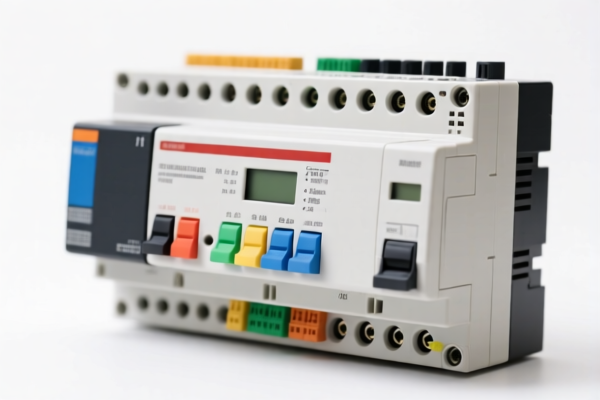
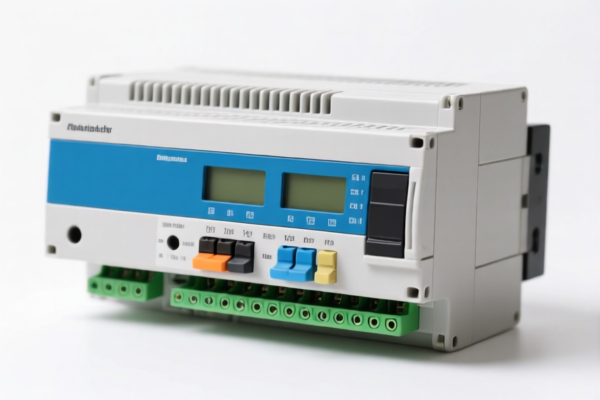
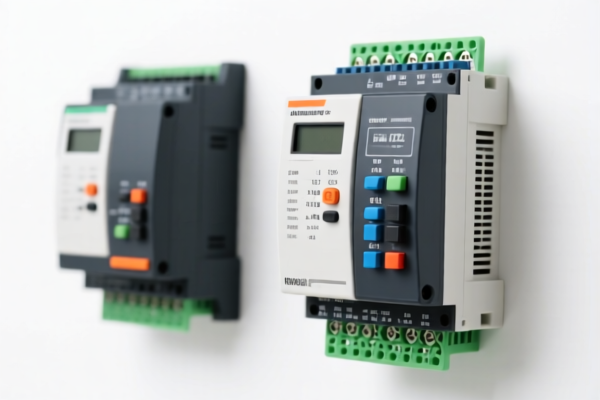
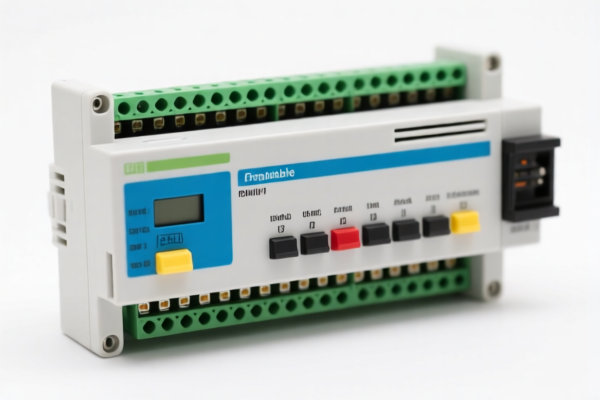
AI Analysis
🌾 Irrigation Kit (Irrigation Systems)
🌐 HS Code Reference & Customs Clearance Guide | 2026 Latest Tariff Analysis | Professional Entry Strategy
📌 I. Product Definition & Classification: What is an "Irrigation Kit"?
An Irrigation Kit generally refers to a complete set of materials designed for agricultural, garden, or landscape watering. In international trade, the classification depends heavily on the core function and material composition. The system typically falls into two logical categories based on Customs interpretations:
- Plastic Piping & Hoses: If the kit is primarily viewed as a collection of plastic tubes, pipes, and hoses used for transporting water, it is classified under Chapter 39 (Plastics).
- Irrigation Machinery/Equipment: If the kit is viewed as a functional system or device designed specifically for spraying or distributing water (irrigation equipment), it is classified under Chapter 84 (Machinery).
⚠️ Key Distinction:
- If the focus is on the material (Plastic Pipes) → HS Code 3917
- If the focus is on the function (Irrigation Device) → HS Code 8424
📦 II. HS Code Classification Details (2026 Latest Tariff Data)
Based on the provided data, here are the three potential classifications. Note that while the HS Codes differ, the Total Tax Rate remains identical due to the specific tariff structure applied to Chinese-origin goods.
| HS Code | Product Description | Summary & Logic | Total Tax Rate |
|---|---|---|---|
3917.32.00.50 |
Plastic Pipes/Hoses | The irrigation system usually contains tubes, pipes, and hoses, mostly made of plastic. This fits the classification logic of plastic pipes and their accessories without obvious conflict. | 38.1% |
3917.29.00.90 |
Other Plastic Pipes | Based on the "irrigation" purpose, it is reasonably inferred that the core components include plastic pipes. This falls under the "Other" catch-all category, with no material or form conflicts. | 38.1% |
8424.82.00.20 |
Irrigation Equipment | The product name "Irrigation System" fully matches the definition of "Irrigation Equipment" under this code. It belongs to the "Other" category, with no material or form conflicts mentioned in the name. | 37.4% |
🔍 Critical Insight:
- Codes3917.32.00.50and3917.29.00.90are for Plastic Pipes. The total tax is 38.1%.
- Code8424.82.00.20is for Irrigation Machinery. The total tax is 37.4%.
- Difference: Choosing the "Irrigation Equipment" code (8424) saves 0.7% in total tax compared to the "Plastic Pipe" codes. This is a significant optimization for high-value shipments.
💰 III. 2026 Latest Tariff Rate Breakdown (Including Surcharges)
✅ Applicable Country: United States (US)
✅ Origin: China (CN)
✅ Effective Date: Current regulations apply (including Section 301 and IEEPA surcharges)
🎯 1. For HS Codes 3917.32.00.50 & 3917.29.00.90 (Plastic Pipes)
| Item | Details |
|---|---|
| Base Duty | 3.1% |
| Section 301 Surcharge | +25.0% |
| 122 Clause Surcharge | +10.0% |
| Total Tax Rate | 38.1% |
| Tax Calculation | CIF Value × 38.1% |
📌 Explanation:
- Base Duty (3.1%): The standard MFN (Most Favored Nation) tariff for plastic pipes.
- Section 301 (25%): Additional duty imposed by the US Trade Representative against Chinese goods.
- 122 Clause (10%): Additional tariff surcharge targeting specific Chinese imports.
- Total: 3.1% + 25.0% + 10.0% = 38.1%. This is a high-cost classification.
🎯 2. For HS Code 8424.82.00.20 (Irrigation Equipment)
| Item | Details |
|---|---|
| Base Duty | 2.4% |
| Section 301 Surcharge | +25.0% |
| 122 Clause Surcharge | +10.0% |
| Total Tax Rate | 37.4% |
| Tax Calculation | CIF Value × 37.4% |
📌 Explanation:
- Base Duty (2.4%): The standard MFN tariff for machinery/irrigation equipment.
- Section 301 (25%): Same as above, applies to Chinese-origin machinery.
- 122 Clause (10%): Same as above, applies to this category.
- Total: 2.4% + 25.0% + 10.0% = 37.4%.
- Optimization: This code is 0.7% lower than the plastic pipe codes. For a $100,000 shipment, this saves $700 in duties.
🛠️ IV. Customs Clearance Practical Advice (Battle-Tested Guide)
✅ 1. Documentation Checklist (Essential)
| Document | Required? | Description |
|---|---|---|
| ✅ Commercial Invoice | ✔️ | Must clearly state "Irrigation Kit/System" and list components (pipes, nozzles, controllers). |
| ✅ Packing List | ✔️ | Detail the contents. If it includes a pump or controller, highlight this to support 8424 classification. |
| ✅ Product Specifications | ✔️ | Show that the kit is a complete system for irrigation, not just loose pipes. |
| ✅ Photos | ✔️ | Images of the assembled kit, showing nozzles, sprinklers, or control units to prove it is "Equipment." |
| ✅ Material Declaration | ✔️ | Specify plastic materials (e.g., PVC, PE) if classifying under Chapter 39. |
✅ 2. Declaration Strategy (Key Tips)
🔥 “Function Over Material, System Over Parts!”
| Scenario | Recommended HS Code | Why? |
|---|---|---|
| Kit includes sprinklers, valves, and controllers | 8424.82.00.20 |
It is a functional system for irrigation. Lower base duty (2.4%). |
| Kit is just bags of plastic pipes/hoses | 3917.32.00.50 |
No functional machinery. Classify as plastic pipes. |
| Mixed Kit (Pipes + Some Sprinklers) | 8424.82.00.20 |
If the primary purpose is irrigation distribution, argue for the system classification to save 0.7%. |
⚠️ Warning:
- Do not declare a complete irrigation kit as "Plastic Pipes" (3917) unless it is purely tubing. If it includes functional components like emitters or sprinklers, Customs may reject the3917classification or apply penalties.
- However, declaring a simple PVC pipe kit as8424(Machinery) might be challenged if there are no mechanical parts. Use8424only if the kit has functional irrigation elements (nozzles, emitters, timers).
✅ 3. Special Considerations
| Situation | Advice |
|---|---|
| Customs Audit | Be prepared to show that the kit is assembled or designed for direct irrigation use, not just transport pipes. |
| Section 301 / IEEPA | Both classifications are subject to the 25% + 10% surcharges. No exemption for standard irrigation kits from China. |
| Duty Savings | For large shipments, the 0.7% difference (38.1% vs 37.4%) can amount to thousands of dollars. Always aim for 8424.82.00.20 if the product qualifies. |
🌍 V. Global Market Comparison (2026)
| Country/Region | Recommended HS Code | Approx. Duty (China Origin) | Notes |
|---|---|---|---|
| 🇺🇸 USA | 8424.82.00.20 |
37.4% | Best Option. Lower base duty than plastic pipes. |
| 🇨🇳 China | 8424.82.00.20 |
~10-14% | Import duty into China is different. |
| 🇪🇺 EU | 8424.30.00 |
~4-6% | No Section 301. Standard EU tariff. |
| 🇦🇺 Australia | 8424.82.00 |
~5% | GSP preferences may apply for some origins. |
📌 Conclusion:
- The US market is the most complex due to Section 301 and 122 Clause surcharges.
- Optimization Tip: Always try to classify irrigation kits with functional components under8424.82.00.20to benefit from the lower 2.4% base duty instead of the 3.1% for plastic pipes.
📌 VI. Common Mistakes & Pitfalls (Lessons Learned)
❌ Mistake 1: Declaring a full irrigation kit (with sprinklers) as "Plastic Pipes" (3917).
👉 Consequence: Customs may reject it, leading to delays, or you miss the opportunity to prove it's a system. If accepted, you pay 0.7% more unnecessarily.
❌ Mistake 2: Declaring loose PVC pipes as "Irrigation Equipment" (8424).
👉 Consequence: Customs may classify it correctly as 3917 anyway, but you risk being flagged for incorrect classification, leading to audits or penalties.
❌ Mistake 3: Ignoring the 122 Clause (10%).
👉 Consequence: Unexpected cost increase. Many importers only account for the 25% Section 301 duty, forgetting the additional 10% surcharge.
✅ Correct Practice:
“If it sprinkles, it’s machinery (
8424). If it just carries water, it’s plastic (3917).”
🎯 VII. Conclusion: Smart Classification, Smarter Savings!
🎯 Remember the Golden Rule:
🔹 "Functional System =
8424(37.4%)
🔹 "Just Pipes =3917(38.1%)
🔹 Always check for sprinklers/valves to justify8424!
📌 Pro Tip:
If your irrigation kit includes electronic controllers or pumps, ensure they are listed on the invoice. This strengthens the argument for 8424 classification.
For shipments over $100,000, the 0.7% savings is significant. Always consult a customs broker to confirm the "essential character" of your kit.
📣 Action Step:
📞 Review your Bill of Lading and Invoice.
📦 Do you have sprinklers/nozzles? If yes, use8424.82.00.20.
💰 If no, just pipes, use3917.32.00.50.
✨ Professional Clearance Starts with Accurate Classification!
💼 Every percent counts in today’s tariff war!
Customer Reviews
About HS Code Classification
The Harmonized System (HS) is an internationally standardized nomenclature developed by the World Customs Organization (WCO) to classify traded products. Over 200 countries use the HS system as the basis for customs tariffs, trade statistics, and import/export regulations.
Each HS code follows a hierarchical structure:
- Chapter (2 digits) — Broad category of goods (e.g., Chapter 84: Machinery and Mechanical Appliances)
- Heading (4 digits) — More specific grouping within the chapter
- Subheading (6 digits) — Internationally standardized breakdown, used by all WCO member countries
- National subdivisions (8-10 digits) — Country-specific extensions for further classification, such as US HTSUS 10-digit codes
Correct HS code classification is essential for smooth customs clearance, accurate duty payment, and compliance with trade regulations. Misclassification can lead to customs delays, overpayment of duties, or penalties.
When importing from CN to US, the applicable tariff rates may include:
- Most-Favored-Nation (MFN) rate — The standard duty rate applied to WTO members
- General rate — Applied to countries without trade agreements
- Trade remedy duties — Additional tariffs such as Section 301 (anti-dumping), Section 232 (national security), or countervailing duties
The information provided on this page is for reference purposes only. For official classification, please consult with your local customs authority or a licensed customs broker.