Isobutene Isoprene (Butyl) Rubber (IIR) Tape Raw Material
CN → US| HS Code | Tariff Rate | Origin | Destination | Doc |
|---|---|---|---|---|
| 3913901000 | 35.0% | CN | US | Official Doc |
| 4005990000 | 35.0% | CN | US | Official Doc |
| 4002390000 | 35.0% | CN | US | Official Doc |
| 4005910000 | 35.0% | CN | US | Official Doc |
| 3913902090 | 40.8% | CN | US | Official Doc |
Product Images
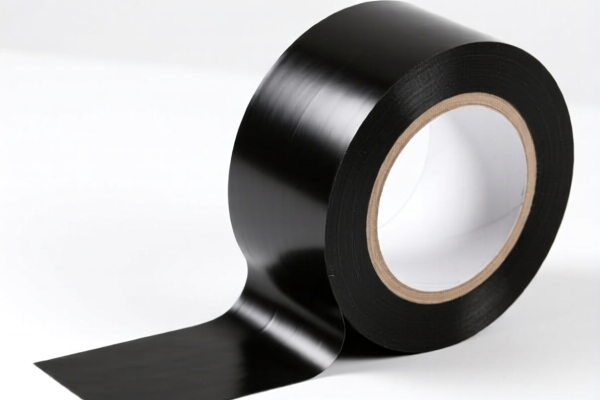
AI Analysis
🧪 Isobutene Isoprene (Butyl) Rubber (IIR) Tape Raw Material
🌐 HS Code Reference & Customs Clearance Guide | 2026 Latest Tariff Analysis | Professional Grade Strategy
📌 I. Product Definition & Classification: What Exactly is "IIR Tape Raw Material"?
Isobutene Isoprene Rubber, commonly known as Butyl Rubber (IIR), is a synthetic rubber made from isobutene with a small amount of isoprene. It is renowned for its excellent air retention, chemical resistance, and shock absorption.
In international trade, the classification of "IIR Tape Raw Material" depends strictly on its physical form (film, sheet, block) and processing state (unvulcanized, compounded).
⚠️ Key Classification Logic:
- If it is in Film (Thin Sheet) form: It often falls under Chapter 39 (Plastics/Films) or Chapter 40 (Rubber Articles depending on composition). Note: The provided data suggests a specific classification logic where film forms are sometimes mapped to HS 3913 or 4005 based on specific interpretations of "primary form" vs "semi-finished".
- If it is in Sheet/Block form (Unvulcanized Compounded Rubber): It generally falls under HS 4005 (Unvulcanized Rubber Compounds).
📦 II. HS Code Classification Details (Based on Provided Data)
| HS Code | Product Description | Applicability / Logic | Tax Rate |
|---|---|---|---|
3913.90.10.00 |
IIR Film – Chemical derivative of natural rubber in primary form | Classified as a primary form plastic/film derivative. Fits the logic of "Chemical Derivative" under Chapter 39. | 35.0% |
4005.99.00.00 |
IIR Sheet/Slab – Unvulcanized compounded rubber | Classified under "Other" unvulcanized rubber compounds. Fits the logic for sheets/slabs not specifically listed elsewhere. | 35.0% |
4002.39.00.00 |
IIR Film – Synthetic Rubber Primary/Semi-finished Form | Classified as Synthetic Rubber (Chapter 40). Specifically for IIR in film form, treated as a common primary/semi-finished rubber product. | 35.0% |
4005.91.00.00 |
IIR (Unvulcanized Mixed Rubber) Film | Classified under "Plates, Sheets, and Strip" of unvulcanized rubber compounds. Fits the "Film" morphology under Chapter 40 logic. | 35.0% |
3913.90.20.90 |
IIR (Synthetic/Modified Polymer) Film | Classified as Synthetic/Modified Polymer in primary form. This code carries a higher base tariff. | 40.8% |
🔍 Critical Distinction:
- The primary difference between4005and3913codes lies in whether customs views the material as a "Rubber Compound" (4005) or a "Polymer Film/Chemical Derivative" (3913).
- Code3913.90.20.90is more expensive (40.8%) due to a higher base tariff (5.8% vs 0%). Always verify if your specific formulation can be classified under the 0% base codes (4005or3913.90.10) to save costs.
💰 III. 2026 Latest Tariff Rate Breakdown (Including Surcharges)
✅ Applicable Country: United States (US)
✅ Origin: China (CN)
✅ Effective Time: 2025/2026 (Current Trade Policies)
🎯 1. Most Common Codes: 3913.90.10.00, 4005.99.00.00, 4002.39.00.00, 4005.91.00.00
| Item | Content |
|---|---|
| Base Tariff | 0.0% (ad valorem) |
| Section 301 Tariff | +25.0% (Additional Tariff on Chinese Goods) |
| Section 122 Tariff | +10.0% (Specific tariff on certain rubber/polymer products) |
| Total Tariff | 35.0% |
| Calculation | CIF Value × 35% |
| De Minimis Exemption? | ❌ NO (Denied for rubber compounds/polymers under these codes) |
| Legal Path | Base Rate 0% → USITC Section 301: +25% → Section 122: +10% |
📌 Explanation:
- These codes benefit from a 0% base tariff, but the Section 301 (25%) and Section 122 (10%) surcharges apply, bringing the total to 35%.
- This is a high-cost entry, but significantly cheaper than Code3913.90.20.90.
🎯 2. High-Tariff Code: 3913.90.20.90
| Item | Content |
|---|---|
| Base Tariff | 5.8% (ad valorem) |
| Section 301 Tariff | +25.0% |
| Section 122 Tariff | +10.0% |
| Total Tariff | 40.8% |
| Calculation | CIF Value × 40.8% |
| Legal Path | Base Rate 5.8% → USITC Section 301: +25% → Section 122: +10% |
📌 Warning:
- This code has a 5.8% base tariff, making it 5.8% more expensive than the other listed codes.
- Avoid this code if your product can legally be classified under4005or3913.90.10to save significant costs.
🛠️ IV. Customs Clearance Practical Advice (Avoid Pitfalls)
✅ 1. Required Documentation Checklist
| Document | Mandatory? | Notes |
|---|---|---|
| ✅ Product Specification Sheet | ✔️ | Must detail: Chemical composition (Isobutene/Isoprene ratio), physical state (Film/Sheet), thickness, unvulcanized status. |
| ✅ Formula/Composition Certificate | ✔️ | Crucial to prove it is "Rubber Compound" (4005) vs "Polymer Film" (3913). |
| ✅ Photos (Label & Product) | ✔️ | Show raw material form (e.g., rolls, slabs, not finished tape products). |
| ✅ Certificate of Origin (CO) | ✔️ | If shipped from China, expect tariffs. If from Vietnam/Malaysia, check for exemptions. |
| ✅ Commercial Invoice | ✔️ | Clearly state "Unvulcanized Isobutene-Isoprene Rubber (IIR)" – Do NOT say "Finished Tape". |
| ✅ Packing List | ✔️ | Confirm packaging type (drums, rolls, etc.). |
✅ 2. Declaration Tips (Key Mnemonics)
🔥 "Raw Material, Not Finished Tape! Unvulcanized, State Clearly!"
| Scenario | Correct Declaration | Wrong Practice |
|---|---|---|
| Raw Rubber Rolls/Slabs | 4005.99.00.00 (Unvulcanized Rubber Compound) |
Declare as "Rubber Tape" → May be reclassified or delayed. |
| Rubber Film (Thin) | 4005.91.00.00 or 3913.90.10.00 |
Declare as "Finished Product" → Higher tax risk. |
| Modified Polymer Film | 3913.90.20.90 (Only if no better fit) |
Assume 3913.90.10 applies → Risk of audit if base rate differs. |
| Finished IIR Tape (Processed) | Different HS Code (e.g., 4016/4017) | Declaring raw material as finished product → Fraud risk. |
✅ 3. Special Considerations
| Situation | Handling Advice |
|---|---|
| OEM Custom Formulation | Provide batch-specific formulas to justify 4005 (Compound) over 3913 (Polymer). |
| Mixed with Fillers/Oils | Must be declared as "Compounded Rubber" (4005). Pure IIR might lean toward 4002. |
| Import from Non-China Origins | If from Vietnam/Malaysia, apply for IEEPA Exemptions or lower tariffs. Check FTAs. |
| Small Quantity Samples | De Minimis ($800) does NOT apply due to Section 301/122 restrictions on rubber. Pay full duty. |
🌍 V. Global Market Comparison (2026)
| Country/Region | Recommended HS Code | Tariff (China Origin) | Certification Notes | Remarks |
|---|---|---|---|---|
| 🇺🇸 USA | 4005.99.00.00 |
35% (0% Base + 25% + 10%) | None specific for raw rubber | High tariff; focus on correct HS to avoid 40.8%. |
| 🇨🇳 China | 4005.99.00.00 |
0% - 5% (Import Duty) | None | No Section 301/122. |
| 🇪🇺 EU | 4005.99.00.00 |
0% - 4% | REACH Registration required | Low base duty; strict chemical compliance. |
| 🇲🇾 Malaysia | 4005.99.00.00 |
0% (Under CHFTA/CEPA) | CEPA Certificate needed | Significant cost saver if produced here. |
📌 Conclusion:
- The US market is the most expensive due to Section 301 and 122 tariffs.
- Classification Strategy is Key: Choosing4005or3913.90.10(35%) vs3913.90.20.90(40.8%) saves 5.8% directly.
📌 VI. Common Mistakes & Pitfalls (Blood & Tears Lessons)
❌ Mistake 1: Declaring "IIR Raw Material" as "Finished Rubber Tape"
👉 Consequence: Wrong HS Code (likely 4016/4017), potential duty evasion accusations, fines.
👉 Fix: Always specify "Unvulcanized" and "Raw Material".
❌ Mistake 2: Using 3913.90.20.90 without justification
👉 Consequence: Paying 40.8% instead of 35%.
👉 Fix: Argue that the product is a primary form derivative or rubber compound (4005/3913.90.10) with 0% base duty.
❌ Mistake 3: Ignoring "Section 122" Tariff
👉 Consequence: Underestimating costs by 10%.
👉 Fix: Always calculate Base + 25% + 10%.
✅ Correct Declaration Example:
"UNVULCANIZED ISOBUTENE-ISOPRENE RUBBER (IIR) COMPOUND, IN SHEET FORM, FOR MANUFACTURING TAPE, MODEL X, CHINA ORIGIN"
🎯 VII. Conclusion: Precision Classification, Maximize Profit!
🎯 Remember the Mnemonic:
🔹 "Raw & Unvulcanized, HS 4005 or 3913.10! Avoid 3913.20 or you lose 5.8%!"
🔹 "Total 35% in US, check origin, plan ahead!"
📌 Pro Tip:
If your IIR rubber is produced in Vietnam, Malaysia, or Thailand, check for preferential tariffs under existing FTAs. The Section 301/122 tariffs may still apply, but base rates could be lower.
📣 Immediate Action:
📞 Contact your customs broker with spec sheets and request HS Code Pre-ruling.
🚀 Save 5.8% on every container by choosing the right HS Code!
✨ Professional Customs Clearance Starts with Accurate Classification!
💼 Your Every Dollar Matters!
Customer Reviews
About HS Code Classification
The Harmonized System (HS) is an internationally standardized nomenclature developed by the World Customs Organization (WCO) to classify traded products. Over 200 countries use the HS system as the basis for customs tariffs, trade statistics, and import/export regulations.
Each HS code follows a hierarchical structure:
- Chapter (2 digits) — Broad category of goods (e.g., Chapter 84: Machinery and Mechanical Appliances)
- Heading (4 digits) — More specific grouping within the chapter
- Subheading (6 digits) — Internationally standardized breakdown, used by all WCO member countries
- National subdivisions (8-10 digits) — Country-specific extensions for further classification, such as US HTSUS 10-digit codes
Correct HS code classification is essential for smooth customs clearance, accurate duty payment, and compliance with trade regulations. Misclassification can lead to customs delays, overpayment of duties, or penalties.
When importing from CN to US, the applicable tariff rates may include:
- Most-Favored-Nation (MFN) rate — The standard duty rate applied to WTO members
- General rate — Applied to countries without trade agreements
- Trade remedy duties — Additional tariffs such as Section 301 (anti-dumping), Section 232 (national security), or countervailing duties
The information provided on this page is for reference purposes only. For official classification, please consult with your local customs authority or a licensed customs broker.