Isobutene Isoprene Butyl Rubber Plates
CN → US| HS Code | Tariff Rate | Origin | Destination | Doc |
|---|---|---|---|---|
| 4005990000 | 35.0% | CN | US | Official Doc |
| 4005910000 | 35.0% | CN | US | Official Doc |
| 4016935020 | 37.5% | CN | US | Official Doc |
| 4002310000 | 35.0% | CN | US | Official Doc |
| 4014901000 | 10.0% | CN | US | Official Doc |
Product Images
AI Analysis
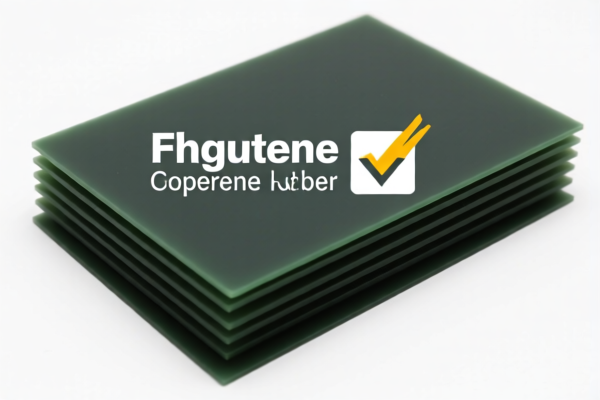
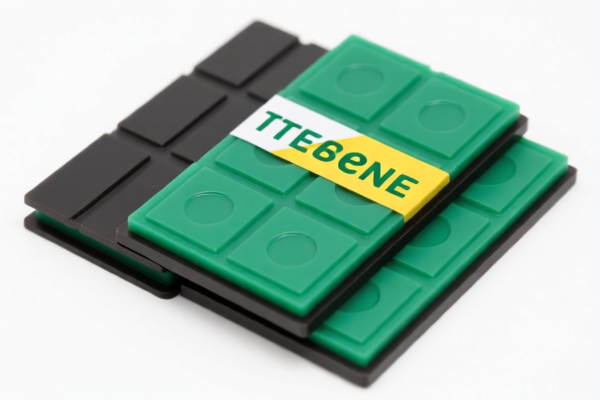
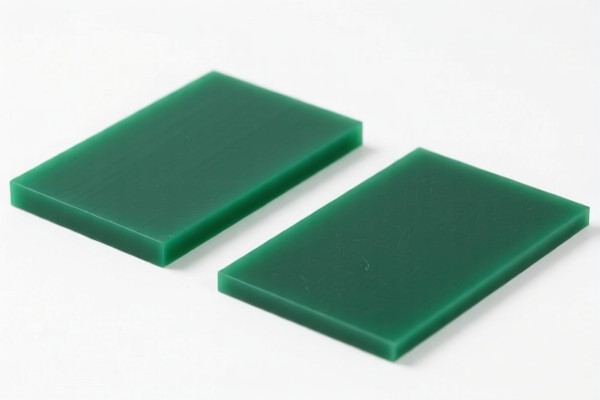
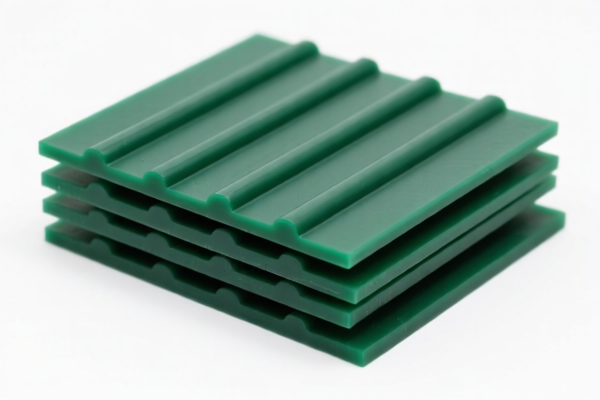
🧪 Isobutene Isoprene Butyl Rubber Plates (Butyl Rubber Sheets)
🌐 HS Code Reference & Customs Clearance Guide | 2026 Latest Tariff Analysis | Professional Clearance Strategy
📌 I. Product Definition & Classification: What Exactly Are "Butyl Rubber Plates"?
Isobutene Isoprene Rubber, commonly known as Butyl Rubber (IIR), is a synthetic rubber characterized by its excellent gas impermeability, thermal stability, and resistance to weathering. In international trade, these products are classified based on their processing state and final form:
- Unvulcanized Rubber Plates (Raw Material): Soft, pliable sheets ready for further manufacturing (e.g., molding, extrusion). These are classified under raw rubber headers.
- Vulcanized Rubber Plates (Semi-Finished/Finished Goods): Harder, set sheets used as general-purpose gaskets, liners, or insulation. These fall under "Articles of rubber."
- Specific Sealing Components: If the plate is cut, molded, or specifically designed as a seal, it may be reclassified under specific sealing articles, which often carry different duty structures.
⚠️ Key Distinction Point:
- If the product is unvulcanized (raw mix) → Classified under 4005.91
- If the product is vulcanized and a general plate → Classified under 4005.99
- If the product is vulcanized and used specifically as a seal → Classified under 4014 or 4002 (depending on interpretation)
📦 II. HS Code Classification Details (2026 Latest Tariff Authority Comparison)
| HS Code | Product Description | Applicable Scenario | Processing State |
|---|---|---|---|
4005.91.00.00 |
Unvulcanized Butyl Rubber Plates (Isobutene-Isoprene Rubber) | Raw material for manufacturing; soft, pliable sheets | ✅ Unvulcanized |
4005.99.00.00 |
Vulcanized Butyl Rubber Plates (General Articles) | General-purpose sheets, liners, or non-specific rubber sheets | ✅ Vulcanized |
4002.31.00.00 |
Butyl Rubber Seals (Treated as Functional Parts) | Sealing components specifically identified as functional seals | ✅ Vulcanized (Specialized) |
4016.93.50.20 |
Butyl Rubber Sealing Parts (Other Seals) | Specific sealing components, gaskets, or O-rings made from butyl | ✅ Vulcanized (Seal Category) |
4014.90.10.00 |
Butyl Rubber Sealing Parts (Based on Parts Rules) | Sealing parts inferred as accessories/parts under general heading | ✅ Vulcanized (Parts/Accessories) |
🔍 Key Warning:
-4005.91vs4005.99: The critical factor is vulcanization. Unvulcanized rubber is subject to 0% base tariff, while vulcanized plates may fall under different subheadings depending on specific national interpretations. - Seal vs. Plate: If the "plate" is already cut or formed into a seal, customs may reclassify it from4005(General Rubber Articles) to4014or4016(Sealing Parts). This can significantly alter the duty rate.
💰 III. 2026 Latest Tariff Rate Breakdown (Including Additional Taxes & Policy Surcharges)
✅ Applicable Country: United States (US)
✅ Country of Origin: China (CN)
✅ Effective Date: November 10, 2025 (and subsequent imports)
🎯 1. 4005.91.00.00 & 4005.99.00.00 —— Butyl Rubber Plates (Raw/Vulcanized Sheets)
| Item | Details |
|---|---|
| Base Tariff | 0% (Ad valorem) |
| Section 301 Additional Tariff | +25% (USITC Footnote 9903.88.01 equivalent for rubber) |
| Section 122 Tariff | +10% (Specific surcharge for certain industrial rubber products) |
| Total Tariff Rate | 35% |
| Calculation Basis | CIF Value × 35% |
| De Minimis Exemption | ❌ Not Eligible (deny_de_minimis) |
| Legal Authority Path | IEEPA:9903.01.24 → USITC:4005.91/99 → FOOTNOTE:9903.88.01 |
📌 Explanation:
- Although the base tariff is 0%, the 25% Section 301 and 10% Section 122 tariffs apply. - Total Effective Duty: 35%. This is a high-duty category for raw/vulcanized rubber sheets.
🎯 2. 4002.31.00.00 —— Butyl Rubber Seals (Functional Parts Interpretation)
| Item | Details |
|---|---|
| Base Tariff | 0% |
| Section 301 Additional Tariff | +25% |
| Section 122 Tariff | +10% |
| Total Tariff Rate | 35% |
| Calculation Basis | CIF Value × 35% |
| De Minimis Exemption | ❌ Not Eligible |
| Legal Authority Path | IEEPA:9903.01.24 → USITC:4002.31 → FOOTNOTE:9903.88.01 |
📌 Note:
- Even if classified as a "seal" under4002, the additional tariffs remain 25% + 10%. - No benefit is gained by reclassifying as a seal if it falls under this specific subheading.
🎯 3. 4016.93.50.20 & 4014.90.10.00 —— Butyl Rubber Sealing Parts (Seals/Accessories)
A. 4016.93.50.20 (Other Sealing Parts)
| Item | Details |
|---|---|
| Base Tariff | 2.5% |
| Section 301 Additional Tariff | +25% |
| Section 122 Tariff | +10% |
| Total Tariff Rate | 37.5% |
| Calculation Basis | CIF Value × 37.5% |
| De Minimis Exemption | ❌ Not Eligible |
📌 Warning:
- This is the highest duty rate (37.5%). The base tariff of 2.5% is added to the 35% surcharges. - Avoid this classification unless absolutely necessary for product compliance.
B. 4014.90.10.00 (Sealing Parts - Parts Rule Inference)
| Item | Details |
|---|---|
| Base Tariff | 0% |
| Section 301 Additional Tariff | 0% (Exempt or different rule applied) |
| Section 122 Tariff | +10% |
| Total Tariff Rate | 10% |
| Calculation Basis | CIF Value × 10% |
| De Minimis Exemption | ❌ Not Eligible (Check specific ruling) |
| Legal Authority Path | IEEPA:9901.25 → USITC:4014.90 → FOOTNOTE:9901.25 |
📌 CRITICAL OPPORTUNITY:
- This is the LOWEST duty rate (10%). - If the product can be justified as a "Sealing Part" under heading 4014 (rather than 4016 or 4005), you may avoid the 25% Section 301 tariff, leaving only the 10% Section 122 tariff. - Strategy: Prove the product is a specific part/accessory for a machine or system, not just a generic sheet or seal.
🛠️ IV. Customs Clearance Practical Advice (Real-World Pitfall Guide)
✅ 1. Document Checklist (Mandatory)
| Document | Must Provide | Description |
|---|---|---|
| ✅ Product Specification Sheet | ✔️ | Must state: Material (Butyl Rubber IIR), State (Vulcanized/Unvulcanized), Hardness, Dimensions. |
| ✅ Material Safety Data Sheet (MSDS) | ✔️ | Confirms chemical composition (Isobutene-Isoprene). |
| ✅ Product Photos | ✔️ | Clear images showing the product shape, packaging, and any markings. |
| ✅ Certificate of Origin | ✔️ | Required to prove Chinese origin for surcharge calculation. |
| ✅ Commercial Invoice | ✔️ | Must clearly describe the product as "Butyl Rubber Plates/Seals" and indicate HS Code. |
| ✅ Structure Diagram (if applicable) | ✔️ | Essential for 4014 classification to prove it is a "Part" rather than a "Sheet." |
✅ 2. Classification Strategy (Key Tips)
🔥 “Vulcanize it right, define it tight, 10% vs 35%, choose wisely!”
| Scenario | Correct Classification | Risk if Incorrect |
|---|---|---|
| Raw, unvulcanized sheets | 4005.91.00.00 |
Misdeclaring as vulcanized → No major tax saving, but compliance risk. |
| Generic vulcanized plates | 4005.99.00.00 |
Misdeclaring as 4014 → High risk of audit, potential penalty + 25% additional duty. |
| Specific sealing parts (Proven as Parts) | 4014.90.10.00 |
Best Option (10%). Requires strong justification that it is a "part" not a "general seal." |
| General seals/gaskets | 4016.93.50.20 or 4002.31 |
Higher duty (35-37.5%). Avoid if 4014 is applicable. |
✅ 3. Special Situations
| Situation | Handling Advice |
|---|---|
| OEM Custom Seals | Provide design drawings to prove the product is a specific "part" for a client’s machine, supporting 4014 classification. |
| Mixed Shipments | If shipping both plates and seals, declare separately. Do not mix 4005 and 4014 on one line item. |
| Section 122 Target | Note that Section 122 (10%) applies to all Chinese rubber goods in this dataset. Only Section 301 (25%) can be avoided via 4014. |
🌍 V. Global Market Comparison (2026 Update)
| Country/Region | Recommended HS Code | Total Tariff (China Origin) | Remarks |
|---|---|---|---|
| 🇺🇸 USA | 4014.90.10.00 |
10% (if part) / 35% (if sheet/seal) | 4014 is the optimal classification. |
| 🇨🇳 China | 4005.99.00.00 |
~5-8% | Domestic production, low impact. |
| 🇪🇺 EU | 4008.99.00 |
0% (if raw) / ~5% (vulcanized) | No Section 301/122 equivalents. |
| 🇬🇧 UK | 4008.99.00 |
~5-10% | Post-Brexit tariffs apply. |
📌 Conclusion:
- USA is the only market with high additional tariffs (301 + 122). - Optimization Opportunity: If your product is a butyl rubber seal, attempt to classify it under4014.90.10.00to reduce the total tariff from 35% to 10%. This requires strong technical documentation proving it is a "part" rather than a "general article of rubber."
📌 VI. Common Errors & Pitfalls (Lessons Learned)
❌ Error 1: Declaring all butyl rubber products as 4005 (Plates)
👉 Consequence: You pay 35% tax. If it qualifies as a 4014 part, you overpay by 25%.
❌ Error 2: Using vague descriptions like "Rubber Sheet"
👉 Consequence: Customs may classify it as 4016 (37.5%) or 4005 (35%) based on their discretion.
❌ Error 3: Ignoring Section 122
👉 Consequence: Even if you save the 301 tariff, the 10% Section 122 still applies to all entries in this dataset.
✅ Correct Approach:
“Butyl Rubber Sealing Part, Vulcanized, Custom-Molded, Model XYZ, For Use in Industrial Valve Systems”
(Note: Emphasize "Part" and "Specific Use" to support4014classification.)
🎯 VII. Conclusion: Professional Declaration, Cost Saving, Efficiency!
🎯 Remember the Mantra:
🔹 "If it’s a sheet, it’s 35%. If it’s a part, it’s 10%. Define it as a part, save 25%!"
🔹 "Section 122 is always 10%. Section 301 is the battle."
📌 Pro Tip:
- If your product is a custom-molded seal, provide engineering drawings and function descriptions to Customs brokers to support
4014.90.10.00.- Always verify the vulcanization state (Unvulcanized vs. Vulcanized) as it affects the base HS Code (
4005.91vs4005.99), though the total tax rate remains similar for4005items.
📣 Immediate Action:
📞 Consult a Customs Broker to review your product’s technical specifications.
📄 Request an Advance Ruling if possible, to lock in the4014classification for 10% duty.
🚀 Optimize your supply chain to avoid the 35% trap!
✨ Professional clearance starts with precise classification!
💼 Every 1% of duty saved is profit earned!
Customer Reviews
About HS Code Classification
The Harmonized System (HS) is an internationally standardized nomenclature developed by the World Customs Organization (WCO) to classify traded products. Over 200 countries use the HS system as the basis for customs tariffs, trade statistics, and import/export regulations.
Each HS code follows a hierarchical structure:
- Chapter (2 digits) — Broad category of goods (e.g., Chapter 84: Machinery and Mechanical Appliances)
- Heading (4 digits) — More specific grouping within the chapter
- Subheading (6 digits) — Internationally standardized breakdown, used by all WCO member countries
- National subdivisions (8-10 digits) — Country-specific extensions for further classification, such as US HTSUS 10-digit codes
Correct HS code classification is essential for smooth customs clearance, accurate duty payment, and compliance with trade regulations. Misclassification can lead to customs delays, overpayment of duties, or penalties.
When importing from CN to US, the applicable tariff rates may include:
- Most-Favored-Nation (MFN) rate — The standard duty rate applied to WTO members
- General rate — Applied to countries without trade agreements
- Trade remedy duties — Additional tariffs such as Section 301 (anti-dumping), Section 232 (national security), or countervailing duties
The information provided on this page is for reference purposes only. For official classification, please consult with your local customs authority or a licensed customs broker.