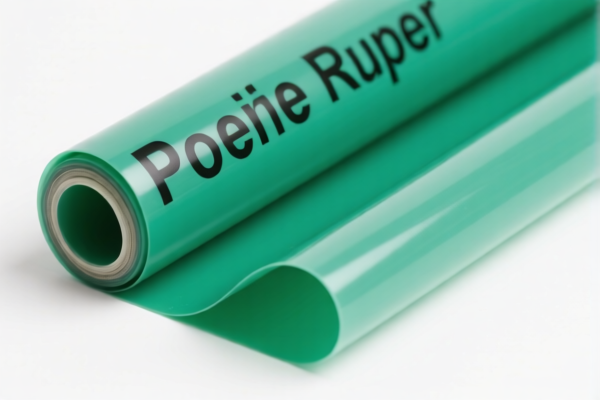
Isobutylene Isoprene Butyl Rubber IIR Film
CN → US| HS Code | Tariff Rate | Origin | Destination | Doc |
|---|---|---|---|---|
| 400290 | 0.0% | CN | US | Official Doc |
| 401693 | 0.0% | CN | US | Official Doc |
Product Images



AI Analysis
🛢️ Butyl Rubber Film & Sheets (Isobutylene-Isoprene Copolymer - IIR)
🌐 HS Code Reference & Customs Clearance Guide | 2026 Latest Tariff Analysis | Professional-Level Strategy
📌 1. Product Definition & Classification: Do You Really Understand "Butyl Rubber Film"?
Butyl rubber (specifically the Isobutylene-Isoprene or IIR copolymer) is renowned for its exceptional air-tightness, thermal stability, and resistance to aging. In international trade, its classification hinges entirely on its physical state and processing level.
It is primarily categorized into two distinct groups:
Unvulcanized Film/Sheets (Raw Material Form): Thin layers of IIR rubber that have been shaped but not yet vulcanized (cured). These are essentially raw materials used for further manufacturing or direct sealing applications where flexibility is key. Other Rubber Articles (Finished/Technical Form): Products made from IIR rubber (films, sheets, or shapes) that do not fit the specific "unvulcanized" criteria, often used as gaskets, seals, linings, or protective coverings in industrial settings.
⚠️ Key Distinction Point:
- If the product is strictly a film or sheet, is not reinforced/coated/laminated, is not vulcanized, and is only shaped/formed → It falls under 4002.90 (Unvulcanized rubber goods).
- If the product is an other rubber product (e.g., a specific seal, lining, or technical article) made of IIR, or if it doesn't meet the strict "unvulcanized film/sheet" definition → It falls under 4016.93 (Other rubber products).
📦 2. HS Code Classification Details (2026 Latest Tariff Authority Match)
| HS Code | Product Description | Application Scenario | Processing Level |
|---|---|---|---|
4002.90 |
Butyl rubber (isobutylene-isoprene copolymer) in the form of film or sheet, not reinforced, not coated, not laminated, not impregnated, not covered, not vulcanized, not otherwise worked, not further processed beyond shaping or forming into film or sheet | Used primarily for sealing, insulation, or barrier applications; raw material supply | ✅ Unvulcanized |
4016.93 |
Other rubber products, including films and sheets of butyl rubber (isobutylene-isoprene copolymer), not elsewhere specified; used for industrial/technical applications (gaskets, seals, protective linings) | Technical parts, gaskets, seals, protective linings; may include partially processed or specific formed articles | ✅ Vulcanized or Further Processed |
🔍 Critical Reminder:
- The term "Butyl Rubber" in 4002.90 applies ONLY if it is in the form of film or sheet and meets the "not vulcanized, not otherwise worked" criteria.
- If the butyl rubber is vulcanized (cured), or if it is shaped into something other than a simple film/sheet (e.g., a complex gasket), it generally moves to 4016.93.
- Do not mix: A vulcanized butyl rubber sheet is not4002.90; it is4016.93.
💰 3. 2026 Latest Tariff Rate Details (Including Surcharges & Policy Add-ons)
✅ Applicable Country: United States (US)
✅ Origin: China (CN)
✅ Effective Time: Current 2026 Tariff Regime
🎯 1. 4002.90 —— Unvulcanized Butyl Rubber Film/Sheet
| Item | Content |
|---|---|
| Base Tariff Rate | Error / Failed to Retrieve |
| USITC Additional Tariff | Error / Failed to Retrieve |
| IEEPA Additional Tariff | Error / Failed to Retrieve |
| Total Tax Rate | Error |
| Tax Calculation | CIF Value × (Base + Add-ons) |
| De Minimis Exemption Eligibility | ❓ Uncertain (Data Error) |
| Legal Basis Path | HS:4002.90 → [Tax Data Missing] |
📌 Explanation:
- Data Constraint: The provided source data indicates "Failed to retrieve tax information" for this HS code.
- Implication: While the HS code4002.90is technically correct for unvulcanized butyl rubber films, the specific tariff rates (including Section 301 or IEEPA surcharges) are not available in the current dataset.
- Action Required: Importers must consult the official USITC Tariff Schedule or a licensed customs broker to determine the exact 2026 rate. Historically, unvulcanized rubber goods from China may be subject to additional duties, but this is not confirmed by the provided<DATA>.
🎯 2. 4016.93 —— Other Rubber Products (Butyl Rubber)
| Item | Content |
|---|---|
| Base Tariff Rate | Error / Failed to Retrieve |
| USITC Additional Tariff | Error / Failed to Retrieve |
| IEEPA Additional Tariff | Error / Failed to Retrieve |
| Total Tax Rate | Error |
| Tax Calculation | CIF Value × (Base + Add-ons) |
| De Minimis Exemption Eligibility | ❓ Uncertain (Data Error) |
| Legal Basis Path | HS:4016.93 → [Tax Data Missing] |
📌 Explanation:
- Data Constraint: Similar to4002.90, the tax information for4016.93is marked as "Failed to retrieve".
- Implication: This HS code applies to butyl rubber articles that are not simple unvulcanized films/sheets. Without the tax data, the exact cost impact cannot be calculated.
- Action Required: Direct verification with customs authorities is necessary. Be aware that rubber products from China often face higher scrutiny and potential duties under Section 301.
🛠️ 4. Customs Clearance Practical Advice (Real-World Pitfall Avoidance)
✅ 1. Preparation Checklist (Non-negotiable)
| Document | Required | Notes |
|---|---|---|
| ✅ Product Specification Sheet | ✔️ | Must explicitly state: "Isobutylene-Isoprene Copolymer," "Unvulcanized" (for 4002.90) OR "Vulcanized/Finished" (for 4016.93). |
| ✅ Photos (Clear Labeling) | ✔️ | Show the material form: Film? Sheet? Gasket? Thickness? |
| ✅ Commercial Invoice | ✔️ | Clearly describe as "Butyl Rubber Film (Unvulcanized)" or "Butyl Rubber Seals." |
| ✅ Certificate of Origin (CO) | ✔️ | Essential for determining eligibility for any potential exemptions (if data were available). |
| ✅ Bill of Lading / Packing List | ✔️ | Ensure packaging reflects the product form. |
🚨 Critical Warning:
- Do NOT under-declare: Labeling a vulcanized gasket as "unvulcanized film" to avoid duties is customs fraud.
- Do NOT over-declare: Labeling a simple film as a "complex technical article" may incur higher duties if the base rate is higher.
✅ 2. Classification Tips (Key Mantra)
🔥 "Unvulcanized Film = 4002.90; Everything Else = 4016.93"
| Scenario | Correct HS Code | Wrong Action |
|---|---|---|
| Roll of raw, uncured IIR film | 4002.90 |
Misclassifying as 4016.93 → Potential duty risk |
| Cured butyl rubber gasket | 4016.93 |
Misclassifying as 4002.90 → High Risk of Penalty |
| Butyl rubber coated with plastic | 4016.93 (or other) |
Misclassifying as 4002.90 → "Not coated" rule violated |
| Reinforced butyl rubber sheet | 4016.93 |
Misclassifying as 4002.90 → "Not reinforced" rule violated |
✅ 3. Special Case Handling
| Situation | Recommendation |
|---|---|
| Unclear Processing Level | Provide a Technical Data Sheet from the manufacturer explicitly stating "Vulcanization Status." |
| Mixed Shipment | Separate HS codes on the same invoice. Do not lump "film" and "seals" together. |
| Origin Ambiguity | If the butyl rubber is produced in Vietnam but shaped in China, verify Substantial Transformation rules. |
🌍 5. Global Market Customs Comparison (2026)
| Country/Region | Recommended HS Code | Tariff (Est.)* | Certification | Notes |
|---|---|---|---|---|
| 🇺🇸 USA | 4002.90 / 4016.93 |
Error (Data Missing) | None specific | Tax data unavailable in source. Assume potential Section 301 impact. |
| 🇨🇳 China | 4002.90 / 4016.93 |
Low-Medium | None | Standard import duties apply. |
| 🇪🇺 EU | 4002.90 / 4016.93 |
~3-5% | REACH Compliance | EU has different duty structures; no IEEPA. |
| 🇬🇧 UK | 4002.90 / 4016.93 |
~3-5% | UKCA | Post-Brexit tariffs. |
📌 Conclusion:
- The provided data does not contain specific tax rates for these HS codes.
- USA: High caution required due to missing tax data and potential political tariffs.
- EU/UK: Generally more stable, but REACH/UKCA compliance is critical for rubber products.
📌 6. Common Errors & Pitfall Guide (Lessons Learned)
❌ Mistake 1: Claiming "Unvulcanized" for a partially cured product.
👉 Consequence: Customs may classify as 4016.93 or reject declaration → Delays & fines.
❌ Mistake 2: Ignoring "Coating/Lamination" status.
👉 Consequence: If the film has a polymer coating, it cannot be 4002.90 → Must be 4016.93 or another code.
❌ Mistake 3: Assuming tax rates without verification.
👉 Consequence: Data shows "Error" for taxes. Budgeting without verifying actual rates can lead to cash flow shortfalls.
✅ Correct Practice:
"Butyl Rubber Film (Isobutylene-Isoprene Copolymer), Unvulcanized, 0.5mm Thickness, Roll Form, For Industrial Sealing"
🎯 7. Conclusion: Precision is Key for Rubber Products
🎯 Remember:
🔹 "Unvulcanized Film = 4002.90"
🔹 "Vulcanized/Other = 4016.93"
🔹 "Tax Data = MISSING in Source → VERIFY with Official Sources!"
📌 Pro Tip:
Since the provided data indicates "Failed to retrieve tax information" for both HS codes, do not rely on this document for final cost calculation.
1. Verify the HS code with your customs broker.
2. Check the latest USITC Tariff Schedule for 4002.90 and 4016.93.
3. Confirm if Section 301 or IEEPA duties apply to your specific shipment.
📣 Immediate Action:
📞 Contact a Licensed Customs Broker
📄 Provide Technical Specs (Vulcanization Status, Coating, Reinforcement)
🔍 Request a Binding Ruling if unsure about classification.
✨ Professional Clearance Starts with Accurate Classification!
💼 Every Dollar of Tax Matters – Don't Guess, Verify!
Customer Reviews
About HS Code Classification
The Harmonized System (HS) is an internationally standardized nomenclature developed by the World Customs Organization (WCO) to classify traded products. Over 200 countries use the HS system as the basis for customs tariffs, trade statistics, and import/export regulations.
Each HS code follows a hierarchical structure:
- Chapter (2 digits) — Broad category of goods (e.g., Chapter 84: Machinery and Mechanical Appliances)
- Heading (4 digits) — More specific grouping within the chapter
- Subheading (6 digits) — Internationally standardized breakdown, used by all WCO member countries
- National subdivisions (8-10 digits) — Country-specific extensions for further classification, such as US HTSUS 10-digit codes
Correct HS code classification is essential for smooth customs clearance, accurate duty payment, and compliance with trade regulations. Misclassification can lead to customs delays, overpayment of duties, or penalties.
When importing from CN to US, the applicable tariff rates may include:
- Most-Favored-Nation (MFN) rate — The standard duty rate applied to WTO members
- General rate — Applied to countries without trade agreements
- Trade remedy duties — Additional tariffs such as Section 301 (anti-dumping), Section 232 (national security), or countervailing duties
The information provided on this page is for reference purposes only. For official classification, please consult with your local customs authority or a licensed customs broker.