Isobutylene Isoprene Rubber Sheet
CN → US| HS Code | Tariff Rate | Origin | Destination | Doc |
|---|---|---|---|---|
| 4008210000 | 35.0% | CN | US | Official Doc |
| 4005990000 | 35.0% | CN | US | Official Doc |
| 3926909989 | 22.8% | CN | US | Official Doc |
| 4008115000 | 38.3% | CN | US | Official Doc |
| 4005910000 | 35.0% | CN | US | Official Doc |
Product Images
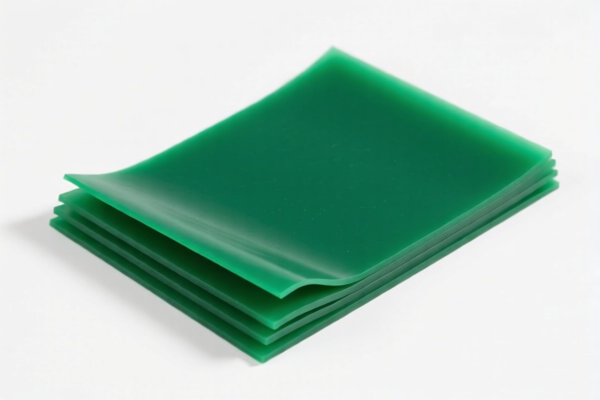
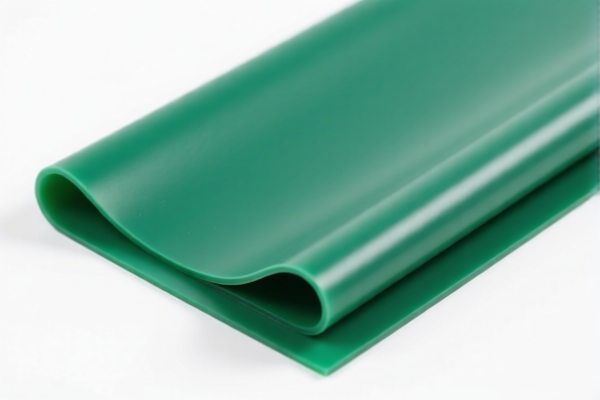
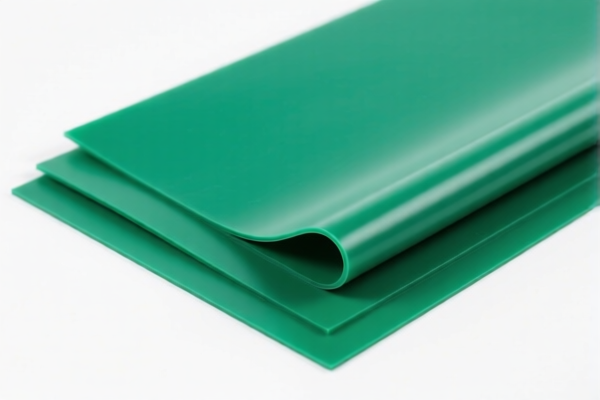
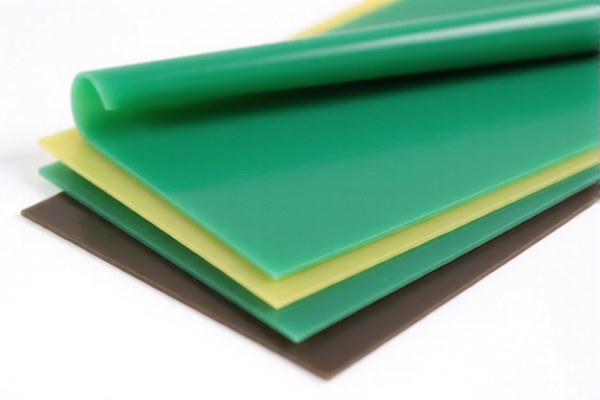
AI Analysis
🧪 Isobutylene Isoprene Rubber (IIR) Sheet / Butyl Rubber Sheet
🌐 HS Code Reference & Customs Clearance Guide | 2026 Latest Tariff Analysis | Professional Clearance Strategy for US Import
📌 I. Product Definition & Classification: What Exactly is "IIR Sheet"?
Isobutylene Isoprene Rubber, commonly known as Butyl Rubber (IIR), is a synthetic rubber characterized by low gas permeability, excellent heat resistance, and superior weathering properties. In international trade, the classification depends strictly on its processing state (Vulcanized vs. Unvulcanized) and physical form (Sheet/Plank).
Key Distinction: * Vulcanized (Cured): The rubber has undergone chemical cross-linking, becoming stable, elastic, and insoluble. It falls under Chapter 40 (Rubber and Articles Thereof). * Unvulcanized (Uncured): The rubber is in a raw or semi-processed state (e.g., masticated or compounded). It also falls under Chapter 40 but in different subheadings. * Plastic-like/Synthetic Resin: In rare cases, if the product is considered a "semi-finished good" that doesn't meet specific rubber definitions, it might be misclassified under Chapter 39 (Plastics), leading to severe compliance risks.
⚠️ Critical Clarification:
- Vulcanized Sheets are generally classified under 4008.
- Unvulcanized Sheets are generally classified under 4005.
- Do NOT classify as generic "Plastic Sheets" (Chapter 39) unless explicitly authorized by a binding ruling, as this triggers misclassification penalties.
📦 II. HS Code Classification Matrix (2026 US Customs Data)
Based on the provided dataset, here are the four distinct classifications for Isobutylene Isoprene Rubber (IIR) Sheets. Note that while the product is the same, the state of vulcanization changes the code and, consequently, the tariff structure.
| HS Code | Product Description | State of Material | Physical Form | Key Characteristic |
|---|---|---|---|---|
4008.21.00.00 |
Vulcanized Isobutylene-Isoprene Rubber Sheet | Vulcanized | Sheet | Non-foam, non-cellular. Standard cured rubber sheet. |
4005.99.00.00 |
Unvulcanized IIR Rubber Sheet | Unvulcanized | Sheet | Compounded but not yet cured. Raw material state. |
4005.91.00.00 |
Unvulcanized Mixed Rubber Sheet | Unvulcanized | Sheet | Specifically "Mixed" rubber compounds (often includes IIR blends). |
4008.11.50.00 |
Vulcanized Rubber Sheet (General) | Vulcanized | Sheet/Plank | Broad category for vulcanized rubber sheets/boards/stripes. |
3926.90.99.89 |
IIR Rubber Sheet (Misclassification Risk) | Synthetic Plastic-like | Sheet | Classified as "Other Plastic/Synthetic Rubber Articles." High Risk. |
🔍 Detailed Breakdown: -
4008.21.00.00: The most precise code for Vulcanized Butyl Rubber. "21" specifically refers to Isobutylene-Isoprene (Butyl) rubber. -4005.99.00.00&4005.91.00.00: For Unvulcanized sheets. Use4005.91if it's a specific mixed compound; use4005.99for other unvulcanized rubber sheets. -4008.11.50.00: A broader "catch-all" for vulcanized sheets if4008.21is deemed too specific or if the material composition varies slightly. -3926.90.99.89: ⚠️ WARNING: This classifies the item as a plastic article. IIR is a rubber, not a thermoplastic. Using this code is a misclassification unless the product is a hybrid composite explicitly defined as a plastic article by Customs. This carries high audit risk.
💰 III. 2026 Latest Tariff Rate Breakdown (US Import from China)
✅ Applicable Country: United States (US)
✅ Origin: China (CN)
✅ Effective Date: November 10, 2025 (and ongoing)
The total duty burden for IIR sheets from China is significant due to multiple layers of tariffs. Below is the detailed breakdown by HS Code category.
🎯 1. Vulcanized IIR Sheets (4008.21.00.00 & 4008.11.50.00)
These are the most common codes for finished rubber sheets used in gaskets, liners, and seals.
| Item | Detail |
|---|---|
| Base Duty (MFN) | 0.0% (for 4008.21.00.00) / 3.3% (for 4008.11.50.00) |
| Section 301 Duties (USITC) | +25.0% |
| IEEPA Section 1223 Duties | +10.0% |
| Total Effective Rate | 35.0% (for 4008.21.00.00) 38.3% (for 4008.11.50.00) |
| Calculation | CIF Value × Total Rate |
| De Minimis Exemption | ❌ NOT APPLICABLE (Deny De Minimis) |
| Legal Path | USITC:4008.21.00.00 + FOOTNOTE:301 + IEEPA:1223 |
📌 Explanation:
- The 25% is the standard Section 301 tariff on Chinese rubber goods.
- The 10% is the additional IEEPA tariff on specific Chinese imports.
- Total 35%-38.3% is a heavy cost factor. You must price your goods accordingly.
🎯 2. Unvulcanized IIR Sheets (4005.99.00.00 & 4005.91.00.00)
Used for manufacturing further downstream (e.g., molded parts).
| Item | Detail |
|---|---|
| Base Duty (MFN) | 0.0% |
| Section 301 Duties (USITC) | +25.0% |
| IEEPA Section 1223 Duties | +10.0% |
| Total Effective Rate | 35.0% |
| Calculation | CIF Value × 35% |
| De Minimis Exemption | ❌ NOT APPLICABLE |
| Legal Path | USITC:4005.99.00.00 + FOOTNOTE:301 + IEEPA:1223 |
📌 Note:
- Despite being "raw" rubber, it is still subject to the same 35% total tariff as vulcanized sheets.
- No duty reduction for being unprocessed.
🎯 3. Misclassified "Plastic" Sheet (3926.90.99.89)
⚠️ High Risk Category
| Item | Detail |
|---|---|
| Base Duty (MFN) | 5.3% |
| Section 301 Duties (USITC) | +7.5% |
| IEEPA Section 1223 Duties | +10.0% |
| Total Effective Rate | 22.8% |
| De Minimis Exemption | ❌ NOT APPLICABLE |
📌 Warning:
- While the rate (22.8%) is lower than the correct rubber codes (35%), this classification is incorrect for pure IIR Rubber.
- Customs may audit and reclassify the goods to4008or4005, resulting in:
1. Back Taxes: Difference between 22.8% and 35%.
2. Penalties: Up to 100% of the value of the goods for negligence or fraud.
3. Delays: Goods held in bond while classification is disputed.
- Recommendation: Do NOT use this code unless you have a binding ruling confirming the product is considered a "plastic article."
🛠️ IV. Customs Clearance Practical Advice (Avoid Pitfalls)
✅ 1. Essential Documentation Checklist
| Document | Requirement | Notes |
|---|---|---|
| ✅ Product Specification Sheet | Required | Must explicitly state: "Isobutylene Isoprene Rubber (IIR)" and "Vulcanized" or "Unvulcanized." |
| ✅ Certificate of Origin (CO) | Required | To prove Chinese origin (triggers 301/1223 tariffs). |
| ✅ Commercial Invoice | Required | Must describe goods as "IIR Rubber Sheet," not just "Rubber Sheet" or "Plastic Sheet." |
| ✅ Packing List | Required | Weight and dimensions per package. |
| ✅ Test Report (Optional but Recommended) | Helpful | Lab report confirming chemical composition (IIR content) to defend against Chapter 39 misclassification. |
✅ 2. Declaration Best Practices (The "Golden Rules")
🔥 Rule 1: Be Specific, Not Generic.
❌ Bad: "Rubber Sheet"
✅ Good: "Isobutylene-Isoprene Rubber (Butyl) Sheet, Vulcanized, Non-foam, 2mm thickness"🔥 Rule 2: Declare Correctly to Avoid Penalties.
- If you declare3926.90.99.89to save 12.2% in duties, you risk a penalty that could exceed the savings.
- Always use4008or4005for genuine IIR rubber.🔥 Rule 3: Handle Section 301 & IEEPA Tariffs.
- These tariffs are non-negotiable for Chinese-origin IIR sheets.
- Ensure your HS Code is correctly linked to the Footnotes in the HTSUS to ensure the 35% rate is applied correctly and not missed.
✅ 3. Special Scenarios
| Scenario | Action |
|---|---|
| Mixed with Fillers (Carbon Black, Oil) | Still classified under 4005 or 4008. The presence of fillers does not move it to Chapter 39 unless the rubber content is negligible. |
| Re-importation of Returned Goods | If you originally exported and are re-importing, you may claim a Section 301 Exclusion or duty drawback, but you must prove the goods were previously exported. |
| Small Samples (< $800) | ⚠️ De Minimis ($800) does NOT apply to IIR rubber sheets from China due to Section 301/IEEPA restrictions on certain rubber articles. Every shipment is liable for duty. |
🌍 V. Global Market Comparison (2026)
| Region | HS Code | Base Duty | Additional Tariffs (China) | Total Estimate | Notes |
|---|---|---|---|---|---|
| 🇺🇸 USA | 4008.21.00.00 |
0% | +25% (301) +10% (IEEPA) | 35% | Strict enforcement. |
| 🇨🇳 China (Export) | 4008.21.00.00 |
N/A | Export Tax: 0% | 0% | No export duty on rubber sheets. |
| 🇪🇺 EU | 4008.21.00 |
6.5% | N/A (No EU 301 equivalent) | 6.5% | Lower barrier, but anti-dumping duties may apply. |
| 🇯🇵 Japan | 4008.21.00 |
5.0% | N/A | 5.0% | JEFTA Agreement may offer 0% for future partners. |
| 🇰🇷 South Korea | 4008.21.00 |
8.0% | N/A | 8.0% | KORUS/ROC FTAs may apply if originating elsewhere. |
📌 Conclusion for US Importers:
The 35% tariff burden makes IIR sheets from China expensive. Consider:
1. Supply Chain Diversification: Source from Vietnam, Thailand, or Malaysia (if rubber is locally sourced) to avoid Chinese-origin tariffs.
2. Duty Drawback: If the sheets are used to manufacture exported goods, claim drawback.
3. Binding Ruling: Obtain a CBP Binding Ruling if your product is a hybrid to ensure it’s not misclassified under Chapter 39.
📌 VI. Common Errors & Pitfalls (Lessons Learned)
❌ Error 1: Calling it "Plastic Sheet"
👉 Result: Initial clearance might go through at 22.8%, but Customs audits will reclassify it as Rubber (35%), leading to back taxes + penalties.
❌ Error 2: Using Generic "Rubber Sheet" (HS 4008.90)
👉 Result: Higher base duty or misalignment with specific IIR codes. Customs may reject the specificity required for IIR.
❌ Error 3: Ignoring IEEPA 10% Tariff
👉 Result: Underpayment. The 10% IEEPA tariff is separate from the 25% Section 301. Both must be paid.
✅ Correct Declaration Example:
"Isobutylene-Isoprene Rubber Sheet, Vulcanized, Non-foam, Black, 1mm Thick, Model: IIR-100, Origin: China"
HS Code:4008.21.00.00
Total Duty: 35%
🎯 VII. Conclusion: Professional Clearance, Cost Optimization
🎯 Key Takeaway:
🔹 IIR Rubber Sheets from China face a 35% Total Duty Rate.
🔹 Do NOT misclassify as Plastic (3926) to save money—it is high-risk.
🔹 Precise description is critical: "Vulcanized" vs. "Unvulcanized" changes the HS Code but not the total tariff rate significantly.📌 Pro Tip:
If you are importing high volumes, consider applying for an HTSUS Exclusion if available, or explore Foreign Trade Zones (FTZs) to defer duty payments until the goods are sold or used.
📣 Immediate Action:
📞 Consult a Licensed Customs Broker to verify the exact HS Code based on your specific product formulation.
📄 Prepare Detailed Specs showing the IIR content percentage.
💼 Budget for 35% Duty in your cost modeling.
✨ Accurate Classification Saves Money. Misclassification Costs Fortune.
💼 Your Supply Chain Needs Precision.
Customer Reviews
About HS Code Classification
The Harmonized System (HS) is an internationally standardized nomenclature developed by the World Customs Organization (WCO) to classify traded products. Over 200 countries use the HS system as the basis for customs tariffs, trade statistics, and import/export regulations.
Each HS code follows a hierarchical structure:
- Chapter (2 digits) — Broad category of goods (e.g., Chapter 84: Machinery and Mechanical Appliances)
- Heading (4 digits) — More specific grouping within the chapter
- Subheading (6 digits) — Internationally standardized breakdown, used by all WCO member countries
- National subdivisions (8-10 digits) — Country-specific extensions for further classification, such as US HTSUS 10-digit codes
Correct HS code classification is essential for smooth customs clearance, accurate duty payment, and compliance with trade regulations. Misclassification can lead to customs delays, overpayment of duties, or penalties.
When importing from CN to US, the applicable tariff rates may include:
- Most-Favored-Nation (MFN) rate — The standard duty rate applied to WTO members
- General rate — Applied to countries without trade agreements
- Trade remedy duties — Additional tariffs such as Section 301 (anti-dumping), Section 232 (national security), or countervailing duties
The information provided on this page is for reference purposes only. For official classification, please consult with your local customs authority or a licensed customs broker.