Isocyanate Mixture for Casting
CN → US| HS Code | Tariff Rate | Origin | Destination | Doc |
|---|---|---|---|---|
| 3909310000 | 41.5% | CN | US | Official Doc |
| 3909505000 | 41.3% | CN | US | Official Doc |
| 3824992600 | 35.0% | CN | US | Official Doc |
| 3824401000 | 41.5% | CN | US | Official Doc |
Product Images
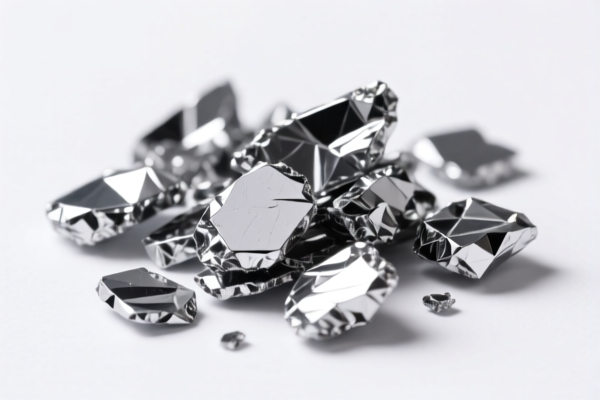

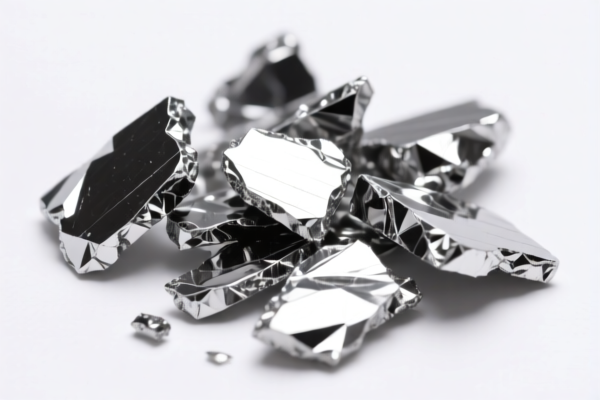

AI Analysis
🧪 Isocyanate Mixture for Casting (Casting Curing Agents)
🌐 HS Code Classification & Customs Clearance Guide | 2026 Latest Tariff Analysis | Strategic Import Strategy
📌 I. Product Definition & Classification: What Exactly Is "Isocyanate Mixture"?
Isocyanate Mixture for Casting refers to chemical curing agents or pre-formed binding agents used primarily in the manufacturing of casting molds and cores. These are critical components in foundry processes, where they react with other chemicals to harden sand molds.
In international trade, these products are not treated as a single entity. They are classified based on their chemical composition and physical state (primary form vs. prepared mixture):
1. Poly(methylene phenyl isocyanate) & Polyurethane Prepolymers:
- These are often considered "Chemical Raw Materials" or "Primary Forms."
- If the product is a specific polymer like poly(methylene phenyl isocyanate), it falls under Chapter 39 (Plastics).
2. Prepared Chemical Mixtures & Adhesives:
- If the isocyanate is part of a complex mixture, a specific dimer/trimer (e.g., phenyl 2,4-diisocyanate-1,3,5-tris(1-methylethyl)共聚物), or used specifically as a binding agent for sand molds, it may fall under Chapter 38 (Prepared Binders/Adhesives).
⚠️ Key Distinction Point:
- If the material is a specific polymer (like Poly(methylene phenyl isocyanate)) in its primary form → It is a Plastic/Chemical Raw Material (Chapter 39).
- If it is a mixture, dimer, or specifically formulated as a binding agent for molds → It is a Prepared Chemical/Binder (Chapter 38).
📦 II. HS Code Classification Details (2026 Latest Tariff Authority Comparison)
| HS Code | Product Description | Application Scenario | Chemical Nature |
|---|---|---|---|
3909.31.00.00 |
Poly(methylene phenyl isocyanate), primary form | Chemical raw material, plastic precursor | ✅ Polymer / Primary Form |
3909.50.50.00 |
Polyurethane-type isocyanate, primary form | Chemical component, polyurethane prep | ✅ Polymer / Primary Form |
3824.99.26.00 |
Specific isocyanate mixture (e.g., phenyl 2,4-diisocyanate-1,3,5-tris(1-methylethyl)共聚物) | Chemical agent, specific mixture | ❌ Mixture / Prepared Agent |
3824.40.10.00 |
Pre-formed bonding agents for metal casting molds or cores | Foundry mold/core binding | ✅ Prepared Binder / Adhesive |
🔍 Critical Reminder:
- Do not confuse "Primary Form" with "Prepared Mixture":
-3909.xxcodes apply to polymers in their basic, unmodified chemical structure (primary forms).
-3824.xxcodes apply to mixtures, dimerized products, or specifically prepared binders for industrial use (like casting). - Misclassification can lead to significant duty differences due to Section 301 and Section 232 tariffs.
💰 III. 2026 Latest Tariff Rate Breakdown (Including Surcharges & Policy Add-ons)
✅ Applicable Country: USA (US)
✅ Origin: China (CN)
✅ Effective Date: Ongoing (Section 301 & IEEPA measures)
🎯 1. 3909.31.00.00 – Poly(methylene phenyl isocyanate)
| Item | Content |
|---|---|
| Base Duty Rate | 6.5% (Ad Valorem) |
| Section 301 Surcharge | +25.0% (Trump-era tariffs still in effect) |
| Section 232 / IEEPA Surcharge | +10.0% (122 Clause Tariff for Chinese origin) |
| Total Duty Rate | 41.5% |
| Tax Calculation | CIF Value × 41.5% |
| De Minimis Eligibility | ❌ Not Eligible (Deny De Minimis for Section 301 items) |
| Legal Basis Path | USITC:3909.31.00.00 → Section 301: Footnote 9903.88.01 → IEEPA:9903.01.25 |
📌 Explanation:
- This code classifies the product as a polymer plastic material. - The high tax burden (41.5%) is due to the cumulative effect of the base duty, the 301 additional tariff, and the 10% IEEPA surcharge. - Crucial: Even if marketed as a "casting agent," if the chemical structure is primarily poly(methylene phenyl isocyanate), it attracts this higher duty tier.
🎯 2. 3909.50.50.00 – Polyurethane-type Isocyanate
| Item | Content |
|---|---|
| Base Duty Rate | 6.3% (Ad Valorem) |
| Section 301 Surcharge | +25.0% |
| Section 232 / IEEPA Surcharge | +10.0% |
| Total Duty Rate | 41.3% |
| Tax Calculation | CIF Value × 41.3% |
| De Minimis Eligibility | ❌ Not Eligible |
| Legal Basis Path | USITC:3909.50.50.00 → Section 301: Footnote 9903.88.01 → IEEPA:9903.01.25 |
📌 Note:
- Slightly lower base duty (6.3% vs 6.5%) compared to3909.31.00.00, but the total rate is still extremely high. - Applies to polyurethane-based isocyanates in primary form.
🎯 3. 3824.99.26.00 – Specific Isocyanate Mixture (e.g., Dimer/Trimer)
| Item | Content |
|---|---|
| Base Duty Rate | 0.0% (Ad Valorem) |
| Section 301 Surcharge | +25.0% |
| Section 232 / IEEPA Surcharge | +10.0% |
| Total Duty Rate | 35.0% |
| Tax Calculation | CIF Value × 35.0% |
| De Minimis Eligibility | ❌ Not Eligible |
| Legal Basis Path | USITC:3824.99.26.00 → Section 301: Footnote 9903.88.01 → IEEPA:9903.01.25 |
📌 Explanation:
- This code applies to prepared chemical mixtures or specific complex isocyanates (like the phenyl 2,4-diisocyanate derivative). - Key Advantage: The base duty is 0%, resulting in a 6.5% lower total duty compared to the polymeric codes (3909.xx). - Caution: Requires precise chemical identification to prove it is a "mixture" or specific dimer/trimer, not a simple primary polymer.
🎯 4. 3824.40.10.00 – Pre-formed Bonding Agents for Castings
| Item | Content |
|---|---|
| Base Duty Rate | 6.5% (Ad Valorem) |
| Section 301 Surcharge | +25.0% |
| Section 232 / IEEPA Surcharge | +10.0% |
| Total Duty Rate | 41.5% |
| Tax Calculation | CIF Value × 41.5% |
| De Minimis Eligibility | ❌ Not Eligible |
| Legal Basis Path | USITC:3824.40.10.00 → Section 301: Footnote 9903.88.01 → IEEPA:9903.01.25 |
📌 Note:
- Applies to the product based on its end-use: specifically for "pre-formed bonding agents for metal casting molds or cores." - Despite being a "prepared binder," the base duty is 6.5%, leading to the high 41.5% total rate. - Misclassification Risk: If you classify as3824.40.10.00but the product is actually a primary polymer (3909.xx), you may face customs audits and penalties.
🛠️ IV. Customs Clearance Operational Advice (Practical Pitfall Avoidance Guide)
✅ 1. Required Documentation Checklist (Missing items = Delays/Seizure)
| Document | Mandatory? | Explanation |
|---|---|---|
| ✅ Product Specification Sheet | ✔️ | Must detail chemical composition, CAS numbers, and physical state (liquid/powder). |
| ✅ MSDS (Material Safety Data Sheet) | ✔️ | Crucial for isocyanates (hazardous chemicals). Must confirm if classified as "pre-formed binding agent." |
| ✅ Commercial Invoice | ✔️ | Must explicitly state: "Isocyanate Mixture for Casting," not just "Chemical." |
| ✅ Certificate of Origin (CO) | ✔️ | Required for origin verification to apply Section 301/IEEPA tariffs. |
| ✅ Bill of Lading | ✔️ | Standard shipping document. |
| ✅ Usage Declaration | ✔️ | State clearly: "For use in foundry mold/cor core binding." |
✅ 2. Declaration Strategy (Key Mnemonics)
🔥 “Chemical Structure First, End-Use Second, Name Accurate, Tax Down!”
| Scenario | Correct Declaration | Wrong Approach |
|---|---|---|
| Product is Poly(methylene phenyl isocyanate) | 3909.31.00.00 (41.5%) |
Misdeclare as 3824.40.10.00 → Audit Risk & Penalty |
| Product is a Polyurethane Prepolymer | 3909.50.50.00 (41.3%) |
Generic "Chemical Agent" → Customs Rejection |
| Product is a Specific Mixture/Dimer | 3824.99.26.00 (35.0%) |
❌ Best Option if chemically accurate |
| Product is Pre-formed Sand Mold Binder | 3824.40.10.00 (41.5%) |
Only if it meets the "pre-formed binding agent" definition |
📌 Critical Insight:
-3824.99.26.00is the only code with a 0% base duty, making it the most cost-effective option IF the product's chemical composition qualifies as a specific mixture/dimer. - Do not arbitrarily choose a lower-duty code without chemical evidence. CBP (U.S. Customs and Border Protection) will demand proof.
✅ 3. Special Situation Handling
| Situation | Handling Advice |
|---|---|
| OEM Custom Formulation | Provide detailed chemical analysis to justify 3824.99.26.00 if applicable. |
| Multi-component Kits | If sold as a kit (isocyanate + hardener), declare the dominant component or the set as per GRI 3(b). |
| Hazardous Material | Ensure proper UN classification and DOT labeling. Isocyanates are often regulated. |
| Pre-ruling Request | Strongly recommended to file an Advance Ruling with CBP if the chemical nature is ambiguous. |
🌍 V. Global Market Customs Comparison (2026 Latest)
| Country/Region | Recommended HS Code | Estimated Duty (China Origin) | Certification Requirements | Notes |
|---|---|---|---|---|
| 🇺🇸 USA | 3824.99.26.00 (if eligible) |
35.0% | DOT, OSHA SDS | Highest risk of 301/IEEPA surcharges. |
| 🇺🇸 USA | 3909.31.00.00 (if polymer) |
41.5% | DOT, OSHA SDS | Common for primary polyurethane chemicals. |
| 🇨🇳 China | 3909.31 / 3824.40 |
6.5% / 6.3% | No major surcharges | Low base duty, no Section 301. |
| 🇪🇺 EU | 3909.40 / 3824.99 |
0% - 6.5% | REACH, SDS | No additional punitive tariffs like US. |
| 🇮🇳 India | 3909.31 / 3824.99 |
7.5% - 10% | BIS, Standard Mark | Basic customs duty + social welfare surcharge. |
📌 Conclusion:
- The USA market is the most challenging due to the cumulative 35-41.5% tariff. - Cost Optimization: If your product is chemically a mixture/dimer, strive to classify under3824.99.26.00to save 6.5% on the total CIF value. - Compliance: Always maintain MSDS and chemical structure proofs.
📌 VI. Common Errors & Pitfall Guide (Blood and Tears Lessons)
❌ Error 1: Declaring all isocyanates as "Pre-formed Binders" (3824.40.10.00)
👉 Consequence: If CBP determines it is a primary polymer (3909.xx), you face penalties for misclassification and potential back taxes.
👉 Reality: Both codes have ~41.5% duty, so the savings aren't there, but the risk of audit is high.
❌ Error 2: Ignoring the 10% IEEPA Surcharge
👉 Consequence: Underestimating total landed cost by 10%.
👉 Reality: This 10% applies to all these HS codes for Chinese origin.
❌ Error 3: Assuming "De Minimis" Exemption for Small Shipments
👉 Consequence: Packages valued under $800 are NOT exempt from Section 301/IEEPA tariffs for these chemical codes.
👉 Reality: Deny De Minimis is strictly enforced for Chinese-origin chemicals in these categories.
❌ Error 4: Incorrect MSDS Labeling
👉 Consequence: Customs seizure or delay due to hazardous material non-compliance.
👉 Reality: Isocyanates are hazardous. Proper UN labeling is mandatory.
✅ Correct Action:
"Isocyanate Mixture for Casting, Chemical Name: [Specific Name], CAS No: [Number], Used for Foundry Mold Binding, SDS Attached, Origin: China."
🎯 VII. Conclusion: Precise Classification, Cost Savings, Compliance!
🎯 Key Takeaways:
🔹 "Structure Dictates Code, Mixture Saves Tax"
- If you can legally classify as3824.99.26.00(Mixture/Dimer), you save 6.5% compared to polymer codes.
- If it is a primary polymer, you must pay ~41.5%.🔹 "No De Minimis for Chinese Chemicals"
- Even small samples are subject to full tariffs (35-41.5%). Do not rely on $800 exemption.🔹 "Documentation is King"
- MSDS, Chemical Structure, and Usage Declaration are non-negotiable.
📌 Pro Tip:
If your product is a custom mixture of isocyanates, consult with a licensed customs broker to file an Advance Ruling for 3824.99.26.00 to legally secure the lower base duty rate.
📣 Immediate Action:
📞 Contact a Customs Broker + Provide Chemical Analysis Report + Request Advance Ruling
🚀 Minimize Tariff Burden, Ensure Smooth Clearance, Maximize Profit Margins!
✨ Professional Classification Starts with Accurate Chemistry!
💼 Every Percent of Duty Saved is Pure Profit!
Customer Reviews
About HS Code Classification
The Harmonized System (HS) is an internationally standardized nomenclature developed by the World Customs Organization (WCO) to classify traded products. Over 200 countries use the HS system as the basis for customs tariffs, trade statistics, and import/export regulations.
Each HS code follows a hierarchical structure:
- Chapter (2 digits) — Broad category of goods (e.g., Chapter 84: Machinery and Mechanical Appliances)
- Heading (4 digits) — More specific grouping within the chapter
- Subheading (6 digits) — Internationally standardized breakdown, used by all WCO member countries
- National subdivisions (8-10 digits) — Country-specific extensions for further classification, such as US HTSUS 10-digit codes
Correct HS code classification is essential for smooth customs clearance, accurate duty payment, and compliance with trade regulations. Misclassification can lead to customs delays, overpayment of duties, or penalties.
When importing from CN to US, the applicable tariff rates may include:
- Most-Favored-Nation (MFN) rate — The standard duty rate applied to WTO members
- General rate — Applied to countries without trade agreements
- Trade remedy duties — Additional tariffs such as Section 301 (anti-dumping), Section 232 (national security), or countervailing duties
The information provided on this page is for reference purposes only. For official classification, please consult with your local customs authority or a licensed customs broker.