Jacket Clothing Parts
CN → US| HS Code | Tariff Rate | Origin | Destination | Doc |
|---|---|---|---|---|
| 6217909035 | 32.1% | CN | US | Official Doc |
| 6117909055 | 32.1% | CN | US | Official Doc |
| 6217909045 | 32.1% | CN | US | Official Doc |
| 6217109550 | 32.1% | CN | US | Official Doc |
| 7117909000 | 28.5% | CN | US | Official Doc |
Product Images

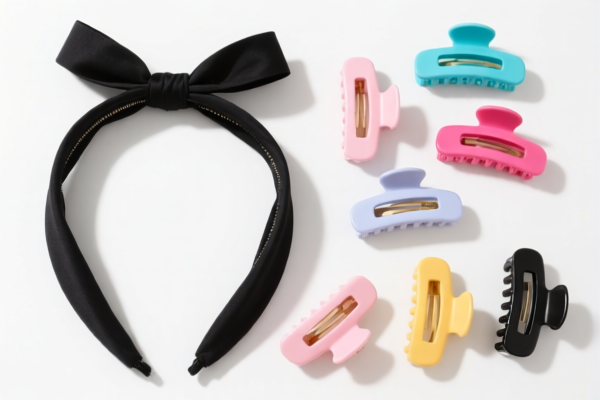
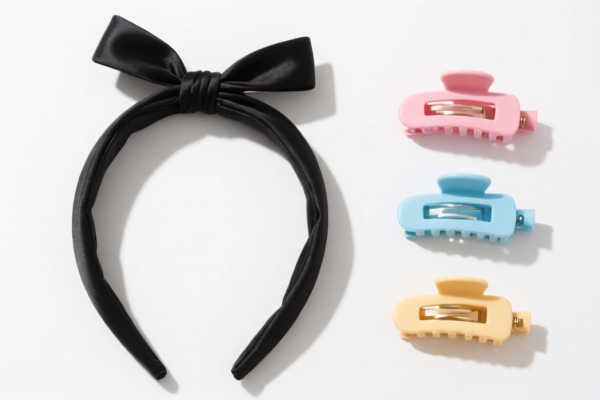

AI Analysis
👕 Jacket Clothing Parts (Garments/Accessories)
🌐 HS Code Reference & Customs Clearance Guide | 2026 Latest Tariff Analysis | Professional Clearance Strategy
📌 I. Product Definition & Classification: What Are "Jacket Parts"?
Jacket clothing parts refer to non-complete garment components used in the assembly, repair, or alteration of outerwear (jackets, coats, blazers). In international trade, these are typically classified based on their material composition (synthetic vs. natural fibers) and their functional role (accessories vs. structural components).
Key Categories: 1. Structural Parts: Sleeves, collars, cuffs, lapels, pocket bags, linings. 2. Accessories/Trimming: Buttons, zippers, decorative patches, elastic bands, woven labels.
⚠️ Critical Distinction:
- If the item is a functional garment accessory made of synthetic fibers (e.g., polyester jackets parts), it generally falls under Chapter 62 (Articles of Apparel and Clothing Accessories, Not Knitted or Crocheted).
- If the item is considered a jewelry/fashion accessory (non-metallic) with decorative intent, it might fall under Chapter 71 (Imitation Jewelry), though this is less common for structural jacket parts.
📦 II. HS Code Classification Details (2026 Latest Tariff Authority Comparison)
Based on the provided data, here are the precise HS Codes and their logical justifications for "Jacket Clothing Parts":
| HS Code | Product Description | Justification & Material Inference | Tax Category |
|---|---|---|---|
6217.90.90.35 |
Jacket Parts | Matches usage and form; Material inferred as Synthetic/Man-made fibers (e.g., polyester, nylon). Fits the definition of "Other made-up clothing accessories." | High Tariff (32.1%) |
6117.90.90.55 |
Jacket Parts | Matches outerwear/jacket components; No material conflict (Likely Knitted/Crocheted synthetic or cotton blend). | High Tariff (32.1%) |
6217.90.90.45 |
Jacket Parts | Fits clothing or auxiliary parts; No material conflict. Standard synthetic fiber accessory classification. | High Tariff (32.1%) |
6217.10.95.50 |
Clothing Accessories | Explicitly classified as "Clothing Accessories"; No material conflict. Generic synthetic accessory code. | High Tariff (32.1%) |
7117.90.90.00 |
Clothing Accessories | Classified under Jewelry/Accessories Category; Non-precious metal material. Used if parts are purely decorative (e.g., metal-free fashion studs, plastic badges) and not structural. | Moderate Tariff (28.5%) |
🔍 Key Insight:
- The majority of jacket parts (sleeves, collars, linings) are classified under 6217 or 6117 depending on whether they are woven (62) or knitted (61).
- Code7117is an exception: It applies only if the item is deemed a "fashion accessory" rather than a garment component, and specifically if it contains no precious metals.
- All codes above are subject to additional US tariffs (see Section III).
💰 III. 2026 Latest Tariff Rate Breakdown (Including Surcharges & Policy Add-ons)
✅ Applicable Country: United States (US)
✅ Country of Origin: China (CN)
✅ Effective Date: Post-November 2025 (Current Active Rates)
🎯 1. Codes 6217.90.90.35, 6117.90.90.55, 6217.90.90.45, 6217.10.95.50
| Item | Detail |
|---|---|
| Base Duty Rate | 14.6% (Ad Valorem) |
| Section 301 Surcharge | 7.5% |
| Section 122 Tariff | 10% (Specific US provision for certain apparel/textiles) |
| Total Effective Rate | 32.1% |
| Tax Calculation | CIF Value × 32.1% |
| De Minimis Exemption? | ❌ No (These items are subject to full duty collection; no $800 exemption for China-origin goods in many cases due to trade policy) |
| Legal Basis Path | HTSUS:6217/6117 → Section 301 Footnote → Section 122 Statute → Total: 32.1% |
📌 Explanation:
- The 14.6% is the standard US MFN (Most Favored Nation) duty for apparel accessories.
- The 7.5% is part of the ongoing Section 301 tariffs on Chinese goods.
- The 10% is a specific additional tariff (Section 122) often applied to clothing and textile articles to protect domestic manufacturing.
- Total: 32.1% is a significant cost driver. Accurate classification is crucial to avoid overpaying or underpaying (which leads to penalties).
🎯 2. Code 7117.90.90.00
| Item | Detail |
|---|---|
| Base Duty Rate | 11.0% (Ad Valorem) |
| Section 301 Surcharge | 7.5% |
| Section 122 Tariff | 10% |
| Total Effective Rate | 28.5% |
| Tax Calculation | CIF Value × 28.5% |
| De Minimis Exemption? | ❌ No |
| Legal Basis Path | HTSUS:7117 → Section 301 Footnote → Section 122 Statute → Total: 28.5% |
📌 Explanation:
- Although slightly lower (28.5% vs. 32.1%), misclassification here is high-risk. If customs determines the item is a structural jacket part (e.g., a sleeve) rather than a decorative accessory, they will reclassify it to Chapter 62/61 and charge 32.1% + back taxes + interest.
🛠️ IV. Customs Clearance Operational Advice (Practical Pitfall Guide)
✅ 1. Required Documentation Checklist (Non-negotiable)
| Document | Must Provide? | Notes |
|---|---|---|
| ✅ Commercial Invoice | ✔️ | Must clearly state "Jacket Parts" and specify material (e.g., "100% Polyester Woven Jacket Collar"). |
| ✅ Packing List | ✔️ | Detail quantity, weight, and dimensions. |
| ✅ Product Photos | ✔️ | Clear images showing the item is not a complete garment. Must show tags, seams, and any labels. |
| ✅ Material Composition Statement | ✔️ | Explicitly declare fiber content (e.g., "Synthetic Fiber"). This determines if it’s 61xx or 62xx. |
| ✅ Letter of Explanation | ⚠️ | If using 7117, provide a letter explaining why it’s a "fashion accessory" and not a garment part. |
| ✅ Country of Origin Certificate | ✔️ | Proof that goods are made in China (triggers the 32.1% rate). |
✅ 2. Classification Strategy (Key Rules)
🔥 “Shape Defines HS, Material Defines Chapter, Origin Defines Tax!”
| Scenario | Correct HS Code | Why? |
|---|---|---|
| Woven Jacket Parts (e.g., woven collar, sleeve) | 6217.90.90.xx |
Chapter 62 covers non-knitted apparel accessories. |
| Knitted Jacket Parts (e.g., knitted cuff, hood) | 6117.90.90.xx |
Chapter 61 covers knitted/crocheted apparel accessories. |
| Purely Decorative Accessory (e.g., plastic badge, non-metal pin) | 7117.90.90.00 |
Only if it has no structural function and is made of non-precious materials. |
| Complete Jacket | ❌ DO NOT USE THESE CODES | Use 6201/6202 for complete coats. Using parts codes for full jackets is fraud. |
| Metal Buttons/Zippers | 7318/7415 (Not in list) |
Metal parts are excluded from apparel accessory codes. Use metal hardware codes instead. |
✅ 3. Special Considerations & Risk Management
| Issue | Recommendation |
|---|---|
| Misclassification Risk | Do NOT use 7117 for structural parts (collars, sleeves) just to save 3.6%. Customs will reject it and charge 32.1% + penalties. |
| Material Confusion | If the part contains both synthetic and natural fibers, check the chief value or essential character rule. Usually, the outer shell material dictates the code. |
| Section 122 Applicability | Verify if your specific supplier/product type is eligible for any exemptions. Section 122 rates can change. |
| De Minimis ($800) | For shipments under $800, ensure the carrier processes it correctly. However, China-origin goods are often scrutinized heavily. |
🌍 V. Global Market Comparison (2026 Snapshot)
| Market | Recommended HS Code | Est. Total Duty | Notes |
|---|---|---|---|
| 🇺🇸 USA | 6217.90.90.xx / 6117.90.90.xx |
32.1% | High tariffs due to Section 301 + Section 122. |
| 🇪🇺 EU | 6217.90.90 |
~12-16% | Lower base duty, but anti-dumping rules may apply. |
| 🇨🇳 China | 6217.90.90 |
~5-10% | Import duties for China on Chinese goods (rare scenario). |
| 🇨🇦 Canada | 6217.90.90 |
~0-5% | CUSMA (USMCA) may offer duty-free status if originating in NA. |
📌 Conclusion:
- The US market is the most expensive for jacket parts from China due to the 32.1% total rate.
- Consider supply chain diversification (e.g., Vietnam, Bangladesh) if tariffs are prohibitive, as those countries may enjoy lower or zero duties under trade agreements.
📌 VI. Common Mistakes & Pitfalls (Lessons Learned)
❌ Mistake 1: Labeling "Jacket Parts" as "Textile Accessories" without specifying material.
👉 Result: Customs may assign a generic higher rate or delay shipment for classification review.
❌ Mistake 2: Using 7117 for fabric collars.
👉 Result: Rejection by CBP. Reclassification to 6217.90.90 + 32.1% duty + penalties.
❌ Mistake 3: Ignoring Section 122 tariffs.
👉 Result: Underpayment by 10%. Back taxes + interest due upon audit.
✅ Correct Practice:
Always specify:
"Jacket Parts (Collar/Sleeve), Woven, 100% Polyester, Made in China"
This clarity supports the use of6217.90.90.35or6217.90.90.45.
🎯 VII. Conclusion: Precision Saves Money!
🎯 Key Takeaway:
🔹 Structure matters: Are they parts of a garment (Chapter 61/62) or fashion accessories (Chapter 71)?
🔹 Tax is high: Prepare for 32.1% in the US. Factor this into your pricing strategy.
🔹 Documentation is key: Clear invoices and photos prevent delays.
📌 Pro Tip:
If you are importing large volumes, consider applying for a Binding Tariff Ruling (BTR) from US Customs and Border Protection (CBP) to lock in the HS code and duty rate before shipping. This provides legal certainty.
📣 Immediate Action:
📞 Consult a licensed customs broker.
📄 Prepare detailed product specs.
💰 Budget for 32.1% in landed costs for US-bound jacket parts from China.
✨ Accurate Classification = Cost Savings + Smooth Clearance!
💼 Don’t let tariff miscalculations eat your margins!
Customer Reviews
About HS Code Classification
The Harmonized System (HS) is an internationally standardized nomenclature developed by the World Customs Organization (WCO) to classify traded products. Over 200 countries use the HS system as the basis for customs tariffs, trade statistics, and import/export regulations.
Each HS code follows a hierarchical structure:
- Chapter (2 digits) — Broad category of goods (e.g., Chapter 84: Machinery and Mechanical Appliances)
- Heading (4 digits) — More specific grouping within the chapter
- Subheading (6 digits) — Internationally standardized breakdown, used by all WCO member countries
- National subdivisions (8-10 digits) — Country-specific extensions for further classification, such as US HTSUS 10-digit codes
Correct HS code classification is essential for smooth customs clearance, accurate duty payment, and compliance with trade regulations. Misclassification can lead to customs delays, overpayment of duties, or penalties.
When importing from CN to US, the applicable tariff rates may include:
- Most-Favored-Nation (MFN) rate — The standard duty rate applied to WTO members
- General rate — Applied to countries without trade agreements
- Trade remedy duties — Additional tariffs such as Section 301 (anti-dumping), Section 232 (national security), or countervailing duties
The information provided on this page is for reference purposes only. For official classification, please consult with your local customs authority or a licensed customs broker.